
By Frank Parlato
What Was Lost
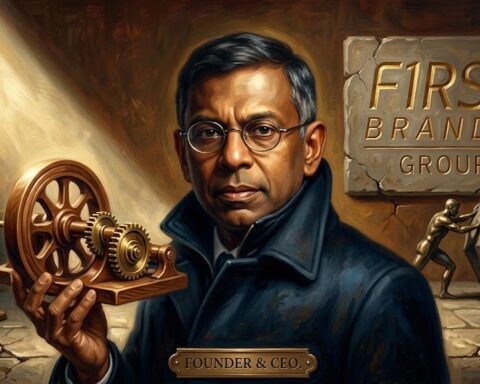
First Brands, a Cleveland-based auto parts company, went into bankruptcy last year. It employed 26,000 people on five continents. About 6,000 of those workers were Americans in Midwestern factories.
The other 20,000 were in China, Mexico, Europe, and other places where labor is cheaper than in the United States.
First Brands had not reversed the long offshoring of American auto parts production. It had slowed it.
It had the only American foundry still making aftermarket brake rotors.
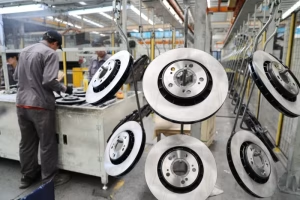
It had American filter lines, American wiper plants, American brake assembly. And American jobs in the Midwest at a time when the rest of the industry was leaving America.
By the time the restructuring team, and federal prosecutors completed their tasks, 17 factories had closed, 4,000 American workers had been fired, the rotor factory had been auctioned for scrap, and the aftermarket parts business went to China.
The Indictment
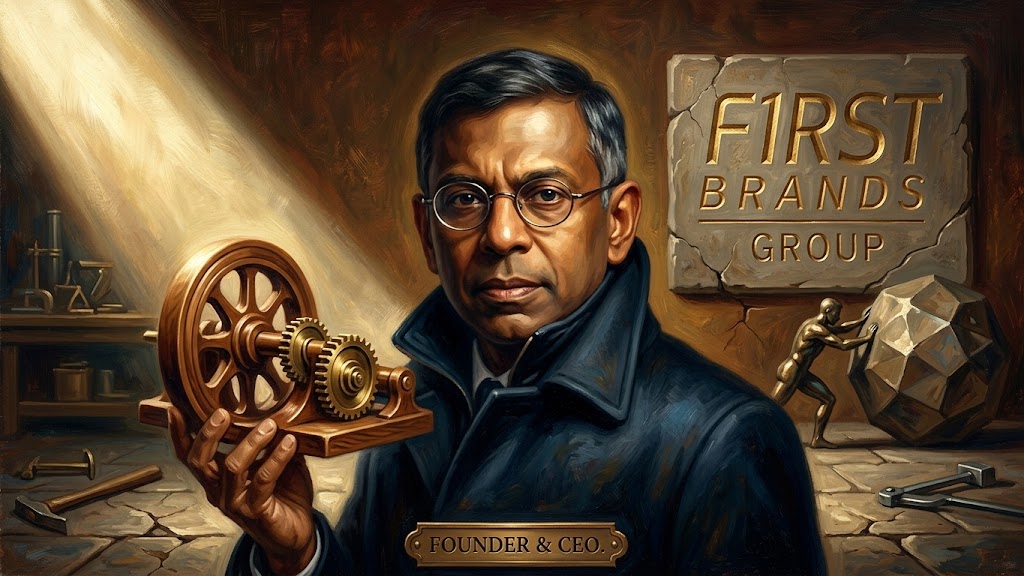
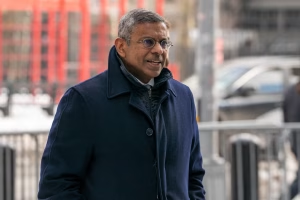
The US Attorney for the Southern District of New York filed a nine-count indictment on January 27, 2026, charging First Brands founder and CEO Patrick James with a little-used “Financial Kingpin” charge, officially known under 18 U.S.C. § 225 as the Continuing Financial Crimes Enterprise.
The statute says that, to convict, the government must show:
Patrick organized, managed, or supervised a financial crimes enterprise. The enterprise involved at least four people working together. Patrick personally received at least five million dollars from the enterprise over a two-year period. The mandatory minimum is ten years in federal prison. The maximum is life.
In addition to the Continuing Financial Crimes Enterprise count, Patrick was charged on eight additional counts, including conspiracy to commit wire fraud, wire fraud, conspiracy to commit bank fraud, bank fraud, and conspiracy to commit money laundering.
If convicted on all counts, Patrick James faces a realistic federal sentence of 20 to 30 years in prison. He is 62. A plea deal, if James decided to take one, would most likely come in somewhere between five and ten years in federal prison.
He has pleaded not guilty. Trial is scheduled for February 9, 2027, before Judge Analisa Torres in Manhattan.
The Questions
Did James commit fraud on a massive scale, as the government alleges? Or did a heavily indebted American manufacturer fail under economic pressures that global competitors helped create? Was he a con man running a rolling financial scheme? Or the last man stubborn enough to keep old American factories open while everyone else moved production overseas?
Was there something more at work than ordinary economic forces? When First Brands died, the American manufacturing it had been operating flowed to China.
The Manhattan investment firm that helped sabotage the company — Apollo Global Management, which manages close to a trillion dollars — has documented financial ties to Chinese state-connected funds.
The Man Who Came to Ohio
Patrick James was born in Malaysia in 1964 to an Indian Catholic family. He came to America in the 1980s to attend the College of Wooster, a small liberal arts college in northern Ohio with about two thousand students. He worked the campus bar to pay his way.
After graduation he remained in Ohio, married an American woman and while many immigrants pursued medicine, engineering, or finance, James entered a dying world: Midwestern manufacturing.
He began buying small auto-parts companies that larger corporations no longer wanted — with auto-parts plants in Ohio, Indiana, Michigan, and Missouri. Companies with aging equipment, union workers, and shrinking margins. To James, they looked salvageable.
He never had enough money to buy the companies for cash. Almost nobody in the acquisition business does.
Beginning in the 1990s, he started using leveraged buyouts — the same strategy private-equity firms in New York had been using for years.
James found small companies he thought were underpriced. A bank lent him most of the purchase price. He put down a small amount of his own money or used the company’s assets as collateral. He bought the company and used the company’s profits to pay back the loan. James kept doing it, one acquisition at a time.
Borrowing at Higher Rates
By the time he founded First Brands in 2013, traditional banks were reluctant to lend to him. He turned to higher-risk Wall Street lenders that charge higher interest rates and fees in exchange for taking on borrowers ordinary banks will not touch. James was willing to pay those higher rates.
In 2014 he bought Trico, the Buffalo company that invented the windshield wiper blade in 1917, with that kind of financing. Over the next 11 years he kept buying.


James acquired Raybestos, the Connecticut brake maker founded in 1902 that invented the woven brake lining.
He acquired Carter, the St. Louis fuel pump and fuel system maker founded in 1909; Autolite, the Toledo spark plug maker founded in 1911; ANCO, the Indiana wiper brand founded in 1918; FRAM, the Rhode Island oil filter company whose orange cans have sat on auto parts shelves since 1932.

All told, he acquired 24 American auto parts brands.
American Dinosaurs
Admittedly, James was buying American dinosaurs. Old brands. Faded names.
American manufacturing had been losing ground since the 1970s — first to Japan, then to Mexico, then to China.

China especially had cheaper labor, cheaper materials, lower regulatory costs, and a communist government determined to dominate global manufacturing through subsidies, currency policy, strategic targeting of foreign industries, and near or actual forced labor by its oppressed citizenry.
The big American corporations that had owned these brands — Honeywell, Federal-Mogul, Bendix — could no longer make them work as American manufacturers. So they sold them, moved the manufacturing overseas, or shut the brands down.
James tried scale and consolidation, pulling two dozen old American brands together under one management.

By 2024 the company was doing $5 billion a year in sales. James built one of the largest aftermarket auto parts companies in the world. He was buying back American manufacturing instead of selling it off.
Under Attack

But First Brands was under attack. A Manhattan investment firm called Apollo Global Management, which operated a major competitor in the aftermarket parts business, had spent a year setting up to profit from First Brands’ destruction — and actively working to make that destruction happen.
By mid-2025, the combination of Apollo’s pressure and the high interest rates First Brands was paying on its borrowed money had begun to strain the company.
In September 2025, First Brands filed for bankruptcy protection under Chapter 11. A bankruptcy filing does not normally close a company. When First Brands filed for bankruptcy, the company was viable. Customers wanted to keep buying American-made parts from First Brands. Six hundred million dollars in new customer orders had come in during the weeks before the filing.

A normal bankruptcy process would have used the protections of Chapter 11 to restructure the debt, sell some of the weaker businesses, keep the core operating businesses running, and emerge as a leaner but still functioning American manufacturer.
Instead, two actors moved in and made sure First Brands would never survive.
The Trojan Horse

Charles Moore did not arrive at First Brands as an outside party. James himself hired Moore and his firm, Alvarez and Marsal, in September 2025 to help prepare the company for bankruptcy.
James gave them access to the company’s books, operations, strategic plans, and weaknesses. He paid them for their advice. Then the bankruptcy was filed. James was forced out by the senior lenders as a condition of the bankruptcy financing.
The bankruptcy court appointed Alvarez and Marsal — the firm James had hired to help him — as the firm that would now run the company through the bankruptcy. Moore, the Alvarez and Marsal partner James had brought in to help, became the interim CEO of First Brands.
The Destruction

Under Moore’s management, Alvarez and Marsal billed millions of dollars in fees from the First Brands estate.
Moore did not file a restructuring plan to keep First Brands operating. He spent the new financing the senior lenders had provided. He closed 17 factories, fired thousands of American workers, sold off the brands at fire-sale prices and shut down the foundry that made aftermarket brake rotors.
He auctioned the equipment for scrap rather than seeking a buyer who would have kept it running. Multiple buyers offered to keep parts of the company operating. Moore reportedly did not return their calls.

Next, with Moore fueling the indictment, and providing a remarkably self-serving spin, federal prosecutors in Manhattan indicted James, ending any remaining possibility of a strategic buyer for First Brands. No serious company will acquire a business at the center of an active Manhattan criminal prosecution. No lender will refinance debt that the bankruptcy court might later void as part of the fraud case.
The Motives
The prosecutors wanted a Manhattan headline indictment of a private-company founder.
Moore wanted something else. Moore had a reason to make the bankruptcy as long, complicated, and dramatic as possible. The longer the case dragged on, the more fees Alvarez and Marsal collected. A bankruptcy that ended quickly with the founder still in charge would have generated a few months of work. A bankruptcy that dragged through litigation and asset sales for years, and put a major American executive in federal prison was the kind of case that paid Moore’s firm millions and would appear on Alvarez and Marsal’s marketing materials for the next decade.
Moore, a senior managing director at Alvarez and Marsal, would bill at $1,500 to $2,000 an hour. The fees Alvarez and Marsal has collected from the First Brands estate are in the millions and continue to grow as long as the bankruptcy continues.
Neither Moore nor the prosecutors appear to have wanted what was best for the 6,000 American workers, the 17 factories, the brake rotor foundry, or the century of American industrial heritage that had been brought together under one roof.
What Comes Next
Federal prosecutors would later insist the explanation was simple: fraud, deception, and manipulation.
Was it Patrick James’s dishonesty, as prosecutors allege? Or did something else, something more sinister, destroy First Brands?
Part 2 of this series examines what Apollo Global Management did to First Brands in the year before the bankruptcy — and why a firm that manages billions of dollars for Chinese state-connected investors might have wanted an American auto parts maker dead.