OneTaste Case Raises Questions Over Forced-Labor Conspiracy Charge
Nicole Daedone and Rachel Cherwitz were sentenced after prosecutors pursued conspiracy without charging a substantive forced-labor count.

THE NOTION
Two women are in federal prison for an agreement.
Not for what they did. For what a jury decided they agreed to do. The government said so, in writing, before the trial began. It said so again, in closing, after the last witness stepped down.
THE COMPANY

OneTaste was not, at least formally, a church, commune or secret order. It was an educational company.
Nicole Daedone started it in San Francisco in 2004 around a practice called orgasmic meditation, or OM. It lasted fifteen minutes. Two people did it together.
Daedone taught that it could sharpen attention, deepen connection, and, in her telling, lead to a higher state of consciousness.
It sold courses.
It opened centers in San Francisco, New York, Los Angeles, London, and other places.
It had a residential community, a coaching program, and a sales operation. Daedone lectured, led classes, wrote books, and gave a TED talk.
About 35,000 people took courses over the years.
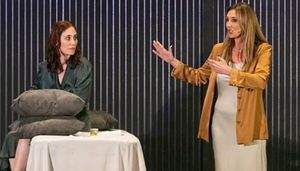
Rachel Cherwitz led sales and, for much of the company's existence, occupied the position closest to Daedone within the organization.
Some — a few, but some — nine, we know of for certain — left angry.
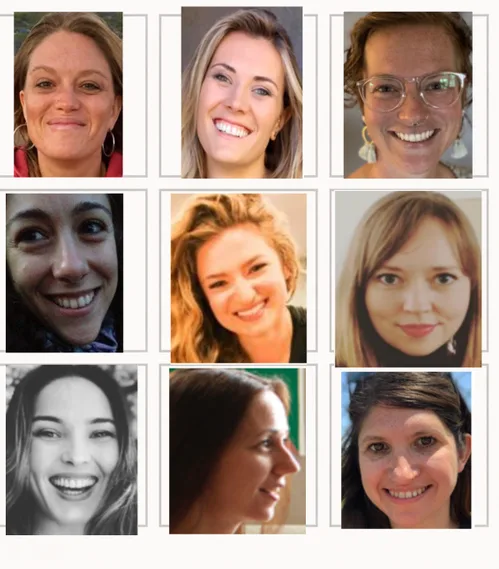
They said they had been underpaid and overworked. Some said they had been pressured into sexual situations. A couple of women said they had been encouraged to go into debt for courses.
Not everyone left OneTaste enlightened.
SEE PART ONE: OneTaste Forced Labor Case Shows How 'Cult' Label Framed Prosecution
THE CHARGE
In 2023, prosecutors with the U.S. Attorney's Office for the Eastern District of New York led a federal grand jury in Brooklyn to indict Daedone and Cherwitz on a single count of forced labor conspiracy.
Note, please, that the indictment did not include the actual charge of forced labor, just the conspiracy to commit it.
It was a singular case. In every prior federal forced-labor conspiracy prosecution the defense could find, the conspiracy count sat beside a substantive charge — forced labor itself, or sex trafficking.
But here it was forced labor conspiracy alone.
Not sex trafficking. Not wage theft. Not fraud. Not sexual assault. Not even forced labor.
The long list of accusations had become a very short indictment.

In a filing, the U.S. Attorney's Office under Breon Peace, a Biden nominee, explained: "the instant case charges a conspiracy and not a substantive offense. The defendants could be proven guilty if they never forced any victim to do anything — so long as the evidence proves beyond a reasonable doubt that they agreed to do so."
A conspiracy is an agreement. The government does not have to prove the crime agreed to was ever carried out, or carried out against anyone in particular.
BIRDS ON THE FENCE

I'm reminded of the old tick math question. There were 14 birds sitting on a fence, and 7 of them had a notion to fly away. How many birds were left on the fence?
The answer is all 14. They only had the notion to fly away.
A conspiracy charge, of course, is not necessarily nothing. People go to prison for it every day.
But it is a curious choice when the government has nine women it calls victims waiting in the witness room. If the labor had been forced, the government could have charged forced labor and proved it, woman by woman. It did not. It charged the notion.
In any event, that didn't stop the government from bringing the nine unhappy women as witnesses, which it actually and incongruously called victims.
Victims of what? Not of forced labor. That was never charged. Victims of an agreement. Nine women were presented to a jury as victims of the notion — and then, as we will see, the jury was told their harm was not the question.
That is the entire charge on which two women — Daedone, the founder, and Cherwitz, her longtime second-in-command — were sentenced on March 30, 2026, to a combined 15.5 years.
The narrowness of the indictment and the severity of the punishment should be seen as one and the same.
The trial began in May 2025.
The government called nine former members and employees and presented them as victims.
It called no expert.
Then the prosecutors explained what it all meant.
THE QUESTION THAT WAS NOT
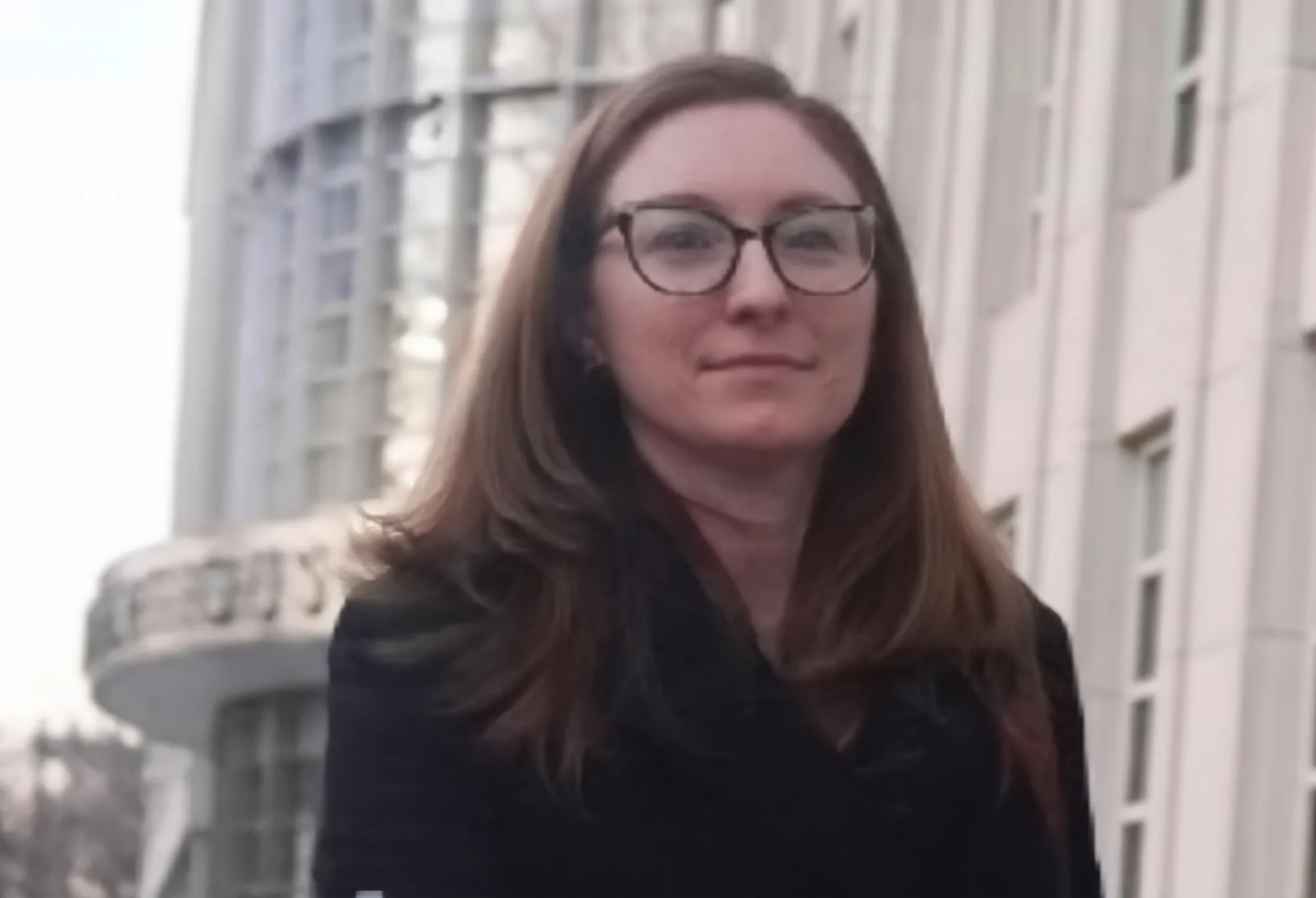
Assistant U.S. Attorney Kaitlin Farrell, in closing argument, told the jury what this forced-labor conspiracy case was not about.
"It's not about whether these victims actually suffered serious harm and whether they actually caused them to work. That is absolutely not the question of this trial."
And:
"The focus is what the defendants agreed and intended, not whether a particular victim had a choice."
You may want to read it again.
Nine women testified in a forced-labor conspiracy case.
Apparently, whether they were forced was not the issue.
Whether any of them was harmed was not the question. Whether any of them had a choice — not the question.
The defense argued that the nine women were adults. Every one was college-educated. They made choices.
On June 5, prosecutor Kayla Bensing explained why this was evidence for the government too:
"The Defendants argue that these were grown women, these were adults. And they were educated, they were smart. They did walk in here with degrees and careers and they were clearly thoughtful, conscientious people. Members of the Jury, that just shows how powerful the coercion was in this case."
Their competence proved the coercion. Their degrees proved the coercion. Their thoughtfulness proved the coercion.
Then Bensing explained the machine in one sentence.
"Choice wasn't something they were in a psychological state to even consider, and that means they could make no reasonable choice."
There is no answer to an argument built this way. Evidence of freedom is evidence of captivity.
HAPPINESS IS PART OF BRAINWASHING
The government's first witness was Rebecca Halpern.
Jennifer Bonjean, lead counsel for Daedone, on cross-examination, confronted her with the contradiction underlying the prosecution's theory:
Q: "You testified you were happy?"
A: "Yes."
Q: "You also testified that you were brainwashed?"
A: "Yes."
Q: "How do those two things work together?"
A: "…That's the brainwashing. So the happiness is part of the brainwashing. Right? Like — because people don't stay in places where they're not happy."
Happiness was evidence of brainwashing.
Had she been miserable, one assumes the misery would have, instead, proved coercion.
Bonjean asked Halpern the obvious next question:
Q: "Can you provide me with an accepted definition for the word 'brainwashing'?"
A: "I can provide you with my own definition."
Q: "I'm not interested in your own. I'm interested in an accepted definition."
A: "I'm not claiming to be an expert."
Q: "So you don't have a definition for the word 'brainwashing,' right?"
A: "What I can provide is my own personal definition, yes."
The organizing concept of a federal criminal prosecution, and the government's own first witness, could not define it and did not claim to be qualified to.
NO EXPERT
The government presented no expert witness on the subject.
With no expert, the theory was never tested for reliability.
The prosecution presented it to the jury through nine lay witnesses, several of whom testified that they learned the vocabulary afterward.
One said that her understanding of "love bombing" came from her therapy sessions.
The vocabulary was retrospective.
WHAT THE JURY NEVER HEARD

The statute the government used, 18 U.S.C. §1589, defines "serious harm" by an objective test — harm serious enough "to compel a reasonable person of the same background and in the same circumstances" to keep working.
This suggests that other people in the same circumstances might be worth hearing from.
Approximately 35,000 people took OneTaste courses. Nine became government witnesses.
That leaves quite a lot of people in the same circumstances.
The defense proposed the obvious comparison group: people who lived in the same houses, heard the same doctrine, took the same courses, and yet did not experience the circumstances as compulsion.
Whatever one thinks of such testimony, it is difficult to call it irrelevant to a statute expressly invoking a reasonable person "in the same circumstances."
At a status conference on December 10, 2024, Judge Gujarati characterized the request this way:
"I'm giving you the opportunity to try to convince me that you should be allowed to put on a parade of people who will say they did not feel coerced."
Their testimony was excluded.
The jury heard from the nine who said they were coerced. It was not permitted to hear from anyone who said she was not. Then it was told to decide what a reasonable person in the same circumstances would have felt.
I AM NOT ARGUING
Nothing here requires sentimentalizing OneTaste.
There were claims about uncomfortable sexual situations, unpaid wages, and people driven into debt. Some of that may be true.
But notice: none of that was charged. Not sexual assault. Not a wage violation. Not trafficking.
There was one conspiracy count.
And the prosecutor told the jury outright that whether anyone was actually harmed was "absolutely not the question of this trial."
Instead, the government proceeded under a statute that allowed the defendants' teachings to become the alleged means of coercion.
THE NOTION, SENTENCED
So here is the case as the government itself described it.
An agreement, not an act.
Victims whose harm was not the question.
Coercion proved by competence.
Brainwashing that the first witness could not define, and no expert was asked to.
And a rule that a reasonable person in the same circumstances would have felt compelled — decided by a jury forbidden to hear from anyone in the same circumstances who did not.
Fourteen birds on a fence. Seven had a notion.
Two women got fifteen and a half years for the notion.
The government told the court it never had to prove anyone was forced. It kept that promise. What it proved instead was something else — that the teaching itself was the crime. That is the next story.