


Orgasmic Meditation, or OM, is about clitoral stimulation as a method to improve health and growth.
It has been castigated as sex, and sex is dirty. Judge Diane Gujarati, who presided over the trial of two women, the founder of OM, Nicole Daedone, and her assistant Rachel Cherwitz, was unwilling to admit evidence of nine studies that suggest that the practice of OM is not sex but a therapy and healing practice — or at least so it is considered by its practitioners. She denied the evidence because she ruled the practice of Om was not on trial, yet the entire trial was underpined by the prosecution’s direct and indirect framing of OM as a sexual practice, and much like prosecutors used to argue that marajuana leads directly to heroin, prosecutors argued in this case that the practice of OM led to increasingly promiscuius and non-monogomous (though legal) sex. The argument was that OM, in effect, brainwashed women (not men) into sex that they believed at the time they were freely consenting to, but later, following regret and ample consultation with the government and approved therapists (such as Steven Hassan), they realized they were brainwashed ergo they were coercively controlled, after ample coaching (sometimes as many as 10-15 government meetings) by the government. The nine women who testified they were brainwashed did not come to the conclusion easily; they needed to be, in effect, brainwashed by the government that they were brainwashed.
Keep in mind that nine college-educated 30+ and 40+ year old White women, supposedly of sound mind and intelligence, actively employed would not easily admit to being incapable of independent judgment without significant government intervention (and promises, potentially of restitution).
In short, the “ick” factor plus the brainwashing plus excluding all science that would argue to the contrary was the summum bonum of the case and conviction of Daedone and Cherwitz.
Now, suppose that the following results of studies and appropriate evidence through expert witnesses were permitted as evidence to contradict the “ick” factor and other prejudicial elements, these women might have had an entirely different (i.e. fair) trial.
The prosecution (with the judge’s tacit consent) pulled their classic bait and switch: we don’t need any evidence about the efficacy of OM because we aren’t going to introduce evidence against it’s nonefficacy. In reality, the prosecution’s entire case was built on, as mentioned above, the baneful derivative effect of the practice of OM based on the testimony of nine college-educated White women, who basically argued that they were made feeble-minded, foolish, and without agency as adults largely because of the practice.
Now let’s take a look at what the evidence would have been in a fair trial.
One final point: the practice of OM is 100% legal among consenting adults, and not one of the 35,000 (even the nine feedble-college educated, affluent or middle class adult white women) ever said they did not consent.
So here are the 9 scientific studies the judge kept out of the trial of Daedone and Cherwitz. They’re not icky at all.
Nine Studies Deemed Inadmissible in a Brooklyn Courtroom
Over the past six years, researchers at the University of Pittsburgh, Thomas Jefferson University, UCLA and MIT have published peer-reviewed studies examining Orgasmic Meditation (OM). The funding came from OM-affiliated foundations, just as pharmaceutical trials are funded by pharmaceutical companies. And the Beef Growers of America fund studies on why people eat more beef. What follows is a summary of the published findings on OM.
Study 1: Practitioners Experience OM as Meditation, Not Sex Siegel et al. — F1000Research, 2022 — 220 respondents with analyzable data
Researchers surveyed 220 OM practitioners — evenly split between men and women — using questions that compared OM to seated meditation, fondling, and sex. On a 1-to-5 scale, practitioners rated the statement “OM is a form of meditation” at 4.69. They rated “OM is sex” at 1.42 and “OM is fondling” at 1.48. Over 80 percent said OM was more similar to meditation than to sex.
That’s what its practitioners said.
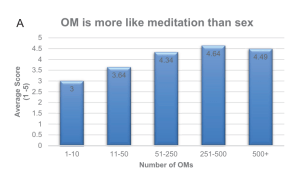
Study 2: Practitioners Report Mystical Experiences Comparable to Psilocybin Siegel & Emmert-Aronson — F1000Research, 2021 — 780 respondents (Study 1), 56 pairs
This study used the Mystical Experience Questionnaire, developed by Roland Griffiths for the Johns Hopkins psilocybin studies, to ask participants whether OM produces experiences of unity, transcendence, sacredness, and a deeply felt positive mood, just like others were asked about psilocybin. The FDA is evaluating psilocybin as a breakthrough therapy for depression, partly on the strength of the mystical experiences it produces. This OM study had two parts. In the first, 780 OM practitioners completed the questionnaire with “a single powerful OM” in mind. They were asked to recall a peak OM experience. Sixty-two percent reported a complete mystical experience as described in the questionnaire. The average score was 3.35 out of 5. That is comparable to what Griffiths reported for a moderate dose of psilocybin — slightly higher, in fact, than the 56 percent complete mystical experience rate at the maximum psilocybin dose in the Johns Hopkins research. So hundreds of practitioners said they had a serious mystical experience through one of their OMs. It was more than clitoral stroking to them.
In the second part of the study, 56 pairs of practitioners — both the stroker and the strokee — completed the questionnaire immediately after their most recent OM. The complete mystical experience rate dropped to 23 percent, and the average score fell to 3.21 out of 5. This shows that practitioners felt not every session produces a mystical experience, just as perhaps not every meditation produces profound insight, and not every prayer produces transcendence. It also suggests honesty in reporting. People were willing to report ordinary sessions. If practitioners were simply checking boxes to validate their practice, that number would have been higher.
Study 3: OM Can Be Safely Taught to People with PTSD Kriegman et al. — Phase 1 Clinical Trial — 23 participants
This study was a Phase 1 clinical trial examining whether OM could be safely introduced to individuals with clinically significant PTSD. Twenty-three people with clinically significant PTSD who had never practiced OM practiced at home with their romantic partners for four weeks. No adverse events were reported. Self-reported PTSD symptoms dropped substantially, with most participants falling below the diagnostic threshold by the end of the trial. The study had 100% adherence, which points to the safe introduction of the practice for people with PTSD. Phase 1 trials are not designed to prove efficacy. They are designed to establish that the intervention can be safely administered.
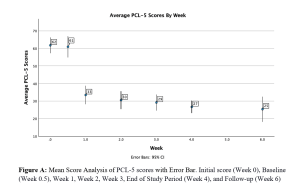
Study 4: Long-Term Practitioners Show Different Resting Brain Activity Newberg et al. — Frontiers in Neuroimaging, 2024 — 40 OM practitioners, 19 non-meditating controls
Researchers at Thomas Jefferson University used FDG PET scanning to measure resting cerebral glucose metabolism in 40 long-term OM practitioners — 20 men, 20 women, all with more than a year of two to three sessions per week — and compared them to 19 healthy adults who had no meditation history. OM practitioners showed lower resting brain activity across multiple regions compared to people who don’t meditate — including the frontal and temporal lobes, the anterior cingulate, and the thalamus. These are the same regions, and the same pattern, found in long-term practitioners of mindfulness meditation and yoga. The default mode network — the brain system active when the mind is wandering — was quieter. The salience network, which filters important stimuli, was altered. These are hallmarks of a meditative brain.
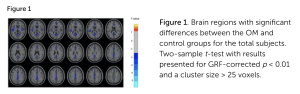
What the researchers did not find matters just as much. The striatum — the brain’s primary reward center, the area that lights up during sexual gratification and that shows abnormal reactivity in people with compulsive sexual behavior — was unaffected. The OM brain at rest looked like a meditator’s brain, not a sex addict’s brain. Men who stroked showed lower resting activity in brain areas tied to motor coordination, social processing, and emotional regulation. Women who were stroked showed lower activity in regions involved in sensory processing, emotional awareness, and self-awareness — the same regions consistently identified in meditation research.
The control group consisted of non-meditators rather than practitioners of another meditation tradition. This means the study cannot distinguish whether the observed differences are specific to OM or would appear in anyone who has maintained a sustained contemplative practice of any kind for years. The researchers acknowledged this limitation. For a practice that the federal government has characterized as essentially commercial sexual exploitation, the fact that the neuroimaging data shows a brain signature consistent with meditation rather than sex deserves consideration.
Study 5: OM Increases Interpersonal Closeness — Even Between Strangers Prause, Siegle & Coan — PLOS ONE, 2021 — 125 dyads (250 participants)
Researchers recruited 125 pairs of OM practitioners who had completed at least 10 sessions and brought them into a mobile lab set up in Los Angeles, San Francisco, and New York City. Roughly half the pairs (106 individuals) were romantic partners. The other half (104 individuals) were OM partners who practiced together without a romantic relationship. Before and after a single OM session, each participant completed the Inclusion of Other in Self scale, a one-item visual measure of psychological closeness that asks you to select from a series of overlapping circles representing how much you feel another person is part of your identity. Closeness increased significantly after OM for all participants. When romantic and non-romantic partners were compared, the non-romantic partners showed greater gains in closeness than romantic couples.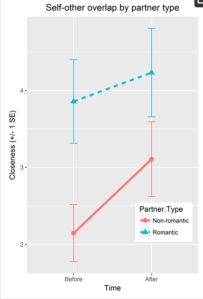
This is not what you would predict if OM’s effects were primarily sexual. Sexual touch between non-romantic partners could produce discomfort or awkwardness, not enhanced closeness. It is what you would predict if the structured, consensual, time-limited OM protocol creates a context in which interpersonal connection can form independent of existing romantic attachment.
The study establishes that practitioners reported that OM increases feelings of interpersonal closeness after a single session, that this effect is stronger between non-romantic partners than romantic ones, and that it occurs regardless of attachment style. A practice whose practitioners report measurably increasing human connection, published in a reputable, peer-reviewed journal with IRB approval, is worth investigation. Maybe it is not sex.
Study 6: Trauma Survivors Experienced Enhanced Arousal, Not Harm Prause, Cohen & Siegle — Sexual and Relationship Therapy, 2021 — 93 women (strokees)
The federal case against Nicole Daedone and Rachel Cherwitz characterizes OM as a practice that exploits vulnerable people. If that characterization is correct, you can expect people with histories of childhood trauma to show diminished arousal, emotional distress, or physiological shutdown when practicing OM. This study tested that. Ninety-three female OM practitioners completed the Adverse Childhood Experiences questionnaire — a 10-item measure that captures exposure to abuse, neglect, and household dysfunction before age 18. This is the ACE instrument used in the CDC-Kaiser study that established the link between childhood adversity and adult health outcomes. The researchers then measured both skin conductance response during an OM session — an objective physiological indicator of sympathetic nervous system activation — and subjective affect before and after. 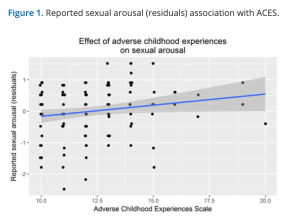
The finding ran directly counter to what the trauma literature predicts: women with more adverse childhood experiences reported greater sexual arousal after OM, not less (multiple regression R² = .13, p < .005). The prevailing model in trauma psychology holds that childhood sexual abuse impairs adult sexual functioning by disrupting the capacity for safe arousal. This study suggests that the problem for many trauma survivors is not an incapacity for arousal but the absence of a context in which arousal feels safe. OM’s structured protocol — gloves, defined 15-minute timing, communication, no reciprocation, no intercourse, a clear beginning and end — may eliminate the unpredictability that triggers trauma responses. When someone knows exactly where and how she will be touched, when it will start, and when it will stop, her nervous system can engage rather than shut down. Now, maybe right now you will say, “I thought you said OM was not sex.” And well, maybe it is not, but nobody said one cannot be aroused and still have it not be sex.
Or is all arousal sex? Is all sex dirty? Is all sex that later involves regret brainwashing? Should the government make arousal illegal? But there was more to this study. The skin conductance data showed that about half the women exhibited increases in Skin Conductance Response (SCR) during the session, consistent with the sympathetic activation you would predict during sexual arousal. The other half showed decreases — parasympathetic calming. But both groups reported high positive affect afterward. And both groups reported reduced anxiety and anger. The physiological pathways differed, but the emotional outcome was the same. People who OM’d, including sexual trauma victims, said the practice made them happier and less anxious. And they did not call it sex. This finding is consistent with the affective circumplex model in emotion research — the recognition that positive states can involve either high or low physiological activation. It suggests OM engages the nervous system in a way that accommodates individual variation rather than forcing a single arousal trajectory.
Of course, this is a sample of practitioners who self-selected into OM, which means any woman who deemed the practice harmful, triggering, or retraumatizing would likely have stopped before this study began. The sample cannot tell us what would happen if you handed OM to a random group of trauma survivors who had never tried it. But then, nobody ever practiced OM who did not say they wanted to practice it. The government could never find one who ever said so. So they found 9 who said they wanted to do it then, but realized they were brainwashed later. But while 9 said brainwashing (after saying it was good at the time), thousands said it was good. How does one legally protect oneself from women who later realize they are brainwashed?
Do a study on being brainwashed. Study their brains if you can find them.

But what these real studies show that the jury was not permitted to hear is that OM in the hands of women with self-reports of childhood adversity — including sexual abuse — found enhanced positive arousal, increased happiness, increased closeness, and decreased anxiety and anger. If the prosecution’s theory requires that OM exploits vulnerable people, the prosecution must explain why the most vulnerable people in this study showed the strongest positive response.
Study 7: Brain Imaging Technology Confirms OM Resembles Meditation, Not Sex Newberg et al. — F1000Research, 2022 — 20 pairs (40 participants)
Twenty couples at Thomas Jefferson University were measured with PET scanning with a radioactive glucose tracer — fluorodeoxyglucose — which measures metabolic activity. A small dose was injected while the person was performing the OM practice. The brain cells that are most active during the 30-minute uptake window consume the most glucose, and the PET scan captures that metabolic snapshot during OM, not afterward. The researchers found widespread decreases in cortical metabolic activity during OM compared to the neutral control condition. Reduced brain metabolism across multiple cortical regions has been documented in long-term practitioners of Tibetan Buddhist meditation, Franciscan prayer, and other contemplative traditions. It is the neurological opposite of what happens during sexual arousal and orgasm, which typically show increased metabolic activity, particularly in reward circuits, the orbitofrontal cortex, and midbrain dopamine pathways. The finding that OM decreases cortical metabolism indicates that OM produces a brain state more consistent with meditation than sex.
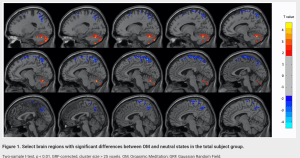
The prosecution characterizes OM as a sexual act. PET imaging shows that the brain during OM does not look like the brain during sex. It looks like the brain during meditation. The people who built these scanners, designed these studies, and analyzed these images are neuroimaging researchers at Thomas Jefferson University whose academic reputations rest on the accuracy of their data. Their data says the prosecution’s characterization is all wrong.
Study 8: Real-Time Physiology Confirms the Body Responds During OM Siegle & Prause — International Journal of Psychophysiology, 2022 — 93 women (from 125 recruited couples)
Researchers attached small electrodes to the fingers of 93 women receiving OM to measure skin conductance — the same indicator of sympathetic nervous system activity used in polygraph testing. The electrodes pass a tiny electrical current between two points on the skin, and the reading changes in response to sweat gland activity below the level of conscious awareness. More sympathetic nervous system engagement means higher conductance; less engagement means lower conductance. About half of the women showed increased skin conductance during the session, and the other half showed decreased skin conductance, yet nearly all rated their happiness 4 or 5 out of 5 afterward.
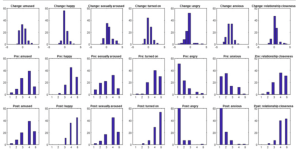
The study confirmed that something measurable is happening in the body during OM, sustained changes in nervous system activity across a 15-minute session, with self-reported positive emotional outcomes and decreased anxiety and anger. If the practice itself were coercive or harmful, the affect data should show distress, mixed emotions, or negative states in at least some participants. Instead: near-universal happiness, near-universal anxiety reduction. Whether this finding is specific to OM or would apply to any form of pleasurable intimate touch remains untested. But for a practice facing federal prosecution, the confirmation that OM produces measurable positive physiological and emotional responses — not just in participants’ memories but in real time — is a finding the judge should consider before sentencing in March.
Study 9: Brain Imaging Shows OM Is Neurologically Distinct from Sex Newberg et al. — Frontiers in Psychology, 2021 — 20 pairs (40 participants)
Twenty pairs of OM practitioners with more than a year of regular practice, participating in two to three sessions per week, were scanned using functional magnetic resonance imaging at Thomas Jefferson University, an academic medical institution with neuroimaging infrastructure. Each pair completed both an OM session and a neutral control condition — leg stroking in the same physical position for the same duration — in randomized order. Resting-state BOLD fMRI was acquired approximately 30 to 77 minutes after each practice. FDG — a radioactive glucose tracer — was injected midway through the 15-minute practice to capture metabolic activity during the session. The analysis revealed a pattern that resembled neither typical sexual stimulation nor typical meditation, but a hybrid of both. OM altered brain connectivity in regions governing attention and emotional awareness, including the anterior cingulate cortex, the insula, and the default mode network — the brain’s wandering-and-resting system.
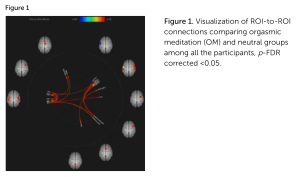
Women did not show the widespread cortical deactivation pattern characteristic of orgasm — no orbitofrontal decreases, no inferior temporal decreases of the kind documented in climax studies. Whatever was happening during OM, it was not orgasm as neuroscience understands it. Men — who provide the stimulation — showed connectivity changes in parts of the brain consistent with what the literature describes as “flow” states — deep task engagement with diminished self-referential processing. Heart rates rose about 8 bpm in both men and women during OM — a 12 percent increase — while heart rate variability measures confirmed the sympathetic nervous system was activated. Brain regions involved in reward processing, memory, and executive function all showed correlated changes. The scans were taken after practice rather than during, and the sample was only 20 pairs — small, but comparable to the foundational brain imaging studies on mindfulness meditation that launched that entire field. Neuroimaging is expensive. Twenty pairs is where most new research starts. The study establishes objective neurological evidence that OM produces a brain state distinct from ordinary sexual stimulation. If OM were “just sex,” the brain patterns should match what orgasm studies consistently find — orbitofrontal deactivation, midbrain dopamine surges, widespread cortical shutdown. None of those patterns appeared. Instead, the patterns matched elements of focused-attention meditation, default mode network modulation, and social bonding. Both partners showed significant brain changes — this is not one person “doing something to” another, but two people entering a mutual neurological state.
What the Nine Studies Say
The nine studies, taken together, indicate measurable short-term changes in emotional state, perceived closeness, physiological responses, and neural activity. Across methodologies — survey, physiology, fMRI, PET, and clinical safety — the findings show psychological and neurological effects. If this body of evidence existed for a breathing technique or a partner yoga practice — the same institutions, the same journals, the same sample sizes, the same funding structure, the same consistent findings — it would be described as a promising early-stage research program that warrants independent replication and controlled trials. It would not be the basis for a federal prosecution.
Swap “clitoral stimulation” for “breathing technique,” and we’re talking about a wellness revolution. Replace the word “Orgasmic” with “Mindfulness,” and this research would be cited as early-stage innovation.
Instead, two women face prison. Lots of prison for launching something based on the clitoris, and like Eve, they must be punished.

Other recent stories on this case:
The Clitoris is Legal, Teaching About it Isn’t: Unravelling the Daedone and Cherwitz Case
THE DAEDONE FILES: Part I: Convicted of an Agreement, Punished for Everything Else