
OAKLAND, Calif. — On June 9, 2024, someone smashed the window of Mario Juarez’s car with a brick. By June 14, FBI Special Agent Duncan Haunold told a federal magistrate judge it was an assassination attempt orchestrated by the Duong family — the recycling executives now facing decades in federal prison.

There was just one problem. The evidence collected the night of the shooting — evidence sitting in FBI files before Haunold swore out his affidavit — showed the opposite of what he told the judge.
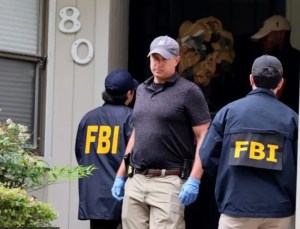
That lie, and the search warrants it helped produce, are now the subject of a Franks hearing set for March 5, 2026, before U.S. District Judge Yvonne Gonzalez Rogers. If the defense prevails, the evidence seized in the June 2024 raids — raids that ended a mayor’s career, and produced a 31-page indictment — could be thrown out.
The hearing is in United States v. Thao et al., Case No. 4:25-cr-00003-YGR. At its center is a question: Did an FBI agent deceive a magistrate to get a warrant?
What the Agent Told the Judge
According to the defense motion filed by David Trung Duong’s attorneys at Jones Day and Swanson & McNamara LLP (Docket #119), Special Agent Haunold’s June 2024 affidavit told the following story about the shooting:
On the night of June 9, 2024, Co-Conspirator 1 — the government’s name for Mario Juarez — was the target of a “suspected targeted shooting due to his cooperation in this investigation.”
The affidavit stated that the assailants were “waiting for Co-Conspirator 1 to return home and may have attempted to draw him out of his home before they opened fire.” According to the affidavit, Co-Conspirator 1 only “returned fire.”
Agent Haunold told the magistrate he believed “the shooting was targeted and may have been coordinated by the Duong family in an attempt to kill or harm Co-Conspirator 1 to prevent him from cooperating with the investigation.”
This was not filler. This was not background. The affidavit explicitly asserted probable cause to believe that Andy and David Duong had violated 18 U.S.C. § 1512(a) — the federal witness-tampering statute that applies when a defendant “killed or attempted to kill another person, with intent to prevent the attendance or testimony of any person in an official proceeding.”
This was a claim of attempted murder. It was presented to a magistrate judge as grounds to raid the homes of a sitting mayor, a Vietnamese-American businessman, his son, and their offices.
What the Evidence Actually Showed
The defense’s supporting declaration (Docket #120), filed by attorney Neal J. Stephens and containing 23 exhibits, paints a radically different picture — one drawn entirely from evidence the FBI already had.
Here is what investigators knew before Agent Haunold submitted his affidavit on June 14, 2024:
Juarez told Oakland police he fired his .40 caliber handgun.
Jaurez’s son told officers he heard four initial shots coming from the front of the house, where Juarez was standing.
A neighbor independently confirmed hearing four initial shots.
Officers recovered four .40 caliber shell casings in Juarez’s front yard.
Juarez had told police the sequence went like this: unknown assailants fired twice at him, he fired four times in self-defense, and the assailants left and returned approximately ten minutes later to fire again.
But the physical evidence said something else. Four shots were heard initially. Four casings were found — all matching Juarez’s gun.
If Juarez’s story were true, there should have been six sounds in the initial volley: two from the attackers and four from him. Instead, witnesses heard only four. The initial gunfire was all Juarez.
As David Duong’s attorneys wrote in their reply brief (Docket #162): “The available evidence suggested that, in the initial round of gunfire, Co-Conspirator 1 shot four times and the supposed assassin not at all.”
You don’t need a ballistics degree to see the problem.
The neighborhood told a different story, too. A neighbor reported seeing “two Mexican males” hitting Juarez’s car with a brick prior to the shooting. Police found a red brick near Juarez’s car, which had a smashed window with red dust consistent with the brick. Juarez himself told officers he saw an individual inside his vehicle.
Neighbors told investigators this was a high-crime area. There had been prior shootings. The suspects were described as local to the neighborhood — people seen at a nearby liquor store. This was not a sophisticated assassination. It looked like a smash-and-grab gone sideways when the homeowner came out firing.
Defense counsel put it this way in the reply brief: “SA Haunold’s declaration does not claim that he or any of his colleagues have ever encountered a case where an alleged hit man, who was lying in wait, allowed his target to get into his house and arm himself before attempting to lure the target out by loudly breaking car windows, thereby drawing the attention of the entire neighborhood who could then witness the shooting.”
No competent assassin breaks car windows with a brick and waits for the target to get inside, grab a gun, and come out shooting. If the Duong family sent hit men, they sent the worst ones in the history of organized crime — men who arrived, smashed a car window, let the target arm himself, took zero shots when the target opened fire, fled, allegedly came back, missed every single shot, and then vanished without a trace.
Or it was a car burglary. And Juarez, a man known for embellishment, violence, and self-interest, fired at the burglars and then told the FBI they were assassins.
The ShotSpotter Problem
Here is where the government’s timeline becomes evidently false.
ShotSpotter, the acoustic gunfire detection system used by Oakland police. recorded the shooting. The reports documented four gunshots at 9:52 p.m. and nine additional shots (15 minutes later) at 10:07 p.m. Not six initial shots, as Juarez claimed. Four.
According to the defense motion, the Oakland Police Department received the ShotSpotter data on June 15, 2024 — one day after Agent Haunold submitted the affidavit for the residential search warrants.
But the warrants did not end on June 14. Five days later, on June 20, the FBI obtained rollover warrants — additional warrants extending the search authority. Those rollover affidavits continued to allege that Co-Conspirator 1 had fired only in self-defense. They did not disclose the ShotSpotter data.
The government admits in its opposition brief (Docket #151) that the ShotSpotter data “was not analyzed until several weeks later.” According to the government, the FBI did not determine that Juarez likely fired first until August or September 2024, more than two months after the raids that destroyed a mayor’s career.
The FBI had acoustic data that contradicted its star witness’s account of an attempted assassination — data that arrived before the rollover warrants were filed — and nobody looked at it.
The defense argues this is not exculpatory. It is evidence of reckless disregard. You have an informant you already know is motivated by revenge. You have an informant you already know is a co-conspirator in the scheme you’re investigating. You have an informant already charged with felony fraud. And when data arrives that could show he lied about being the target of an assassination — data relevant to the very warrants you’re seeking — you don’t look at it?
In September 2024, three months after the raids, the FBI finally re-interviewed Juarez about the shooting. He changed his story. He now said he shot first, after someone pointed a gun at him. This was a different account from what he told Oakland police on the night of the incident, and different from what the FBI told the magistrate.
The Government’s Defense
In its opposition brief, the government offers two responses to the shooting problem.
First, it says the significance of the evidence was “unclear” at the time — that four initial shots and four .40 caliber casings in Juarez’s yard didn’t necessarily tell Haunold that Juarez fired first.
David Duong’s attorneys had a response to that: “In fact, the significance is unmistakable.”
And it is. Juarez said the attackers shot twice, then he shot four times. Witnesses heard four shots total. Casings from Juarez’s gun accounted for all four. Either Juarez was lying, or the supposed assassins fired silent rounds.
Second, the government argues the shooting was included in the affidavit merely for “context” about Juarez’s “state of mind and potential motives for statements to law enforcement.”
The defense demolished this in their reply. The affidavit didn’t present the shooting as context. It presented it as a standalone crime. It asserted probable cause that the Duongs violated the federal witness-tampering statute — attempted murder to prevent cooperation. The government cannot claim the shooting was a cornerstone allegation when seeking the warrant and then recharacterize it as background context when challenged.
As the defense wrote: “This after-the-fact characterization cannot be squared with the application itself.”
Why the Shooting Mattered
Imagine you are a magistrate judge. You receive a warrant application in a bribery case. The amounts are modest — $170,000, split between campaign mailers and payments to a mayor’s boyfriend. The documentary evidence consists largely of text messages written by the cooperating witness himself. The agent tells you his informant is revenge-motivated and has a criminal history.

Now add this: three days after the informant started cooperating, someone tried to murder him. The agent believes the defendants’ family ordered the hit.
That changes everything. A bribery case becomes a case involving potential violence. The urgency to search the defendants’ homes escalates. The informant’s credibility paradoxically increases — if they tried to kill him, he must be telling the truth about something important.
Now, remove the assassination. Replace it with what actually happened: a car burglary in a high-crime neighborhood where the informant fired first.
The affidavit reads very differently. Instead of a dangerous cooperator targeted for death, you have a man with a pattern of confrontation, exaggeration, and self-serving lies — a man who turned a neighborhood burglary into an assassination plot because it served his narrative.
The magistrate never got to make that evaluation. Agent Haunold made it for her.
No Evidence the Duongs Knew
There is another detail the government has never addressed, and the defense highlighted it in their reply.
Agent Haunold told the magistrate the shooting was connected to the case for two reasons: it was a “targeted” attack, and it occurred just three days after Juarez’s first meeting with the FBI.
The timing argument implies that the Duongs — or someone acting on their behalf — learned Juarez was cooperating and moved to silence him. But the government does not dispute that there was no evidence anyone other than the FBI knew about Juarez’s cooperation at the time of the shooting.
As the defense wrote: “The government does not dispute that SA Haunold had no reason to believe that the Duongs (or anyone else) knew Co-Conspirator 1 had started cooperating with law enforcement shortly before the shooting.”
So the FBI’s theory required accepting two unsupported propositions: that the shooting was a targeted hit despite physical evidence suggesting a car burglary, and that the Duongs somehow learned about Juarez’s secret FBI cooperation in time to organize an assassination within 72 hours — despite no evidence they knew.
Agent Haunold presented both propositions as established facts.
March 5: The Reckoning
On March 5, 2026, Judge Gonzalez Rogers will decide whether to hold a full evidentiary Franks hearing. If she does, Agent Haunold will be called to the stand. He will be asked what he knew about the shooting evidence before he submitted his affidavit. He will be asked why ShotSpotter data wasn’t reviewed before the rollover warrants were issued. He will be asked why he told a magistrate that a car burglary was an assassination.

The standard for a Franks hearing is not high. The defense needs only to make a “substantial preliminary showing” that the affidavit contained deliberate or reckless falsehoods. They do not need to prove it by a preponderance of the evidence — that comes later, at the hearing itself.
The shooting evidence alone may be enough.
If the hearing is granted and the defense prevails, the June 2024 search warrants could be voided. The evidence seized in the raids — the raids that dominated Oakland headlines, destroyed a political career, and preceded a recall election by four months — could be suppressed.
And a federal bribery case built on the word of a serial fraudster who bounced his own bribery check might finally be seen for what it is.
The FBI raided a mayor’s home over a car burglary they called an assassination.

The hearing is March 5. The country should be watching.