
Part 2
THE PATTERN
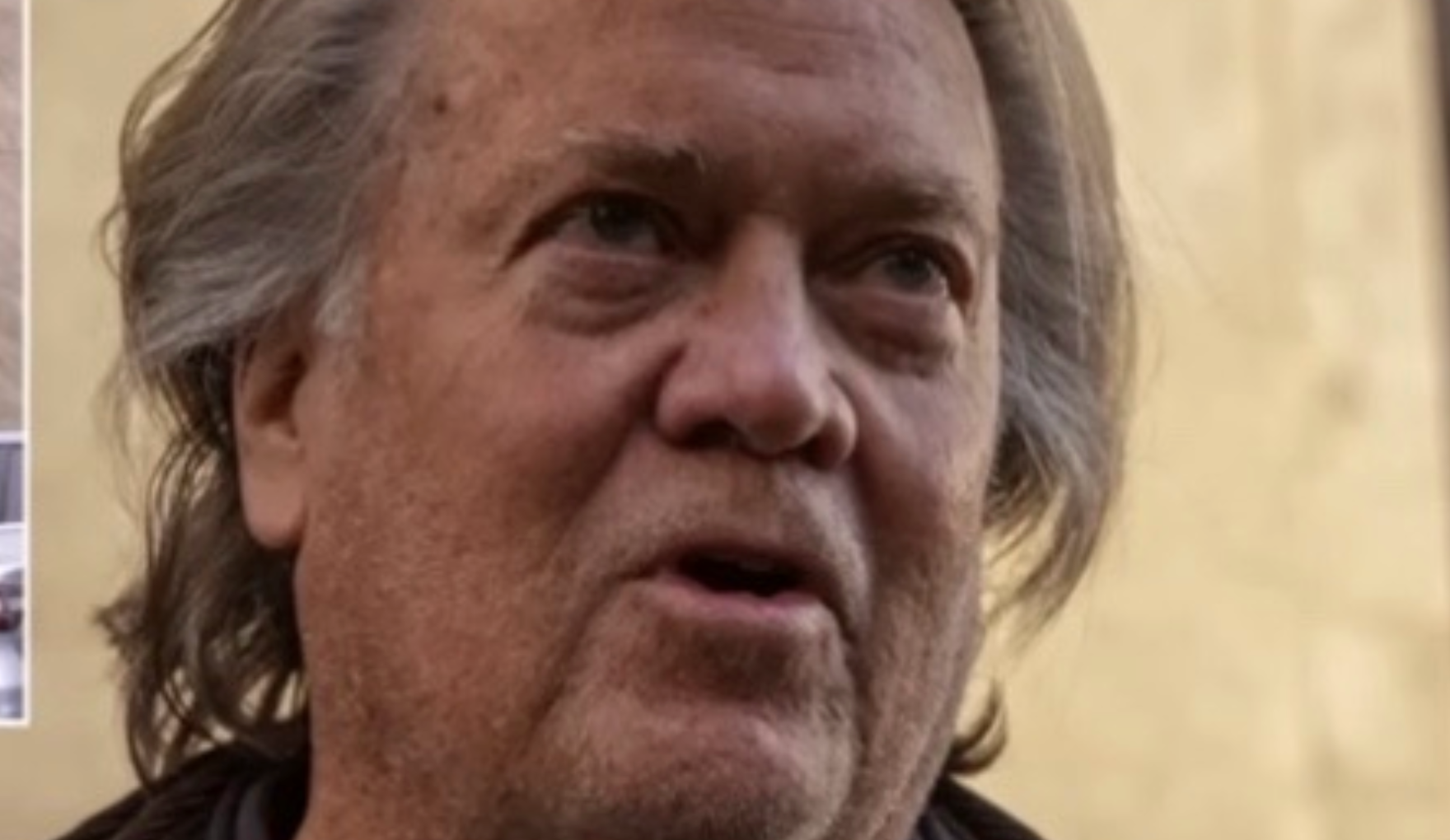
Steve Bannon and Miles Guo were partners. They had offices at 162 East 64th Street — a bulletproof-glass townhouse on the Upper East Side known as the Himalaya Embassy. It housed GTV Media, the Rule of Law Society, and other Bannon-Guo operations.
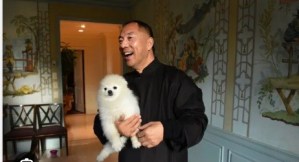
Federal agents came for Miles Guo in March 2023. They arrested him at dawn at his Sherry-Netherland penthouse. While agents were still inside seizing electronics, a fire broke out in the 15-room apartment. Sources believed it was set remotely. The entire apartment, sources said, had been wired to record guests.

The Yacht
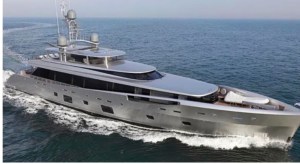
Two and a half years earlier, in August 2020, federal agents boarded the Lady May — Miles Guo’s 152-foot, $37 million yacht anchored off the Connecticut coast — and arrested Steve Bannon on fraud charges.
The yacht was purchased with funds from the Himalaya Exchange. The charges for Bannon that day were not for his role with Guo, but for his charity, We Build the Wall.
Two Frauds, One Period

We Build the Wall launched in December 2018. Guo’s operation began paying Bannon in August 2018. The two ran together, overlapping through 2019 and beyond.
The structure of each was nearly identical. A political cause with mass appeal — border security for one, anti-communist Chinese democracy for the other. Donors who believed. Promises that the money served the mission. Shell entities to move the money elsewhere.
At the receiving end, Bannon.
In the Build the Wall fraud case, Brian Kolfage publicly swore he would not take a penny in salary. The private texts told a different story. Kolfage wrote to Badolato that “as far as [the public] know[s] no one is getting paid” and that “Salaries will never be disclosed.”
Badolato wrote to Bannon that emphasizing Kolfage’s selflessness “removes all self-interest taint” and gives “Brian Kolfage sainthood.”
Bannon approved every secret payment. His text to Badolato made it clear he was in on the deception: “No deals I don’t approve; and I pay [Kolfage] so what’s to worry.”
It was not much different in the Bannon-Guo partnership.
Chinese immigrants were told their investments would be converted to shares, that the cryptocurrency was backed by gold, and that the membership fees were building a movement. The money went to Guo for a yacht, a $67 million Manhattan penthouse, $36,000 for two extra-comfort mattresses, and tens of millions to Bannon-connected entities.
The Hypocrisy
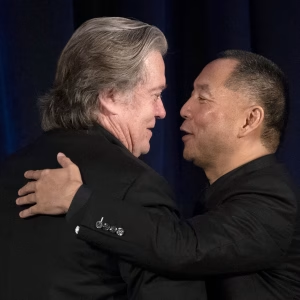
Guo and Bannon built a billion-dollar following on the promise that Guo was the CCP’s most dangerous enemy.
Guo told people, including Bannon, “The CCP is great. They give you the tools to make your money.”
Communism, he told staff, was superior to capitalism because it made people work.
Bannon and Guo sold anti-communism to Chinese immigrants fleeing communism. In private, Guo believed in the CCP.
On a trip, Guo’s wife put money in a hotel safe and couldn’t get it open. Maintenance drilled it. Inside was $275,000 in US currency, a stack of yen, and stacks of Red Army currency from the 1940s — the physical money of the Communist revolution Guo made his living denouncing. He collected it.
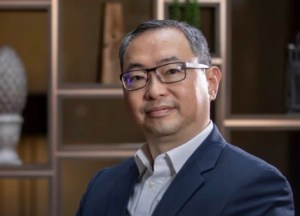
Then there is William Je — the man Guo called “my money man,” the financial architect who sent $36.7 million to Bannon’s entities.
Je listed CPPCC membership in the Honor & Awards section of his LinkedIn profile. Official Chongqing government records show he served as a United Front member for two terms, from 2008 to 2018.
The CPPCC is the body through which the CCP conducts its United Front influence operations.
At trial, Guo acknowledged that Je “might have said” he was a member of the CPPCC.
The money flowing to Bannon did not come from an anti-communist movement. It came from a man who believed in the CCP, through a CCP-affiliated official, to Bannon, the former chief strategist of a president who built his political identity on opposing communist China.
A source with direct knowledge of the operation says Bannon was told that money was being laundered onto Guo’s plane for no legitimate purpose — millions for new seats that didn’t need replacing and did not cost millions. And millions more were moving onto the yacht under the guise of a painting, when it had just been painted.
A financial professional who worked inside the operation lasted one month before walking upstairs and telling staff that Guo was laundering money. He was fired the same day.
Bannon said nothing.
The Architect Question
Guo had the charisma, the livestreams, the anti-CCP persona, and the devoted follower base of Chinese immigrants who trusted him.

Je brought the offshore money-movement infrastructure and the shell-company network. What neither of them brought was deep knowledge of American financial markets, American securities law, or how to construct a payment architecture that kept the principal one step removed from every transaction.
Before Bannon was a political operative, he was a Wall Street banker. He was a vice president at Goldman Sachs — a position that requires structuring complex financial transactions, understanding private placement memoranda, moving money across jurisdictions, and keeping beneficial ownership sufficiently layered that it takes forensic accountants years to trace.The Guo-Bannon operation required those skills. It ran four simultaneous fraud instruments — a stock offering, a loan program, a membership club, and a cryptocurrency exchange — each with its own entity structure and its own set of investor documents. More than 500 bank accounts across three countries moved the money. Thirty-plus shell companies held assets and channeled payments. The structure was designed so that no single transfer was obviously fraudulent.
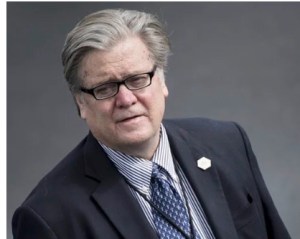
In the We Build the Wall fraud, Bannon used a nonprofit, routed money through shells, and took in roughly $25 million. The Guo-Bannon operation ran the same architecture at forty times the scale.
A source close to the operation says Bannon was the smartest person in the room when it came to money — and that Guo and Je were not sophisticated enough to build what they built without him.
The Indictment and the Gap
The federal indictment against Guo and Je runs 38 pages. It identifies a conspiracy beginning “at least in or about 2018” — the same time Bannon’s payments from Guo’s entities began. It names the entities at the center of the fraud. Several of them sent money directly to Bannon.
The indictment repeatedly names “others known and unknown” alongside Guo and Je. It is the language used when prosecutors know the identities of the other participants.
Saraca Media Group is identified in the indictment as GTV’s parent company and the vehicle through which $452 million in investor funds were deposited and misappropriated. A source with direct knowledge of the operation says Bannon received multiple $500,000 checks from Saraca beginning in 2018. If accurate, Bannon was receiving money from the primary fraud vehicle named in the criminal indictment from the conspiracy’s first year.
The Rule of Law Foundation and Rule of Law Society are identified in the indictment not as legitimate nonprofits but as tools Guo used to build an audience “inclined to believe” his investment pitches. Bannon co-founded both organizations with Guo in November 2018.
GTV is identified as the vehicle for a fraudulent $452 million stock offering. Bannon co-founded GTV with Guo in 2020.
Then there is paragraph 54(t). In the criminal forfeiture section of the indictment — not the civil bankruptcy, the federal criminal case — prosecutors listed GETTR USA Inc. by name and seized $2,745,377.75 from its bank account as fraud proceeds traceable to the scheme. The government took GETTR’s money in a criminal proceeding. Bannon chaired GETTR.
In the Guo-Bannon operation, $36.7 million flowed to Bannon’s entities through shell companies.
His co-principals: Guo convicted of nine felonies; Je indicted and a fugitive; Yvette Wang, Guo’s chief of staff, serving ten years.
Bannon was not charged.
Why?
Cooperation. Pardon calculation. Prosecutorial judgment about knowledge and intent. The public record does not resolve it.
The government seized money from Bannon’s platform as criminal fraud proceeds, identified the organizations he co-founded as instruments of the fraud, and traced the conspiracy to the same month his payments began.
Then it left his name off the indictment.
Who Suffered
Thousands of donors in the Chinese diaspora lost their savings. Some wired money their families had sent from China.
One victim told the court she first heard Guo on a radio station in 2017, started watching his livestreams five or six times a week, and eventually invested over $100,000. “I believed whatever he said,” she said.
In We Build the Wall, Bannon was the beneficiary. His nonprofit received more than $1 million from the scheme. His co-defendants fared not so well.

Brian Kolfage, a triple-amputee veteran and We Build the Wall co-founder, was convicted and sentenced to federal prison. Released to home confinement, his ankle monitor was fastened to his only remaining wrist.
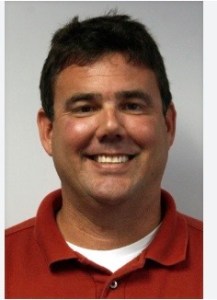
Andrew Badolato, Bannon’s partner in the Wall scheme, went to prison.

Timothy Shea went to trial, was convicted, and is serving his sentence at FCI Florence, with a release date of April 14, 2027.
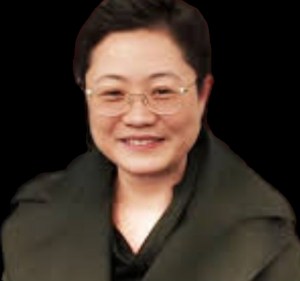
Yvette Wang, Guo’s chief of staff, is serving ten years at Aliceville Federal Correctional Institution in Alabama.

Miles Guo sits in MDC Brooklyn awaiting sentencing.
William Je, the financial architect, is indicted and is a fugitive from justice.
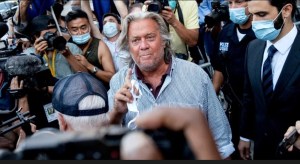
Steve Bannon was arrested on Guo’s yacht. He was pardoned. He pleaded guilty to a state felony in connection with We Build the Wall and received a conditional discharge. A bankruptcy Trustee is suing his entities to recover $36.7 million.
He told reporters outside the courthouse that he felt like a million bucks. He broadcasts for four hours a day.
The Question

Two fraud operations. The same playbook. The same position for Bannon at the receiving end. The same result: co-defendants prosecuted, convicted, sentenced, while Bannon navigated the wreckage through pardons, plea deals, and civil litigation.
The evidence does not prove he designed it. It proves the pattern and the presence. It proves who paid and who collected, who is in prison, and who is on a podcast.
The distance between Steve Bannon and a billion dollars in fraud proceeds turns out to be very small. It was the length of a yacht.
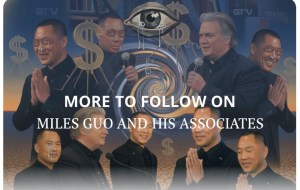
Next: Part 3 — The Money Man: William Je and the Shell Network That Built the Pipeline