
Warning: This article contains major spoilers for The Drama, in theaters April 3, 2026.
The embargo on reviews for The Drama, the A24 dark comedy starring Zendaya and Robert Pattinson directed by Norwegian filmmaker Kristoffer Borgli, lifted March 31.
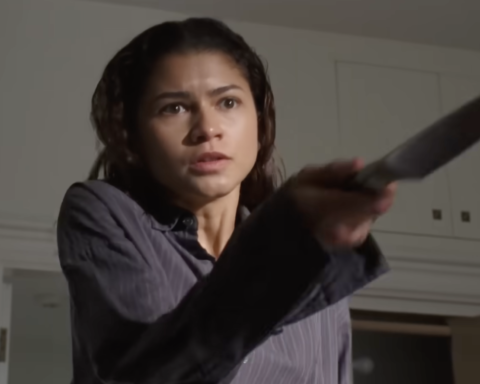
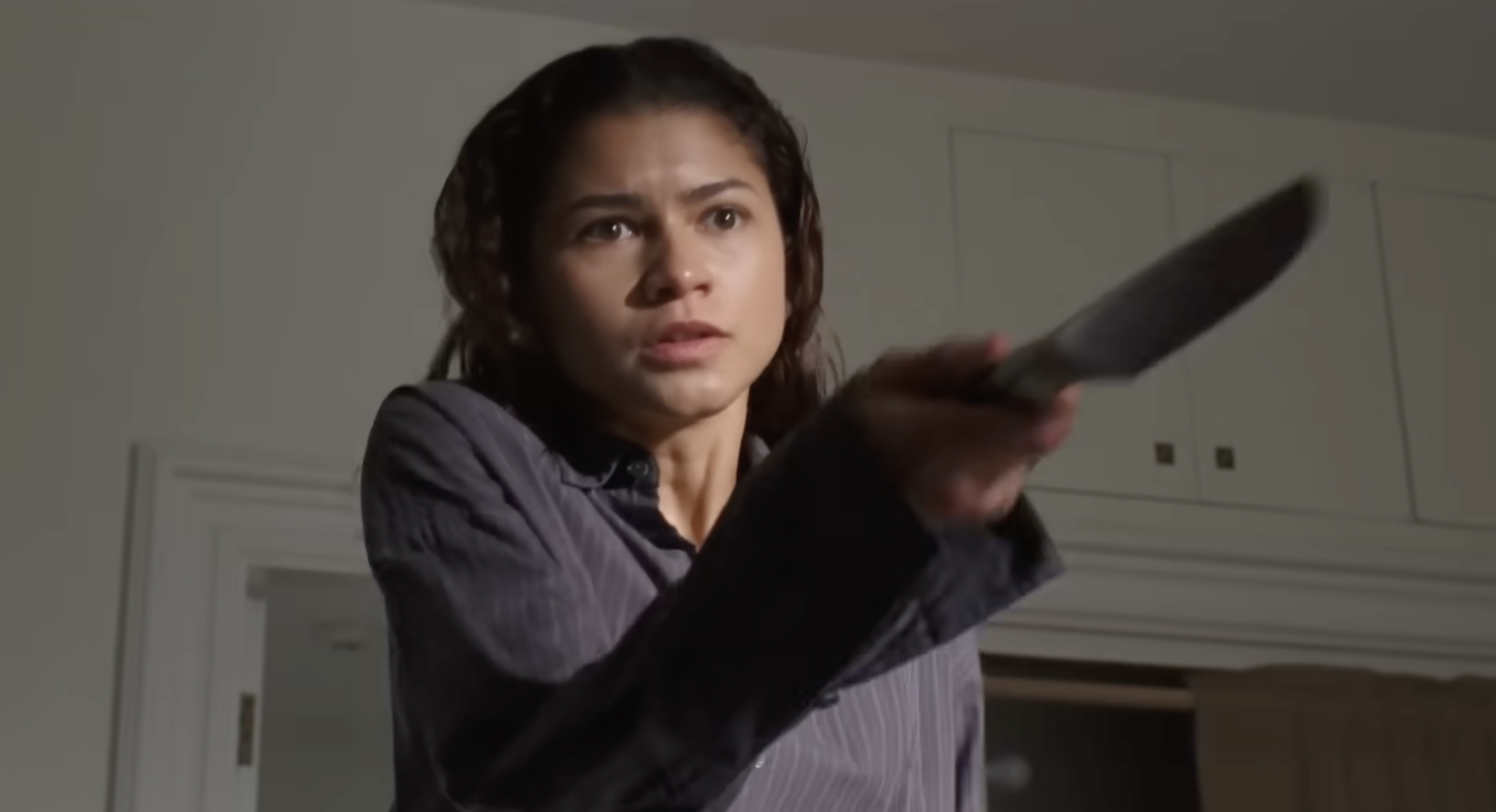
The twist that A24 spent months guarding is now public. Zendaya’s character Emma, days before her wedding, confesses during a parlor game that when she was fifteen years old, bullied and troubled, she planned a school shooting using her father’s shotgun.
She never went through with it. She went on to become an anti-gun advocate. And she never told her fiancé.
That is the movie’s central engine, the revelation that derails everything, and it is the most discussed and divisive detail in a film that opened to deeply split reviews, a 83 percent Rotten Tomatoes critics score against a 65 on Metacritic, and a wave of controversy that began before a single professional review was published.
What Happens In The Film?
The Drama is set during the week leading up to the wedding of Emma Harwood (Zendaya), a bookstore clerk from Baton Rouge, Louisiana, and Charlie Thompson (Robert Pattinson), a British museum director living in Boston.
The film opens with Charlie writing his wedding vows at the kitchen table alongside his best friend Mike (Mamoudou Athie), while flashbacks reconstruct how he and Emma met.
The meet-cute, which multiple reviews have noted is laced with a meaningful early dishonesty, involves Charlie photographing the cover of Emma’s book in a coffee shop, a novel called The Damage by the fictional author Harper Ellison, researching it on his phone, then approaching her pretending to have read it.
He confesses the lie on their first date. She finds it charming. He calls her “a weird little British freak.”
The film then moves to the week of the wedding, where Charlie, Emma, Mike, and Mike’s wife Rachel (Alana Haim, of Licorice Pizza) are together sampling wedding menus, finalizing vows, and navigating the wedding-industrial complex with its aggressive dance instructors and overeager DJs.
After several bottles of wine, the conversation turns to a game: what is the worst thing you have ever done? Mike admits to using his spouse as a human shield against an attacking dog.
Rachel confesses to locking a boy in a closet. Charlie admits to cyberbullying a kid as a teenager. Then Emma speaks.
She tells them that at fifteen, bullied and mentally struggling, she planned a school shooting using her father’s shotgun.
She researched it. She came close. She did not go through with it. She later became an anti-gun advocate. Rachel screams. Charlie goes pale. Mike is stunned. The rest of the film lives in the fallout.
Charlie spends the remainder of the week unable to reconcile the woman he loves with the person he has just learned about. He is shown in flashbacks imagining a young Emma in the circumstances she described.
He awkwardly attempts to seduce his assistant. He drinks more. He cannot write his vows. The wedding looms closer, the tension tightens, and then, per the film’s most criticized creative choice, Borgli releases it.
The film ends at the wedding reception, where disaster seems certain and then doesn’t quite arrive. The couple gets through it.
Critics have largely called the ending the film’s weakest element, a failure of nerve on the part of a director who set up something genuinely dark and chose not to follow through on its implications.
How Did Critics Respond?
The Guardian gave The Drama four stars, with Peter Bradshaw writing that it “has the spiky, ingenious, tasteless style of his previous film Dream Scenario” and “delivers on its promise,” calling it “a provocation, a jeu d’esprit of outrage, a psychological meltdown that is more astutely articulated than in many another more solemnly intended film.”
The Times gave it five stars, calling it “a nuptial apocalypse” explored with “dark intelligence and mordant wit” and praising Zendaya as “slyly brilliant.”
USA Today gave it four out of four, calling it “one of the boldest, brashest movies in some time” and “a moral thought experiment conducted amid a disaster-filled deconstruction of the romantic comedy.”
The dissenters were equally forceful. The Boston Globe gave it zero stars, one of only seven films the critic had scored that way in twenty years of reviewing, describing it as “morally repugnant” and arguing that Borgli “chose to throw bombs and run off giggling rather than deal with the carnage he hath wrought.”
RogerEbert.com criticized the film for the “hollowness” of its approach to Emma’s race and gender, writing that Borgli “flatly approaches Emma’s psychological, gendered, and racial complications” and that the film’s ending “can’t help but feel unearned, undramatic, and well, strictly about the vibes.”
The Daily Beast called it “crushingly humorless” and said “A24 should have kept it hidden away in the darkest corner of their deepest closet.” The Australian gave it one star.
The consensus points on the positive side are Zendaya’s performance and Alana Haim’s work as Rachel. Nearly every positive review singles out Haim as the scene-stealer, with The Film Verdict comparing her to Susie Essman in Curb Your Enthusiasm in terms of combustive energy.
On Zendaya, the Times called her “slyly brilliant,” RogerEbert.com wrote that she “communicates regret and fragility through the discreet way she holds her body, like a wounded bird caught in the midst of an ice storm,” and the Hollywood Reporter noted that Zendaya is “far more complicated and unsettling than the gamine we first meet.”
The Controversy That Preceded The Reviews
Before a single professional review published, the film was already generating real-world backlash from an unexpected source. Tom Mauser, whose son Daniel was among the thirteen people killed at Columbine High School on April 20, 1999, spoke to TMZ after early screenings revealed the plot, calling the twist “awful” and saying he was “disgusted” that the subject was being used as a romantic plot device.
He said the casting of Zendaya in particular “humanises” school shooters and that school shooting ideation is “something that should be addressed by a therapist and not used for entertainment purposes.”
His statement circulated widely and accelerated the pre-release conversation around the film.
Director Kristoffer Borgli addressed the genre question at the world premiere, acknowledging the film resists easy categorization,
“It’s been a challenge to put a genre on the movie. Obviously the title has a genre, but it doesn’t feel right. It doesn’t capture the full scope. I’ve seen it labeled as comedy, drama, romcom, dark comedy, and they all apply, but they don’t capture the whole thing.”
Borgli is Norwegian and previously directed Dream Scenario, the Nicolas Cage film in which Cage played a man who began appearing involuntarily in strangers’ dreams.
The Drama is his first English-language film with an American cast and American subject matter.
It is produced by Ari Aster, the director of Hereditary and Midsommar, and Lars Knudsen and Tyler Campellone through A24.
The cinematography is by Arseni Khachaturan, the score by Daniel Pemberton, and the running time is 106 minutes.
The Drama opens in US theaters Friday, April 3, 2026. It is rated R for language, sexual content, and some violence.