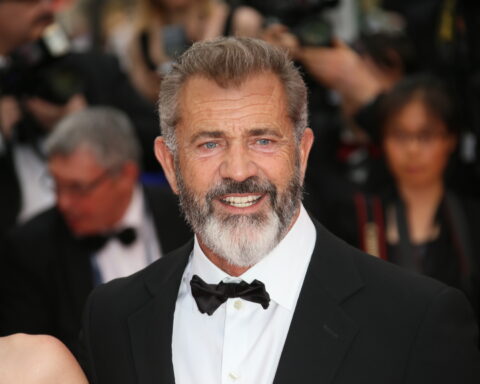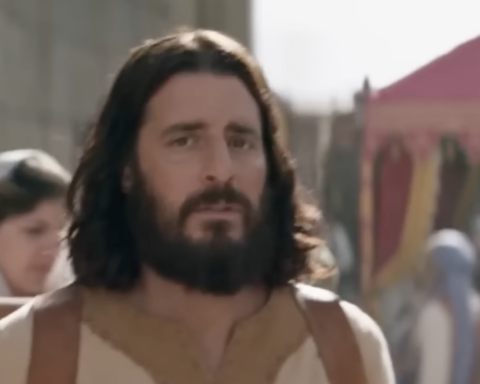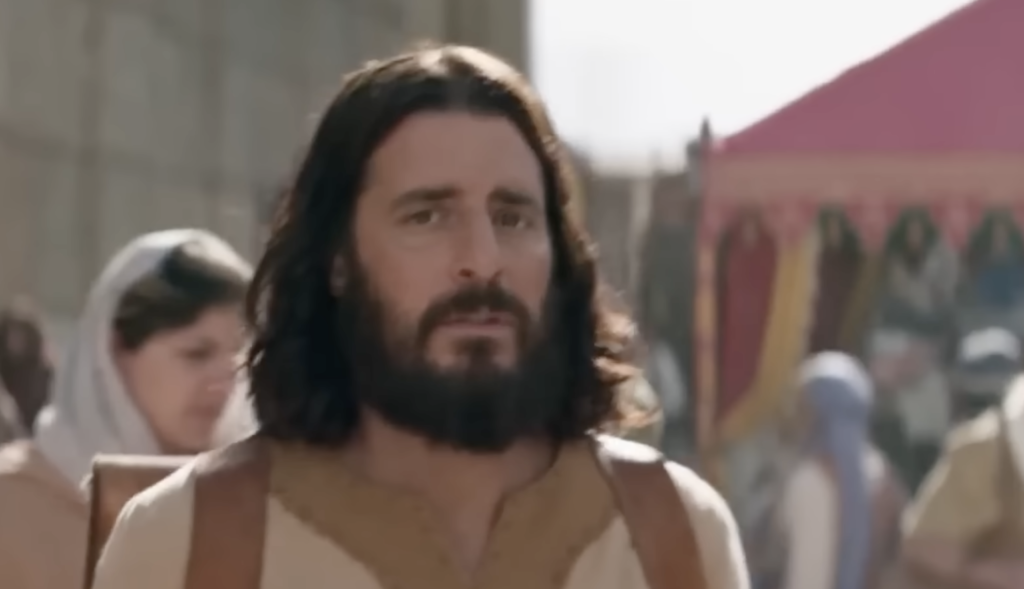

Mel Gibson is back in the headlines this Easter season as The Chosen Season 6 announcement and his own forthcoming Resurrection of the Christ sequel have put The Passion of the Christ back into the cultural conversation.
With that in mind, here is the full story of how that film got made, what happened during the making of it, and why it remains one of the most remarkable box office stories in Hollywood history.
What Is The Passion Of The Christ?
The Passion of the Christ is a 2004 epic biblical drama directed by Mel Gibson from a screenplay he co-wrote with Benedict Fitzgerald.
The film covers the final twelve hours before the crucifixion of Jesus Christ, beginning with the Agony in the Garden of Gethsemane, moving through the betrayal by Judas Iscariot, the Flagellation, the trial before Pontius Pilate, and the crucifixion itself, ending with a brief depiction of the resurrection.
It was shot primarily in Italy and starred Jim Caviezel as Jesus, Maia Morgenstern as the Virgin Mary, and Monica Bellucci as Mary Magdalene.
Both Gibson and Caviezel were practicing Catholics when the film was made. Caviezel was 33 years old, the same age as Jesus at the time of the crucifixion, when Gibson cast him, a detail that was not lost on either of them.
Why Did Mel Gibson Make The Film?
Gibson made The Passion of the Christ in response to what he described as a deep emptiness he felt at the excesses of Hollywood life.
He financed the film himself through his production company Icon, putting up an estimated $30 million of his own money after every major studio in Hollywood passed on it.
Fox, which had a first-look deal with Icon at the time, passed. His friends in the industry told him not to make it. He made it anyway.
“This is a movie about love, hope, faith and forgiveness,” Gibson said during the making of the film. “Jesus died for all mankind, suffered for all of us. It’s time to get back to that basic message. The world has gone nuts. We could all use a little more love, faith, hope and forgiveness.”
The Languages And The Scholar Who Made It Possible
One of the most distinctive and academically ambitious decisions Gibson made was to have the entire film performed in the ancient languages spoken in first-century Judaea rather than in English.
Jesuit Father William Fulco translated Gibson’s script into Aramaic, Hebrew, and Latin and then wrote English subtitles.
The language assignments reflect the social divisions of the time: the Jewish people of Jerusalem speak Aramaic, the Jewish leaders and priests speak Hebrew, and the Romans speak Latin.
Father Fulco also deliberately inserted grammatical errors into many of the lines to illustrate the language barrier between the Jewish population and their Roman occupiers.
The errors are not mistakes, they are historical commentary encoded into the dialogue.
There is one notable exception. During Pilate’s interrogation of Jesus in the praetorium, the governor begins in Aramaic, making an accommodation, but Jesus responds in Latin, meeting him on Rome’s own terms.
What Was Jim Caviezel’s Experience Like?
The physical cost of playing Jesus in Gibson’s film was extraordinary. During production, Caviezel was struck by lightning twice.
He dislocated his shoulder carrying the 150-pound cross that his character drags through Jerusalem to Calvary. He got hypothermia from hanging on the cross on a hilltop in 25-degree weather with wind.
The makeup applied to show his swollen eye required the costume department to create a prosthetic effect that gave him essentially no depth perception on one side, causing severe migraines throughout the shoot.
The actors playing the Roman soldiers accidentally struck him twice during the scourging scene, leaving a 14-inch scar on his back that he still carries.
Because the scourging makeup, which had to depict extreme physical trauma across his entire body, took ten hours to apply each time, Caviezel would sometimes sleep in full makeup rather than repeat the application process daily.
The performance earned him significant critical praise and became one of the most physically committed portrayals in the history of Hollywood biblical filmmaking.
Who Is In The Supporting Cast?
Maia Morgenstern, the Romanian Jewish actress who played the Virgin Mary, was among the most vocal voices countering the accusations of anti-Semitism that preceded and followed the film’s release.
She described The Passion of the Christ as “pure art.” Her surname Morgenstern means Morning Star in German, one of the titles traditionally given to Mary in Catholic theology, who precedes Christ as the morning star precedes the sun.
Whether Gibson knew this when he cast her is unknown, but the coincidence, if it was one, delighted the film’s admirers.
Luca Lionello, the Italian actor who played Judas Iscariot, was a professed atheist when he took the role. By the time production wrapped, he had converted to Catholicism.
The Source Material Beyond The Gospels
Gibson drew on the four canonical Gospels as his primary source material, but supplemented them with The Dolorous Passion of Our Lord Jesus Christ, a 19th century account of the visions of Blessed Anne Catherine Emmerich, a German Augustinian nun.
This source provided narrative details not contained in the Gospels, including the names of the two thieves crucified alongside Jesus.
In The Passion, they are called Dismas and Gesmas, names drawn from Emmerich’s visions rather than the scriptural record, which does not name them.
The Controversy Before And After
The film generated intense controversy before a single frame had been publicly screened. The Anti-Defamation League and several Jewish organizations argued that its depiction of the Jewish religious leadership’s role in the crucifixion risked inflaming anti-Semitism.
Gibson rejected the charge consistently, arguing he was staying faithful to the Gospel accounts.
Critics were sharply divided on the film’s extreme violence, with some finding it spiritually powerful and others finding it gratuitous.
Gibson’s own Catholicism was and remains complicated. He was raised in a traditionalist Catholic household by his father Hutton Gibson, who held views far outside mainstream Catholic doctrine.
The controversy around his personal faith did not subside with the film’s release and has been periodically renewed by his subsequent public behavior over the years.
What Did Passion Of The Christ Make At The Box Office?
The Passion of the Christ opened on February 25, 2004 and earned $83 million in its opening weekend, an extraordinary number for a subtitled film in ancient languages with no major studio backing.
It went on to gross $370 million in North America, a figure that stood as the record for the highest-grossing R-rated film in domestic box office history for twenty years, until it was finally surpassed in 2024 by Deadpool and Wolverine’s $636 million.
Globally, the film earned $612 million on Gibson’s $30 million investment, making it not only the highest-grossing Christian film of all time but the highest-grossing independent film in cinema history at the time of its release.
The film received three Academy Award nominations at the 77th Oscars: Best Makeup, Best Cinematography for Caleb Deschanel, and Best Original Score for John Debney. It won none of them.
Will There Be A Sequel?
Gibson has been developing a sequel for nearly two decades. The Resurrection of the Christ will be released in two parts through Lionsgate.
Part One is scheduled for Good Friday, March 26, 2027. Part Two follows exactly 40 days later, on Ascension Day, May 6, 2027. The date choices are deliberate and liturgically loaded.
Each film reportedly carries a budget of approximately $100 million, for a combined $200 million, a dramatic escalation from the original’s $30 million.
The scripts, co-written with Braveheart screenwriter Randall Wallace, have been shrouded in secrecy.
Gibson has described the films as an “acid trip” and said he has “never read anything like” them, suggesting the screenplay ventures into theological and supernatural territory that the original film’s naturalistic style did not explore.
Reports indicate the films will feature large-scale battles between angels and demons.
Jim Caviezel will not be returning as Jesus due to concerns about the cost of digital de-aging.
The role has been given to Finnish actor Jaakko Ohtonen. Mary Magdalene, played by Monica Bellucci in the original, is being recast as Cuban actress Mariela Garriga. Production is currently underway in Rome.
The release of The Resurrection of the Christ Part One on Good Friday 2027 will put it in direct proximity to the theatrical release of The Chosen Season 6 finale, which is also scheduled for spring 2027.
Two of the most significant pieces of Christian filmmaking in a generation will open within weeks of each other. It is going to be a remarkable spring.