
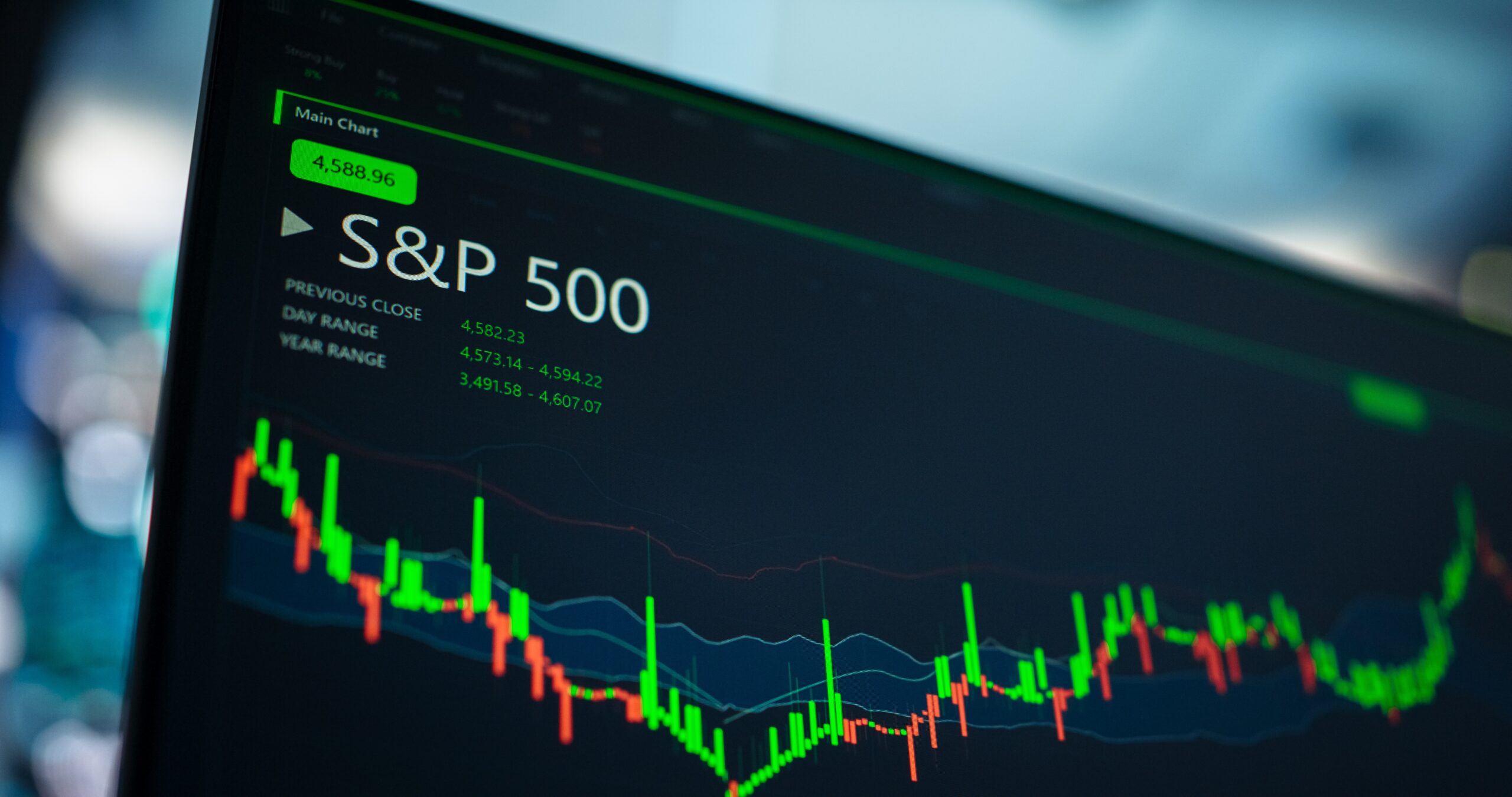
The S&P 500 climbed roughly 2.5 percent on Wednesday, the Dow Jones Industrial Average soared more than 1,300 points, and the Nasdaq rose more than 3 percent after the United States and Iran agreed to a two-week ceasefire late Tuesday night.
This was a deal brokered by Pakistan with less than ninety minutes to spare before a deadline that President Trump had described in apocalyptic terms.
The catalyst for the market move was not just the ceasefire itself but what came with it. Oil collapsed.
West Texas Intermediate crude fell 14.75 percent to approximately $96 a barrel. Brent crude dropped roughly 14 percent to around $93. Analysts described it as the biggest single-day oil decline in six years.
The fall matters because elevated oil prices had been the central mechanism through which the Iran war was damaging the broader economy, driving inflation, pressuring the Federal Reserve to hold rates, and squeezing consumers at the pump.
When oil dropped, the entire chain of consequences that had been weighing on markets for six weeks reversed, at least for a day.
What Tuesday Looked Like Before The Deal
The session before the rally was a study in how quickly the war had made normal market analysis difficult.
During just the first hour of Tuesday’s trading, the Dow careened between a gain of 74 points and a loss of 425 as Trump escalated his rhetoric dramatically, posting that “a whole civilization will die tonight, never to be brought back again” if Iran did not reopen the Strait of Hormuz by his 8 p.m. ET deadline.
Oil briefly spiked above $117 a barrel intraday. The S&P 500 fell as much as 1.2 percent at one point.
Then Pakistan’s prime minister posted his appeal for a two-week extension. Stocks recovered.
The S&P 500 closed Tuesday up a total of five points, 6,616.85, having essentially done nothing on the day after an enormous amount of volatility.
The Dow fell 85 points. The Nasdaq added 21 points. Those numbers look unremarkable. The intraday swings were not.
After the close, Trump posted the ceasefire announcement on Truth Social at 6:32 p.m. ET, and futures immediately jumped. Dow futures rose 1.5 percent, S&P 500 futures gained 1.6 percent, and Nasdaq futures climbed 1.7 percent in after-hours trading.
By Wednesday morning, those gains had expanded significantly as the full scope of the oil move became clear.
Looking At Asset Classes Individually
The ceasefire produced one of the cleaner across-the-board risk-on moves markets have seen in years.
In equities, the S&P 500 is up approximately 2.5 percent. Nasdaq 100 futures are up more than 3.5 percent. The Dow is up more than 1,300 points.
Nvidia, Tesla, AMD, and Micron gained between 4 and 10 percent in pre-market trading as the inflation threat eased and rate cut expectations revived.
Delta Air Lines surged 12 percent after reporting strong first-quarter earnings before the bell, a result that directly reflected what lower jet fuel costs could mean for the airline industry going forward.
In oil, the WTI is down nearly 15 percent to approximately $96. Brent down 14 percent to around $93.
For context, oil had surged 47 to 70 percent since the war began February 28, pushing the national average gasoline price above $4.14 per gallon, the first time it had crossed $4 since 2022.
The dollar fell against every major currency. The Bloomberg dollar spot index erased its entire 2026 gain in a single session. The U.S. dollar index was in the midst of its third-biggest decline of the year.
The drop in oil eased inflation expectations enough that the CME Group FedWatch tool showed December rate cut odds jumping to 43 percent from just 14 percent before the ceasefire.
Fed Vice Chair Philip Jefferson had said Tuesday that the energy price surge was complicating the inflation outlook. Wednesday’s oil collapse changed that calculation instantly.
Gold futures were up more than 3 percent, above $4,800 an ounce. Silver and platinum surged 7 percent. Copper up 3 percent. Bitcoin rose 5.47 percent to approximately $71,800.
In the international markets, South Korea’s Kospi surged nearly 7 percent. Japan’s Nikkei 225 advanced 5.39 percent to close at 56,308. China’s CSI 300 gained 3.49 percent.
Europe’s Stoxx 600 advanced nearly 4 percent, with Germany’s DAX leading at 4.8 percent. The iShares MSCI Emerging Markets ETF was on pace for its biggest single-day gain since the post-Liberation Day surge in April 2025.
South Korea’s country ETF was up more than 10 percent. Chile up 7 percent. Taiwan, Turkey, the UAE, Mexico, Japan, and India all up more than 5 percent.
The one sector that moved the wrong direction was energy stocks. Shell fell 4 percent before the open. The logic being that lower oil prices, while good for the broader economy, reduce the revenue of the companies that produce and sell oil.
What’s Coming Next?
The rally happened in the context of a ceasefire that lasts two weeks and remains contested in its terms.
As of Wednesday morning, only two vessels had transited the Strait of Hormuz since the ceasefire was announced, against a backlog of 426 tankers, 34 liquefied petroleum gas carriers, and 19 liquefied natural gas vessels still trapped in the Persian Gulf.
Shipping experts warned that the practical mechanics of coordinating passage with Iranian military authorities remained unclear, and that the vetting system Iran had put in place appeared unchanged despite the ceasefire announcement.
Oil at $96, down 15 percent from Tuesday’s high, is still historically elevated. One strategist, León, noted:
“Prices went down from $110 to $95. That is a significant decline, but still you focus on the absolute level, prices are still at $95 per barrel. I think that the market is becoming skeptical about a fragile ceasefire. I don’t think that this is over.”
Iran’s 10-point proposal, which Trump initially called “a workable basis for negotiations” and later described elements of as “fraudulent,” includes full sanctions relief, withdrawal of all U.S. combat forces from regional bases, and release of frozen Iranian assets.
The U.S. has not publicly addressed most of those terms. Delegations from both sides are expected in Islamabad on Friday for the start of formal talks. The ceasefire expires around April 22.
The S&P 500 entered 2026 near 6,857. At Tuesday’s close it was 5.5 percent below the all-time high reached earlier this year, and down on the year.
Wednesday’s rally clawed back a significant portion of that gap in a single session. UBS, which lowered its S&P 500 year-end target to 7,500 as recently as Tuesday citing Middle East conflict risks, has not yet updated that target following the ceasefire.
Whether Wednesday’s gains hold will depend on whether the Islamabad talks produce something durable, or whether the ceasefire’s two-week clock runs out without a broader agreement.