Will Anderson Jr. Just Became The Highest Paid Non-Quarterback In NFL History
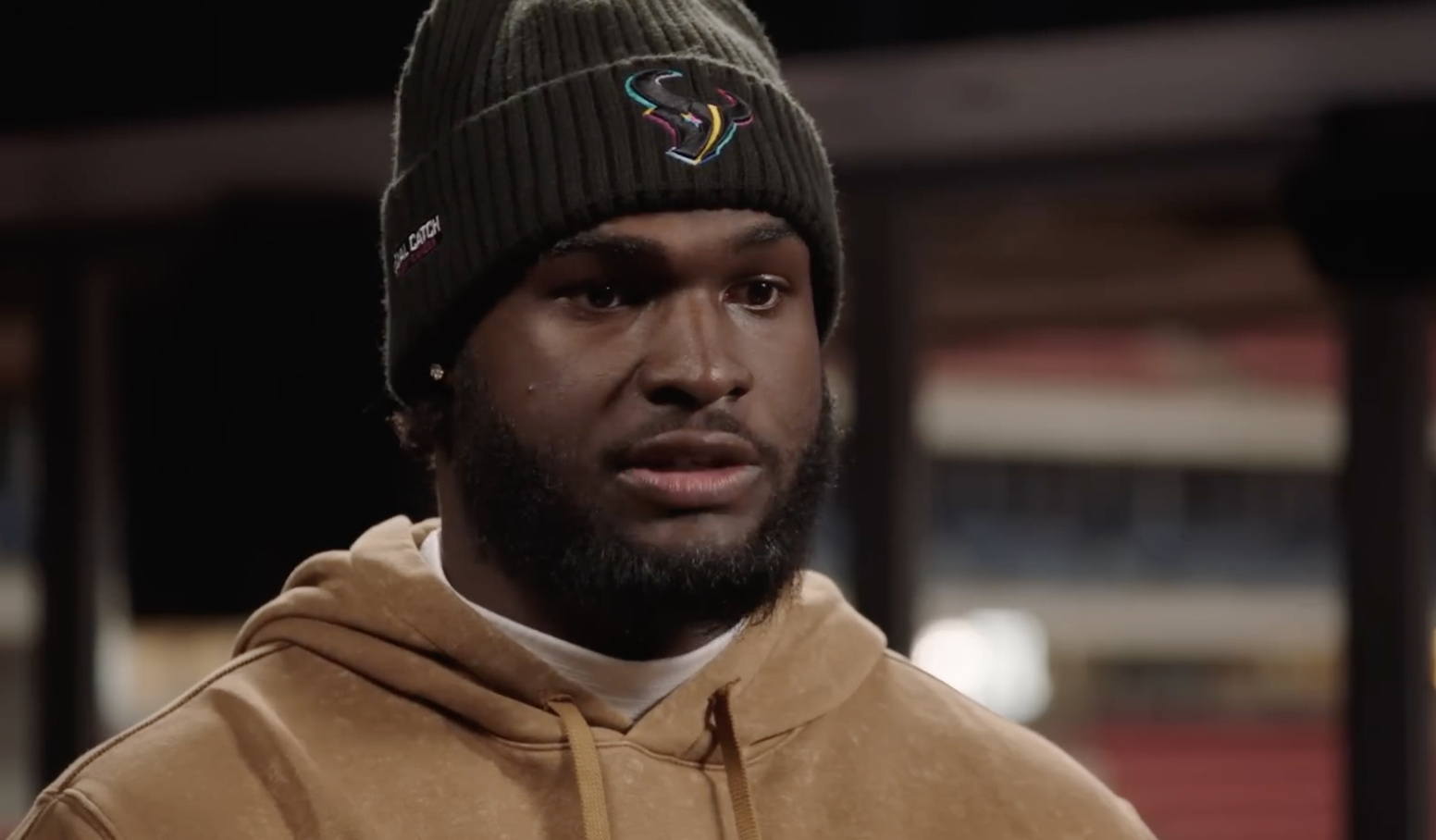
The Houston Texans and Will Anderson Jr. have agreed to a three-year, $150 million contract extension, making the 23-year-old defensive end the highest-paid non-quarterback in NFL history.
The deal, reported by NFL Network’s Ian Rapoport and confirmed by ESPN’s Adam Schefter on Friday, includes $134 million guaranteed, $100 million fully guaranteed at signing, a no-trade clause, and an average annual value of $50 million, surpassing the previous record held by Micah Parsons by $3.5 million per year.
Anderson is locked in with Houston through 2030. He has been on the roster for three seasons. He is 23 years old.
The Texans drafted CJ Stroud second overall in 2023 and then traded up to draft Anderson third overall in the same draft. Three years later, they have paid the edge rusher before they have paid the quarterback.
That is the shape of the Houston Texans right now, and it says something specific about what this organization believes its foundation looks like.
The Record Contract In Context
To understand what $50 million per year for a defensive end means, it helps to see where the market was before Anderson got here.
Edge rusher salaries have risen at a pace that outstrips almost every other position in football over the past three years.
Nick Bosa reset the market in 2023 at $34 million per year, which at the time felt staggering. Maxx Crosby topped him at $35.5 million not long after. Myles Garrett pushed it to $40 million.
Then last August, the Green Bay Packers, who had just acquired Micah Parsons in a trade from Dallas, extended him at $46.5 million per year on a four-year, $188 million deal with $136 million total guaranteed.
Anderson has now cleared $50 million, which means the market for elite pass rushers has gone from $34 million to $50 million in approximately 36 months.
The edge defender market was below $35 million barely 13 months before this deal was signed. It has climbed $15 million per year in just over a year.
What drives that? Supply and demand at a position where the supply of genuinely elite players is extremely limited and the demand, driven by the NFL’s increasing reliance on the passing game, has never been higher.
The best pass rushers in football touch the ball on virtually every offensive play. They affect the entire structure of opposing game plans. Teams pay for that.
Anderson’s deal also includes a no-trade clause, which is rare for a non-quarterback. It signals not just that the Texans want to keep him, it signals that Anderson and his agent, Nicole Lynn of Klutch Sports, had enough leverage to demand permanence as part of the structure.
What Did Anderson Do To Earn This Contract?
The 2025 season Anderson just completed was the kind of year that forces a franchise’s hand. He finished with 12 sacks, 20 tackles for loss, 54 total tackles, 3 forced fumbles and 2 fumble recoveries, all career highs.
He ranked second in the NFL in pressures (85) and set an NFL record with 47 third-down pressures.
His run stop rate of 12.6% ranked seventh among all defenders with at least 150 run defensive snaps.
He was first-team All-Pro and finished second in Defensive Player of the Year voting behind only Myles Garrett, who broke the NFL’s single-season sack record with 23.
Anderson was in year three. He was 22 years old when most of those numbers were posted.
The defense he anchored was historically productive. The Texans allowed just 17.3 points per game, second fewest in the league, and 279 yards per game, the fewest in the league.
They forced Justin Herbert, Josh Allen, Patrick Mahomes and Sam Darnold into a combined eight turnovers across four games.
Anderson personally contributed four sacks, six tackles for loss and a forced fumble he recovered in the end zone for a touchdown against the Seahawks across those four matchups alone.
In the playoff win over Pittsburgh, Anderson strip-sacked Aaron Rodgers, the fumble was recovered and returned for a touchdown, and the defense forced Rodgers into two turnovers that became touchdowns and sacked him four times. The Texans won.
His head coach DeMeco Ryans runs a 4-3 defense that thrives on multiple elite pass rushers working in tandem.
Anderson pairs with Danielle Hunter, who the Texans extended in March on a one-year, $40.1 million deal, himself one of the highest-paid edge rushers in the game.
What the two create together is a problem that opposing offensive lines cannot solve with a single high-investment blocker.
When you double one of them, the other wins. When you try to account for both, the quarterback gets hit anyway.
Anderson’s Draft Day Story
Anderson arrived in Houston through one of the more dramatic moments of the 2023 NFL Draft.
The Texans had the second overall pick and used it on CJ Stroud. Then, with the third pick available, they decided they wanted Anderson badly enough to pay for it.
They traded up with the Arizona Cardinals, surrendering the 12th overall pick, the 33rd overall pick, a 2024 first-round pick and a 2024 third-round pick to move one slot and take Anderson.
That is an enormous price for one roster spot. It is the kind of move that gets general managers fired if it does not work out.
Nick Caserio made the call. Anderson has now made it look prescient. Since Anderson and Stroud arrived together, the Texans are 32-19 in the regular season with three playoff wins and two AFC South titles.
They now have Anderson locked up through 2030. The quarterback question, Stroud’s extension, is still unresolved, with reports indicating his talks have stalled following a regression in the 2025 season and a disappointing playoff performance.
The Texans exercised Stroud’s fifth-year option on April 8, the same day they exercised Anderson’s, but the expectation is that Stroud will wait until at least next offseason to negotiate his second contract.
The team built around defense first and quarterback second. That sequencing is now formalized in the contract structure.
The Texans’ Major Commitment To Anderson
The Anderson extension is the largest piece of a broader offseason in which the Texans have invested aggressively in retaining their own players.
Caserio extended cornerback Derek Stingley Jr. last offseason on a three-year, $90 million deal, highest-paid corner at the time.
This offseason he extended Hunter on a one-year, $40.1 million deal. He extended tight end Dalton Schultz on a one-year, $12.6 million deal.
He made kicker Ka’imi Fairbairn the highest-paid kicker in NFL history on a two-year, $13 million extension.
The Texans are not rebuilding. They are paying their players and betting on the core that has produced back-to-back division titles.
Anderson’s contract is the biggest of those bets by a substantial margin, $150 million for a defensive end is a commitment that reshapes a team’s cap calculus for years.
But at $50 million per year in a market that has risen $15 million per year in just over a year, and with the salary cap projected to continue growing significantly due to new broadcasting deals, the structure becomes more defensible the longer it runs.
He is 23. He is an All-Pro. He plays the most valuable non-quarterback position in football.
He just set an NFL record for third-down pressures. The Texans were going to pay him something that made the rest of the league uncomfortable.