James Comey Was Indicted Again And His Record At The FBI Is Part Of The Story
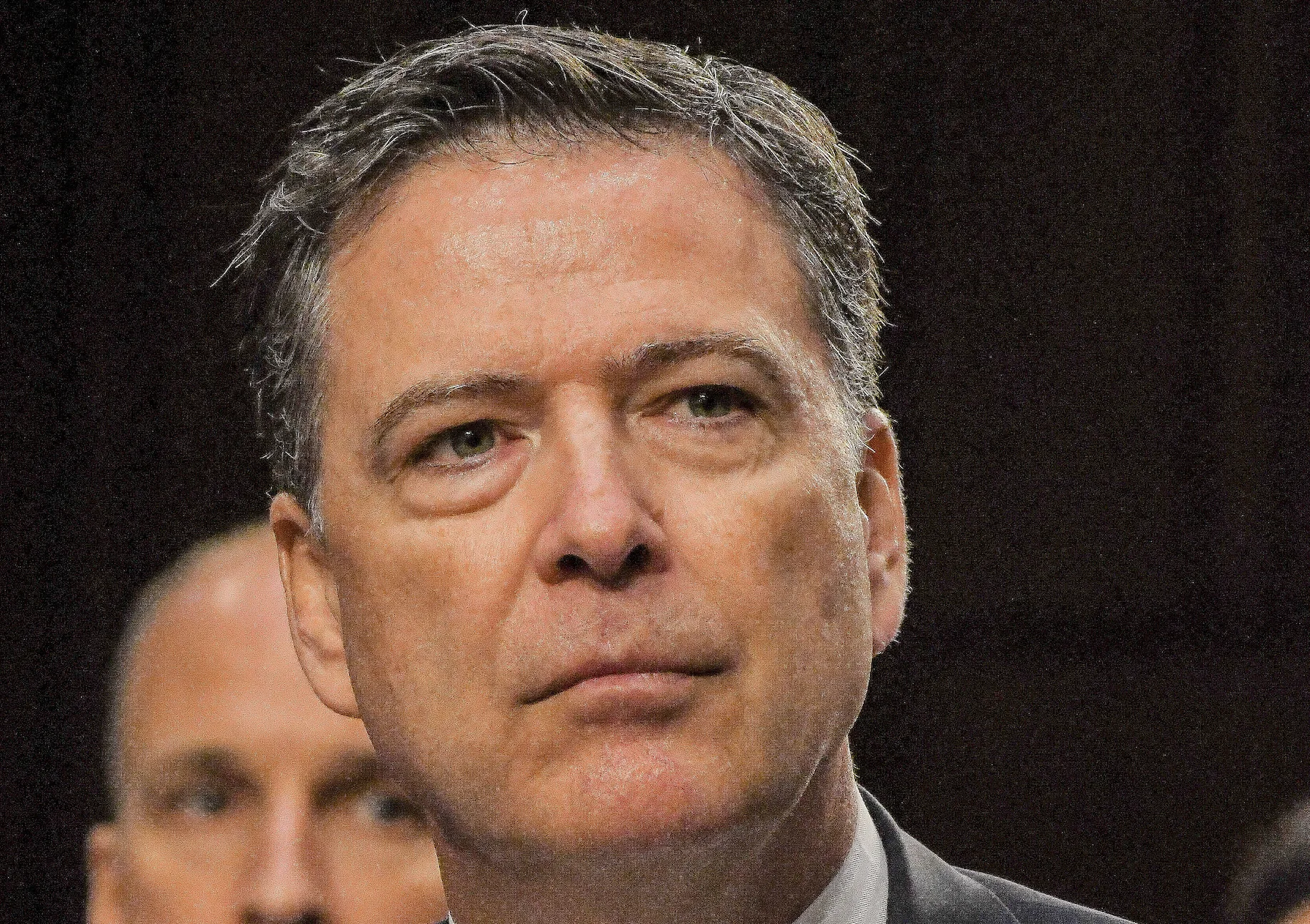
A federal grand jury in the Eastern District of North Carolina indicted former FBI Director James Comey on Tuesday, April 28, 2026, on two counts related to an Instagram post he made last year.
He faces one count of threatening the president and one count of transmitting a threat in interstate commerce, each carrying up to 10 years in prison. An arrest warrant was issued.
This is his second federal indictment since President Trump returned to office in January 2025. Comey’s attorney did not have an immediate comment.
What Are The New Charges Against Comey?
The indictment centers on a photograph Comey posted to his Instagram account on May 15, 2025. The image showed seashells arranged on a beach to form the numbers “86 47.”
The caption read, “Cool shell formation on my beach walk.”
The phrase “86” is widely understood in certain contexts as slang for removing, ejecting or killing someone. “47” refers to Trump’s status as the 47th president.
Trump supporters and administration officials interpreted the post immediately as a call for violence against the president.
Trump’s son publicly accused Comey of calling for his father’s murder. Administration officials said in May 2025 they would investigate.
Comey deleted the post and issued a statement:
“I didn’t realize some folks associate those numbers with violence. It never occurred to me but I oppose violence of any kind so I took the post down.”
He later said he believed the shell formation was communicating a “political message.”
The indictment states the post depicted shells “in a pattern making out ’86 47′, which a reasonable recipient who is familiar with the circumstances would interpret as a serious expression of an intent to do harm to the President of the United States.”
Acting Attorney General Todd Blanche addressed the charges at a press conference Tuesday.
“Threatening the life of anybody is dangerous and potentially a crime. Threatening the life of the president of the United States will never be tolerated by the Department of Justice,” Blanche said. “You are not allowed to threaten the president of the United States.”
FBI Director Kash Patel noted that the grand jury was specifically informed that Comey deleted the post after it went viral and issued a subsequent statement claiming he did not connect the numbers with violence.
The indictment was filed three days after Trump was evacuated from the White House Correspondents’ Dinner following the shooting at the Washington Hilton Hotel by a man who had declared his intent to harm members of the Trump administration.
The Legal Challenge Prosecutors Face
The legal bar for this case is significant. The Supreme Court ruled in 2023 in Counterman v. Colorado that proving a “true threat” requires showing the defendant subjectively understood their communication would be perceived as threatening, not just that a reasonable person would perceive it that way.
The indictment uses the “reasonable recipient” objective standard, which is the older and lower bar.
Whether prosecutors can satisfy the subjective intent standard established by the Supreme Court is the central legal question the case will turn on.
Comey’s camp will almost certainly argue that deleting the post and issuing a statement distancing himself from any violent interpretation is evidence he did not subjectively intend to threaten anyone.
Prosecutors will counter that the deletion itself, and the timing of the grand jury being informed of it, is relevant to his state of mind.
The First Indictment And Why It Was Thrown Out
The current charges are Comey’s second indictment in under a year. In late September 2025, a federal grand jury in Virginia indicted him on charges that he lied to Congress during Senate Judiciary Committee testimony in September 2020 and obstructed a congressional proceeding.
The specific allegation was that he denied having authorized media leaks when prosecutors say he had.
Comey pleaded not guilty and maintained his innocence. A federal judge dismissed the case in November 2025, not on the merits but on a procedural issue. Judge Cameron McGowan Currie found that Lindsey Halligan, the acting U.S. attorney who secured the indictment, had been unlawfully appointed to her position.
Halligan was a former personal lawyer for Trump, and the judge found her appointment did not comply with legal requirements.
The same ruling dismissed a simultaneous indictment against New York Attorney General Letitia James.
After the dismissal, Comey posted a video:
“I know that Donald Trump will probably come after me again, and my attitude is going to be the same. I’m innocent. I am not afraid, and I believe in an independent federal judiciary, the gift from our founders that protects us from a would-be tyrant.”
He was right that he would be charged again. The new charges arrived Tuesday.
The Documented Record Of Comey’s Conduct At The FBI
The seashell post is what is generating headlines today. But the documented record of James Comey’s actual conduct as FBI Director represents a set of facts that deserve to be placed alongside any discussion of whether he is the victim of political persecution.
In July 2016, Comey held an extraordinary and highly unusual press conference to announce that he was recommending no charges against Hillary Clinton for mishandling classified information, a step that is explicitly outside the role of an FBI director, who makes referrals to prosecutors and does not hold press conferences announcing investigative conclusions.
In October 2016, eleven days before the presidential election, he sent a letter to Congress announcing the FBI was reopening the Clinton email investigation.
His own department’s inspector general later found the October letter violated FBI policy. The Clinton campaign blamed that letter for contributing to her loss.
After being fired by Trump in May 2017, Comey acknowledged deliberately leaking the contents of his FBI memos to a Columbia law professor with the specific stated intent of triggering the appointment of a Special Counsel.
The Department of Justice Inspector General found in 2019 that Comey violated FBI policies by retaining and leaking those memos, one of which contained information marked Confidential.
The IG report stated that Comey had set “a dangerous example” for the bureau.
Under Comey’s watch, the FBI submitted four FISA warrant applications to surveil Trump campaign associate Carter Page.
The IG’s December 2019 report found 17 significant errors and omissions in those applications.
The Steele dossier, politically funded opposition research that Comey had personally briefed Trump on in January 2017, was used as central evidence in those applications despite the FBI knowing it was unverified.
A DOJ attorney, Kevin Clinesmith, pleaded guilty to altering an email used in one of the applications, changing text that said Carter Page “is a source” to “is not a source” to obscure his relationship with the CIA.
The Durham Special Counsel Report, released in 2023, found that the FBI “failed to uphold its mission of strict fidelity to the law” in its handling of the Trump campaign investigation and opened it without “adequate factual basis.”
Durham found the FBI gave preferential treatment to the Clinton campaign investigation compared to the Trump campaign investigation.
Comey also acknowledged in a television interview that he sent agents to interview incoming National Security Advisor Michael Flynn in January 2017 without going through the standard protocol of notifying White House counsel, saying he “probably wouldn’t have done” it in “a more organized administration.”
The agents who conducted the interview initially concluded Flynn had not lied to them. Flynn was later prosecuted and eventually had his conviction set aside.
What’s Next For Comey?
Comey now faces a second set of federal charges. The legal theory is more straightforward in its factual foundation than the first set of charges, there is a post, the post existed, and the question is what it meant.
The legal standard the Supreme Court established in 2023 makes conviction difficult but not impossible.
What the case shares with the first indictment is the broader pattern that the Trump Justice Department under Todd Blanche has been accelerating, investigations and charges against people Trump has publicly identified as political adversaries.
The department has also sought charges against the Southern Poverty Law Center and has been investigating former CIA Director John Brennan.
Trump himself publicly urged then-AG Pam Bondi to take action against Comey, NY AG Letitia James and Senator Adam Schiff in a September 2025 Truth Social post.
None of that context erases what the documented record shows about Comey’s own conduct.
Both things can be true simultaneously: a man can have a documented history of using his institutional power in ways that bent or violated the rules, and a subsequent administration can choose to prosecute him on charges that are legally questionable and politically motivated.
The documents exist. The IG reports exist. The Durham report exists. The leaked memo exists. The FISA applications exist.
That record belongs in any honest accounting of who James Comey is, regardless of what one thinks of the seashell charges that landed in court today.