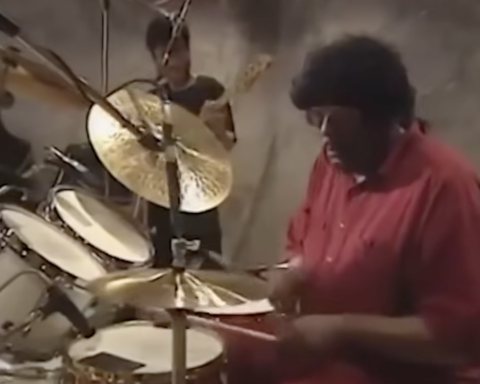

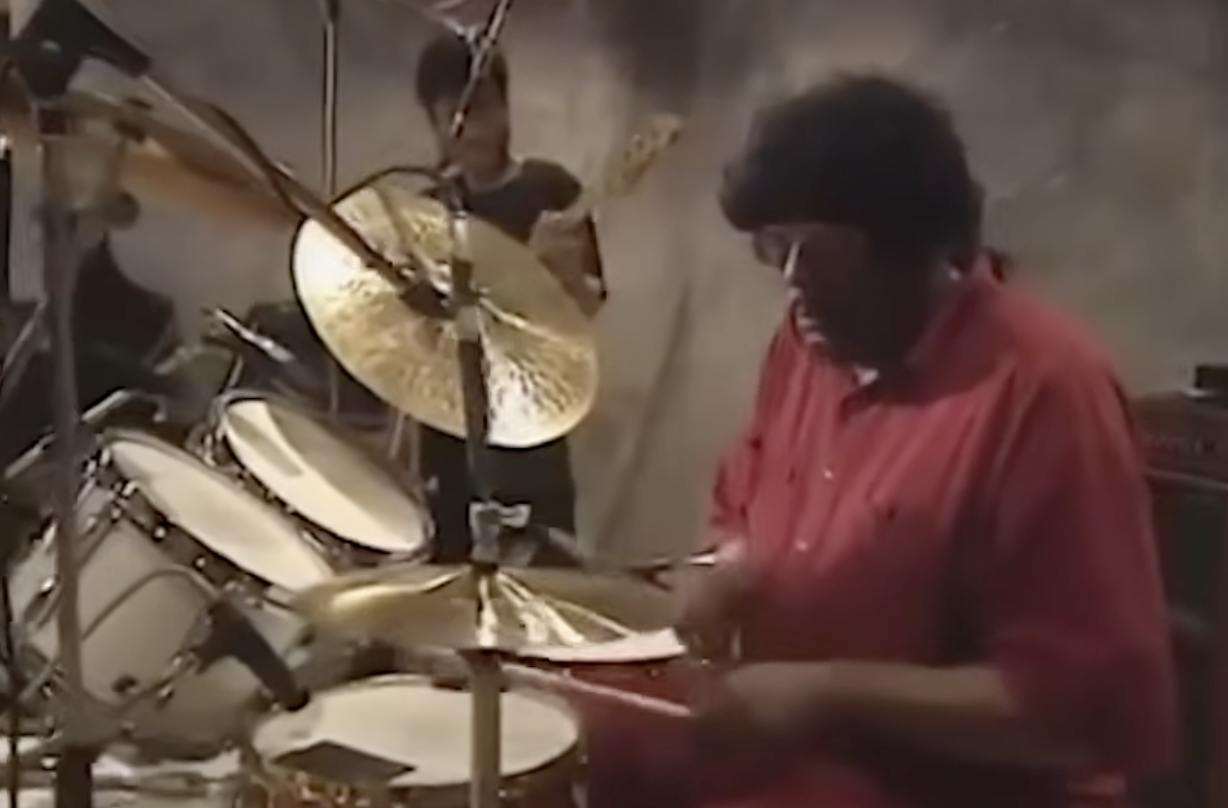
James Gadson, the session drummer whose playing underpins some of the most beloved recordings in the history of American popular music, died Thursday, April 3, 2026.
He was 86. His wife, Barbara, confirmed the news to Rolling Stone, saying he had experienced some health challenges recently including surgery and a bad fall that hurt his back.
“He was a wonderful man,” Barbara said. “He was a great husband, father, grandfather, great grandfather, and one hell of a drummer.”
One hell of a drummer is an understatement so vast it is almost funny. James Gadson played on nearly 300 gold records across a career spanning more than five decades.
If you have ever danced to I Will Survive, swayed to Lean on Me, nodded your head to Express Yourself, or heard any of the hundreds of songs sampled from those recordings, and you have, whether you know it or not, you have been listening to James Gadson.
Who Was James Gadson?
James Edward Gadson was born June 17, 1939, in Kansas City, Missouri. His father Harold was a drummer who initially tried to steer his son away from the music industry.
The effort did not take. Harold bought James and his brother Thomas cornets to play in their school’s drum and bugle corps, hoping, apparently, that brass instruments might lead somewhere more practical.
As a teenager, Gadson was more interested in singing, performing doo-wop with a group called the Carpets at thirteen. His mother kept him from going on the road.
He discovered funk music while stationed in Louisiana with the Air Force and joined his brother’s band after leaving the service, teaching himself piano and continuing to sing.
He also taught himself the drums, in the way he taught himself everything: obsessively. “When I first started playing drums, I practiced all day and all night, 18 to 20 hours a day,” he said in Jim Payne’s book The Great Drummers of R&B, Funk and Soul. “I did my homework.”
His first professional sessions were, by his own account, terrible. “At first, during the time I didn’t really know how to play R&B, it was awful,” he recalled in Modern Drummer.
“I wouldn’t even charge them it was so bad. I felt bad about wasting their studio time. I couldn’t keep a steady pattern because I was coming from a free-jazz mindset.” He was describing his early work with Dyke & the Blazers and Charles Wright & the Watts 103rd Street Rhythm Band in Los Angeles, the gigs that changed everything.
Express Yourself
Charles Wright & the Watts 103rd Street Rhythm Band recorded Express Yourself in 1970, and Gadson’s drumming on that track became one of the most recognizable grooves in the history of funk, tight, purposeful, locked in on the one.
The song reached the top five of the R&B charts.
Fourteen years later it would be sampled by N.W.A on their own Express Yourself, making Gadson’s rhythm the foundation of one of the most important records in the history of hip-hop without most listeners ever knowing whose hands had originally laid it down.
That is the story of James Gadson’s career in miniature.
Influence without recognition. The beat that holds everything together, heard by millions, credited to almost no one.
Bill Withers, Diana Ross, And The Disco Era
After most of the Watts 103rd Street Rhythm Band left to back Bill Withers, Gadson’s already-in-demand studio work shifted into a higher gear.
His drumming on Withers’ 1972 album Still Bill is among the most celebrated rhythm work in the soul canon. Lean on Me, Use Me, Ain’t No Sunshine, all Gadson.
His playing on Use Me in particular is a masterclass in restraint and momentum: the hi-hat crisp, the groove unhurried, the pocket so deep the song feels like it breathes.
Withers told him his playing was behind the beat on Lean on Me. Gadson said that was the point.
He understood that feel was not the same as tempo, and that the best dance music lives in the space between strict time and human instinct.
He played on Marvin Gaye’s I Want You in 1976. He played on Diana Ross’s Love Hangover the same year.
He played on Gloria Gaynor’s I Will Survive, the four-on-the-floor disco beat that became the sonic signature of an entire cultural moment, and on Jackson 5’s Dancing Machine, which he recalled as his introduction to the Motown session world.
When Motown producer Hal Davis first recruited him, a contractor asked if he could read charts. Gadson lied and said yes, then went home and taught himself to read music before the next session.
“They said, ‘Hey, do that again,'” Gadson recalled of his first Motown date. “They liked what I was doing, and they said, ‘Let’s keep him because he has good time.'”
He also played on Thelma Houston’s Don’t Leave Me This Way, Cheryl Lynn’s Got to Be Real, Tavares’ Heaven Must Be Missing an Angel, and Donald Fagen’s The Nightfly in 1982, a record frequently cited as one of the finest-sounding albums ever made.
Gadson’s Versatility Defined His Career
What made Gadson genuinely extraordinary was not just the depth of his feel or the precision of his timing. It was his range.
His discography crosses every boundary that normally separates session drummers into categories. He played with Barbra Streisand and B.B. King.
With Quincy Jones and Paul McCartney, specifically on Chaos and Creation in the Backyard in 2005.
With Gladys Knight and Herbie Hancock and Ray Charles and Leonard Cohen and Aretha Franklin and Frank Sinatra and Smokey Robinson and the Isley Brothers and Tina Turner.
He also played on Beck’s Sea Change, The Information, and Morning Phase, the last of which won the Grammy for Album of the Year in 2015, making Gadson part of an unlikely late-career chapter that introduced him to a generation of listeners who had grown up on a completely different sound.
He played on Justin Timberlake’s FutureSex/LoveSounds in 2006. He played drums and hambone, slapping his own legs as a percussion instrument, on D’Angelo’s Sugah Daddy from the Black Messiah album in 2014. Harry Styles. Kelly Clarkson. Beck. D’Angelo. They all used Gadson.
What Have His Peers Said?
The tributes from the music community Thursday captured something about Gadson that statistics alone cannot.
Questlove wrote on Instagram,
“Some drummers are soulful. Some drummers are funky. Some drummers are a-rockin’. Some drummers are swinging — but NO drummer has impacted the art of breakbeat drumming like James Gadson.”
Ray Parker Jr., who worked with Gadson for more than fifty years, left a simpler statement, “He changed the world.”
Modern Drummer, which had been tracking his career since their landmark 2007 interview, called him one of the most recorded drummers in R&B history.
One anonymous producer who had known him for two decades wrote, “I’m gutted right now. No one played like him, and no one ever will. One of the greatest honors of my life is the 100-plus times I got to make music with him.”
What Did Gadson Say About His Career?
Gadson spoke about his career with a combination of gratitude and self-deprecating humor that was clearly genuine.
“I’ve been blessed,” he told The Great Drummers. “I’m still doing this for a living. I wanted to hear myself on the radio someday, but I never dreamed I’d be on so many records.”
His advice to other drummers was simple and counterintuitive for a man who had practiced 18 hours a day to get where he was. “Most grooves, especially for dance music, are very simple,” he told Modern Drummer.
“Even so, to learn them, you have to slow them down. You have to slow it all down and simplify it. Then you can kind of feel whether it’s danceable or not.”
He was born on the beat. He spent 86 years laying it down for everyone else.