
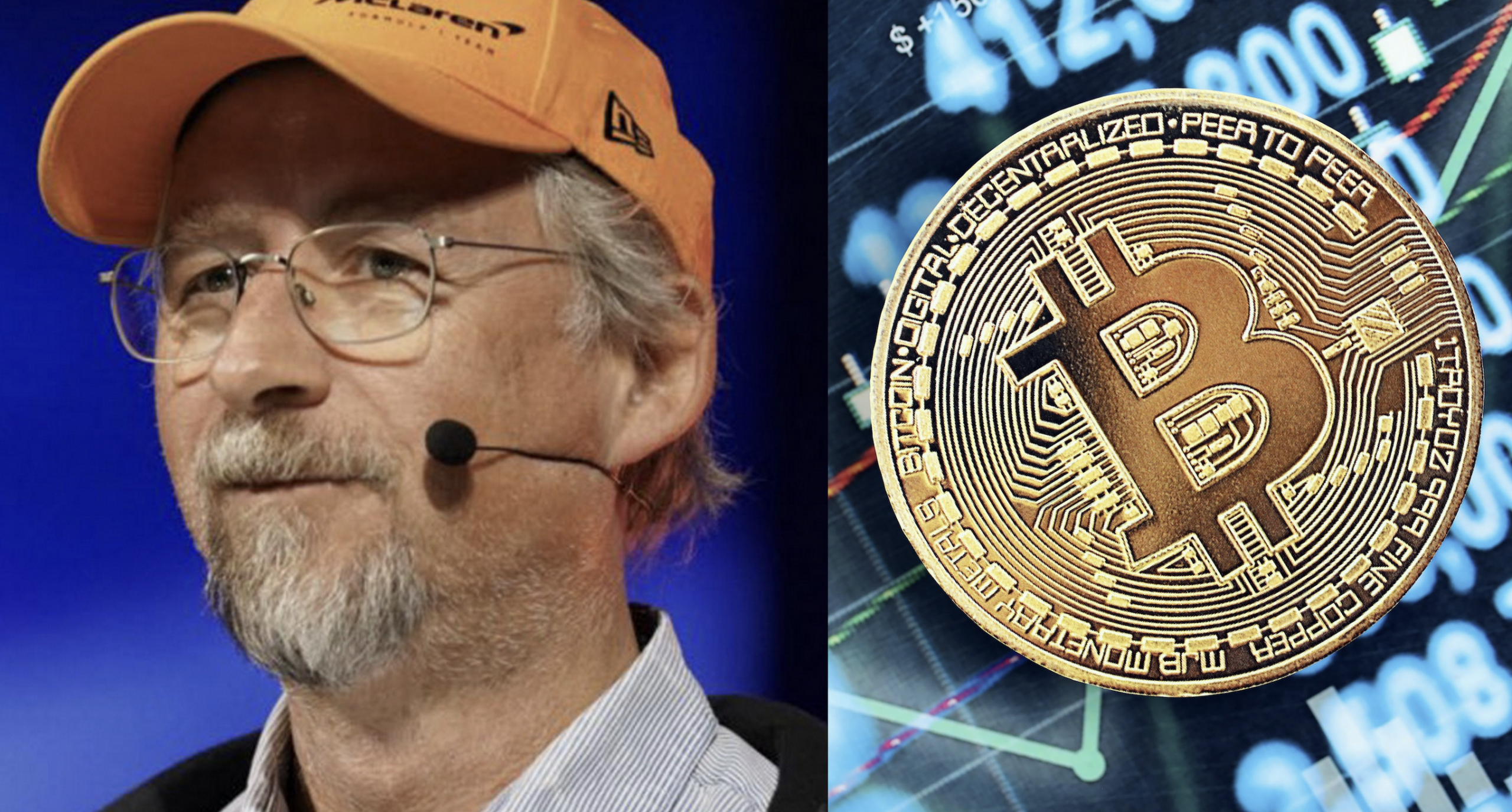
The New York Times published an investigation today naming Adam Back, British cryptographer, Blockstream CEO, and inventor of Hashcash, as the most likely candidate behind Satoshi Nakamoto, the pseudonymous creator of Bitcoin.
Back has denied it. He denied it during a two-hour in-person interview. He denied it again on X. He denied it to the BBC. The mystery remains exactly as unsolved as it was before the article was published.
The Times piece was written by John Carreyrou, the investigative reporter best known for his reporting on Theranos, and represents a year of reported work.
Carreyrou confronted Back in person at a Bitcoin conference in El Salvador in late January, meeting him in a hotel room alongside two company executives.
By the account in the Bitcoin.com summary of the Times piece, Back denied being Satoshi more than six times.
He offered no explanation for the writing analysis results the Times presented. He declined to provide email metadata Carreyrou had requested.
Back’s response on X, “I’m not satoshi, but I was early in laser focus on the positive societal implications of cryptography, online privacy and electronic cash.”
He also addressed the Times’ claim that he went silent on forums precisely when Satoshi was most active, then re-emerged after Satoshi disappeared in April 2011, saying he actually “did a lot of yakking” on the forums during that period.
In a moment of dry humor that the internet appreciated, he posted, “Kicking myself for not mining in anger in 2009.”
What Evidence Did The Times Actually Have?
The investigation rests on several layers of circumstantial evidence, none of which is conclusive on its own and which the Times itself acknowledges do not definitively prove the case.
The centerpiece is stylometric analysis, a technique that examines unconscious writing habits as a kind of linguistic fingerprint.
Carreyrou commissioned this analysis from Florian Cafiero, a computational linguist who previously helped the Times identify the people behind the QAnon movement.
Cafiero compared writings from 12 Satoshi suspects against the Bitcoin white paper and other known Satoshi communications. Back came out as the closest match.
Cafiero also said the result was inconclusive. Hal Finney, the late cryptographer who received the first-ever Bitcoin transaction and has long been a leading Satoshi candidate, was nearly tied for the top spot.
A second analytical method produced entirely different rankings. Cafiero called those results inconclusive too.
The specific stylistic markers Carreyrou highlights include: mixed British and American spellings in Satoshi’s writing consistent with someone navigating between the two.
Distinctive phrases like “burning the money” and “partial pre-image” that appear identically in Back’s writings and Satoshi’s across years of separate documents.
67 shared hyphenation patterns between Back and Satoshi, nearly double the next closest suspect; and tics like ending sentences with “also,” misusing “it’s” and “its,” and placing two spaces after periods.
Back is British. He uses two spaces after sentences. He once wrote “bloody.” The Times finds this constellation meaningful.
Beyond the writing analysis, Carreyrou points to technical and biographical overlap.
Back invented Hashcash in 1997, the proof-of-work system that Satoshi explicitly cited in the Bitcoin white paper, writing that the network would use “a proof-of-work system similar to Adam Back’s Hashcash.”
Satoshi emailed Back directly before the white paper’s release in 2008. Back was an active member of the Cypherpunks mailing list in the 1990s and wrote about distributed electronic cash in terms that closely prefigure Bitcoin’s architecture.
He had both the technical skills and the ideological disposition to build Bitcoin.
The Times also describes Back becoming visibly tense during an HBO documentary segment filmed on a park bench in Riga, Latvia, when the Satoshi question was raised, which Carreyrou interprets as a tell.
The Times acknowledges the strongest counterargument to its own case.
Emails between Satoshi and Back from August 2008, produced during the Craig Wright fraud trial in London, show Satoshi contacting Back before the white paper’s release, as if they were two different people.
Carreyrou suggests Back could have sent those emails to himself as a cover. He offers no evidence this happened.
Why The Times Suspected Back
Adam Back’s connection to Bitcoin’s origins is not in dispute and predates the question of whether he created it.
Born in London in July 1970, he taught himself programming on a Sinclair ZX81 as a child, studied advanced mathematics, physics, and economics at A-level, and earned a computer science PhD in distributed systems from the University of Exeter.
He spent his early career in applied cryptography, writing cryptographic libraries, designing and reviewing encryption systems, and working within the tight-knit community of cypherpunks who believed, with genuine conviction, that strong cryptography was a tool for individual liberty against government and corporate surveillance.
Hashcash, his 1997 invention, was a proof-of-work system designed originally to combat email spam by requiring senders to perform a small computational task before a message could be sent.
It is elegant in its simplicity. Force a small cost on senders, make bulk spam economically impractical, preserve privacy without a central gatekeeper.
Satoshi cited it directly. Bitcoin would not exist in its current form without the conceptual foundation Hashcash provided.
Back co-founded Blockstream in 2014 and has served as its CEO since 2016.
He is currently taking a Bitcoin treasury company, Bitcoin Standard Treasury Company, public through a merger involving a Cantor Fitzgerald shell entity.
That pending SEC disclosure requirement is, the Times notes, relevant. If Back held Satoshi’s estimated 1.1 million Bitcoin, worth approximately $118 billion at current prices, that would likely constitute material information requiring public disclosure under securities law. He has disclosed no such holding.
The fact that Back is a plausible candidate is not the same as evidence that he is the candidate. Plausibility is the beginning of an investigation, not its conclusion.
The Times had plausibility. What it does not have, and what no Satoshi investigation has ever produced, is cryptographic proof: a message signed with Satoshi’s known private keys.
Until someone produces that, every unveiling is the same unveiling.
The History Of Failed Unveilings
This is not the first time someone has been named as Satoshi. It is not the second, third, or fourth time.
The parade of candidates, each presented with confidence, each denied, each eventually set aside, is by now one of the more reliable recurring events in technology journalism.
In 2014, Newsweek published a high-profile investigation identifying Dorian Nakamoto, a Japanese-American man living in California, as Satoshi. He denied it, and the claim has been largely discredited.
In 2015, Wired and Gizmodo pointed to Australian computer scientist Craig Wright, who subsequently declared publicly that he was Satoshi and produced apparent proof.
The Bitcoin community rejected his claims. After years of legal maneuvering, a UK High Court judge ruled in March 2024 that Wright “is not Satoshi Nakamoto,” that he “lied to the court extensively and repeatedly,” and that he committed “forgery on a grand scale.”
Wright was sentenced in December 2024 to twelve months suspended for contempt. Back himself testified against Wright’s claims during those proceedings.
In 2024, HBO’s documentary Money Electric named Canadian crypto expert Peter Todd as Satoshi.
Todd said the claim was “ludicrous” and has since provided photographic evidence for key dates that reduces the likelihood of his candidacy.
Nick Szabo, a cryptographer whose conceptual work on “bit gold” also closely prefigures Bitcoin, has long been another leading suspect, but his candidacy has faded following technical missteps in a public debate.
The community’s reaction to the Times piece has been sharp. Bitcoin contributor Jameson Lopp wrote, “Satoshi Nakamoto can’t be caught with stylometric analysis. Shame on you for painting a huge target on Adam’s back with such weak evidence.”
Galaxy Digital’s head researcher Alex Thorn added, “Another journo oneshotted by the Satoshi mystery. The New York Times continues to publish garbage.”
One respondent to the Carreyrou story called the investigation “pointless unmasking journalism” that “paints a massive target on a real person for absolutely no public benefit,” citing the harassment that Hal Finney’s family experienced after prior Satoshi speculation.
Finney, who died in 2014, cannot be Satoshi under most theories because someone claiming to be Satoshi posted on a Bitcoin forum in 2015, after Finney’s death.
Satoshi’s estimated holdings, widely cited at approximately 1.1 million Bitcoin, have never moved.
At current prices they represent roughly $70-80 billion, which would make Satoshi one of the wealthiest people in the world.
The coins sit in wallets associated with the network’s earliest mining activity, untouched since they were created.
Every day they remain unmoved is simultaneously evidence that Satoshi is dead, incapacitated, content, principled, or cautious, and there is no way to distinguish between those possibilities from outside.
Back himself has said that he thinks not knowing who Satoshi is “is good for bitcoin.”
The decentralized structure of Bitcoin was deliberately designed to need no central authority, no CEO, no issuer, no identifiable creator who could be pressured, arrested, or sued.
The mystery reinforces the architecture. A Bitcoin with a known, living, identifiable creator is a different kind of asset than one that emerged from the ether and has no master.
The Times has named its candidate. The candidate has denied it. The coins have not moved. The mystery is intact.