Accused in Secret, a Top Nuclear Official Loses His Career
One day your boss calls and tells you there is an investigation. The call comes without warning.
She does not say what is being investigated. She says only that it concerns your conduct.
You are the second-ranking official at the National Nuclear Security Administration. The President nominated you. The FBI cleared you. The Senate confirmed you.
The seals, the hearings, the solemn assurances. The state placed you high enough to trust you.
Not high enough to tell you the accusation.
You handle the nation's nuclear weapons. Strategic stability, deterrence, arms control. You spent thirty years in national security. You lived inside guarded rooms, secure cables, classified briefings. The calm language of annihilation. Trusted to avert catastrophe. You are allowed to know the country's most dangerous secrets.
You are not allowed to know the secret about yourself. You have handled secrets for a living. Now you are one.
But the secret that destroys you is not in Moscow or Beijing. It’s in your own office.
The Chain of Command Is Visible
It was your boss, the NNSA administrator, who told you that you were under investigation. Above her stands the Secretary of Energy. It is from there, she indicates, that the matter descends. The line of authority is clear. Nobody says much more. Nobody needs to.
You do what an innocent man does. You say you will cooperate. You ask to be interviewed. But cooperation requires someone willing to hear you.
You wait. Days pass. You ask again, because perhaps the first request has not reached the proper desk.
No one interviews you. You ask again. It is noted somewhere, perhaps.
At first, you asking to defend yourself. Then you are asking merely to learn what needs defending. You are not asking for mercy. You are asking to know the charge.
You ask four times to be interviewed. Not to win. Not to threaten. Just to find out what this is.
Leave by the End of the Month
You handle nuclear security for the United States. Someone has filed a complaint against you. They will not tell you what it says. Your superiors know enough to act. You know nothing.
No one has interviewed you to hear your side. Then, 17 days after the first call, your boss calls again.
The investigation is done, she says. There will be no interview.
The Secretary's chief of staff says you are to leave by the end of the month. It is not quite an order and not quite a choice.
No charge.
No hearing.
Just the date by which you must disappear.
You ask the ordinary questions: What was the allegation? Who made it? What did the investigation find?
You are not told.
You ask to see the findings. There are findings, perhaps, or perhaps only decisions, but none you are permitted to see. You have been convicted by a document that may as well be invisible ink.
Leave, or be fired.
Resign or be terminated. The old formula. The pistol on the desk, polished and discreet.
So you plan to leave. What choice do you have? The Department has removed you already. A man can be expelled before the door closes behind him.
The Accusation Was Secret From You, Public for Them
The office announces your decision to leave to all 60,000 employees you used to lead. It does not explain why. It is treated as your decision.
Five days later, before you clear out your office, you learn from a media outlet, from Politico, what your own office would not tell you. You learn it along with everyone else in your profession. Or anyone online who cares to search your name.
The leak does what the process would not admit it was doing.
The article names you. It does not name the accuser. Her anonymity is intact. Yours is gone.
You are identified to the national security world as a man accused of sexual harassment. You have not seen the evidence. You have not faced the accuser.
The national security world now knows you as that man. Not the Senate-confirmed official. Not the thirty-year veteran. The man accused of sexual harassment.
Solving the Case Against Yourself
By reading the article, you begin to figure out who started this. The file reveals itself after it has ruined you.
You read closely. You begin to triangulate. A detail here. A timeline there. You read the article like a detective reading his own obituary.
The article mentions a supposed complaint from years earlier, at a think tank where you once worked. The past is treated as evidence, though you never knew it was evidence.
One place. One time period. One detail too specific to be accidental. The invisible accuser acquires a face. You know who it is.
You have been forced to solve the case against yourself from clues placed in public.
A woman said she had accused you of sexual harassment years before. Then she claimed retaliation, years later. It is a lie.
One Anonymous Accusation
You never even knew you had been accused. You never harassed her. Not once. The allegation is false. But the false allegation has done the work of a true one.
The false accusation followed you in secret: never recorded at Brookings, anonymous at DOE, and anonymous in the press. One anonymous accusation outweighed the President’s nomination, the FBI’s clearance, and the Senate’s confirmation.
You are now unemployed.
You seek work. No one hires you. Doors that once opened now stay closed. No one says why. No one has to. The accusation has become your credential.
This is what happened to Frank Rose.
And now he is suing in federal court, and the government will have to explain how this happened.
ARTVOICE Art
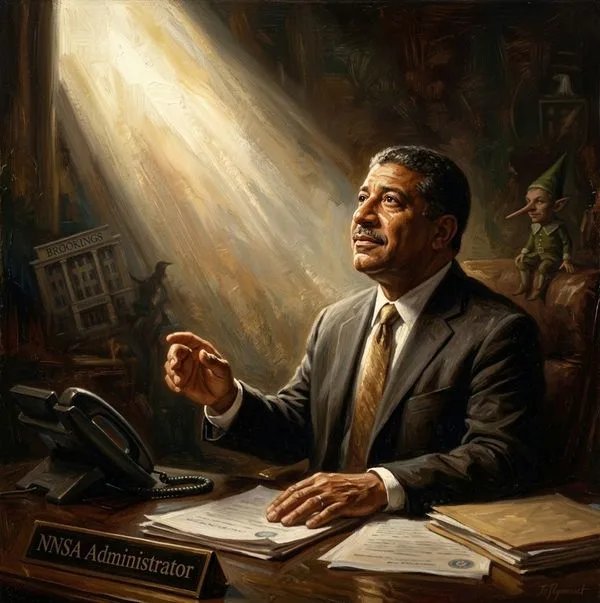 Kate Hewitt is no angel on your shoulder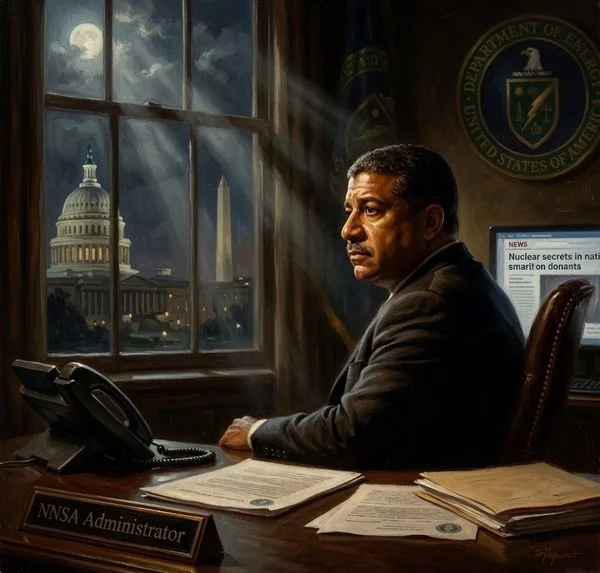
 This series will draw back the curtain on who the real liar was...