Brooklyn's Thought-Crime Verdict Won't Stop at OneTaste

Part 3 of a series on why the case against Nicole Daedone and Rachel Cherwitz should trouble anyone who believes the government should not define a person's inner life and why President Trump should pardon them, not for mercy, not for them, but to protect the people's right to freedom of religion, freedom of philosophy, and freedom of assembly.
Twelve women participated in the forced labor conspiracy case against Nicole Daedone. There were also three women prosecutors and a woman judge.
Sixteen women created this precedent that endangers all Americans.
But don't take my word. Study the case for yourself.

Sixteen Women
The US Attorney's Office for the Eastern District of New York indicted Daedone and convicted her, too.
Eleven other women, the government called victims. But let us focus on the victims.
Two of them failed to make the final cut, so technically there were nine victims at the trial.
Ayries Blanck was the first to call herself a victim of Nicole Daedone's teachings.

Those teachings centered around women adopting sexual mores that were not different from those of men.
Her company was called OneTaste, and its signature practice was called Orgasmic Meditation.
It was adults only. It came out of San Francisco. Anybody who entered its doors knew that this was a philosophy centered around sex and particularly about female sex.
Critics have said it teaches that women can be as promiscuous as men and have no regrets. It taught that women can pursue sex outside of monogamy or marriage and pursue men unabashedly, have sex with them, and not expect any commitment.
Regardless of what you may think of the teachings or whether it would be a horror if women adopted it widely, the practice and the teachings were legal until the government said they weren't.
It was women-centric.
In fact, to show how one-sided this teaching was for women, the primary practice, called Orgasmic Meditation, was where a man, fully clothed, gently stroked a woman's clitoris, wearing a rubber glove, for exactly 15 minutes to develop a rapport and an intuition and a feeling.

For the woman, she was taught to tap her arousal energy and use it for her empowerment without necessarily seeking an orgasm as the goal, but the feeling leading up to it was the focus.
And for the man, an intuition of what feminine energy is in reality.
These teachings, and it may be a horror to some, did not require a coupling of a man and a woman already committed to each other.
It was taught, and it was done in practice, that a woman could disrobe from the waist down and let a man, sometimes even a perfect stranger, stroke her clitoris in a certain way.
She was supposed to gain some power from her quiet attentiveness to that.
Nobody is asking you to adopt this theory or do the practice, but it must be told here that nobody, not one of the 35,000 adults who entered a OneTaste class or event, did not know exactly what was going on.
A Legal Practice Until It Wasn't
It was a legal practice. It was about sex. Only adults were allowed to participate. Nobody ever thought it was illegal until the government, through its process, made the teachings illegal by using the forced labor statute.
You will see if you care to study it that once the government can make an oddball, bizarre, San Francisco-style teaching illegal by prosecuting it in Brooklyn, then the government can make other teachings illegal.
Maybe one day you will practice something different, and the government may decide it is illegal.
The trick was getting the precedent in a case that almost nobody would care about. Stoking the clitoris for enlightenment.
Why that is just as dumb as tithing, praying, or going into a cave to meditate. Or saying Our Father, or Hail Mary, or bowing to Mecca five times a day.
The only difference is sex. But sex meditation is not illegal. Neither is bowing to Mecca. Or tantric practices.
But this is what Daedone taught, and once you get past the kinky, or off-centric practice, you will note that no one was forced to walk in the door.
Once they did, Daedone offered courses and practices to liberate the libido, or the spirit. It was legal.
And victim number 1, Ayries Blanck, took to those teachings. She did it with vigor. In the course of her experiments with the teachings, she encountered numerous men. In so doing, she lost her boyfriend, who, it turned out, was a good deal richer than the other men who would have her.
She left in a huff after punching out the woman who started dating her boyfriend.
Then she adopted the role of victim.
She supplied the evidence of her victimhood with the intent of making a lot of money by suing.
In 2023, she fabricated a journal and backdated it to 2015 to correspond with the time she left OneTaste.
She gave her journal to the FBI as the raw record of her suffering written while the pain was fresh, except that it wasn't. It was written eight years later and backdated.
The government called her Victim #1.
The Fabricated Journal
For 18 months, during the forced labor conspiracy prosecution of Daedone, Blanck's forged journal served as the moral foundation of the entire case.
Her journal spoke of how Daedone's teachings made her have sex with unwelcome men.
She had sought a parade of men, then regretted it. She said she did it because Daedone taught her that it was important to experiment and not regret it. The teaching to have no regret caused her regret.
She did some labor for OneTaste and got paid.
No one accused Daedone of forcing Blanck to work.
Instead, the government, using the journal, decided that this sex for women teaching was in fact a trick, not real philosophy. It was a trick that Daedone used to manipulate Blanck into working cheaper, harder, and more enthusiastically than she would have.
It was not forced labor, but a scheme to get Blanck to labor by making her consent to sex seem like it was her own idea, when Daedone was implanting the thoughts in her head through the teachings.
It was almost like making a person think they were going to go to heaven or hell forever based on whether they believed in a book or not.
Daedone, the government said, devised her teachings to hook women (and men, too) into helping Daedone build up her business and make her rich.
It was not unlike a preacher telling his followers to put 10% of everything they ever made into the collection box, and that it would bring blessings.
Only this was about sex, not hell or heaven.
The journal helped prove how bad Daedone's teachings were, for it was supposedly the real, fresh, excited utterances of a true victim.
It was a fake journal. The defense, not the crack investigators at the Federal Bureau of Investigation, discovered the fraud.
The defense discovered that in Blanck's journal, a supposed February 22, 2015, journal entry quoted a book that did not exist until December 3, 2019.
The handwritten version, which was supposed to be written in 2015, did not match the first 2022 typed transcription, but it did match the final 2023 edit.
The supposed original journal was written in pencil, but all her other journals were written in pen. The entries appeared at the back of the notebook, not in their chronological place.
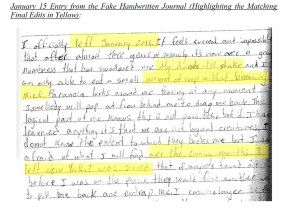
The evidence was clear: it had been manufactured to serve a narrative.
Of course, it must be said that the FBI was hoping for a much bigger fish to fry. And if they had it, they would not have needed a cooked-up journal.
The agents wanted sex trafficking, but there was none. Ayries Blanck chased the men she bedded.
Sure, her regret was extreme. Regret is a fine thing for a man. He can grin and bear it. He can have remorse and change.
But regret for a woman, for her escapades, needs a villain, according to the government, according to #METOO, according maybe to conventional wisdom, maybe according to everyone other than Daedone.
In this case, Daedone was the devil who made her do it. It cost Ayries Blanck her rich boyfriend. It also caused her to lie.
Blanck Walks Free
In March 2025, in a sealed filing, the government admitted that Blanck fabricated the journals. She lied to federal agents. She committed federal crimes under 18 U.S.C. § 1001. The US Attorney for the Eastern District of New York decided not to charge her.
The woman who manufactured evidence in a federal prosecution, who lied to the FBI again and again, walked away. She did not, however, receive the restitution that the government had promised her when they won the case.
The government had to drop the journal and, for that matter, drop victim number one.
Ayries Blanck moved to Ireland, married a man named Milligan, and, after causing all the trouble, left without receiving any money.

The Nine Who Agreed
Nine women testified at the trial. Nine out of roughly 35,000 people who participated in OneTaste courses or events.
They agreed they had been victims. They did not disqualify themselves by writing fake journals.
About half of the 35,000 people who took OneTaste courses were women, and 9 of them found that Daedone's philosophy led them to do things they never wanted to do, though they said they wanted to at the time.
Sexual things like having sex with different men, consenting at the time, then later realizing they should not have.
It was regret.
If it is true that hell has no fury like a woman scorned, it may also be true that heaven has no greater sorrow than a woman who regrets a sexual encounter that she initially sought, then later finds no one to blame.
Happily, the government provided the nine with someone to blame: Not the men, and certainly not themselves, but Daedone.
These nine were the subjects of the forced-labor conspiracy case against Daedone.
Keep in mind, this was a conspiracy. Not one of these women was forced to labor.
The actual charge, a standalone forced labor conspiracy charge leveled against Daedone, was that Daedone, through her teaching, plotted to make them labor.
She did not make them labor; she plotted to make them labor. She devised a teaching that would make women want sex so much that they would help her build her company, which was the entire conspiracy theory.
The FBI sought out the nine victims. The government's case against the teachings of Daedone did not rest on the many.
Judge Diane Gujarati helped the prosecution immensely in this novel prosecution by not allowing testimony from anyone who said the teachings helped them.
What has that to do with the nine who suffered, Gujarati reasoned.

If you robbed nine people through your teachings of their ability to think, why should the other 34,990 who weren't robbed factor in at all?
Suppose you robbed nine banks or murdered nine people. How could all the other banks you did not rob, or people you left alive, be witnesses that you are not a thief or a murderer?
It was sound reasoning if there were a physical act, such as robbing a bank.
But this was a case about robbing the mind. It was a case about brainwashing or psychological control exercised over women who could not say no.
Daedone had a teaching so powerful that it was criminal.
Out of 35,000, it brainwashed nine (10 if we count Ayries Blanck).
Nine were vulnerable. The poor. The brainwashed.
Although you might expect a different cast of victims in a forced labor case.
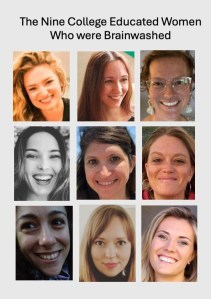
You might expect illegals, or the poverty-stricken, or minorities, or any species of the oppressed. The nine victims of Daedone were possibly the most educated witnesses ever assembled to claim they could not think for themselves.
Michal Neria — Columbia University. She testified that the defendants believed themselves to be witches, and reaffirmed it on cross: a hundred percent, she said, she didn't think it, she knew it.
Dr. Margaret Pixley — medical school at Brown. A physician, testifying that she was susceptible to brainwashing.

Rebecca Halpern — a licensed clinical social worker, college-educated, trained to recognize coercion in others. She testified she had been, in her words, carefully and gently brainwashed over time.
Christina Berkley — a degree in microbiology and immunology from McGill. A life coach. Asked what the trauma was, she answered: the brainwashing.
Dana Gill Port — a Master's in Divinity and Ministry. An ordained pastor, testifying that she was brainwashed.
Lianna Lifson — Smith College, with a Master's from NYU. A high school teacher.
Lyndsi Keves — Michigan State. An intuitive eating and body image coach.
Michelle Wright — University of Rhode Island.
Anthia Gillick, known professionally as Brooke Sheffer — a professional actress, trained at Skidmore. She said Daedone and Cherwitz brainwashed her.
The Logic That Cannot Lose
A physician. A clinical social worker. An ordained minister. A microbiologist. A teacher. Graduates of Columbia, Brown, McGill, Smith, NYU, and Skidmore.
The prosecution did not treat their education as an argument against brainwashing.
AUSA Kaitlin Farrell told the jury:
"They were grown women, these were adults. And they were educated, they were smart… that just shows how powerful the coercion was."
The argument was that the smarter the witness, the stronger the brainwashing. Supposed intelligence proved Daedone's teachings were too powerful to be legal.
A theory that has the advantage of not being able to lose. Consent becomes evidence that consent was defeated. Intelligence proves the control was deep.
An educated witness says she was brainwashed. If she consented, the consent was conquered by teachings. If she were intelligent, the control would reach deeper inside her brain.
It is the logic of the confession chamber.
Consent is not consent; it is evidence that the will had been broken.
Intelligence is not independence; it is proof of sophisticated control.
A lucid, educated witness who says she was brainwashed is not a contradiction. She is the product of an invidious doctrine.
Nine educated women, each of whom testified she was free to leave, each of whom did in fact leave when they chose, were the victims of a forced labor conspiracy.
Daedone conspired to force them to labor. The fact that they did not labor is irrelevant, as the government explained.
AUSA Kayla Bensing said to the jury: "It's not about whether these victims actually suffered serious harm and whether [Daedone] actually caused them to work. That is absolutely not the question of this trial."
AUSA Farrell said Daedone "put some of the testifying witnesses… in psychological distress and also taught them concepts that taught them basically to consent to everything."
And the prosecutors in a court filing said, "the instant case charges a conspiracy and not a substantive offense. The defendants could be proven guilty if they never forced any victim to do anything—so long as the evidence proves beyond a reasonable doubt that they agreed to do so."
You'll notice that the US Attorney said "defendants" in the plural.
We have spoken about 12 women. We mentioned Daedone, victim 1, Ayries Blanck, and nine other women who testified.
That is 11. It is high time we get to the 12th.
The Woman Who Said No
Before the indictment, the prosecutors approached Rachel Cherwitz the same way as the other victims. They told her that they regarded her as a victim. She could cooperate. There was a path that required her to accept the government's description of her life.
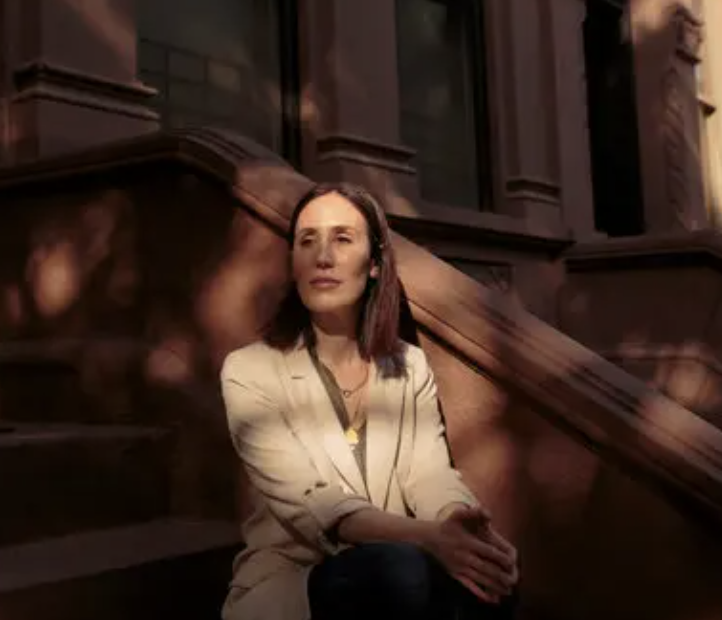
Rachel had only to make the necessary confession: She was a victim of Daedone's teachings.
Through counsel, Cherwitz told the government she did not consider herself a victim. She would not say she had been one.
The government had only one charge to level at Daedone: conspiracy to commit forced labor, under 18 U.S.C. § 1594.
Not forced labor. Conspiracy to commit it.
A conspiracy cannot be committed alone. It requires at least two people.
The government wanted Daedone. They had spent years pursuing a case.
Almost everything had fallen apart. There was no sex trafficking. No forced labor. They could indict on conspiracy; that Daedone, by her teachings and classes, planned to force people to labor to build up her business and make herself rich.
Daedone could not be convicted of a conspiracy of one.
By refusing to be a victim, Cherwitz made herself available as the accomplice. If she would not serve as a victim, she could serve as the co-conspirator.
She went from victim to conspirator. Nothing about her conduct changed. Nothing about her job changed. What changed was her label.
Who Rachel Cherwitz Was
Cherwitz did not found OneTaste. She joined in 2007, rose to Head of Sales, and left in 2018, five years before the indictment.
She never owned the company. Her average salary was $35,000 a year, only slightly more than some of the women the government later called her victims.
In financial terms, she was similar to the other victims. In prosecutorial terms, she became the woman who conspired with Daedone to become their oppressor.
At trial, in closing, AUSA Kayla Bensing said it was not about whether the victims actually suffered serious harm or whether the defendants actually caused them to work.
That was not the question.
Every one of the nine complainants testified that they were free to leave. No locks. No chains. One asked whether she regretted her time at OneTaste, and she answered that she did not.
Rebecca Uma Halpern said she was brainwashed. She was confronted with her journals, posts, and texts.
Defense counsel asked: "You were happy?"
"Yes," Halpern said.
"You also testified that you were brainwashed?"
"Yes."
"How do those two things work together?"
"The happiness is part of the brainwashing. People don't stay in places where they're not happy."

The case was a forced labor conspiracy. It made it seem like captivity was required. The words "forced labor" remained, while "force" and "labor" were absent.
The Punishment
Daedone got nine years.
Blanck, who fabricated evidence, was not charged.
Complainants who accepted the victim label received restitution.
The court's restitution order directed that payments be made to the complainants, drawn from funds the government seized from Daedone.
1. Michelle Wright — $232,375.00
2. Michal Neria — $181,049.14
3. Dana Gill — $167,261.00
4. Anthia Gillick — $178,730.00
5. Rebecca Halpern — $55,226.00
6. Margaret Pixley — $61,740.00
7. Lyndsi Keves — $11,496.50
Cherwitz, who declined the victim label, got six and a half years.
She and Daedone have served for more than a year.
Old Testament
In Genesis, Abraham bargains with God for the city of Sodom.
He asks the question every decent man must finally ask power: Will you destroy the innocent with the guilty?
He begins with fifty. Then forty-five. Then forty. He keeps lowering the number as he asks God whether the presence of the righteous can save a condemned city.
Down the ladder of mercy. Thirty, twenty. He looks for the good and asks if they count.
At last he said, "Oh let not the Lord be angry, and I will speak yet but this once: If ten shall be found there."
God said, I will not destroy it for ten's sake."
If ten righteous people could be found, the city would be spared. Ten witnesses against annihilation. Ten whose righteousness might stay the hand of God. Ten! Ten against fire. Ten against doom.
Not fifty. Not a majority. That is the terrible beauty of the bargain. It means the innocent are not disposable because they are few.
Ten righteous would save a city, if they could be found, because God still recognized that a city was not merely its worst men.
The Inversion of Abraham's Bargain
The government inverted the bargain. Thirty-five thousand people took courses or attended events at OneTaste. The overwhelming majority were left unharmed. Thousands left grateful.
The government did not search for those who could show that the place should not be condemned. It excluded them.
It searched only for the few who could justify condemning it.
Having found nine, it called the truth complete.
It needed only nine aggrieved to condemn the teachings of Daedone.
Think of the implications of that for other groups, religions, philosophies, and communities.
The government did not look for the good stories. Judge Gujarati excluded good stories.
Nine were enough to destroy what the other 35,000 had made, or believed they had made, or at least had passed through without asking the government to call it a crime.
Abraham bargained downward toward mercy, toward the smallest number by which a city might still be spared. The prosecutors bargained downward toward ruin, toward the smallest number by which a community might be condemned.
Ten good men against a city's sins. Nine accusers against a city's worth of people who had been content, or grateful, or merely free to remember their own lives differently.
Nine became louder than thirty-five thousand.
The few could save the many in Genesis. In Brooklyn, a few were enough to condemn them.
A pardon in this case is not clemency. It is a repudiation of the government's finding of a few to condemn an entire philosophy.
President Trump has said he will end the weaponization of the Department of Justice. This case is an example of weaponization.
A pardon for Nicole Daedone and Rachel Cherwitz would not erase the precedent. It would remove the test case on which the precedent stands.

What the Pardon Would Mean
A government can cherry-pick a few to destroy any community, religion, or philosophy in America by charging a conspiracy without a substantive crime. Look out for this precedent.
There are two children hidden beneath this prosecution.
One is the belief that an adult's consent is not real — that what a woman chooses, affirms, and chooses again can be undone years later by a government that decides she could not have truly meant it.
The other is the belief that a community may be condemned not by what it did to the many but by what a few were persuaded, or paid, to say of it.
On the brow of the second is written Doom — not just OneTaste's, but the next community's, and the one after that.
The church, the commune, the campaign, the congregation. The government will deny it. No government admits its wrong.
It took them 300 years in Massachusetts to say that Salem was wrong.
The government will say this was a conspiracy to commit forced labor, though no one was forced. No one labored.
It will slander those who tell otherwise, and admit the precedent only for its own purposes, and make it worse, and worse, and worse, and bide the end.
The end is not hard to see. When a woman can be sent to prison for refusing to call herself a victim, when the contentment of 35,000 counts for nothing against the regret of nine.
Are there no prisons? There are. We have just watched them fill one with a woman whose only proven crime was telling the truth about herself. And the other for teaching a philosophy that the government could find nine who regretted.
There will be many prisons filled on this precedent. Most of all, that is surely something to fear.
More on this series:
Why Should MAGA Give a Damn About Steve Hassan
OneTaste Precedent Provides Government with the Power to Criminalize Teachings


