The Office That Had No Business Investigating Frank Rose

Part 1: Guilty Until Proven Gone: He Ran America's Nuclear Arsenal
Part 2 Nine Words: How Politico Ended Frank Rose's Career
Part 3: Nuke No. 2 Axed in 17 Days Over Complaint No One Can Find
Fourth of six parts.
WHO IS WHO
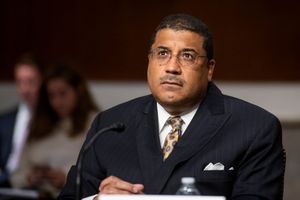
Frank Rose — Principal Deputy Administrator of the National Nuclear Security Administration, the agency's second-ranking official. President Biden nominated him, the Senate confirmed him, and he took office on August 2, 2021. In April 2024, he was forced out. He is now suing the Department of Energy, which oversees NNSA.
 Kathryn Kate Hewitt
Kathryn "Kate" Hewitt — Rose's research assistant at the Brookings Institution from 2018 to 2019, and later a public affairs specialist at NNSA. She alleges that Rose harassed her at Brookings and later retaliated against her at NNSA by refusing to keep her on a Pentagon detail. Rose says he did neither.
Jill Hruby — NNSA Administrator, Rose's boss. She called to tell him he was being investigated. She also chose the office that would do the investigating.
Christopher Davis — DOE chief of staff. He told Hruby what Rose's choices were. Walk out, or get thrown out.
 Richards
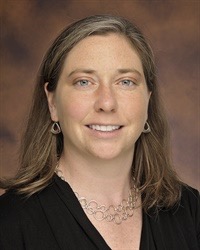
Jocelyn Richards — a DOE attorney. She was consulted about where the case would go.
Matthew Rotman — deputy director of OHA. He helped decide that OHA should receive the matter and then authored the document prescribing what OHA would do with it.
Samuel Walsh — DOE General Counsel during the entire period. He is now in private practice.
WHAT HAPPENED
Sometime in February 2024, DOE says complaints came in about Frank Rose.
On February 24, 2024, while Rose was on official travel in Hanoi, Hruby called to tell him that complaints had been made and that DOE's Office of Hearings and Appeals would investigate them.
Seventeen days later, on March 12, she called again. The investigation was finished. He could resign, or he could be fired.
They didn't tell Rose what he had done. They didn't tell him who said he'd done it. They didn't interview him. There was no hearing, no report, and no findings. There wasn't even anything he could appeal.
 Davis
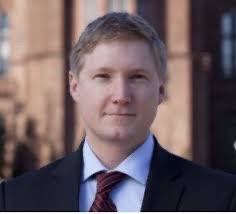
DavisChristopher Davis, Energy Secretary Jennifer Granholm's chief of staff, told Hruby what to tell Rose: quit, or we'll fire you in public.
DOE later acknowledged in court that Davis said he wanted Rose out of NNSA.
So Rose quit. He still didn't know what they said he'd done.
What Rose apparently did not anticipate was Politico. His accuser, Hewitt, went to the publication.
Politico named Rose, told readers he had been accused of sexual harassment, and did not name the woman accusing him.
The government had not told Rose the accusation. A news organization did. Rose and the public learned the charge together.
This story is not about Kate Hewitt.
It's about what Biden's Department of Energy did with her complaint.
Hewitt said the trouble at NNSA went back years. She said she'd complained at Brookings that Rose sexually harassed her, and that later, at the NNSA, he retaliated against her for it.
THE OFFICE THAT WAS NOT SUPPOSED TO GET IT
There was already a procedure. DOE had written it down. The memorandum applied to harassment complaints and contained an unusually uncomplicated sentence: there were no exemptions.
The rules required two things Rose never got: tell him the charge and let him answer.
Instead, DOE sent the matter to its Office of Hearings and Appeals, an office whose ordinary work includes deciding FOIA appeals and security-clearance cases.
OHA is an adjudicative office. Its central purpose is not to investigate allegations but to hear disputes and decide them.
And that institutional difference raises the question at the center of the story: whether OHA was chosen not despite being adjudicative, but because it was.
They didn't switch detectives. They sent the case to the judges.
WHERE IT STANDS
Rose is now suing DOE, arguing that he was forced to resign. One of the things his lawyers want explained is why DOE sent his case to judges instead of investigators.
An investigation asks whether an allegation is true. Judges decide what happened. Rose got no real investigation and no hearing.
From "you're under investigation" to "quit or be fired" took seventeen days.
And they saved some time by never asking Rose what happened.
Whether Hewitt was entitled to complain is not the issue here. The institutional question is how the government converted an accusation into a compelled resignation in seventeen days without hearing from the accused.
THE PROCESS DOE WROTE FOR ITSELF
DOE cannot plausibly plead absence of guidance. When the complaint arrived, the department possessed a policy specifically prescribing what officials were to do.
Under the Anti-Harassment Program, complaints go first to Human Resources.
Policy Memorandum 102 does the tedious work rules are supposed to do. It tells the bosses where to send the complaint, what happens next, and when the accused gets his say.
PM 102 applies to all DOE federal employees. It then states the point so plainly that interpretation is difficult: "There are no exemptions to this Policy Memorandum."
Rose was not outside the department. NNSA is part of DOE, and NNSA employees are DOE employees.
The procedure is mandatory enough to be dull. Referral to HR within three business days. Preliminary inquiry by the designated Anti-Harassment contact. Further factual inquiry, if required, by Employee and Labor Relations through a manager whose title actually includes the words Fact-Finding Services.
What PM 102 does not provide is a departmental buffet.
Three other offices can become involved in harassment matters, but none gives management the option to bypass Human Resources and choose another forum.
The Office of Civil Rights handles discrimination-based harassment under federal EEO rules. The complainant chooses that process; management does not choose it for the complainant. It creates a record and provides the accused with appeal rights, standard protections in a formal administrative proceeding.
The Inspector General is another office, but it is particularly awkward for any theory of managerial control.
Misconduct, abuse of authority, and retaliation are its province.
Yet PM 102 reserves to the IG the independent decision whether to investigate. Management can neither appoint the investigators nor dictate the route.
NNSA itself has Internal Affairs. Its purpose includes investigating questions of integrity and personnel conduct inside the agency.
The offices are different. The common denominator is precisely what due process requires, and bureaucratic convenience sometimes dislikes: a record capable of being examined later.
Reports. Interviews. Records. Rights. Something another person can look at later. And they investigate first. The bosses decide what to do afterward.
THE OFFICE THAT ADJUDICATES

DOE did not follow the harassment procedure it had written. The case went to OHA.
In DOE's own words, OHA is its "central administrative adjudicative forum." The operative word is adjudicative. It is not investigative.
One asks what occurred. The other decides what follows from an evidentiary record.
OHA more closely resembles an administrative court than an internal investigative unit. A case comes in. Judges look at the evidence. Then they rule.
The subject was not obscure. When Hruby called Rose, she described the inquiry as involving "hostile work environment and harassment."
The case went to an office whose ordinary work was not harassment but security adjudications, FOIA appeals, contractor whistleblower disputes, and energy-efficiency enforcement.
Two subjects conspicuously absent from OHA's ordinary portfolio were the two central to Rose's case: harassment and retaliation.
THE SIX WORDS
There is an exception. OHA is not wholly forbidden from fact-finding. It places certain fact-finding assignments under a heading called "Other Areas of OHA Jurisdiction," and under that provision DOE management may ask OHA to conduct independent fact-finding reviews or special projects.
But there are conditions.
"At the request of DOE management officials, OHA may conduct independent fact-finding reviews or other special projects to fulfill a departmental need. These reviews may involve a specific allegation, a general review of the workplace environment, or an adjudication for which no appropriate process currently exists."
The department would naturally prefer attention to linger on the permissive phrase "fact-finding." The consequential words are the limiting ones: "no appropriate process currently exists."
Those words impose a condition. Without that limitation, OHA could become an alternative forum whenever management wanted to avoid the ordinary process.
Yet the ordinary processes were there. The harassment policy existed. The IG existed and had already received complaints about Rose. No one has produced a contemporaneous statement that either route was unavailable.
And the provision supplies another inconvenient noun: "adjudication."
The provision places fact-finding beside adjudication. OHA could gather facts when properly assigned to do so, but the office itself remained an adjudicative institution staffed largely by officials trained to evaluate evidence and decide cases.
Why bring in the judges before the regular investigation even starts?
And here's the bigger problem.
Whatever authority DOE believed it was invoking, the residual provision supplies no procedural rules for conducting the review.
Call it fact-finding, and none of the rules judges follow apply.
Yet the protections of the harassment policy vanish, because OHA appears nowhere in PM 102's investigative sequence.
One begins to see the attraction. By calling the exercise neither a proper harassment investigation nor adjudication, DOE arrived at a procedural no-man's-land in which the safeguards of both could be discarded.
THE POLICY THAT NAMES EVERY OFFICE EXCEPT OHA
PM 102 establishes a procedure. A manager must refer the matter to Human Resources within three business days.
The policy leaves little room for interpretation. That is who the rules say gets the complaint.
If more facts are needed, the case goes to Employee and Labor Relations. PM 102 says so.
The memorandum names the offices. Human Resources. Employee and Labor Relations. General Counsel. The Inspector General. The IG decides independently whether to investigate.
The whole point was that nobody got to make up the process as they went along.
OHA is not on the list.
Rose's case went there anyway.
The prescribed sequence was not difficult to understand: complaint, preliminary inquiry, further fact-finding if necessary, a response from the accused and, only then, management action.
In Rose's case, DOE appears to have taken the matter out of that sequence and delivered it instead to an office whose normal function lies much closer to the final stage: deciding cases.
THAT CHOICE WAS NOT SUPPOSED TO EXIST
PM 102 gives the supervisor no authority to select whichever forum he or she prefers.
Courts don't ask lawyers to promise they won't pick their favorite judge. They build rules so they can't.
PM 102 does the same thing. The complaint goes here, then here, then here. No exemptions.
The protection lies in removing discretion.
The sequence itself is the safeguard.
OHA describes its role as residual, a place for matters with no other institutional home. Rose's matter had several.
To get Rose into OHA, they had to step over not one safeguard, but two.
THE TWO ORDERS THAT DON'T APPLY
Then Rose sued. His lawyers asked the government one question under oath: What rules were you following?
DOE did not name PM 102. Instead, it cited Redelegation Order S2-DEL-HG1-2019 and DOE Order 243.1B.
DOE Order 243.1B governs records management. It says nothing about how a harassment investigation is to be conducted.
Redelegation Order S2-DEL-HG1-2019 addresses authority to sign documents.
The orders cover records and signatures. They do not say how to investigate harassment.
Neither explains why Rose's case was sent to administrative judges.
WHO CHOSE OHA, AND WHY
 Jill Hruby
Rose's lawyers asked who decided to use OHA rather than Human Resources, Civil Rights, the Inspector General, or Internal Affairs, the offices ordinarily associated with harassment matters?
They wanted to know when it happened, and whether anybody bothered calling the offices that normally did the work.
Finally, they asked for the document that should exist if OHA truly was an exception of necessity: a record establishing that someone had determined the ordinary processes were unavailable.
DOE answered that Hruby selected OHA after consulting DOE attorney Jocelyn Richards and OHA Deputy Director Matthew Rotman.
That settles one question. We know who sent the case around the regular offices.
The reason for the choice remained unanswered. DOE declined to provide one.
Motive, however, remained undisclosed.
DOE produced no evidence that the ordinary offices had been consulted, no contemporaneous explanation for the selection of OHA, and no record that anyone had determined the established process could not be used.
There was no call, no memorandum, no finding, and no written determination of necessity.
Before OHA was chosen, did anyone actually make the determination OHA itself says should justify its involvement: that no other process was available?
If no such finding existed, the forum choice requires another explanation.
Was OHA picked because it had something HR and Internal Affairs didn't? Judges. People whose job was to decide.
DOE's Office of Public Affairs and OHA did not answer written questions about the choice of forum. Samuel Walsh, DOE's General Counsel during the relevant period, also did not respond.
 Sam Walsh
THE SIX
DOE opened Case No. NNSA FFR-24-0001 and assigned six officials to conduct the review.
Janet Fishman, an administrative judge, opened it.
Another administrative judge, Katie Quintana, served as lead manager.
Phillip Harmonick, also an administrative judge, was designated on the paperwork as a "co-investigator."
Diane Miles was a general attorney.
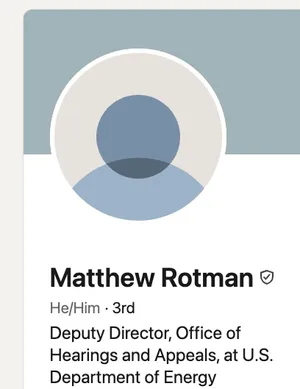
Matthew Rotman is the name to watch. He was OHA's deputy director. He helped choose OHA. Then, once OHA had the case, Rotman wrote the rules for what OHA would do.
At the top sat Poli Marmolejos, OHA's director and chief judge. His job included keeping the bosses updated.
Four judges, a lawyer, and a deputy director. No investigator by position. So for this case, they took a judge and called him an investigator.
Marmolejos briefed leadership before the review was finished.
The bosses got briefed on Rose. Rose didn't get briefed on Rose.
OHA knows the difference. Judges decide. Investigators interview and report.
DOE had investigators.
It chose judges and lawyers instead.
And here the arrangement begins to contradict its own stated purpose.
They sent Rose to judges. He never got a hearing.
Nobody even told Rose what he was accused of.
He never saw the evidence.
He could not present evidence in his defense.
They didn't call anything a decision either. That solved another problem: you cannot appeal something they say was never decided.
OHA never interviewed Rose, although Rose was the person they were investigating.
Rose got the worst of both worlds. Investigated without the protections of an investigation. Judged without the protections of a hearing.
The bosses acted as though he had been found guilty.
Maybe this wasn't just a case of sending the investigation to the wrong people.
Perhaps the investigation was not mishandled. Perhaps, in practical terms, it was bypassed.
Maybe they didn't botch the investigation at all. Maybe they skipped the bothersome due process investigation and went straight to the verdict.
Next: four government statements, three stories that don't fit together, and the questions nobody in Washington has answered yet.


