The $10 Billion Company the Feds Forgot to Mention
The government says Josh Wander lied to keep 777 alive. It never tells the jury what was being kept alive.

AT A GLANCE
Company: 777 Partners LLC, a private investment firm headquartered in Miami
Founders: Joshua Wander and Steven Pasko founded 777 Partners in 2015
Indictment: Alleges nearly $500 million obtained from four lenders and investors by fraud
Scale: A 2023 investor presentation said 777 had more than $9 billion in gross assets
Holdings: Included structured settlements, insurance, aviation and football clubs
Airline assets: 777 owned Flair Airlines and launched Bonza
THE COMPANY THE INDICTMENT DOESN'T DESCRIBE

The US Attorney for the Southern District of New York's indictment of Joshua Wander goes on for more than 40 paragraphs, which is plenty of room to tell a story about a man.
The story it tells is that Wander lied about collateral, falsified bank screenshots, and sold shares in his company, 777 Partners LLC, using numbers that weren't true.
The indictment describes 777 Partners in one paragraph. It was, the government says, "a private investment firm headquartered in Miami, Florida," whose "initial and primary focus was underwriting and financing structured settlements," and which "became one of the largest buyers of structured settlements in the secondary market."
For the remaining 40-odd paragraphs, 777 Partners exists almost entirely as a company that borrowed from four lenders: a London investment fund, an Atlanta finance company owned by a Canadian bank, a Dutch bank, and an insurance company.
The word "lender" appears 110 times.
Nearly every time it appears, a lender is being lied to. 777 Partners appear 104 times and Wander 153 times, and they are the ones allegedly doing the lying.
The indictment says Wander obtained nearly $500 million from four lenders and a group of investors by fraud: more than $350 million in borrowing backed by collateral 777 did not own or had pledged twice, about $25 million from a fourth lender, and more than $100 million from investors. It does not say how much of that was lost.
What is missing in the story the indictment tells is what 777 Partners was.
The indictment does not say 777 was a fake company. It says the opposite: a real firm, one of the largest structured-settlement buyers in the country, that expanded into airlines and sports and, when its cash ran short, borrowed dishonestly to keep expanding.
What it leaves out is how big 777 was.
WHERE IT CAME FROM
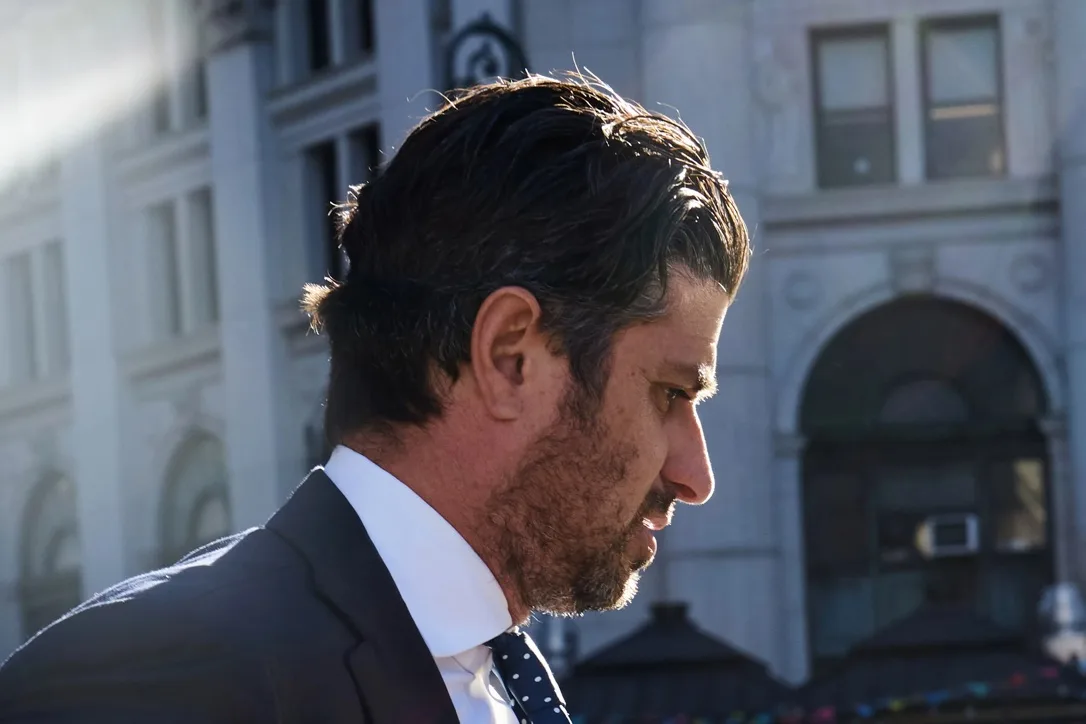
Joshua Wander and Steven Pasko founded 777 Partners in Miami in 2015. Wander was the majority owner.
777 Partners' first business was buying structured settlements and lottery winnings: a person owed money over many years sold the payments to 777 for less money now.
It was simple, dull and profitable.
By the company's own account to investors, it earned an average return on equity of 40 percent a year from 2016 to 2020. Wander could have taken his share and gone home rich. Instead the profits went back into the business and were used to buy more businesses.
The first ones all worked the same way. Someone has money coming to them slowly, over years: an accident victim paid out over two decades, a lottery winner paid in installments, a plaintiff waiting on a case. They want it now. 777 gave them a smaller amount today and collected the full payments as they came in.
The catch is that a business like that needs a lot of money up front and gets it back slowly.
Insurance companies have the opposite problem. They collect premiums today and pay claims years later. In between, the money has to be invested somewhere.
So 777 bought insurance companies and had them fund the loans.
One side of the company lent money out slowly. The other side supplied it. 777 owned both.
Then, starting around 2018, Wander used the profits and borrowed money to buy businesses that had nothing to do with settlements.
WHAT IT BECAME
A 2023 investor presentation said 777 had more than $9 billion in gross assets, seven business lines, more than 60 operating companies, and thousands of employees.
Mark Shapiro, the restructuring executive now running what remains of 777 Partners, has described the peak as more than $10 billion invested across more than 500 entities.
Its insurance businesses included three carriers rated A-minus by AM Best. They were not imaginary insurers.
777 Re, its Bermuda life-and-annuity reinsurer, reported $449 million in book value at the end of 2022.
Sutton National, a Miami property-and-casualty insurer, reported $101 million.
Merit Life sold annuities.
777 Asset Management reported $4.6 billion under management in 2023.
PLANES
In aviation, 777 owned Flair Airlines, Canada's largest independent ultra-low-cost carrier.
When 777 invested in 2018, Flair was a small charter operator. Under 777's ownership, it became a national airline, reporting $295 million in revenue in 2022.
The point is physical. Aircraft took off. Crews appeared for duty. Baggage was loaded. Passengers looked down through windows at Canada. Three thousand people did something very inconvenient for a fraud: they showed up for work.
777 also launched the Australian airline Bonza in 2021.
Its aviation holdings also included Denmark's FlexFlight, an aircraft-leasing business, and travel-technology companies.
THE BOEING BET
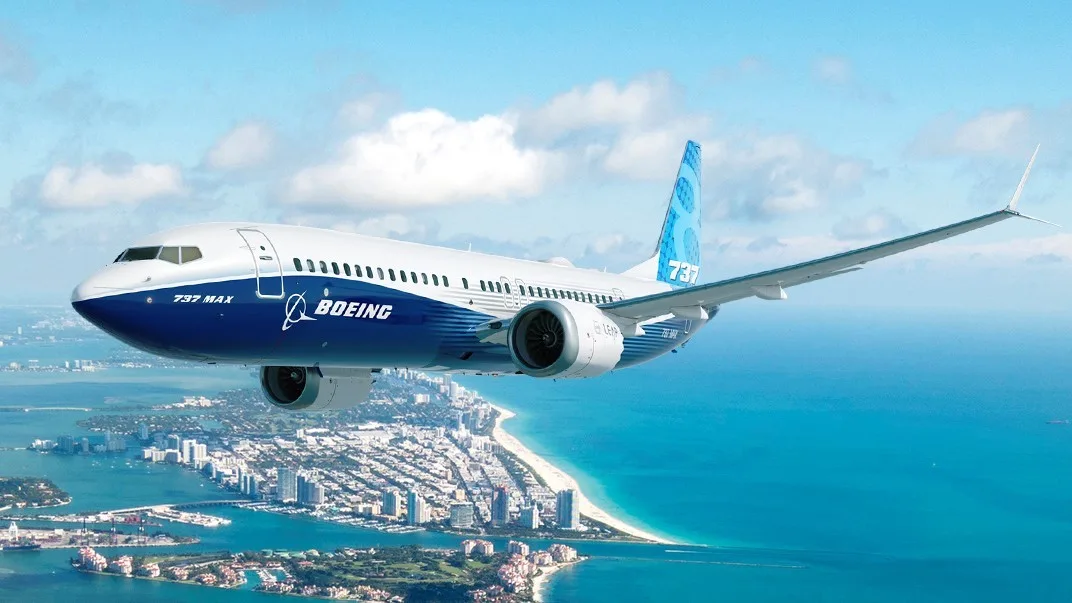
In 2021, the 737 MAX had just been cleared to fly again after two crashes and nearly two years on the ground, and COVID had emptied the airports. 777 ordered 24 of them from Boeing, with rights to buy 60 more. Almost nobody else was buying.
It was a real chance: a plane that had just been through two crashes and a grounding, ordered when almost no one was flying, for two small airlines, Flair in Canada and Bonza in Australia, that were still being built up.
The bet on the airplane was right. Within three years the 737 MAX was Boeing's best-selling plane, everyone wanted planes again, and Boeing could not build them fast enough. The places in line that 777 had bought cheap were now worth a great deal.
It is the classic investor's move: buy when everyone else is afraid. 777 did it.
CLUBS

777 bought football clubs, known as "soccer" in America, before American money discovered the sport.
By 2023 it held interests in seven clubs across Europe, South America and Australia:
Genoa CFC, the oldest club in Italy, founded 1893, in Serie A. 777 owned all of it.
Hertha BSC in Berlin, founded 1892. German rules bar outside majority control, so 777 held most of the economic rights and a large minority of the votes.
Standard Liège, the main club of Liège, in Belgium, founded 1898. 777 owned all of it.
Vasco da Gama, a Rio de Janeiro club named after the Portuguese explorer, founded 1898, one of Brazil's four big Rio teams. 777 owned 70 percent.
Red Star FC, a historic Paris club from 1897 that had fallen into the lower divisions. 777 owned all of it.
Melbourne Victory, Australia's best-supported club, in the A-League. 777 owned 70 percent.
Sevilla FC, a top Spanish club from 1890. 777 owned about 15 percent, a minority stake, meaning it was a part-owner without control. That was its first football purchase, in 2018.
777 valued the portfolio at about $1.5 billion.
By autumn 2023, 777 was seeking to acquire Everton, one of England's oldest football clubs.
FIRST IN, PAID LESS
When 777 started buying clubs in 2018, almost no American investors owned European soccer teams. The clubs were old, famous, badly run and cheap. The idea of owning several at once, so they could share scouts, data and players, was still an oddity.
By 2024, American private-equity firms, hedge funds and NFL and NBA owners were bidding against each other for the same clubs, and owning a group of them had become a common model.
777 got there first, and paid less.
777 made a similar bet in basketball. It bought the London Lions, and a 48 percent interest in the British Basketball League.
The NBA is now planning a European league, with London expected to be a major market.
FILM, FINANCE AND THE REST

Its media holdings included STX Entertainment, Film Finances Inc., Reel Media, Pivotal Post, and Fanatiz. STX produced dozens of films and television programs, including Hustlers, Molly's Game and The Gentlemen.
Its finance businesses included uOwn Leasing, ProbateCash and 777 Equipment Finance. AIP Capital financed aircraft for other airlines.
Its litigation-finance businesses included American Horizon, ML Healthcare, Brickell Key Asset Management and Justice Funds.
Its European holdings included TAMI, a London equity-release mortgage platform valued by 777 at $400 million, as well as software companies.
The point is not the names. It is how many there were.
Sixty companies.
Seven major lines of business.
Two airlines.
Eight sports teams.
Three insurance companies.
A film studio.
And thousands of people going to work on four continents.
The indictment reduces all of this to the act of borrowing.
THE MATH PROBLEM
Now compare the size of that enterprise with the conduct alleged.
The government says more than $350 million in collateral was not there as Wander represented to the lenders.
About $200 million of that concerned a London lender, Leadenhall Capital Partners LLP.
The government further alleges that private investors put in more than $100 million because Wander showed them false projections.
The indictment also says he obtained a $20 million loan, later increased to $25 million, on the condition that he keep it in cash, then moved about $13.7 million of it into a personal brokerage account and sent the lender doctored bank statements showing the money still there.
The indictment alleges nearly $500 million in fraud; it does not allege that lenders suffered $500 million in losses.
The eventual loss, if any, has not yet been determined.
The government has an explanation for why Wander would do it.
777 ran short of cash. It needed financing. The government says Wander lied to obtain it.
Wander owned most of a company reporting more than $9 billion in gross assets and, by its own valuations, equity worth billions. If those figures were accurate, a few-hundred-million-dollar collateral problem was substantial but not existential.
A man short a few hundred million in a company worth billions has choices. He can sell something. He can borrow from someone else. He can bring in a partner. Bankers get paid a great deal of money to arrange exactly that.
Fraud is the one choice that ends in prison.
WHAT HE STOOD TO LOSE
Because Wander owned most of the company, he had more at risk than almost anyone.
And what was Wander supposed to gain by taking that chance?
The allegation is not that Wander personally pocketed $500 million. The alleged benefit was more time with more borrowed money to keep the company alive.
Against that, he risked the company itself.
Men have committed crimes for stupider reasons.
The point is that the motive becomes less simple once one examines what was risked and what was gained.
The prosecution's reply is that 777 ran out of cash and that deception kept it operating.
WHAT WAS REAL
The airplanes flew.
The football clubs took the field.
The insurers issued policies and paid claims.
AM Best rated the insurance carriers.
Those were real.
The defense contends that 777's operating businesses began to suffer in late November 2023 after the media outlet Semafor reported that the US Attorney's Office for the Southern District of New York had opened an investigation into 777, including whether it had violated money-laundering laws.
No one knows who leaked it. Semafor published on Nov. 30, 2023.
The government says it formally opened the matter on Nov. 28, two days before publication. It also insists nobody on the team supplied the information to the press.
Department of Justice rules and policies restrict disclosure of nonpublic information about ongoing investigations. But the leak submarined 777.
Insurers suspended business. A Utah regulator contacted a major lender. Lenders began filing default notices.
None of these institutions needed an indictment before reacting.
Within seven weeks, its bank, Goldman Sachs, closed the accounts.
Even after the story, in February 2024, Leadenhall and 777 signed a term sheet to settle their dispute, to be funded by a securitization through TAMI, 777's London mortgage business. The defense says the publicity killed the financing. When the payments stopped, Leadenhall sued, in May 2024.
WHY HE HANDED OVER THE KEYS

Within six months, Wander voluntarily surrendered control of the company.
He and Pasko handed it to a restructuring firm, in what was presented to the lenders as a temporary measure, for what was supposed to be a few weeks. The firm never left.
The company's collapse came after the publicity announcing an investigation. The indictment came almost two years later.
The defense contends that the publicity turned a functioning business into a collapsing one. The publicity came from a leak. The government denies that anyone on the prosecution team supplied the information, and the source of the leak has not been publicly identified.
Shapiro now puts the company's remaining workforce at approximately 15 people.
There were thousands of people once.
That is the enterprise the indictment largely leaves undescribed.

Next: the cooperating witness at the center of the prosecution. It is a curious thing. The indictment names only one person besides Wander as part of the scheme: the company's chief financial officer, the man through whose office every borrowing report, every compliance certificate and every investor projection passed. He has pleaded guilty to four felonies. He is not on trial. He is the government's witness.

$500M Fraud Rap — and a Baby Photo as 'Witness Tampering' (Aug. 20)
FEDS OPEN FILE — TWO DAYS LATER NEWS REPORT KILLS $10B FIRM (Aug. 22)
How the DOJ Made Its Own Victims in USA v. Wander (Aug. 27)
Josh Wander Asked for Nothing. The Government Calls It Witness Tampering. (Sept. 11)
LEAK AND DESTROY: Feds' Secret Tip Killed 777 Partners, a $10B Firm, Before the Case Even Existed (Sept. 14)
Sworn to Nothing: How SDNY Beat the Wander Leak Motion (Sept. 14)


There is no one in America that reports on the Justife Departmeny like Frank Parlato. Every other outlets parrots tye DOJ. Parlato actually gives the defendants a presumption of innocence.