What Makes a Work of Art Feel Instantly Recognizable?
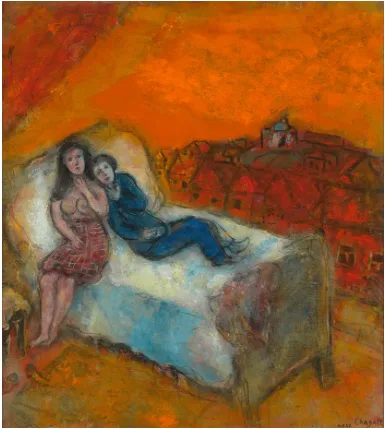
(above: Couple sur le lit by Marc Chagall)
Some works of art stay with you after only one glance. You may not remember where you first saw them, or even know every detail about the artist, but something about the image feels familiar. It could be a certain color palette, a recurring symbol, a way of drawing a figure, or a mood that seems impossible to mistake for anyone else’s. That instant recognition is one of the most powerful qualities art can have.
A Strong Visual Language
Recognizable art often begins with a strong visual language. Just as a writer develops a distinct voice, an artist develops a way of seeing and expressing the world. This might appear through bold lines, dreamlike compositions, unusual proportions, or repeated themes. Over time, these choices become part of the artist’s identity. Viewers begin to associate certain visual cues with a specific creative mind.
The Power of Color
Color is one of the clearest examples. Some artists are remembered for soft, muted tones, while others are known for bright, expressive shades that seem to glow from the canvas. When color is used consistently and meaningfully, it becomes more than decoration. It helps create atmosphere, emotion, and memory. A particular blue, red, or green can make a work feel immediately connected to a wider body of art.
Recurring Themes and Symbols
Subject matter also plays a major role. Certain artists return again and again to the same ideas, places, figures, or symbols. These recurring elements give their work continuity. A viewer might recognize floating figures, village scenes, animals, musicians, lovers, or religious imagery not because every painting looks the same, but because the emotional world feels connected. For collectors, curators, and art lovers exploring original Chagall paintings for sale, this kind of recognizable symbolism is often part of what makes the work so compelling.
A Style That Feels Personal
Style, however, is not just about repetition. Truly memorable art feels personal. It carries a sense of imagination that could not easily belong to anyone else. The brushwork, composition, and emotional tone all work together to create something distinctive. Even when an artist experiments with different techniques or subjects, there is often an underlying sensibility that remains steady.
Familiarity That Lasts
Cultural familiarity can also shape recognition. Some works become widely known because they appear in books, museums, classrooms, exhibitions, and public conversations. The more people encounter an image, the more it becomes part of a shared visual memory. Still, popularity alone does not explain why certain works endure. The strongest pieces continue to feel alive because they offer more than a familiar look. They invite people to return, notice new details, and feel something different each time.
A Balance of Clarity and Mystery
Instantly recognizable art has a rare combination of clarity and mystery. It gives the viewer enough to identify it quickly, but not so much that it becomes predictable. That balance is what allows a work to stand apart. It feels familiar, yet still full of possibility.
In the end, recognition comes from more than a signature or a famous name. It comes from the feeling that an artist has created a world of their own. When a work of art carries that unmistakable presence, it does not simply catch the eye. It lingers in the imagination.