
March 5, 2026

I Thought Judges Were Supposed to Be Smart
A reader writes:

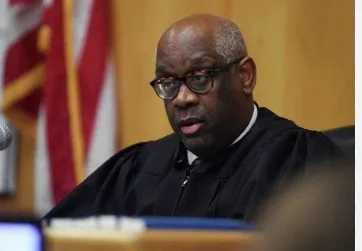
Dear Frank, I’m watching a family member go through the federal court system, and the judge seems completely in the government’s pocket. He interrupts the defense, lets the prosecutors do what they want, and acts like my family member is already guilty. I always thought judges were the best lawyers in the room.
My Answer

Frank Speaketh:
I’m going to explain something that nobody in the legal profession wants to share. But they all – at least the sophisticated members – know it.
Most judges are not lawyers who gave up big money for public service. Judges are mostly lawyers who couldn’t make big money in the first place, and most of them are former prosecutors.
This is the great secret of the American bench. A good trial lawyer, the kind who wins complex cases, makes $2 million a year or more. These lawyers are not taking a pay cut to become judges at $200,000 per year.
Even a mediocre lawyer can make $500,000 per year.
So who becomes a judge?
The lawyer who was almost adequate.
The almost good lawyer, who one day thought: You know what would be nice? A guaranteed salary, at or above what I am making, plus a pension, light work, a few hours per week, and my own room full of people who have to stand up when I walk in.

If you’re the 40th-best lawyer in your law firm and you’ll never be the 5th, or even 10th, a judgeship is a promotion. You get a title, a robe, a courtroom where everyone calls you “Your Honor,” and respect from your peers you never got before.
Plus, nobody interrupts you.
For a lawyer who spent twenty years being almost competent, it’s gravy.
The Road to the Bench Runs Through a Swamp

But being a subpar lawyer isn’t enough. You also have to be a politician, which is unfortunate, because the skills that make a good politician and the skills that make a fair judge are exactly opposite.
No one becomes a federal judge without a United States Senator putting their name forward. No one becomes a state court judge without the blessing of a political party, a governor, or a local machine.
You have to play favorites to become a judge.
You attend dinners, make donations, and serve on political committees nobody else wants to serve on. You laugh at the right jokes. You learn which people to flatter and which to avoid. After performing party loyalty, proving you are reliable, predictable, non-threatening, dull, financially supportive of the party, and obedient to the party bosses, someone makes a phone call, and you’re fitted for a robe.
The public is supposed to believe that this politically adept person, who spent a career being mediocre at law and excellent at networking, is now going to become a guardian of the Constitution.
It’s the naivete of Americans.
The Prosecutor Problem

There’s one more thing. Most judges were prosecutors. Not defense lawyers. On the federal bench, former prosecutors outnumber former defense lawyers four to one. The bench isn’t balanced. It was never meant to be.
Before your judge put on the robe, he spent ten or twenty years building cases, presenting evidence to juries, and asking for convictions. The defense lawyer was his opponent. Every instinct he developed, every habit of mind, every assumption about how a courtroom should work was forged from the prosecution side.
Now he’s supposed to be neutral?
Prosecutors themselves are not the cream of the legal profession. The gifted trial lawyers go where the money is — the defense, the big firms, and high-stakes civil work.
Prosecutors are government employees on government salaries doing volume work. But the best leave for private practice where their salaries jump from $150,000 to a million per year.
The ones who stay either love putting people in prison, or they can’t do better elsewhere. The dirty little secret is that the odds are so rigged against the defense in American courtrooms that even a lousy lawyer as a prosecutor seems good, since they have all the advantages.
And usually, the judge is squarely on their side in everything.
The Judge and Prosecutor Are on the Same Team
Prosecutors who can’t do better in private practice are the ones who end up on the bench — because a judgeship is the biggest promotion a career prosecutor can get.
The judge sees the prosecutor every day. The local U.S. Attorney’s office or the District Attorney’s office appears in his courtroom week after week, year after year. The judge knows them by name. He knows their children’s names. They eat lunch in the same building. They attend the same legal conferences.
America does not have the most people in prison by pure accident of fate or because its people are worse than others in other lands. It’s just that its judiciary is worse than others.
The defense lawyer shows up for an occasional case. He rarely has an ongoing relationship with the judge and has no leverage to build one.

The Incestuous Appeals System
Who has the power to make the judge’s life difficult? A defense lawyer who loses a case can appeal, but appeals courts rarely overturn convictions.
Appellate judges take care of trial judges. After all, they were trial judges once themselves, and before that, they were likely prosecutors too. They protect their bad conduct and bias because they had the same thing happen to them and were protected by appellate judges when they were trial judges. It’s an incestuous system.
The judge, therefore, faces almost no consequences for ruling against the defense even if the defense is right.
The Prosecutor Holds the Judge’s Reputation in His Hands

On the other hand, a prosecutor who is unhappy with a judge? That’s a problem. Prosecutors talk to each other. They can make a judge miserable — filing motions, demanding hearings, dragging out cases. They can whisper that a judge is “soft on crime.”
And the judge needs the prosecutors’ goodwill.
When the defense appeals a conviction, who do you think defends the judge’s rulings? The prosecutor. The same office that tried the case writes the brief to the appeals court, arguing that the judge did everything right. The judge’s reputation on appeal is literally in the prosecutor’s hands.
Judges do not defend appeals against them. The prosecutors do.
He’s Not in Their Pocket. He’s Family.
The judge has every incentive to keep the prosecutor happy and no incentive to keep the defense lawyer happy. The prosecutor can hurt him. The defense lawyer can’t. The prosecutor defends him on appeal. The defense lawyer attacks him.
You wonder why the judge seems to be in the government’s pocket? He’s not in their pocket. He’s in their family.
Even if your relative is innocent, expect a conviction. That’s how the American system works.
The Constitution says the executive and the judiciary are separate but equal branches. They’re not. Your judge is a former prosecutor who socializes with prosecutors, depends on prosecutors to defend his rulings on appeal, and fears being called soft on crime by prosecutors. The only branch left to check the judge and prosecutors as a team is the jury — and as you’ll see in Part 2, the judge spends the entire trial making sure the jury doesn’t know it.

Next: What Judges Don’t Want Jurors to Know — And Why It Matters More Than Anything Else in This Piece
See also Honor Killings Have Drawbacks
And Hang the Jury and Nullify Bad Law