
By Frank Parlato
A Confused Jury Convicts — And a Fool Walks Into His Own Trap

Paul Boyne, 64, was convicted on 18 felony counts of stalking and electronic stalking on March 10 in New Haven Superior Court.
His crime was a blog. TheFamilyCourtCircus.com.
He named Connecticut family court judges, described their homes, published their addresses, and invoked the idea of how appropriate it would be if someone used rifles with specific calibers to take their lives.
No one injured any judge. The blog was up for years before they prosecuted him.
The FBI reviewed the blog in 2015 and declined to bring federal charges. Eight years passed. Then Connecticut moved.
They could not prosecute him at first because there was no hate crime cyberstalking law on the books in Connecticut. Then in 2022, they made one. It appears Connecticut enacted the law largely to charge him.
Connecticut’s electronic stalking statute — CGS § 53a-181f — did not exist before 2022.
Virginia State Police arrested Boyne in July 2023, following an investigation by the Connecticut State Police Computer Crimes Unit and Hate Crimes Unit. Virginia extradited him to Connecticut.
During the pendency of the case, Boyne spent 18 months in a Connecticut jail.
The Trial

The trial went forward. Four judges testified, three of whom said they were afraid on the stand.
At the end of the trial, Judge Peter L. Brown read the jury 145 pages of instructions. The jury started deliberations on Monday at 4 pm. They deliberated for 45 minutes and went home. They came back Tuesday, deliberated another 45 minutes, and convicted Boyne on all 18 counts.
Ninety minutes. Eighteen felony counts. A novel First Amendment standard that appellate courts across the country are still working through. Five minutes per count.
Judge Brown did not base his 145 pages of jury instructions on justice. It was a ploy to confuse the jury.
For a detailed breakdown of what those 145 pages contained and what they left out, see our earlier report: What 145 Pages of Jury Instructions Do to a Jury — and What It Does for an Appeal.
What Confusion Does

Confused people do not make brave decisions. Confused people make safe ones. In a jury room, the safe decision is the one that requires no juror to stand up and say the state is wrong.
Juries tend to fear the judge and the prosecution.
The founders thought the jury would be the palladium of liberty and safeguard the country from judges like Brown.
It takes no bravery to convict. You get the prosecution’s smiles and the judge’s nod. You just avoid the eyes of the defendant who is going away.
It is easier to convict when you are confused. You cannot articulate why acquittal is right. You cannot hold a position you cannot explain. You cannot resist other jurors when you are not certain of the standard yourself.
Acquittal requires courage. Even to debate requires courage.

The 145 Pages
Judge Brown’s 145 pages were unnecessary. The typical Connecticut criminal charge runs 20 to 60 pages. The Counterman standard — the single legal concept that could have produced acquittal — was four pages. The remaining 141 pages were statutory definitions, repeated eighteen times, one for each count.
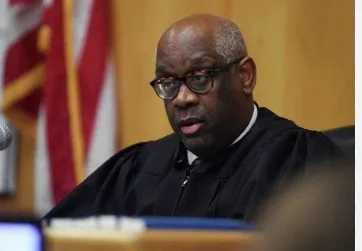
Brown was a trial judge in a case where his colleagues were the alleged victims. He had good reason to want a conviction. He would have embarrassed the whole judiciary if the jury had returned an acquittal, so he cooked up the jury instructions to ensure the jury found Boyne guilty.
For our full analysis of Judge Brown’s two lies to the jury, including the unanimity trap and jury nullification, see: Judge Brown’s Two Lies in the Boyne Trial.
Boyne was foolish. He must have known Brown was corrupt. The prosecution offered Boyne a misdemeanor and time served, but he declined and went to a judge who wanted to find him guilty. His miscalculation — he thought the jury would save him.
But a confused jury, misled by a corrupt judge and buried under 145 pages of instructions, is no safeguard.
The Fool

Boyne’s words are savage. His hatred and bias hurt his cause of exposing the corrupt family court system.
When you combine antisemitism and racial bigotry with a call for bullets to the head and then turn down a misdemeanor that would have set you free, you can be said to be a fool.
Now he faces anywhere from no jail time — he had that already in his pocket — to five or ten or more years in prison.
He has elderly parents at home, at last report, who need his help.
The Sentencing
Maybe Judge Brown will be lenient. He ought to be, but that would require noblesse oblige, something that this coarse judge would never understand.
During the trial, Judge Brown had to pretend to be neutral. A judge can never tell whether a sole juror might be intelligent, hang the jury, and then disappoint his friends on the judiciary.
But now he has the rabbit in the stew pot, and he can cook him for as long as he likes. He has to prove this was not an excursion into foolishness and punish Boyne hard to save face for his cronies.
Boyne is scheduled to be sentenced before Judge Brown on May 26, 2026 in New Haven Superior Court.
The Appeal
Brown denied Boyne the right to represent himself three times during the proceedings. Under Faretta v. California, a competent defendant has a Sixth Amendment right to self-representation. Courts have held that wrongful denial of that right is a structural error — meaning it is not subject to harmless error analysis and requires automatic reversal. If Brown got that wrong, everything that followed, the 145 pages of jury instructions, the buried Counterman standard, the 90-minute verdict, is beside the point. The conviction unravels on its own.
Judge Brown decided 145 pages was the answer. He decided to repeat the prosecution-friendly statutory elements eighteen times and the defense-critical Counterman standard once.
A confused jury convicted and went home. Boyne goes to prison. Judge Brown can face his colleagues with honor. He is no judge, but he is, after all, one of the boys.


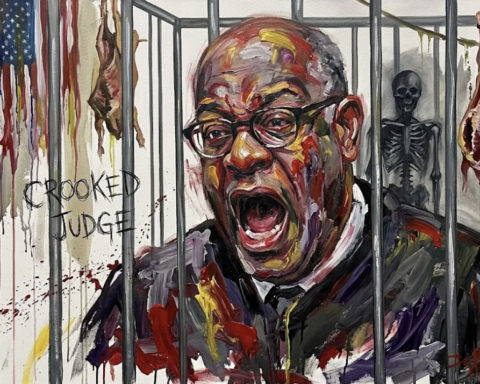
Judge Brown, crooked, bias and a true friend to his brethren – other crooked judges.
For the complete Frank Report coverage of the Paul Boyne case see:
Paul Boyne Convicted on All 18 Counts in Connecticut Family Court Blog Case
What 145 Pages of Jury Instructions Do to a Jury — and What It Does for an Appeal
Judge Brown’s Two Lies in the Boyne Trial

Frank Parlato is an investigative journalist, media strategist, publisher, and legal consultant.