
What Trump Did That No One Else Had Done
Donald Trump did something no modern president had done.
He treated clemency as a constitutional answer to institutional abuse. Other presidents used the pardon quietly and defensively, usually at the end of a term and with little explanation. Trump used it openly, early, and without apology. He said the pardon existed to correct the weaponization of the law.
He appointed Alice Johnson as Pardon Czar. He created a Weaponization Working Group inside the Justice Department. He defended the pardon openly, at rallies and on the record. He argued that the federal justice system had become too powerful to correct its own abuses, and that the Constitution gave the president a tool to correct what the rest of the system would not.
Trump’s innovation was that he did not present clemency as an exception but defended the pardon as necessary to the preservation of justice.
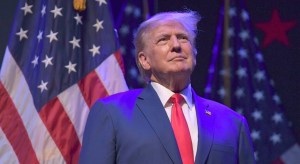
Alice Johnson and the Visible Argument
He commuted the sentence of Alice Marie Johnson in 2018 after she had served 21 years of a life sentence for a first-time, nonviolent drug offense. He issued the full pardon in 2020.
In 2025, he made her Pardon Czar.
He looked at her case the way ordinary people look at suffering. He saw something wrong and stopped it.
He opened the prison door and let her walk back into the world.

Alice Johnson walked out of prison and into a speaking role at the Republican National Convention. She walked into a job advising the White House on clemency.
A grandmother. A woman. A human being who had been given back her life while there was still life left to live.
Every president before Trump had treated clemency as a political liability. Trump treated it as an asset.
He looked at the pardon and saw a way to interrupt suffering. A way to return a mother, a grandfather, or a forgotten prisoner to the ordinary world where people laugh, eat dinner, and hold children again.
When Trump brought Alice Johnson on stage, he brought her before the nation so the people could look directly at what the law had done to a living woman.
Birthdays gone.
Children grew up without her.
Ordinary afternoons gone.
And when she stood there smiling and speaking before the country, something became impossible to ignore: the system had almost buried a human being forever and called it justice.
The Constitution and the Framers Saw This Coming
Trump understood that the federal criminal justice system had become a tool for ambition and retribution.
The system looks legitimate. There are grand juries, indictments, hearings, trials, sentencing guidelines, and appeals. The public sees all of it and assumes the outcome must be justice.
Yet Trump’s critics still treat the pardon as though there is something improper about using it.
The Framers did not share that idea. They placed it in the Constitution. Article II, Section 2: The president “shall have Power to grant Reprieves and Pardons for Offences against the United States.”

Hamilton wrote in Federalist 74 that without an “easy access to exceptions in favor of unfortunate guilt, justice would wear a countenance too sanguinary and cruel.”
Hamilton was saying that without a way to correct unjust or excessive punishment, the system that calls itself justice becomes cruel.
He was describing the system we have now, 238 years later.
When Trump pardoned Michael Flynn, the official White House statement called the prosecution “an outrageous abuse of power” and “the relentless, partisan pursuit of an innocent man.”

Years later, the lawyer for Changpeng Zhao, another Trump pardon recipient, told the Wall Street Journal that his client had been “pardoned for justice.” Not mercy, justice.
There are people sitting in prison cells who write letters year after year to strangers in Washington, hoping somebody will finally read their names with an open heart.
Too often, the letters disappear into offices where nobody wishes to risk criticism by helping them.
Trump said the doors might open.
Eugene Debs sat in federal prison for a speech against the First World War. Woodrow Wilson would not let him out. Warren Harding pardoned him. Debs walked out and was received by the country as the hero he was.
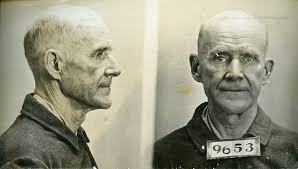
The prosecution had been the injustice. The pardon was justice.
Plea Coercion and the 97 Percent
Trump understood that the Department of Justice had become what the Framers warned us of.
The Department of Justice secures convictions through plea coercion in 97% of federal cases. It stacks charges to threaten decades in prison, so the defendant will accept seven years rather than risk 30.
Seven years if he pleads. Thirty if he fights and loses at trial.
Maybe he is guilty. Maybe he is not. But suddenly, fighting becomes something expensive, almost impossible to afford.
The defendant accepts the plea deal because the government has left him no intelligent way to risk the gamble of a trial.
The law calls this justice.
The Cooperator Problem
Prosecutors use cooperators who are incentivized to lie. They bargain with men facing charges. Tell us the story we need, and you walk away sooner. Maybe you walk away now.
So men speak. Some tell the truth. Some tell half of it. They learn fast that certain stories lighten sentences while others leave the prison door shut. The prosecutor rewards the right story, not the true one.
Cooperators are not a footnote in federal prosecution. They are the foundation. Roughly half of all federal cases rely on cooperator or informant testimony.
And here is the part the public rarely sees: the cooperator is often the real criminal in the case. He has done worse than the person he testifies against. He stole more, lied more, hurt more people. But he was offered the deal. He took it, and points the finger at someone higher profile, someone the prosecutor wants more than him.
The man with the worse record walks out lighter. The man he names goes to prison longer. The cooperator lies because the system rewards lying. He gives the prosecutor the story the prosecutor needs.
There is another phenomenon.
Inside the federal prosecutor’s office, the proudest conviction is not the easy one.
Anyone can convict a clearly guilty defendant.
The prized conviction is the difficult case, the one where the defense had a real argument, the one the office said could not be won. Former Ninth Circuit Chief Judge Alex Kozinski wrote in 2015 about this incentive structure inside federal prosecution. The career rewards the difficult conviction. The difficult conviction becomes the prized one. Sometimes that means convicting a man who never should have been prosecuted at all.
Pretrial Detention as a Plea Tool
Pretrial detention is another tool of injustice.
The detention centers are supposed to hold the presumed innocent. In practice, federal detention centers are harsher than the maximum-security prisons.

Prosecutors push for detention often not because of flight risk or danger to the community but to extract pleas or ensure victory at trial. The harshness takes the fight out of a defendant. It makes preparing for trial impossible. No quiet space to review discovery. No reliable access to counsel. No sleep. Lights on 24/7.
No clear head. Terrible food.
The body breaks down before the case is heard.
Prosecutors also use asset forfeiture to bankrupt defendants before trial so they cannot afford defense. Asset forfeiture allows the government to seize a defendant’s money, home, business, and bank accounts at the moment of indictment, before any conviction, based on the prosecutor’s allegation alone. The defendant is left unable to hire counsel of his choice and forced to rely on whatever the court will give him, which is exactly the outcome the prosecutor wanted.
Whatever is not seized disappears fast into legal bills. The business dies in the meantime. The defendant loses his job and can’t find work.
The children hear whispers at school. Friends disappear. The family begins selling things.
The Trial Penalty and Stacked Charges
Then there is the penalty for just going to trial.
Prosecutors stack charges. They take a single underlying act and break it apart into as many separate federal counts as the statute book allows, so that one alleged crime becomes five or ten or twenty charges, each carrying its own potential sentence, multiplying the defendant’s exposure and pressuring him to plead guilty to one count rather than risk being convicted on all of them at trial.
One allegedly fraudulent email can be charged as wire fraud, mail fraud, conspiracy, money laundering, money laundering conspiracy, monetary transactions in criminal proceeds, bank fraud, false statements to a bank, aggravated identity theft, and obstruction.
An innocent defendant who takes it to trial has to run the table. If he is acquitted on nine counts and convicted on one, something juries often do as a compromise verdict, the court punishes him in effect for the nine.
The judge can still consider acquitted conduct under § 3553(a) in sentencing. The defendant loses the acceptance-of-responsibility reduction.
Run the table or take the plea. That is the choice the system gives him.
The Captured Jury
The judicial coopting of the jury is another problem.
The Framers expected the jury to acquit when prosecutions were unjust. They expected jurors to use their nullification power as a check on government overreach.
Once the jury box held something wild and stubborn in it. Twelve ordinary citizens could stand between the government and the accused and say:
No farther.
Not this time.
Not in our name.
Now jurors enter the courtroom and are told their duty is obedience. Take the law exactly as given.
Jurors who admit an awareness of nullification are dismissed. Jurors who hesitate to convict are pressured by deliberation dynamics.
And if the jurors still hesitate, the judge calls them out and sternly urges them to keep trying for agreement, because the system dislikes a hung jury.
The Hung Jury Was the Citizen’s Last Veto
But the hung jury is the system working, not failing.
The Framers required jury unanimity on purpose. If twelve citizens cannot agree, the government has not made its case. The hung jury is the check the Framers wanted.
The Allen charge, sometimes called the dynamite charge, is the instruction a federal judge gives a deadlocked jury, urging the holdouts to reconsider their position in light of the majority view. It destroys the hung jury. When the jury reports it cannot agree, the judge sends them back with a stern instruction urging the minority to reconsider in light of the majority.
The dissenters, usually the holdouts for acquittal, capitulate.
The constitutional protection of a hung jury becomes a procedural inconvenience the judge maneuvers around.
The Framers wanted prosecutions to fail when the evidence did not compel agreement.
Most human beings do not enjoy standing alone against a room full of certainty. When the judge adds pressure, the federal jury becomes an intimidation chamber.
Twelve citizens are pulled out of their lives, sat in a windowless room, told they cannot leave until they reach unanimity, and presented with the prosecutor’s narrative for weeks while the defense fights to introduce evidence the judge has excluded.
Sustained.
Denied.
The verdict that emerges is not the community’s conscience.
The Number That Ends the Argument
The DOJ counts on it.
Ninety-seven percent of federal defendants plead guilty. Of the few who go to trial, the government wins most of the time.
In fiscal year 2022, according to federal court data, the federal government prosecuted 66,068 defendants. 290 walked out with an acquittal. 0.44 percent. The federal government convicted 227 out of every 228 defendants it chose to punish. The conviction rate is 99.56 percent.
Either federal prosecutors are the most accurate human beings who have ever lived, or the system has been engineered to produce conviction regardless of guilt.
No legitimate system of justice produces those numbers.
Almost everybody pleads.
Almost everybody who fights loses.
A republic built on liberty was never supposed to produce conviction rates that move with the certainty of factory output.
The Stacked Deck
Human institutions fail. Prosecutors are ambitious. They are political. They make mistakes and follow incentives like every other bureaucracy.
No human institution is right 99.6 percent of the time about something as complicated and tragic as human guilt.
Not schools.
Not churches.
Not families.
Not governments.
The federal prosecutor walks into court knowing the court favors the government. He knows the judge will usually defer to him on evidence and on what the jury is allowed to hear.
The defendant’s money is gone. The house may be gone soon.
The defendant no longer sleeps properly. He no longer laughs naturally. He sits in court tired down into his bones.
The prosecutor knows this.
He charges aggressively because the cost is zero, and overcharging leverages pleas. He uses cooperators he knows are lying because he knows the judge will limit the defense’s efforts to impeach them.
He knows the jury has been instructed in a way that funnels them toward a verdict of conviction. He knows the appellate court will affirm on “harmless-error” grounds.
The System Needs More Pardons, Not Fewer
Trump was the first modern president to see the modern system for what it is.
This is a system that requires more pardons, not fewer.
The federal prisons hold tens of thousands of people convicted under laws stretched past their meaning, pleas taken under pressure, and juries pushed toward conviction.
Some of them are guilty of something. Most are guilty of less than what they were convicted of. A significant number are guilty of nothing.
But there are always voices insisting that punishment must continue longer, that forgiveness is dangerous, that somebody has not suffered enough.
They are wrong.
The slogan should be “when in doubt, pardon.” Whenever the question is wrongful conviction, the answer is pardon.
Whenever the question is a prosecution that should never have been brought, pardon.
Whenever the question is a sentence that exceeds the offense, pardon. Whenever the question is a statute applied beyond its intended scope, pardon.
Whenever the question is a defendant broken by the system before trial, pardon.
The Pardon Is the Constitution Correcting Itself
The pardon was written into the Constitution because the founders understood that governments make injustices, too.
The pardon is justice. The pardon is not outside the law. It is the law correcting itself. The last human interruption placed inside the system by men who knew the criminal justice system alone could never be trusted completely with liberty.
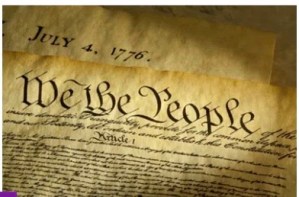
The Framers did not design the pardon because they expected perfection from the system. They designed it because they expected imperfection from every part of it.
The pardon is the last great instrument of correction in a federal criminal system that has exhausted every other corrective remedy.
The pardon is the republic correcting its own “justice” system before the system crushes one life too many.
Justice is the release of those whom a system has wrongly imprisoned.
Mercy says:
You did wrong, but enough suffering has already been carried.
Justice says:
You should never have been trapped this way to begin with.
Yet people speak of the rule of law as though law means only prosecutors, prisons, and convictions.
But the Constitution placed the pardon beside all those things.
Trump understood that the pardon is not an exception to the rule of law. The pardon is the rule of law. And will always be the law when justice is understood.
Trump understood that justice exists not to protect institutions but to protect people.
The fool keeps calling a pardon mercy. The Framers knew better.
So did Trump when he brought Alice Johnson on stage and told the country to look at what justice looks like when one person, accountable only to the people, stands up and corrects the injustices the rest of the system got wrong.

Artvoice Art