DOJ Gave Seized Evidence to a Private Buyer in Somoza Case

A federal prosecutor released unimaged evidence to a private buyer while the defendant sat in jail
Nineteen years later, the government has never explained why
On November 3, 2009, in a federal courtroom in Los Angeles, Judge A. Howard Matz sentenced Curtis Somoza to 25 years for a $64 million fraud.
The prosecution's case was that Somoza promised investors risk-free returns of 25 percent, told them their money would come back five-to-one, and instead spent more than $27 million of it in 16 months on two houses and a great deal of jewelry.
Matz called it an orgy of self-indulgence.
Somoza had pleaded guilty a year earlier, during jury selection of his trial.
He was 41.
He has denied the claims ever since — from the Metropolitan Detention Center in Los Angeles, then from the penitentiary at Lompoc, and since 2020 from home.
The Bureau of Prisons moved him to home confinement during the pandemic, when it was emptying federal facilities to reduce crowding. He was still serving the sentence. In December 2024, President Biden commuted the last seven years of his sentence.
That should be the end of it.
In this country, it almost always is. Roughly 95 percent of federal felony convictions come from guilty pleas. Trials are the exception now, not the rule. A defendant who stands up in open court and says he did it has said the one thing the system treats as final.
Appeals are waived.
The obvious analysis of Curtis Somoza is easy. He admitted it. He served 17 years. Now that he's home, he says his plea was false. That he is innocent.
Prison is full of men who say such things. How many of them are telling the truth, nobody knows. Nobody can know. The only false pleas anyone counts are the rare ones that later get undone.
 Somoza
WHAT A GUILTY PLEA IS
There is a genuine challenge with America's criminal so-called justice system. Those in the system know it, but do not discuss it much.
Among the people who make their living off of the system, it is a form of heresy to speak of it.
A guilty plea is not necessarily a true account of what a man did.
It is a document his lawyer negotiated.
The prosecutor decides which counts to charge and which to drop, and the defendant signs a factual basis written to fit the plea bargain.
What he admits to may or may not resemble what actually happened, including that nothing happened.
The system does not care. Once he pleads, the document is presumed true.
Somoza pleaded to nineteen felony counts. Two money laundering charges were dismissed.
What he was charged with, what counts were dismissed, and what he agreed to say happened were settled between lawyers.
INNOCENT MEN DO PLEAD GUILTY
The National Registry of Exonerations at the University of Michigan has documented more than 4,000 wrongful convictions since 1989. About 15 percent of those exonerated had pleaded guilty.
Among the DNA exonerations tracked by the Innocence Project — cases where science proved beyond argument that the wrong man was convicted — roughly one in nine had stood up in court and admitted to a crime he did not commit.
In Harris County, Texas, the crime lab kept testing seized drugs even after defendants had already pleaded guilty. In more than 150 cases, the substance turned out not to be a drug at all. Those people had confessed in open court to possessing something that did not exist.
They pleaded because pleading was the rational choice. It usually is.
Defense lawyers have a name for this coercive arithmetic: the trial penalty. Plead and get one sentence. Make the government prove the case and risk a much worse one.
The National Association of Criminal Defense Lawyers concluded in a 2018 study that the trial penalty has grown so large it has effectively ended the jury trial as a practical option for most defendants.
The indictment carried a theoretical maximum of 285 years. Somoza pleaded on the second day of jury selection and received 25. One need not possess a law degree to understand the calculation.
That does not make him innocent.
A plea is perhaps some evidence of guilt.
In a system that charges a man such that he might face 285 years and offers him a plea that might let him live a free man again in his life, it is not much evidence.
THE DISCOUNT HE DIDN'T TAKE
But something else about the plea does not fit comfortably with the usual explanation.
Somoza did not receive the ordinary reward for pleading guilty. Judge Matz said one reason for the 25-year sentence was Somoza's refusal to accept responsibility for the fraud.
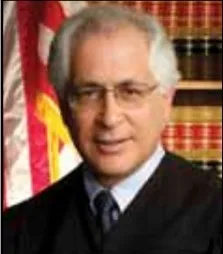 Judge Matz
That was a costly thing. Federal sentencing rules ordinarily reduce punishment for defendants who accept responsibility. That is the reward for pleading.
Somoza did not receive the discount.
Between his plea and his sentencing, he made the intolerable mistake of trying to withdraw the plea. The prosecutors fought the motion.
They won.
He was not going to get his day in court, except, of course, to be sentenced.
Consider what pure practicality devoid of truthfulness, of innocence or guilt, would have counseled.
A man of 41 who had decided he could not win, facing what amounted to a life sentence, had every reason to stand up, confess, express remorse and take the sentencing reduction.
Repent and survive.
Instead, Somoza pleaded guilty and then spent the next year trying to undo the plea.
The judge said no.
One possible explanation is that Somoza would not continue confessing to conduct he believed he had not committed.
Another is that he was guilty but too proud or stubborn to admit it honestly.
Judge Matz chose the second explanation. Somoza got the worst of both arrangements: no trial to contest the charges, and perhaps little or no sentencing benefit for taking the plea bargain.
The plea, then, cannot perform the evidentiary miracle ordinarily demanded of it. It does not settle Somoza's guilt. It never did.
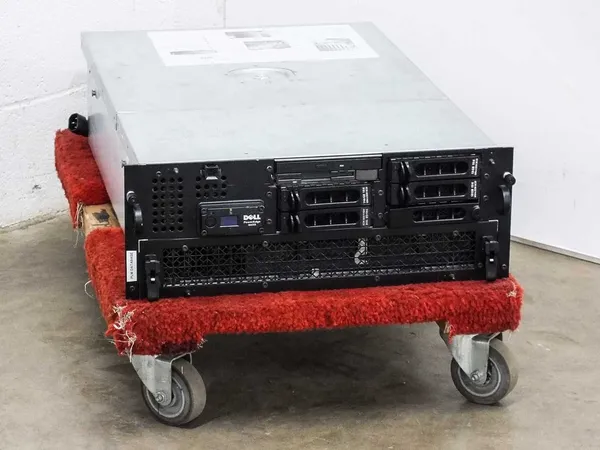
THE COMPUTERS WERE ALREADY GONE
When Somoza pleaded guilty in October 2008, the computers he said contained proof of his innocence had been gone for 17 months.
Federal agents had seized the computers as evidence. The government then gave them away.
Without copying them.
Somoza therefore had to decide whether to go to trial without the evidence he said was essential to his defense.
By then those machines, which he said held his email, his contracts and the models behind the business at the center of the case, belonged to a private buyer who had purchased the assets of Somoza's bankrupt company.
The sequence is simple. The FBI removed the computers from Somoza's house as evidence. His lawyer requested copies in writing. Four(Less than four) months later, with the criminal case still pending, the government released the originals to someone else. It had never copied them.
This series is about how that happened.
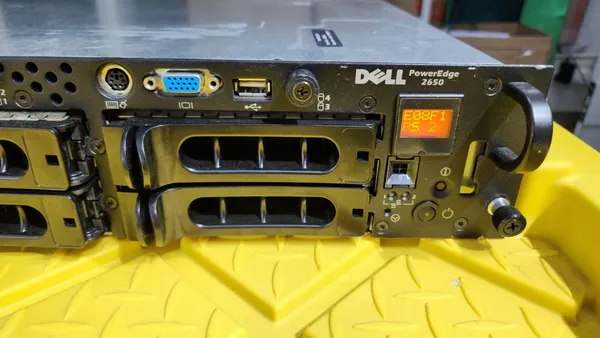 For reasons to be explored, the AUSA Ruth Pinkel kept some computers and chose to give away other computer, seized by the FBI. Somoza says the ones the government gave away contained evidence vital to his defense.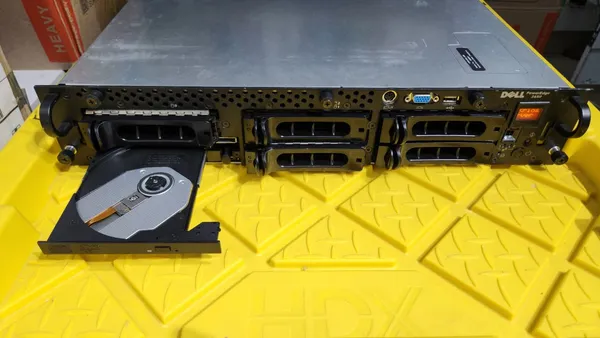
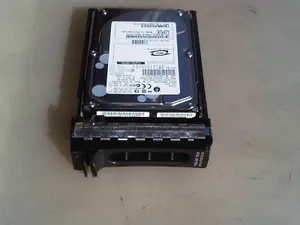
GIVING IT AWAY IS NOT DESTROYING EVIDENCE...?
People resist the suggestion that the system itself can produce injustice. Yet federal prosecutors and agents possess enormous power over what evidence is collected, preserved, disclosed and ultimately presented.
The word "rigged" is one respectable people prefer not to use about institutions to which they have entrusted coercive power.
There is a serious argument that what occurred amounted to destruction of evidence, even though nothing was burned, smashed, or tossed into a river.
Transfer the only originals to a third party, through the respectable mechanism of a civil proceeding, and one may achieve precisely the same result.
Somoza could do little about it. His bond had been revoked.
He was confined in the Metropolitan Detention Center awaiting trial when the government gave away the evidence it had taken from his house.
Strip away the procedural vocabulary and what remains is remarkable: during a criminal prosecution, after the accused specifically requested copies, the government relinquished original evidence it had never duplicated.
It has never been compelled to account for that decision.
Somoza pleaded guilty 19 years ago. It is easy to say it no longer matters.
But rules governing evidence exist for cases other than Somoza's. If the government can dispose of evidence once without explanation, nothing guarantees that it cannot happen again.
Three years later, from prison at Lompoc, Somoza asked the court to return his property. The FBI case agent responded under oath and listed what he knew about the location of each computer device:
Unknown.
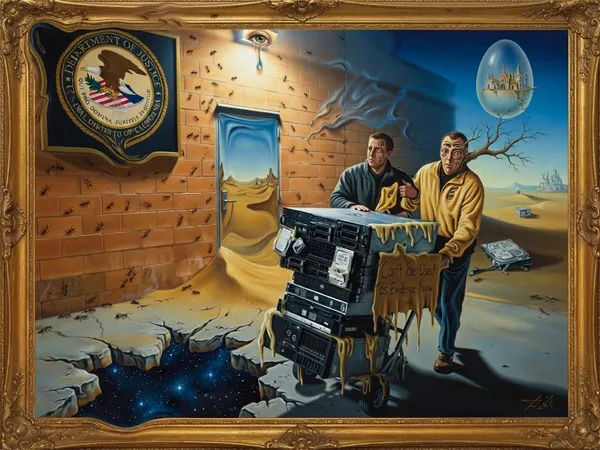 If evidence is given away, then no one can really say we destroyed it.
In the next in our series: The prosecutor wrote the list of what would leave the FBI's evidence room. She itemized a patch cord. She left off nine hard drives.
Somoza series
2,500 Black Churchgoers Got Free Insurance; He Got 25 Years
Somoza Part 2: The Insurance Worked. That Was the Problem
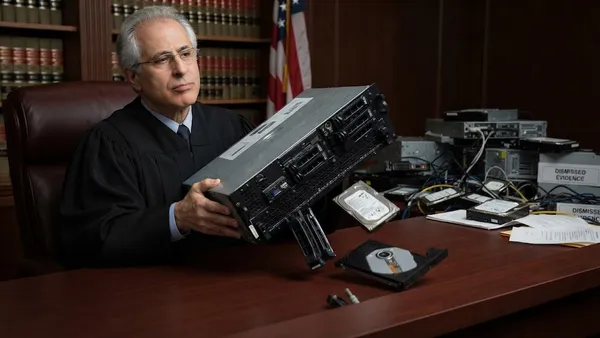 The judge was curiously uncurious about the missing evidence