LEAK AND DESTROY Feds' secret tip killed 777 Partners, a $10B firm before the case even existed
DOJ says nobody leaked to Semafor. Judge says don't ask.
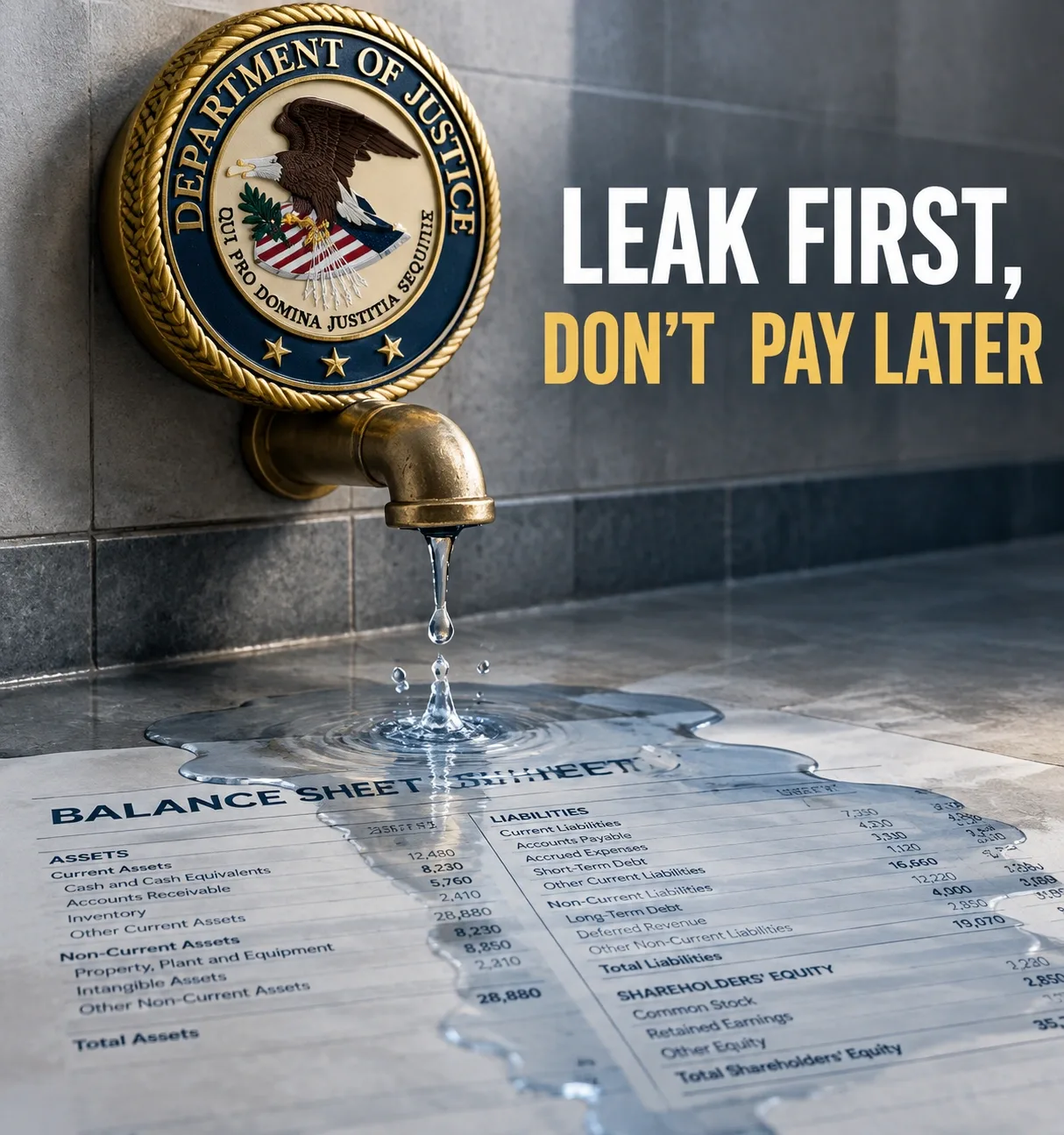
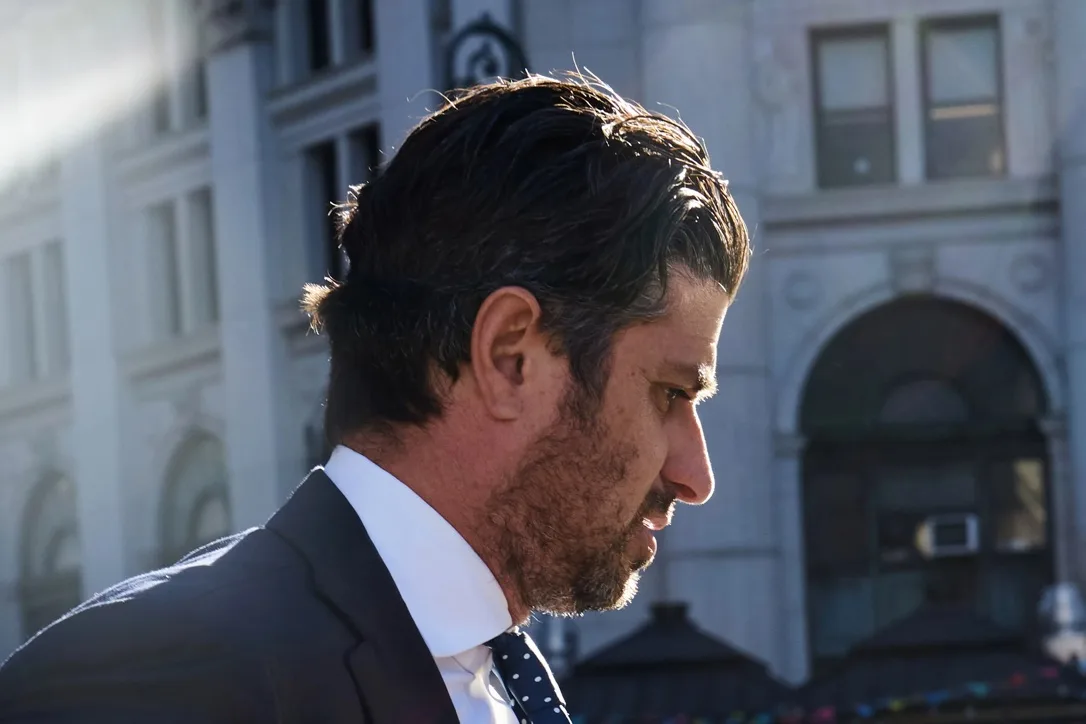
This is the fifth story in a series on United States v. Joshua Wander.
The first addressed the six counts against him.
The second examined how the Justice Department took down his $10 billion company, 777 Partners, after a leaked report of a federal investigation.
The third story showed how the leak technique created the victims the Justice Department will use to try to imprison Wander.

The fourth examined an add-on charge, witness-tampering, based on a dinner invitation and a baby picture.
This next is about the value of a leak.
Someone told the media outlet Semafor about an investigation into Joshua Wander and his $10 billion company, 777 Partners, before the government actually opened its investigation.
Semafor reported it and named the prosecutor: Nicolas Roos.
FOUR DAYS IN NOVEMBER
Here is the sequence, from the government's filings.
On Nov. 22, 2023, Semafor reporter Liz Hoffman called the U.S. Attorney's press office in Manhattan about 777 Partners.
On Nov. 27, she called again. This time she had a name. Semafor believed Roos was working on the matter.
Roos later swore he was not: "at the time of the inquiry I was not working on the matter as SDNY did not have an open investigation."
On Nov. 28, the office opened the investigation. Roos got the case.
On Nov. 29, the reporter emailed 777 to say Semafor would report the next day that the Justice Department had opened an investigation, including into possible money laundering.
She wrote that her sources had been "properly vetted" and had told her the investigation was "formal," though at an "early stage."
That was true. It had been formally opened the day before.
On Nov. 30, at 2:27 p.m., the story ran, headlined "Feds probe sports investor 777 over money flows," with Roos's photograph above it.
Perhaps the reporter was clairvoyant. The less supernatural possibility is that somebody knew something and told her.
NOT JUST ANY PROSECUTOR
What made the story lethal was the combination of the man it named and the woman who wrote it.
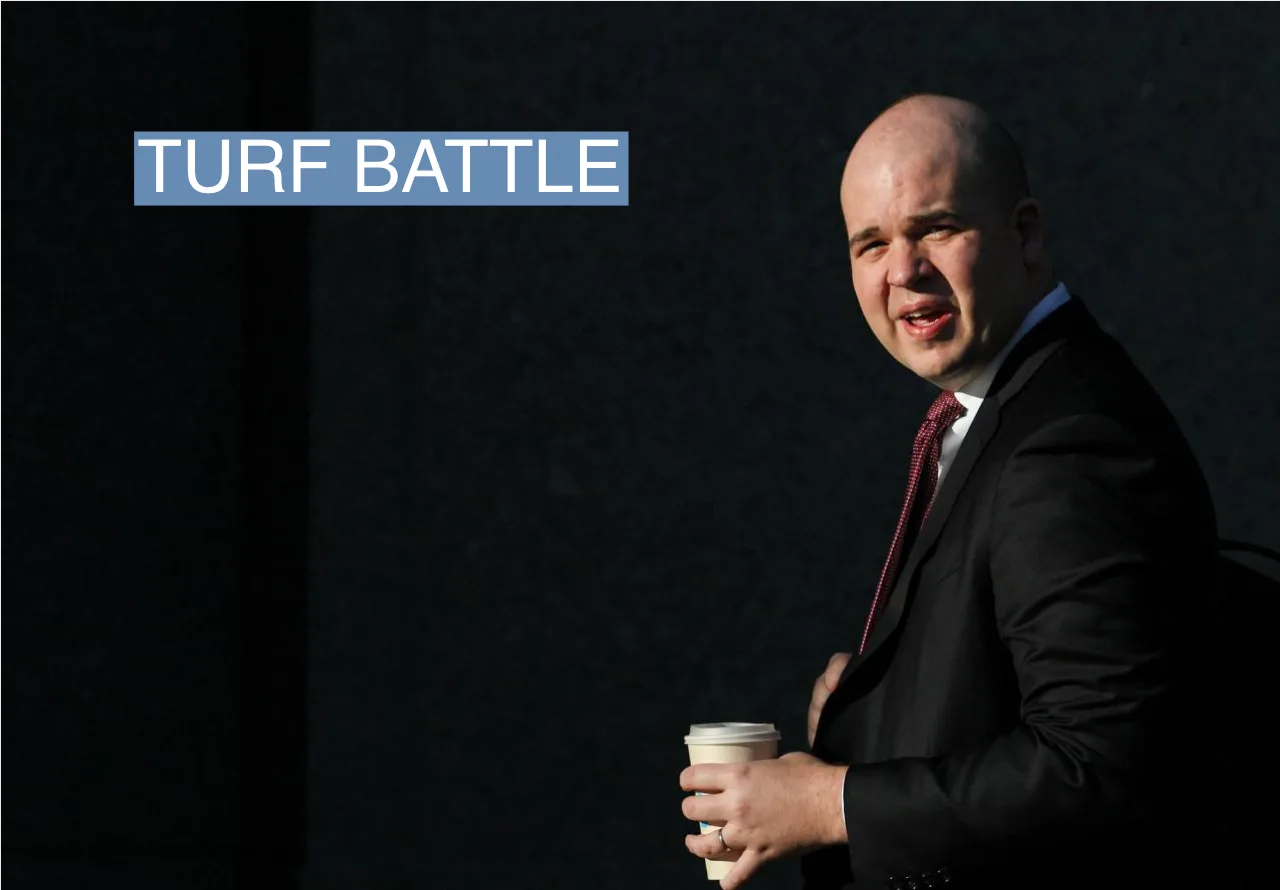
Nicolas Roos had prosecuted Michael Cohen, Lev Parnas, Steve Bannon and Trevor Milton. Four weeks earlier, he had helped convict Sam Bankman-Fried.
Semafor ran his photograph above the story. In the last week of November 2023, there was hardly a name in that office that said "this is serious" more plainly.
Liz Hoffman, who wrote it, had spent nine years on The Wall Street Journal's deals desk, breaking stories the size of Dell's purchase of EMC, before Semafor hired her as its business and finance editor.
She is the author of Crash Landing, a well-regarded book on how the biggest companies survived the pandemic.
A careful reporter. A serious outlet. Naming the man who had just put Bankman-Fried in prison, with his picture over the headline.
Every lender, insurer, and regulator who read it understood: the country's most formidable white-collar office had its best-known prosecutor on 777 Partners.

THE PERFECT OUTLET
And if you're going to leak, Semafor is your perfect media outlet.
Suppose someone in the government wanted an investigation known. Not announced officially. Known. Where would you leak it?
Not a tabloid.
You would want an outlet read by lenders, insurers, regulators.
Believed on sight. Fast. And somewhere the story would look like reporting, not a plant.
That is Semafor. Founded in 2022 by Ben Smith, late of The New York Times and BuzzFeed, and Justin Smith, late of Bloomberg Media, for an audience of executives, financiers and policymakers.
Its business newsletter lands on the desks of those who decide whether a credit line gets renewed. Its business editor came from the Journal's deals desk. When Semafor names a prosecutor, a London lender does not doubt.
Semafor was already writing about 777 Partners. Hoffman had run three hard stories on the firm in the sixteen days before November 30, when she reported the investigation and its prosecutor.
November 14, 2023: The money behind the mystery firm buying up Everton and other football teams
November 15, 2023: Mystery investor 777 Partners bought European sports teams with insurance customers' cash
November 22, 2023: The silent partner behind 777's buying spree
And the fourth, November 30, 2023: Feds probe sports investor 777 over money flows.
Same reporter, same series, and the source: "people familiar with the matter," reads as the next installment. The anonymous source or sources disappear into the sequence.
Targeted, credible, fast, camouflaged, deniable. If you wanted to kill a company before you had to prove anything, you could not pick a better outlet.
I am not saying anyone at the DOJ picked it. I am saying that if they had, it would look like this.
THE SEALED WEEK
Now consider when the conversation with the reporter took place.
The government says it opened the case on Nov. 28. The reporter had Roos's name on Nov. 27.
So if someone inside the government told her, the disclosure came while the office was deciding whether to open a case and who would handle it. The Justice Department calls that stage "predication."
The courts also give it a privilege. It is called the deliberative process privilege, and it lets the government keep secret what its officials said to one another while deciding what to do.
Even if those same officials tell a reporter what it decided it is going to do?
If the leak was authorized, the privilege is gone by waiver. If it was unauthorized, it is gone because the deliberation was the misconduct. Either way, the one thing the privilege cannot logically do is protect the conversation in which the leak occurred.
That is the thing it was used to do.
When the defense later asked to see what the government had redacted from its filings about that week, Judge J. Paul Oetken refused.
The material, he ruled, is protected by the deliberative process privilege, which shields government officials' internal discussions before they reach a decision.
Follow the logic.
If the source of the leak was inside the government, the disclosure came out of the pre-opening deliberations. Those deliberations are precisely what the court has sealed.
The privilege shields the very conversations that would show whether the government leaked it and who did.
WAS IT ILLEGAL?

Assume for the moment that the source was inside the government.
Was the leak itself criminal? No. Rule 6(e) protects grand jury matters, and there was no grand jury. On that point, Judge Oetken was right.
But it was forbidden.
Before charges, DOJ personnel are not supposed to announce an investigation or identify its subject. That is the department's regulation, 28 C.F.R. § 50.2.
The Justice Manual instructs employees not to answer questions about an ongoing investigation or discuss its nature and progress.
Prosecutors also have a professional obligation not to use public statements to prejudice a proceeding or intensify public condemnation of the person under investigation.
Telling a reporter that the office was looking at 777 for money laundering and that the man who had just convicted Bankman-Fried had the case violates all three rules.
None of those rules give the victim of the leak, in this case, Josh Wander, anything.
The rules are not enforceable by a defendant. The Justice Department can enforce them against its own people.
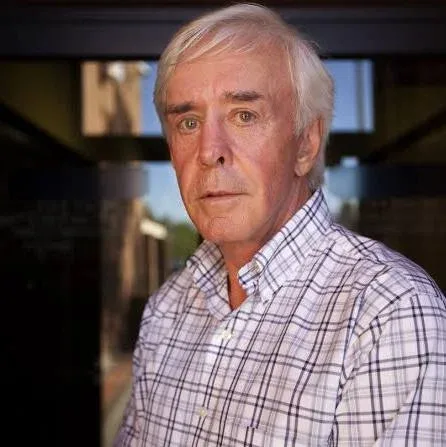
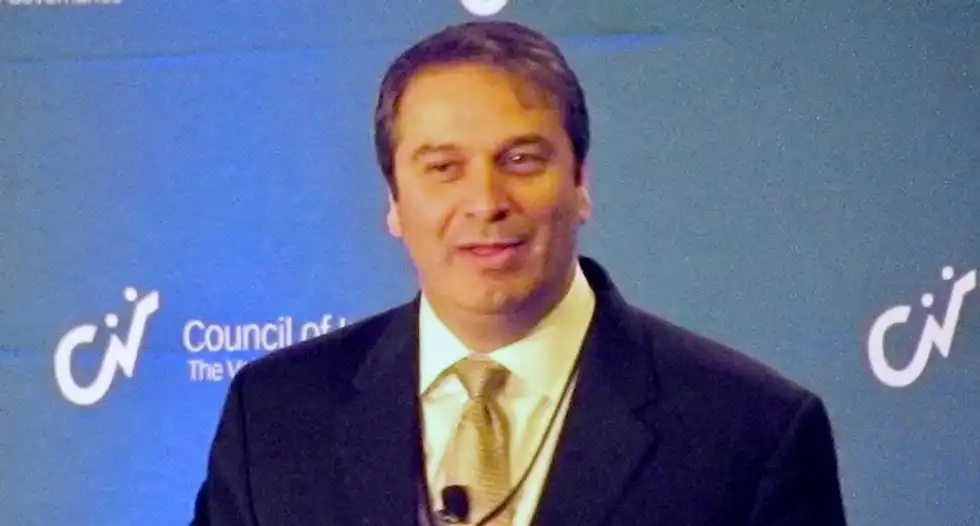
In another case, Billy Walters, they found the leaker. David Chaves, the FBI supervisor in charge of the investigation, admitted he had been feeding reporters for two years. Judge Castel referred him for possible prosecution. He was never charged. He retired from the FBI and ironically opened a compliance consulting business.
Walters's conviction stood.
So: as is proven in the Joshua Wander case (and others) leaking is against the rules, and it not the leaker's problem.
You can leak and destroy a company before you have proved anything, make sure there are real victims with real losses, and face no consequence a defendant can invoke and none the department has ever imposed on itself.
SOMEBODY TOLD HER
Which leaves the question this series of stories is about.
On November 27, Hoffman knew which Manhattan prosecutor was about to be assigned a case that did not yet exist. Somebody told her.
This is not a criticism of Hoffman. She did what a reporter is supposed to do. Somebody with knowledge told her something. She checked it. She gave the company a chance to respond. She published.
The problem is at the other end. The government and its weak rules about what its employees may tell the press and when.
Now look at what the story did.
The afternoon the story ran, the Utah Insurance Department contacted A-CAP, the insurance holding company that was 777's largest lender, about the article.

The next day, Dec. 1, Scottish Widows and Rothesay, the two British insurers that bought 777's home loans, suspended purchases pending an explanation of the reported investigation.


Within a week, lenders were sending default notices. A default notice does not require a missed payment. A reported criminal investigation suffices. It was a run on the bank, and everyone wanted to be first in line to get repaid before the feds closed the door.
On Dec. 7, the first creditor lawsuit was filed.
In January, Goldman Sachs closed 777's bank accounts.

Sixty days after the article, Wander's 777 Partners, a company valued at $10 billion, had lost its bank, its buyers, its biggest deal and the confidence of every lender it had.
FROM COLLAPSE TO INDICTMENT
On Feb. 8, 2024, AUSA Roos served the first grand jury subpoena.
By his account, this was the first investigative step of any kind — 10 weeks after Semafor had reported the investigation as an established fact.
On Feb. 21, 777 Partners and Leadenhall Capital Partners LLP, a London-based insurance-linked securities and asset manager, the lender/victim at the center of the case, signed an agreement to resolve their dispute. 777 was to pay down $25.6 million.

Part of the money was expected from a mortgage securitization. That transaction did not close. After the article appeared, counterparties began asking questions. 777 missed the payment.
On March 15, three weeks after signing the workout agreement, Leadenhall demanded that 777 repay more than $350 million immediately.
On May 3, 2024, Leadenhall sued in federal court in Manhattan, alleging a $600 million fraud.
That month, Wander and his partner transferred control of the company to a restructuring firm.
Within six months of the article, 777 was effectively dead.
The investigation expanded. According to the defense, prosecutors issued more than 37 subpoenas between February and October 2024. Prosecutors began interviewing 777 Partners employees in June.
In May 2025, Leadenhall took three portfolios it had valued at more than $170 million on credit bids of one dollar each.
On Oct. 14, 2025, Damien Alfalla, 777's former chief financial officer, pleaded guilty and agreed to cooperate with the government.
Two days later, prosecutors unsealed a four-count indictment against Joshua Wander, charging conspiracy to commit wire fraud, wire fraud, conspiracy to commit securities fraud, and securities fraud.
The government alleged losses of nearly $500 million.
The core allegations closely tracked those Leadenhall made earlier in its civil lawsuit.
A superseding indictment filed June 30, 2026, added two more counts: one involving a $20 million loan and another charging witness tampering.
Trial is scheduled for Oct. 19.
Everything in that chronology, from the first subpoena to the indictment, came after the article. Nothing came before it.
Wander's lawyers put the sequence before Judge J. Paul Oetken and asked to find out who leaked the investigation days before the DOJ officially opened its file.
THE FANCIFUL THEORY
At oral argument on the motion, prosecutor Sarah Mortazavi had a word for the suggestion that the leak caused the loss: "fanciful."
She then restated the defense theory as, in her telling, Wander would have to put it: "yes, there may have been a fraud that was committed, but it is these leaks that led to my inability to cover up or make better the ramifications of my fraud."
That was her caricature, not her concession. Her actual argument was simpler. A fraud, she said, "is complete when there is money or property that is obtained on the basis of a lie." Whether the lender ever lost a dollar "does not change the fact that a crime was complete."
Grant her the law for the sake of argument.
She was saying the crime does not depend on the loss. The defense was saying the loss depends on the leak. Both can be true.
It is, by the way, a delightful theory. You suspect a fraud, so you destroy the company. Then you investigate it.
The loss you create gives the charge its weight.
SENTENCING GUIDELINES
Under the federal sentencing guidelines, wire fraud starts at level 7. The loss table does the rest. A loss over $250 million adds 28 levels.
With the usual enhancements for sophisticated means and multiple victims, a first-time offender lands at level 39. The guideline range is 262 to 327 months.
Take the loss away, and the same offense is level 7 or 9, with the enhancement. The range at level 9 is four to ten months, and probation is possible.
Same statute. Same alleged lie. The difference between probation and twenty-two years in prison is the loss figure.
The loss figure is what the leak produced.
The government will say it can also count "intended" loss, the money the lenders put out on the strength of the collateral. Perhaps.
But a borrower who is paying, pledging more collateral, and signing a workout is a poor candidate for having intended anyone to lose anything, and that was 777's condition on November 29, 2023.
On November 30, a story ran. By spring, the borrower was in default, the workout was dead, and the loss was real.
WOULD THERE BE A CASE?
Without the loss, would this case exist at all?
The Justice Department's charging rules tell prosecutors to consider whether there is an "adequate non-criminal alternative to prosecution."
A collateral dispute between a borrower and a hedge fund, with a workout signed and payments being made, is the definition of one.
It is a civil case. It was already being handled as one.
The U.S. Attorney for the Southern District of New York does not bring level 9 fraud cases against defendants represented by Gibson Dunn.
It brings cases with victims, loss figures, and press releases with the indictment.
A four-to-ten-month case with a lender that had just signed a term sheet is a referral to the SEC, or nothing.
Wander's lawyer put it to the judge directly: "it's hard to see this being a criminal case at all if their principal victim and the company are working it out."
The government answered that victims are not always in control of whether a case is brought. That is true. It is also beside the point.
Victims who are being paid do not go to prosecutors. And prosecutors do not look for cases with no loss.
Somebody made sure there was a loss.
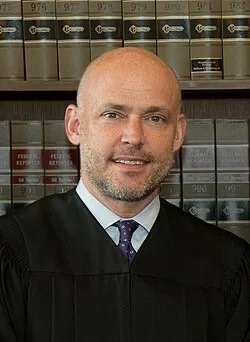
Wander's lawyers asked Judge Oetken to find out whether that somebody worked for the government.
The government's answer was simple: nobody at the Justice Department leaked anything. The judge accepted it without calling anyone to testify under oath.
Josh Wander's trial is in 35 days.
What the government filed in reply, and what the judge did with it, is the next story.