Former Silent Partners Sue Radovan Vítek for €535 Million
Marek Čmejla and Jiří Diviš allege they put about €400 million into Vítek’s companies under a hidden 50-50 partnership and were cut out of CPI gains.


AT A GLANCE
Defendant: Radovan Vítek
Plaintiffs: Marek Čmejla and Jiří Diviš
Claim amount: €535 million
Court filing: Statement of Claim filed in Nicosia
Alleged investment: roughly €400 million into Vítek’s companies
Key companies: CPI Property Group, ORCO Property Group and Rivaroli
Alleged buyout: €480 million handshake agreement in 2016
THE MEN WHO SAVED HIM
Two men are suing Radovan Vítek for €535 million.
Their names are Marek Čmejla and Jiří Diviš. They are Czech businessmen. They live in Monaco.
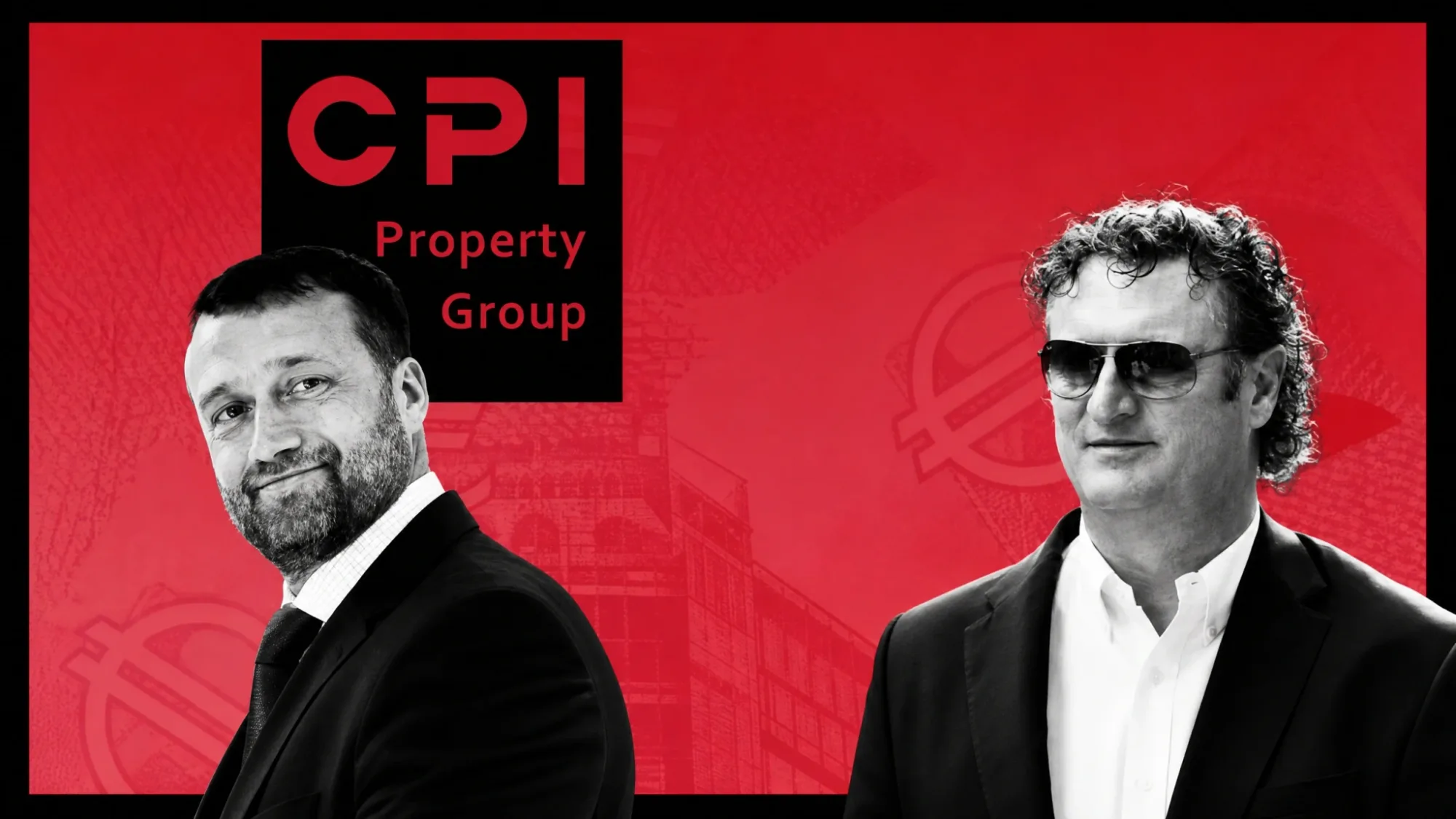
Čmejla and Diviš were involved in the 1999 acquisition of the Czech state's stake in the Mostecká uhelná coal company. A Swiss court later convicted them of fraud over that deal.
No one needs to mistake these gentlemen for choirboys. They knew it. Vítek knew it too.
Vítek has no criminal conviction. He has a record, and it runs in one direction.

Luxembourg's financial regulator, the CSSF, found in 2017 that Vítek took control of ORCO Property Group by buying shares through front companies so that his reported stake stayed below the level at which the law would have forced him to make an offer for the whole company.
It fined him for that, and for misleading the market. The takeover fine was €12,500. The misleading-the-market fine was €1 million. He kept the company.
A New York hedge fund, Kingstown, sued him in federal court in Manhattan for stripping ORCO's assets. The case was dismissed on the ground that it belonged in Europe. The judge never ruled on whether the accusations were true.
In 2023, Muddy Waters, an investment firm that bets against companies it believes are overvalued, published a report on four CPI transactions worth about €441 million and identified roughly €152 million it could not account for.
THE PATTERN
Their version of events begins not with litigation, but friendship.
According to the Statement of Claim filed in Nicosia, Čmejla and Diviš were Vítek's friends in 2007.
That matters, because people do things for friends they would never do for strangers. Then came the financial crisis.
By 2008, according to the claim, Vítek's Czech Property Investments could no longer pay its debts. The plaintiffs describe the company as being "de facto insolvency."
At the time, CPI was registered in the name of Vítek's mother, Milada Malá, while Vítek was going through a divorce.
A FRIEND IN NEED
Vítek turned to his friends for help.
According to the claim, he told them they "could trust him completely," that they could "help each other," and that he "would compensate them accordingly."
They began putting in money.
In November 2008, they paid about €29 million for half of four development companies. In February 2009, they paid another €5.5 million for half of a company called Malerba.
In 2009 and 2010, the claim says, Vítek proposed a 50-50 partnership. He valued everything he owned at about €308 million. Čmejla and Diviš would put in the same amount and, in return, own half of everything.
They would split profits and losses equally. Neither side could act without the other's consent.
Because of their Swiss conviction, Čmejla and Diviš could not appear as owners on any document. They would remain "silent partners" — or, in the language of the claim, "full (albeit invisible) partners."
A lawyer, Kristína Magdolenová, sat on the company boards for them and kept the documents that proved what they owned.
Between March 2010 and 2012, they paid about €296 million for shares in Vítek's residential housing company, CPI Byty.
By Nov. 27, 2012, the claim says they had paid about €361 million for their half of the partnership.
€400 MILLION IN, NOTHING OUT

Over the entire relationship, they say they put roughly €400 million into Vítek's companies.
According to the plaintiffs, without this investment, there would have been no later CPI Property Group, no €20 billion portfolio.
In 2013, the claim says, Vítek used partnership money and borrowed against partnership property to buy control of ORCO Property Group in Luxembourg without telling his partners.
The claim says Vítek actually controlled 49 percent of ORCO while telling the public he owned only 30.7 percent — just under the 33.33 percent at which the law would have forced him to make an offer to buy out every other shareholder.
The lawsuit further alleges that Vítek drove down the value of ORCO's Endurance real estate funds, helped bring about their sale to J&T Bank and then bought the funds' buildings through Sidoti, a.s., a company owned by his mother, for less than a competing offer from Danish pension funds.
Sidoti then sold the buildings to CPI at a €13.12 million profit.
According to the claim, Vítek kept that profit. His supposed equal partners received none of it.
PAPER FOR PROPERTY

In June 2014, Vítek put the CPI group — including the half his partners say was theirs — into ORCO Germany in return for newly issued shares and ended up controlling 94 percent of the company.
ORCO Germany became CPI Property Group.
There was one difficulty. For Vítek to make the transaction work, the men who claimed to own half of CPI had to give it up.
In return for surrendering their half, the partners received paper tied to a Czech company called Rivaroli, which Vítek owned outright and through which he held his CPI Property Group shares.
Vítek pledged half of those shares to the partners as security. Vítek's mother signed a €475 million promissory note, a written promise to pay, guaranteed by CPI.
A later loan agreement was secured by half of Rivaroli's share: if the loan went unpaid, the partners could take half of Rivaroli's share.
The partners' lawyer, Magdolenová, sat on the Rivaroli board beside Vítek's man, Zdeněk Havelka, and held the pledged shares.
For the moment, everything had documentation. They held a promissory note, a loan agreement and a pledge of shares — debts they could take him to court over.
Vítek also promised to put in writing the partnership - the 50-50 arrangement from 2010. He never did.

THE HANDSHAKE
By early 2016, CPI owed approximately €800 million to J&T Group and another €600 million to other lenders.
The lawsuit says the company "was not in a position to generate sufficient profits to repay" those obligations.
Vítek told the partners he intended to settle with J&T by issuing new shares and giving them to J&T instead of cash, with or without their consent.
Paying a creditor in newly printed stock shrinks everyone else's slice, and half of that slice was theirs.
The partners agreed to be bought out.
According to the claim, on April 30, 2016, Vítek agreed by handshake to buy their half for €480 million.
Of that amount, about €296 million would be paid by handing over CPI's Czech residential portfolio of apartment holdings, and €185 million would take the form of a five-year loan at 7 percent interest, producing about €13 million annually.
After hundreds of millions of euros and years of secrecy, they sealed the exit agreement with a handshake.
He made one interest payment. It was €3.7 million short. Then no payment came on the second anniversary or afterward.
According to the claim, Vítek transferred the residential portfolio they were supposed to receive from the companies named in the handshake to other CPI companies. The apartment buildings stayed where they were. The companies that were supposed to deliver them no longer owned them.
SHRINKING THE HALF
In 2016, CPI issued new shares six times. Each time, the new shares went to companies Vítek controlled. Rivaroli got none.
Rivaroli became a small holder in a much bigger company. Its stake in CPI went from 92 percent to 8 percent by 2018.
Vítek's control of CPI did not change. The partners' half of Rivaroli had been half of the enterprise. It was now worth 4 percent.
He simply printed enough of the company to make their half disappear, and sold every new piece to himself.
The lawsuit says the handshake agreement was therefore not a genuine settlement, but a device to "buy time."
Then he went after the 8 percent.
Vítek claimed Rivaroli owed him about €144 million. In December 2016, he sued Rivaroli to collect it. He controlled Rivaroli. The court notice went to his own director, Havelka, who, the lawsuit says, never told the partners' lawyer. Rivaroli did not defend the case. It agreed it owed the money.
On Sept. 5, 2017, a Prague court heard the case and delivered its judgment the same day.
He now had a court order saying Rivaroli owed him €144 million. A court order lets a creditor seize the debtor's property and sell it to pay the debt. Rivaroli's only property was its CPI PG shares, and half of those were his partners'.
So the next step was to have those shares seized and sold. To himself.
SOLD TO HIMSELF, ON THE SAME DAY
On Jan. 16, 2018, Vítek told a court bailiff that Rivaroli owned about 725 million CPI shares. The bailiff seized them that day.
There was no public auction. On March 5, 2018, the shares were sold to CPI Property Group, Vítek's company. The sale paid off the judgment, and the money went to Vítek. Seizure, sale, and payment all closed the same day.
In 2019, he did it again with Rivaroli's remaining 343 million shares. One bidder appeared: Mountfort Investments of Luxembourg, which Vítek owned. Mountfort bid less than one-fifteenth of the appraised value. The bailiff took it and paid Vítek the same day.
Vítek was the creditor. Vítek owned the buyer. Vítek got the money.
Rivaroli no longer owned anything. Every share it had held in CPI Property Group had been seized and sold. The partners' half of it was worth nothing.
In November 2017, the partners' lawyers wrote to CPI's board and its largest lenders setting out their claims.
Vítek denied that any partnership had existed. He denied that any buyout agreement had existed.
NINETEEN BANKS
The dispute eventually reached Cyprus, where Vítek's holding companies were registered and where the courts can freeze a defendant's assets worldwide before trial.
In December 2022, a Nicosia court found sufficient grounds to freeze €535 million of Vítek's assets. In July 2024, the court kept that freeze in place.
They had been invisible. Now a court had made their existence impossible to overlook.
The freeze order was served on 19 banks: the ones where the plaintiffs believed Vítek, his mother, and CPI kept accounts, including Goldman Sachs, Deutsche Bank, HSBC, Société Générale, UniCredit, and J&T Banka, several of which lend to CPI or sell its bonds.
Once served, a bank that lets the money move answers to the Cyprus court. Since March 2023, CPI's own lenders have had written notice of a €535 million claim against the company and its owner.
The order freezes up to €535 million of Vítek's assets worldwide. Whether the banks that received it actually restricted his accounts is not public.
A bondholder reading CPI's 2026 half-year report would not learn about the €535 million asset freeze.
The court order mentioned it. The corporate report did not. This is a significant omission, and we're pleased to inform bondholders and shareholders.
In our next story, we will examine what will happen if the partners win their lawsuit and why it may cause CPI to collapse.

Czech Billionaire Radovan Vitek Faces New Scrutiny Over Secrecy, Lawsuits, and Silence — Oct 6, 2025
The Man Who Mined Paper: Inside Radovan Vitek's Empire of Mirrors — Oct 29, 2025
Radovan Vitek's Rise Was No Miracle — It Was a Shell Game — Dec 8, 2025 (a repost ran Feb 24, 2026)
Czech Magnate Living in Ringo Starr's Mansion Allegedly Built €20 Billion Fortune Looting American Pension Funds… — Jan 23, 2026
Germany's Mark Branson Promised to "Step on Toes" — But Not Radovan Vítek's — Feb 9, 2026
Radovan Vítek: The Man Forbes Calls Self-Made — Mar 29, 2026
Inside Vítek's CPI: A Czech Billionaire's House of Cards — May 9, 2026
How Radovan Vítek Bought a Yacht With Bondholders' Money — May 13, 2026
Was Radovan Vítek's €52 Million Payment to His Son a Crime? — May 23, 2026
Radovan Vítek: Is the Billionaire Broke? — May 28, 2026
Forbes Says Vítek Is Worth $7.2 Billion. The Numbers Say Otherwise — May 31, 2026
The French Village That Billionaire Vitek Could Not Buy — June 29, 2026
Vítek's $7.2B Question: Where Did the Money Come From? — Aug 10, 2026
CZECH, PLEASE: Vitek Hid the Payout He Owed for 3 Years — Aug 11, 2026
MOTHER LODE: €330M Ran Through Vítek's Mom — Aug 12, 2026
Radovan Vítek's €188 Million Took a Trip and Came Back Home — Aug 21, 2026
Vitek: Two Boats, Built to Run — and 19 Banks on Notice — Aug 22, 2026
ROLL OVER, VÍTEK: Czech Tycoon's €1.7B Fundraising: Same Money, Later Date
SELF-MADE? SELF-SERVED Forbes says Czech tycoon Vítek built his $7B alone.