Somoza's Seized Computers Left the FBI Building. Nobody Kept a Copy.
Somoza's claimed evidence of his innocence vanished when the FBI squirreled them out the door
IN THE LAST PARTS
To wit: SOMOZA OUTSMARTED TRANSAMERICA. THE DOJ MADE HIM PAY FOR IT.
And Somoza Tried to Pay the Victims Back. The Justice Department Stopped Him
In sum:
In 2003, Rev. J. Benjamin Hardwick went to Curtis Somoza. He wanted burial insurance for poor people in his South Los Angeles church.
Somoza spent 600 hours on a mortality model and concluded Transamerica's numbers were wrong. Transamerica expected 1.6 deaths in the first year among about 1,200 mostly Black insureds. Somoza expected 8.3. More than 50 investors funded the premiums.
By his account, the first death came in 48 hours. Five died in five months. None was over 50.
He had outsmarted the insurance company.
The program worked. The church got paid. The families got paid. The policies on the living are still in force.
The investors were the ones who did not get paid. Transamerica invoked the contestability period, placed about $3.6 million with a federal court, and left the claimants to litigate over it.
That delay meant the investors were not paid on schedule. The federal government treated the delay as proof of fraud.
The church program was not Somoza's only venture. He was a tech man. One of his companies, Convoii, Inc., a developer of secure Internet communications protocols, filed for Chapter 7 bankruptcy on October 5, 2005 — seven months before the FBI came to his door.
At 7 a.m. on May 16, 2006, the FBI came to Somoza's home and arrested him. The charges included the church insurance program. Agents seized his computers — Sun and Dell servers, a disk array, a tape library, and 14 small removable hard drives they pulled, tagged, and serialized one by one.
He spent two weeks in custody, then posted bond.
In November 2006, he went looking for a buyer for the policy pool. He says he found one at $35 million — enough to repay every investor with a small profit. There would have been no victims.
About a week before the closing, prosecutors moved to revoke his bond, saying he had solicited investors. He said he was selling an asset he already owned. The judge revoked the bond. The sale did not close.
He went into the Special Housing Unit at MDC Los Angeles in April 2007. He says he stayed 327 days. No one at the Bureau of Prisons has produced a document explaining why.
On May 15, 2007 — while he sat in the hole — the FBI handed his computers to the Convoii bankruptcy trustee.
He never examined them. Seventeen months later, he pleaded guilty during jury selection.
This installment is about those computers.
NOVEMBER 2006: THE BUYER
A man named Scott Haire had bought the assets of Somoza's bankrupt company, Convoii, in November 2006 for $225,000.
After Somoza's arrest, Haire learned the FBI was holding the computers.
Haire asked the FBI for the data on the computers. He had a plausible legal claim. What belonged to Somoza and what, if anything, was on his computers that conceivably belonged to Convoii, which would belong to Haire, is a matter he thought the FBI could help him with.
On January 25, 2007, Somoza's prosecutor, Assistant US Attorney Ruth Pinkel, wrote to his lawyers, Jay Lichtman and Joseph Shemaria, to inform them that Haire had purchased Convoii's assets in bankruptcy.
Those assets, she said, purportedly included data stored on Somoza's seized Sun Microsystems and Dell computer equipment then held by the FBI.
The government, she wrote, had no objection to releasing the data on the computers to Haire. She asked the defense to respond immediately if it objected.

THE DEFENSE ANSWERS IN A DAY
The defense answered in 24 hours.
On January 26, Joseph Shemaria wrote to FBI Special Agent Peter Conroy — the case agent — and copied Pinkel.
Before the government gave anything to Haire, he asked, why not give the defense a copy?
Shemaria asked for mirror images of the hard drives in each computer and server the FBI had taken from Somoza.
According to Shemaria's letter, Conroy said he was preparing a list of the equipment and instructions for making mirrored copies of the hard drives and servers seized from Somoza's house so the defense could have them.
The defense, Shemaria said, needed the drives to prepare Somoza's case for trial.
He said the defense needed them urgently and that delay would force him to ask for a continuance of the trial date.
All of this happened while Somoza was out on bond and able to work with his lawyers. The computers themselves would not leave the FBI until May 15 — after his bond was revoked, and after he was in the hole.
While the defense waited for copies of the data, AUSA Ruth Pinkel worked to get Haire not only the data but also some of the actual computers.
THE LIST
Pinkel answered Shemaria on February 16, 2007. Her letter listed, item by item, the machines the government intended to hand over to the bankruptcy trustee and then, in turn, to Haire.
It had shifted. Haire had asked for the data, or copies, not the computers.
For reasons unclear, Pinkel desired to turn over not copies, but the computers. And pointedly, she wanted to hand over some of the computers without even making a copy of what was going out the door for Somoza.
Think of this peculiarity without considering the motive yet.
The FBI comes to a man's door, arrests him, and takes his computers away.
Then they decide to give some of his computers away. Give them away — not copy the data, which was all the buyer had asked for.
And on some of them, they decided to hand over the originals without ever making a copy for the man they had charged, whose house they had taken them from.
If one were a cynical type, one might cry out, "Foul play!"
One might even think that the FBI was looking to get rid of those computers for the evidence they may have contained.
ELEVEN ITEMS
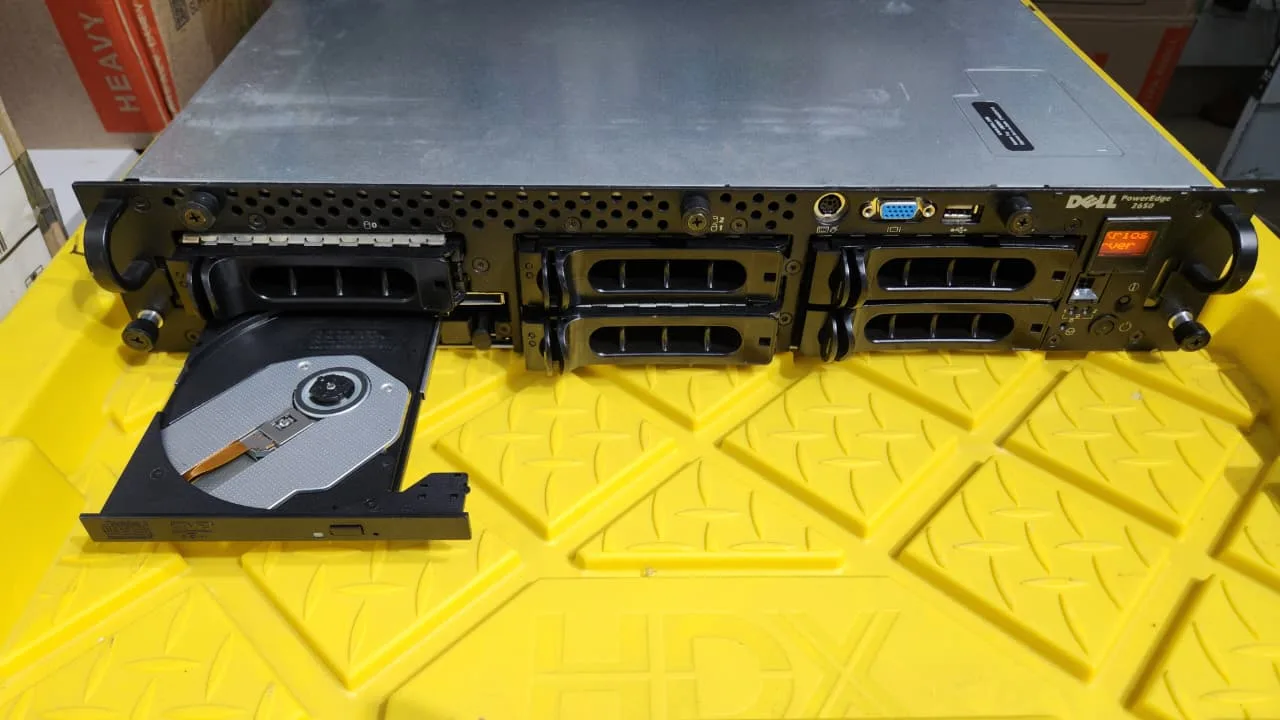
Pinkel headed her list "CONVOII-RELATED COMPUTER ITEMS." There were eleven, numbered one through eleven:
A Sun Microsystems StorEdge 3300 server.
A Cipher HSM Model 1963.
A Sun Microsystems Enterprise 420R.
A Sun Microsystems Sun Fire 280R.
A second Sun Fire 280R.
A Sun Microsystems StorEdge L20.
A Smart UPS 3000XL.
A Dell PowerEdge 6650.
A two-meter orange fiber jumper with an LC connection.
A Dell EMC2 disk array.
A Dell Precision 360.
She also named the destination and the buyer. "We have arranged with the bankruptcy trustee, Jack Wolf, to transfer the following Convoii computers to his custody, which we understand have been purchased by Scott Haire."
At the bottom of the list, Pinkel added two sentences:
"All of the above-described Dell computers have been imaged by FBI. The FBI did not image the Sun Microsystems computers."
"Imaged" means the FBI copied everything on the drive.
Two Sun Fire servers had not been imaged. The FBI also did not image the Enterprise 420R, the StorEdge 3300, the StorEdge L20, or the Cipher security module.
It is hard to explain why the FBI would hand over six machines without copying them first—because in the same seizure, in the same case, the FBI imaged the Dells. Pinkel says so in the sentence immediately before.
Whatever the reason for not imaging the Suns, it cannot be that imaging was not the practice. It was the practice. It had just been done on the Dells but not the Sun computers.
Something else is also hard to explain.
Pinkel's letter listed 11 devices she wanted to give to Haire, six of which would not be copied, meaning the defense would not have access to the data on them.SOMEBODY LOOKED
For Pinkel to write the list, somebody had to decide which computers were Convoii's to go to Haire and which were Somoza's. Nothing on the outside of a server tells you what is inside. Somebody looked.
The sorting assumes an answer nobody could have had without looking. One machine can hold Convoii's software and Somoza's email side by side. Once you hand the computer to the buyer, whatever was Somoza's goes with it.
Pinkel wrote her heading as settled fact in February 2007:
CONVOII-RELATED COMPUTER ITEMS
Three years later, the government's own brief would describe those same machines as "later found to be owned by defendant's company, Convoii, Inc."
Later.
Not in the room on the day of the seizure.
The FBI could have solved it by making a copy. Give Haire the computers. Keep an image of every computer. Give Somoza a copy of everything that was on his computers that the FBI took from his house.
There would be a record.
There is no record.
Somebody in the government had decided those computers belonged to Convoii, not Somoza. And decided to usher them out the door - with six of them uncopied.
Pinkel had an answer for Shemaria's objection to the government giving away Somoza's computers.
It was a bizarre answer.
The defense could, she wrote, "arrange with the bankruptcy trustee to take care of any issues you have with respect to the deletion or preservation of data on the computers."
The prosecutor holding the evidence sent the defense to a bankruptcy trustee to ask that it be preserved.
Pinkel told defense counsel that the government expected to transfer the computers to the bankruptcy trustee by early March, who would then, in turn, give them to Haire.
And she opened the letter by confirming she had received the defense's request in writing: "This letter follows my January 24 letter to you regarding Convoii computers in the government's custody and Mr. Shemaria's January 26, 2007 letter to me."
It is peculiar. In 2010, after Somoza tried to get his computers back to help establish his innocence, the government would tell a federal judge that Somoza "could have copied the materials."
He really couldn't.
LOOK AT ITEM NINE
AUSA Pinkel was precise about what she was giving away. Or was she?
She listed eleven items, with serial numbers.
Item nine on Pinkel's list was a patch cord, six and a half feet long. It runs from a server to a disk array.
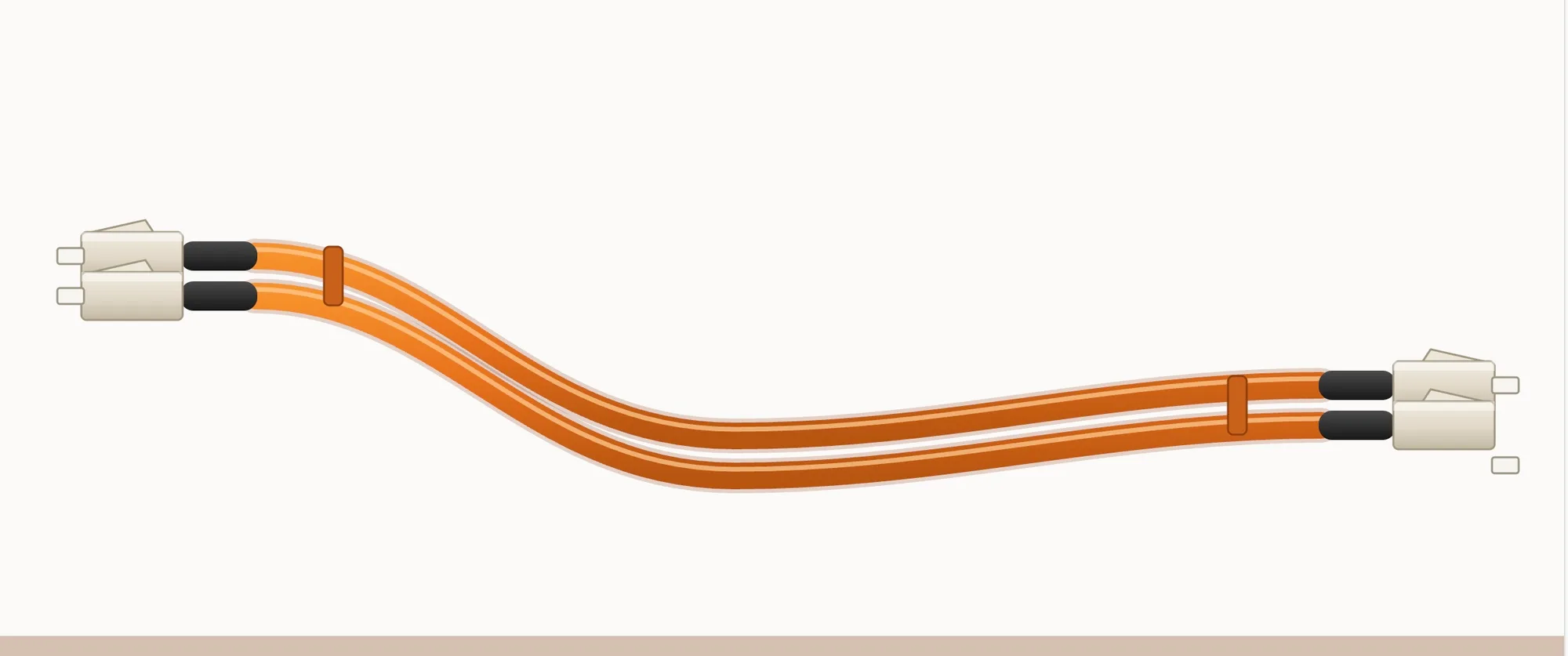
It is the only item on her list with no serial number. A cable does not have one.
But none of the nine hard drives the FBI handed over to the trustee for Haire appeared on Pinkel's list.
Nine removable hard drives would leave FBI custody without appearing anywhere on the approved list.
We know this because years later the government admitted it gave those away too.
The FBI knew the nine drives were there. Nine months earlier, agents had removed them one by one and recorded their serial numbers.
Somebody had to put them back inside the servers before the machines went out the door. Or they went separately. Either way, nine drives the FBI had tagged and serialized would leave federal custody based on an approved list that did not mention them.
Pinkel's list said eleven items. Twenty items would leave the FBI building.
She itemized a cable that has no serial number. She did not list nine hard drives whose serial numbers the FBI had written down nine months earlier.
WHAT WAS NEVER COPIED AT ALL
As for the nine that slipped out the door without being mentioned? The FBI case agent later swore that the nine hard drives had been copied and that images were provided to Somoza's lawyer.
Maybe so.
But the FBI certainly did not copy the StorEdge 3300, a disk array built to hold drives, or the StorEdge L20, which holds backup tapes.
No drive and no tape from either machine appears anywhere on any list the government has produced.
Somoza says that is where the email, business files, and the life insurance models he built were kept—the record he needed to show the insurance program was a real business, not the scheme the government described.
The FBI never copied it.
It went to Haire.
But even the copies of the nine hard drives that whisked away without being on an approved list are in dispute.
On April 20, 2007, the FBI delivered a single 500-gigabyte drive to Shemaria. By the case agent's own chart, that one drive was supposed to hold images of all fourteen removable hard drives — about 763 gigabytes of raw capacity — plus a Dell workstation.
If those drives were anywhere near full, complete copies could not fit. Nobody can check now.
SLEIGHT OF HAND
Easy come, easy go.
The FBI can raid a man's house and take his computers away. The DOJ can charge him. Then they can deprive him of the copies of the computers they took from him, copies of computers that contained evidence he said was needed for his defense.
You may say, "What does it matter?" I don't know. Seems to me it should matter a lot.
This is not literally destroying evidence. It is something harder to name — playing fast and loose with it. Or maybe worse. Maybe it is sleight of hand: putting evidence where the defense can never get it, without anyone ever having to break a rule.
Consider the sequence. The killing of the sale that would have left no victims. The placing of Somoza in the SHU. The handing off of his machines while he sat there. The nine hard drives that never made the list. The six computers never copied at all.
And the prosecutor's answer to all of it: take it up with the bankruptcy trustee. When all the FBI had to do was make a copy.
In our next post, we will look at how the FBI and the Justice Department put Somoza's evidence beyond his reach while he sat in the SHU, and how they later, after he was convicted, tried to defend it.
ARTVOICE ART