COPY THAT? NOT FOR THE DEFENDANT: Curtis Somoza Case: DOJ List Missed FBI-Seized Hard Drives
Prosecutor wrote the inventory, judge rubber-stamped it — and nine of Somoza's hard drives walked out of the FBI anyway

Defendant: Curtis Somoza
Company: Convoii
Date of arrest and seizure: May 16, 2006
Items seized: Sun and Dell servers, a disk array, a tape library, and 14 removable hard drives
Buyer: Scott Haire bought Convoii assets for $225,000
Defense request: Joseph Shemaria asked for a mirror image of every hard drive
Government list: Ruth Pinkel listed eleven Convoii-related computer items
Disputed issue: Nine removable hard drives were not included on the list and later left FBI custody
IN THE LAST PARTS
To wit: SOMOZA OUTSMARTED TRANSAMERICA. THE DOJ MADE HIM PAY FOR IT.
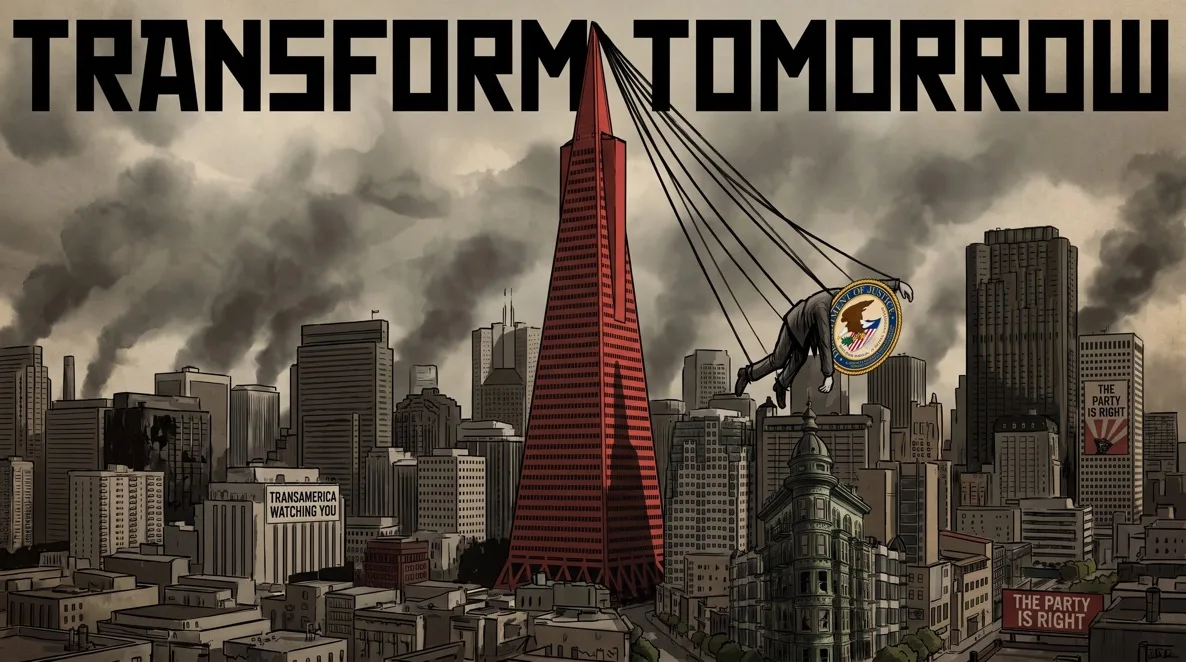
Somoza Tried to Pay the Victims Back. The Justice Department Stopped Him
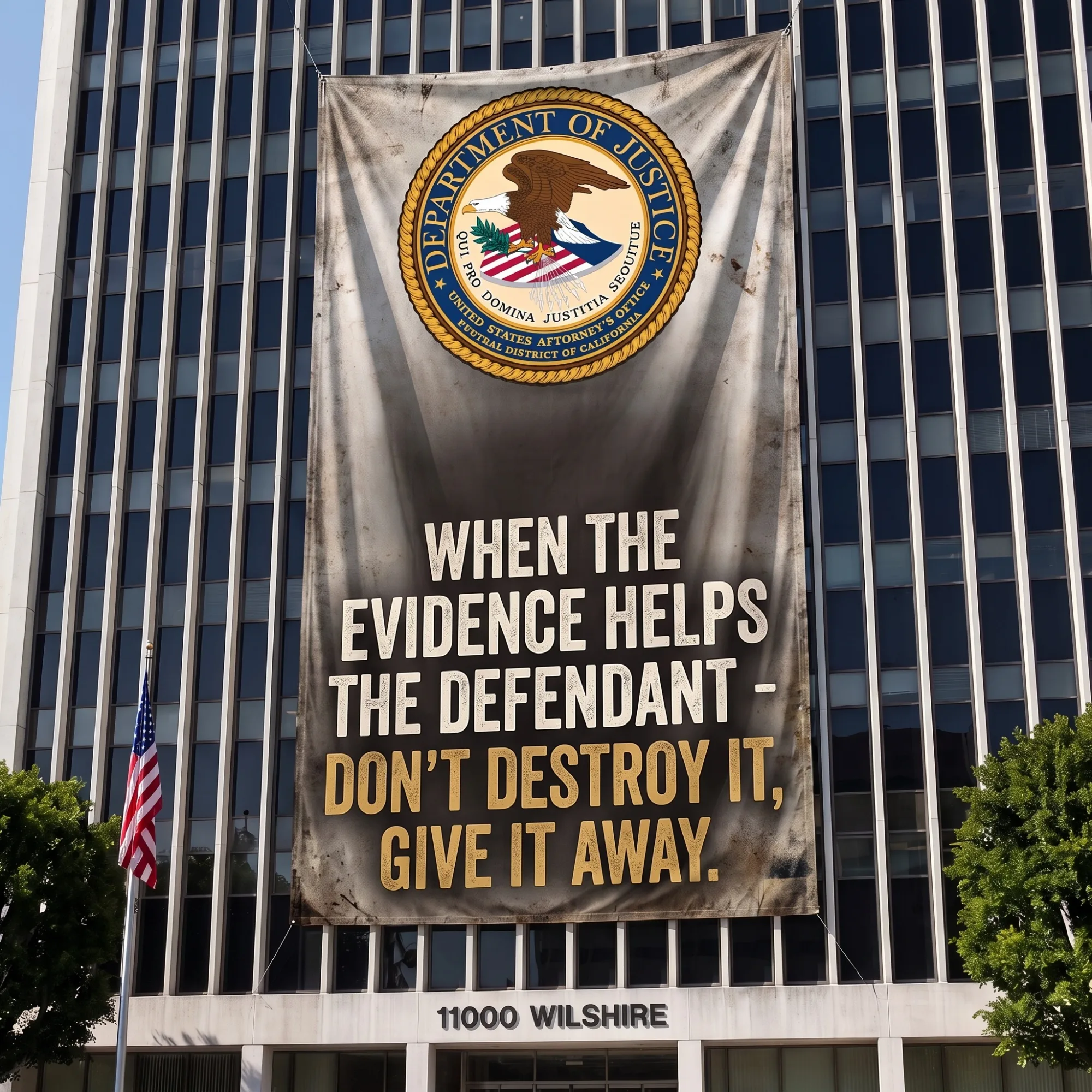
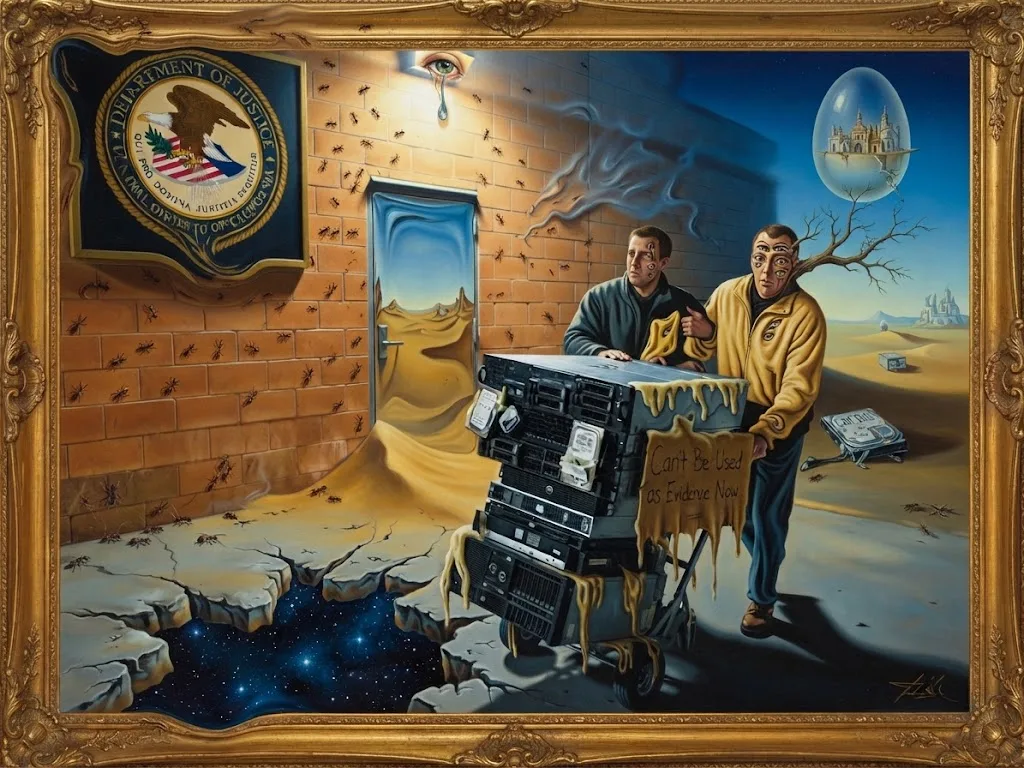
And Somoza's Seized Computers Left the FBI Building. Nobody Kept a Copy.
In previous installments, we encountered a sequence that becomes less reassuring about the Justice Department the closer you look.
THE BET
Curtis Somoza built an insurance program for poor, mainly Black members of a South Los Angeles church.
His wager was simple: Transamerica's mortality tables were wrong.
By his account, Somoza was right.
The church received money. The families received money. The investors did not get paid on time. Transamerica contested the claims and put about $3.6 million with a federal court.
The US Attorney for the Central District of California did not call it a contract dispute. He called it fraud. With that change of words, the investors became victims.
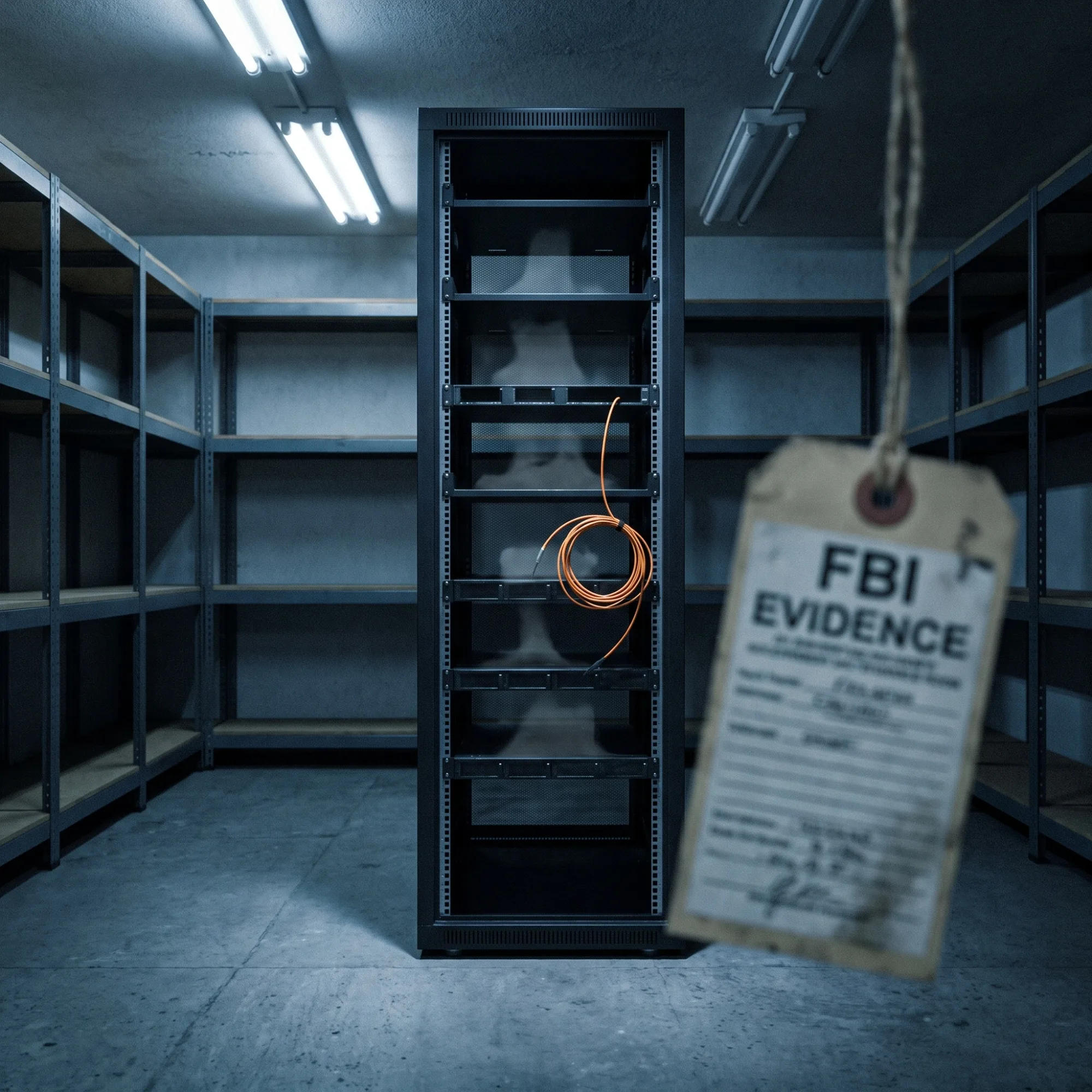
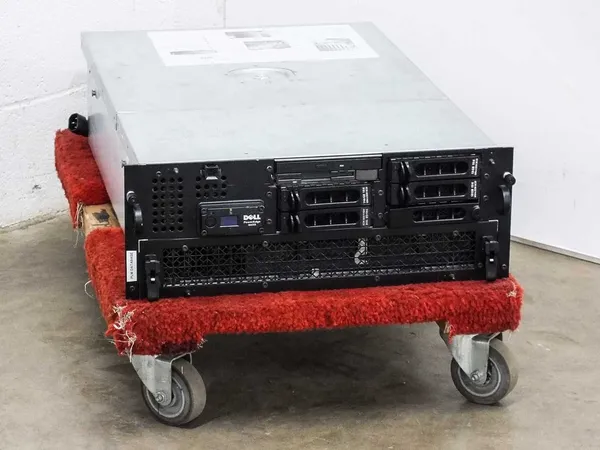
On May 16, 2006, FBI agents arrested Somoza at home. They took his computers. There were Sun and Dell servers, a disk array, a tape library, and 14 removable hard drives.
Agents pulled them individually, tagged them individually, and recorded their serial numbers individually.
The government knew exactly what it had taken.
THE SALE THAT DIED

Somoza posted bond.
He says he then accomplished something one might have expected prosecutors concerned about investor losses to welcome: he found a buyer for the pool at $35 million, enough, he says, to repay every investor.
The proposed sale would not, of course, have erased the indictment.
But it might have done something almost as troublesome for the prosecution: it might have erased the victims.
A fraud case in which every alleged victim has been repaid is still a fraud case. It is simply a rather different one to place before a jury when asking for decades in prison.
About a week before the closing, prosecutors asked the judge to revoke Somoza's bond. They said he had solicited investors.
Somoza said he was selling an asset.
The judge sided with the government.
Somoza went back into custody. The sale died.
One might imagine that victims would regard repayment as a desirable development. This apparently complicated matters.
THE BUYER AND THE LIST
Meanwhile, Scott Haire bought the assets of Somoza's bankrupt technology company, Convoii, for $225,000. He wanted the data stored on the computers the FBI had seized.
On January 25, 2007, Assistant US Attorney Ruth Pinkel informed Somoza's lawyers that the government had no objection to Haire receiving the material.
The defense responded the next day.
Attorney Joseph Shemaria wrote to FBI case agent Peter Conroy and copied Pinkel.
Before the government released anything, Shemaria wanted a mirror image of every hard drive in every computer and server the FBI had seized.
On February 16, Pinkel responded with a list titled "CONVOII-RELATED COMPUTER ITEMS."
It contained eleven items and their serial numbers.
Haire had asked for data.
The government's list identified machines.

At the bottom of the letter, Pinkel added two sentences: "All of the above-described Dell computers have been imaged by FBI. The FBI did not image the Sun Microsystems computers."
Six devices were about to leave federal custody without the FBI retaining an image of their contents.
Somoza says those were precisely the machines containing his email, his business records, and the insurance models at the heart of his defense.
ASK THE BANKRUPTCY TRUSTEE
And who, exactly, was to preserve this potential criminal-defense evidence?
Not the FBI holding it.
Not the prosecutor handling the criminal case.
Pinkel told the defense to take the matter up with the bankruptcy trustee.
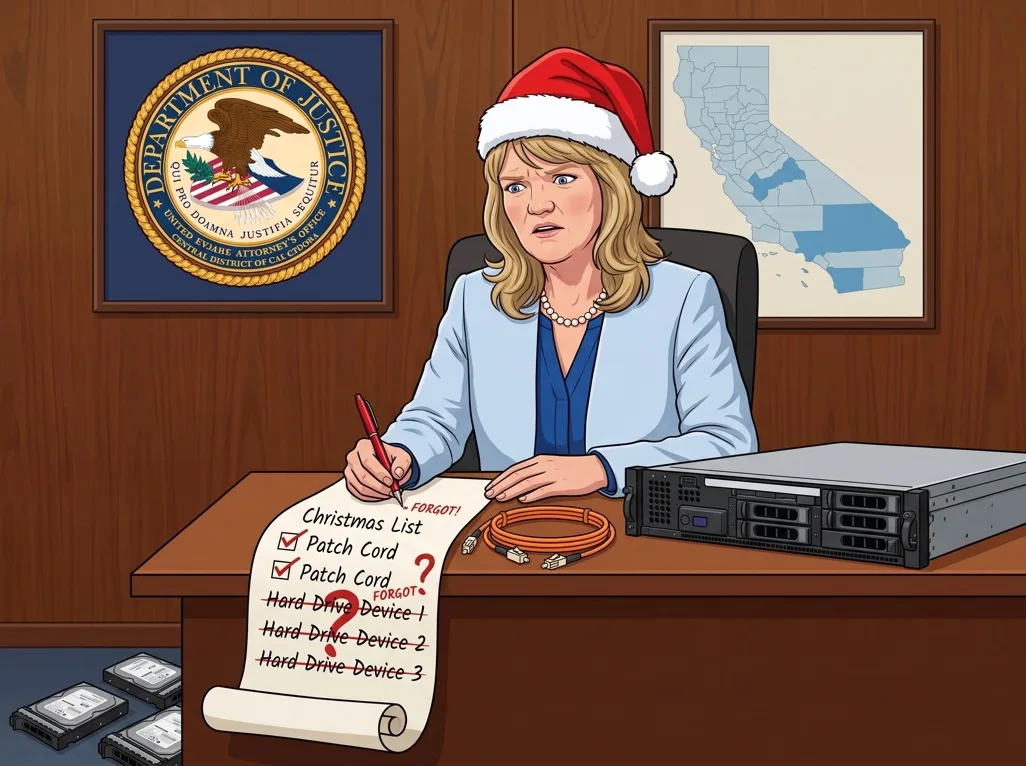
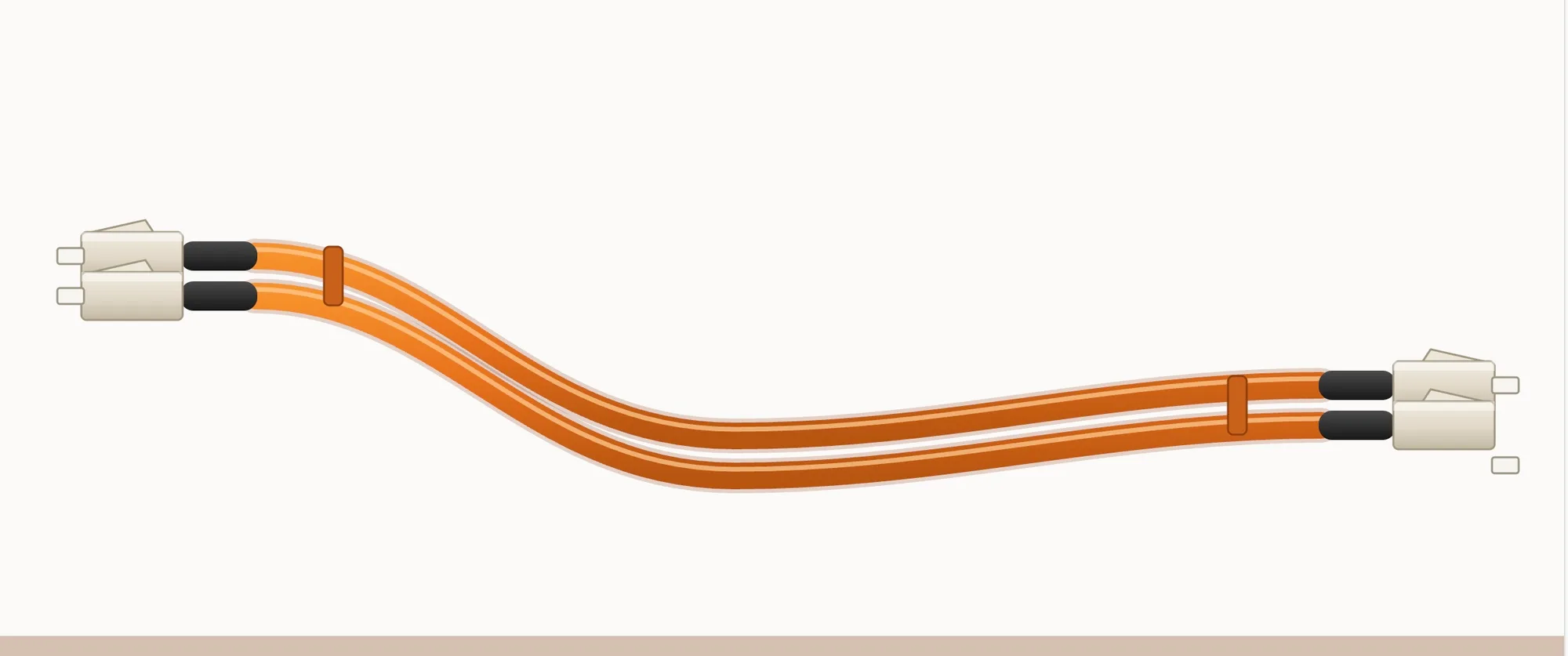
The list was meticulous enough to include a six-and-a-half-foot patch cord that did not even have a serial number.
It was not meticulous enough to include nine removable hard drives whose serial numbers the FBI itself had recorded nine months earlier.
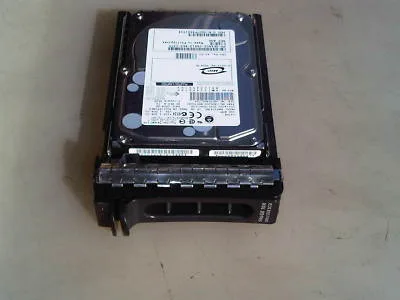
Those drives left with the equipment. The government admitted as much in 2010.
Eleven on the paper. Twenty out the door.
This is the sort of bookkeeping that can only happen in a building full of people whose job is bookkeeping.
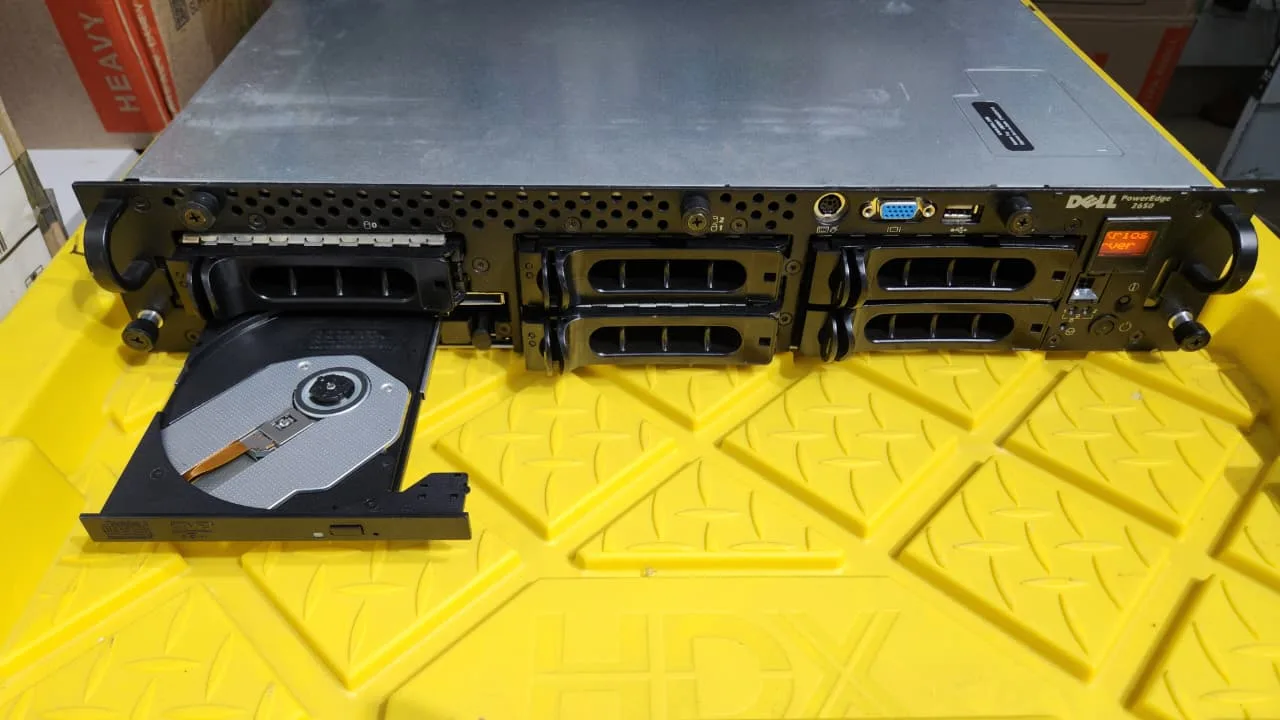
On April 20, 2007, the FBI delivered a single 500-gigabyte drive to Shemaria. By the case agent's own chart, it was supposed to hold images of fourteen drives with about 763 gigabytes of raw capacity, plus a Dell workstation.
The numbers do not fit easily.
Three years later, the government told a federal judge that Somoza "could have copied the materials."
By then the machines were gone.
Pinkel had her list. The defense had its objection on paper. The computers were still in the FBI building. Then came the spring of 2007.
THE TRUSTEE ONLY WANTED A COPY
On March 7, 2007, James C. Bastian Jr., lawyer for the Convoii bankruptcy trustee, faxed a letter to the defense lawyers in the criminal case.
The FBI itself had told him that some of the seized computers apparently contained data or software connected to intellectual property belonging to the Convoii bankruptcy estate.
Then this: "We have requested, and they have agreed, to provide us access to this information so that we may make a copy."
The FBI had agreed.
Defense attorney Joseph Shemaria had asked the same FBI for the same thing on January 26. More than a month later, he was still waiting.
The trustee received an agreement.
The criminal defendant's lawyer received a delay.
Read what Bastian asked for. He did not ask for the machines. He proposed to "simply make a copy of software data stored on these computers, with your full participation and oversight."
That arrangement would have preserved the originals and protected both sides.
Bastian added that "government attorneys" had told him the defense had withheld consent.
If the parties could not agree, he would ask the Bankruptcy Court for an order.
So the prosecutors told the buyer's side about the defense objection. They did not treat the objection as a reason to stop.
The machines kept moving toward the door.
THE PROSECUTOR WRITES THE LIST
On April 4, 2007, the trustee asked the Bankruptcy Court for turnover.
He was no longer asking for a copy. The motion sought the computers.
On April 19, Ruth Pinkel wrote to Bastian, with copies to Somoza's lawyers. The government did not oppose the motion. A colleague in the Civil Division, AUSA Catherine Bauer, had already said the government would stipulate.
Pinkel had one concern. The motion was not entirely clear about which computers it meant. So she wrote them out. The same eleven items from her February letter. The same serial numbers. The same two-meter orange fiber jumper.
Pinkel asked Bastian to ensure that the court order listed those eleven items.
She wanted her list in the judge's order.
And it was.
And she noted, again, that Shemaria had objected — and that she expected him to arrange with the bankruptcy trustee about "the deletion or preservation of data on the computers."
That is twice. Twice, the prosecutor holding a defendant's evidence sent his lawyer to a bankruptcy trustee to ask that it be preserved.
ONE DRIVE
The next afternoon, at about 2:45, FBI Special Agent Peter Conroy went to Shemaria's Century City office.
He delivered one 500-gigabyte Simple Tech hard drive. The FBI recorded the delivery with a receipt.
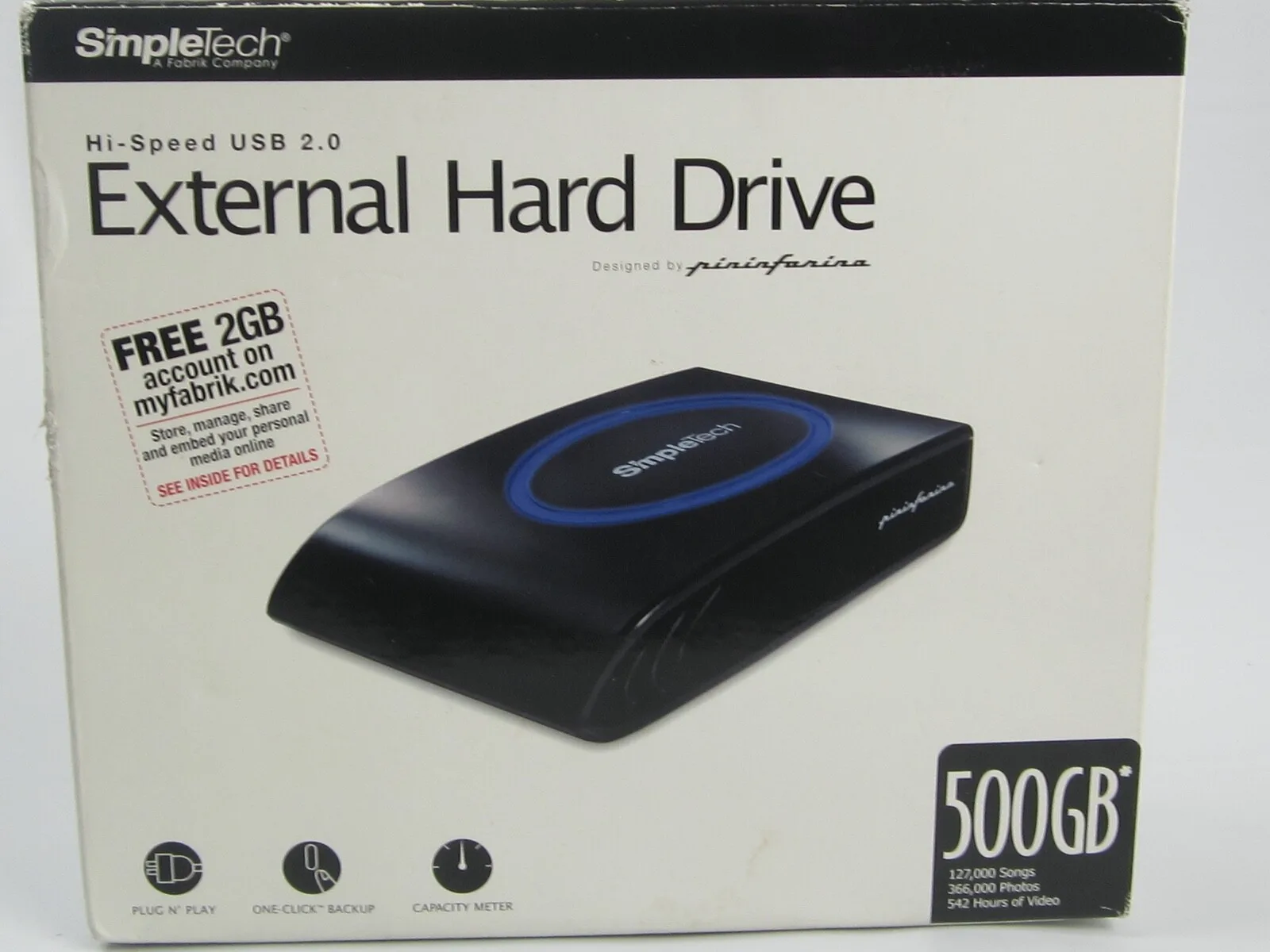
Three days later, prosecutor Jill Feeney memorialized the delivery in a one-sentence letter. The drive, she said, contained "images of defendant Somoza's computers."
You might read that sentence and think everything had been copied. It had not.
Not the Sun servers. Pinkel had already said so in writing.
By then Somoza's bond had been revoked. Somoza says he was in the Special Housing Unit at MDC Los Angeles, locked down 23 hours a day, with one phone call a week.
Somoza was in no position to stroll over to a warehouse and supervise his evidence.
Outside, his computers were being discussed in letters.
THE ORDER
The bankruptcy judge heard the turnover motion on May 1, 2007.
That same day, under the words NO OBJECTION and above the name of Acting United States Attorney George S. Cardona, Ruth Pinkel signed the proposed order. Her signature is part of the order.
Judge Theodor C. Albert signed it on May 7. It was entered May 8.
The order recites that the court had "been advised that the Office of the United States Attorney has no objection to the Motion and that no other written response or objection has been filed or served."
That statement was technically accurate.
Shemaria was on the service list and filed no objection in Bankruptcy Court.
His written objection was elsewhere.
The FBI had it.
The prosecutor had it.
They had had it for three months.
So in one courtroom, there was no objection. In another part of the government, there was.
The order lists eleven items. Pinkel's eleven. Including the cable. What the order did not contain were nine removable hard drives.
WHAT THE ORDER PROMISED
There was another paragraph. Years later, the government would point back to it.
The order gave the FBI, the trustee, and Scott Haire ten days to settle upon a turnover date.
Paragraph 3: an expert agreed on by the buyer and the trustee would retrieve "the information, software and data contained on the Convoii Systems," and copies of all of it would go to the trustee and the buyer.
Copying, plainly, was not technically impossible.
Paragraph 4: Somoza, or his lawyers, "may participate at the Turnover Date so that they may copy anything stored on such Convoii Systems that may be necessary to their criminal defense." If they did not show up, they "will be provided with a copy of anything stored on the Convoii Systems that may be necessary to their criminal defense."
"Will be provided."
Not "may."
Not "if convenient."
So a federal judge ordered that the defense get a copy. I have searched the record for any sign that the copy was made or delivered. I have not found one.
Somoza says nobody told him the order existed. At the time, he was confined in a cell he describes as roughly the size of a parking space.
And notice what happened to Bastian's request. In March, the trustee wanted to "simply make a copy." By May, the order gave the buyer "full possession of the Convoii Systems." The originals.
MAY 15, VAN NUYS
The handoff happened on May 15, 2007, in Van Nuys, California.
The FBI's own report names the man who took custody: Bobby Stout, of HEB, LLC, 777 Main Street, Fort Worth, Texas. HEB was Scott Haire's company.
FBI Agent Conroy's report lists what Stout accepted. Eleven items. Numbered one through eleven. The Sun servers. The StorEdge array. The tape library. The Cipher module. The Dells. The cable.
Eleven.
Three years later, the same agent would swear that twenty items went out that day — the eleven, plus nine hard drives the FBI had pulled and serialized in 2006.
The drives had vanished from the paperwork.
They had not vanished from the handoff.
Three official documents agreed perfectly.
The prosecutor's list: eleven.
The judge's order: eleven.
The FBI's receipt: eleven.
Reality, according to the agent's later sworn statement: twenty.
Six of them had never been copied by anyone.
Once they left, there was no government copy behind.
Whatever they knew went with them.
WHAT IT ADDS UP TO
The documents establish only so much. That is enough.
The trustee asked to copy the data.
The government transferred the machines.
The defense also asked for copies.
It received one 500-gigabyte drive and instructions to negotiate the rest with a bankruptcy trustee.
A judge ordered that the defense get a copy. Nothing shows it did.
Pinkel wrote the list. The list controlled the transfer. Nine hard drives were not on it.
I do not know what the Sun servers contained. The government cannot now establish it either.
That is the problem.
That is not a weakness in this story. It is the story.
Maybe nobody looked. Maybe somebody looked and kept no copy. The machines are gone.
And sometimes the most important piece of evidence is the thing nobody can look at anymore.
The machines went to Texas. But machines leave traces. People open them. People read what is inside.
And a year later, someone was reading Somoza's servers while his own lawyers were still trying to find out where they had gone.
That is the next part.
Artvoice Art