

By Frank Parlato
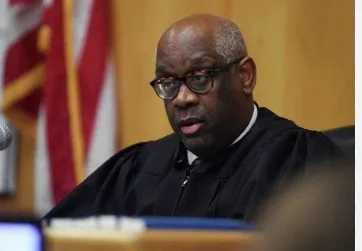
WARREN COUNTY, Pa. — On February 27, 2026, Senior Judge Maureen Skerda dismissed Jerry Sandusky’s post-conviction petition without holding a hearing. She is the third judge assigned to the matter.
A post-conviction proceeding exists to allow evidence to be heard. None of the three has permitted the evidence to be heard.
The evidence in this case is never examined. Testimony exists — but it is never heard.
There is a reason for that: The Pennsylvania judiciary is committed to preserving the conviction, no matter what the truth is.
This I believe, will come to be known as a historic example of dishonesty.
Sandusky was convicted in 2012. The prosecutors were Frank Fina and Joseph McGettigan. Among the witnesses, of whom there were eight accusers, the one with the most horrifying tale is then 18-year-old Sebastian Paden, whom court records identify as S.P.
Three years later, Paden walked away with a $20 million civil settlement, less the attorney’s cut, he netted about $12 million.

The Prosecutors Who Cashed In
During the three years between the conviction and the settlement, the prosecutors had arranged to lend Paden more than a million dollars at 27 percent interest with a lien on his award. They knew he would win, and he paid them back about $2 million. The lender, US Claims, got paid out of the award as did the prosecutors.
They cashed in on Paden from the get-go.
After he got his award and paid the attorneys (of which McGettigan was one), the two prosecutors who secured the Sandusky conviction took control of the witness’s money.
Frank Fina joined the Trust Protective Committee, which oversees Paden’s settlement fund. Gay Warren — described in Judge Skerda’s ruling as Joseph McGettigan’s “paramour” — joined the committee as well.
There were three on the committee that controlled Paden’s more than $10 million. They were McGettigan and Fina and Paden’s therapist, the one they got for him. So they controlled his money, every dime of it.
McGettigan had been the lead prosecutor in the case against Sandusky. Fina was his boss at the AG’s office.
They controlled Paden’s $12 million settlement obtained after the Sandusky prosecution they led.
Their committee possessed unusual authority: the power to veto large payments Paden might want to make and to prevent Paden from firing them or dissolving his trust and taking control of his own money.
And they held the power to collect as many fees as they chose.
Skerda Sees Nothing

In another courtroom, other than Senior Judge Skerda’s, such an arrangement might prompt inquiry.
But evidence is never welcomed in the Sandusky case.
An email dated October 15, 2020, titled “Family Meeting,” shows Frank Fina coordinating matters related to Paden’s affairs eight years after the trial.
Another document appears in the record, a document wholly ignored by the protector of the conviction, Skerda: Paden’s mother, Marie, signed a sworn declaration stating that her son told her Sandusky had never abused him.
She also recounts a remark she attributes to McGettigan, who told her son:
“You will never have to work a day in your life.”
With a $10-12 million settlement locked inside a trust — and the prosecutors overseeing it — that promise turned out to be remarkably prescient.
The Testimony That Doesn’t Hold Together

By the time he got to the stand, Paden, 18, testified that Sandusky anally raped him over three to four years, beginning around age 13. He said it caused him to bleed. He never sought medical attention.
He screamed during the abuse. Jerry Sandusky’s wife, Dottie, was upstairs. “I think the basement is soundproof,” Paden told the jury. “I don’t know. It’s a big basement.”


Still he came back the following weekend. And the weekend after that, 150 times over four years. He testified he rarely ate at the house.
As Paden described it on the witness stand, Sandusky picked him up, brought him to the basement for the weekend, raped him, and on Sunday night he went home, went to school on Monday, told no one — not his mother, not a teacher, not a doctor. Not even a friend.
He said nothing for three years while bleeding from repeated rape.
You’re My Lawyer

On the stand, McGettigan, calculating and confident, wanted to dispel any notion that Paden was testifying for the big money he was sure to get.
During direct examination by McGettigan:
Q: Well, do you have a lawyer now?
A: No.
Q: Did you ever go looking for a lawyer?
A: No.
Q: Did your mom tell you she was going to get a lawyer?
A: No, you’re my lawyer.
Q: Are you going to pay me?
A: Yeah, I’m going to try.
Q: Are you working now, Mr. Paden?
A: No.
On telling his full story:
Q: And did you tell the grand jury everything that happened to you?
A: Yeah.
Q: Are you sure? The grand jury, do you remember talking to the grand jury?
A: Yeah — no. You’re the first person I told everything to.
On being coached:
Q: Did anybody tell you to say anything other than the truth?
A: No.
Q: Did I ever tell you to say anything in particular?
A: No. You just told me to tell you the truth.
Q: Did anybody force you to come here today?
A: No.
Q: Did you want to?
A: No.
A Mother’s Sworn Word

Paden told the jury he visited Sandusky’s house virtually every weekend for four years — approximately 150 times.
Marie Paden was his mother. She knew where her son was on weekends. Her sworn declaration states he went no more than 15 to 20 times. And he was not alone. Other boys were present.
Judge Skerda dismissed this in a word: hearsay.
She dismissed the prosecutors’ financial corruption with a sentence. Skerda wrote that “there is no evidence that any of the prosecutors were actively engaged in the civil litigation nor had a financial interest while prosecuting the defendant in 2012.”
The trust, she noted, was created three years after the trial.
From this, she concluded, without an evidentiary hearing, that no pre-trial misconduct occurred.
The Questions She Would Not Ask

Judge Skerda did not care to examine why the prosecutors controlled the witness’s money. She did not look at the evidence that the prosecutors took control of Paden’s life the moment they got him as a witness.
Skerda would not consider whether the post-trial arrangement might illuminate the relationship between prosecutors and the witness before the trial.
The ruling dares not explore their earlier relationship with Paden, the loans, or when McGettigan’s promise was made. Skerda knows where that would lead. To likely disbarment of Fina (McGettigan died recently).
These questions never made it into the ruling. Skerda saw to it that no one asked.
Jerry Sandusky remains in prison. Judge Skerda was assigned to examine the truth, or so they say.

She chose not to look. She knows what a hearing would reveal — Sandusky’s innocence and the corruption of the men who convicted him.
Maureen Skerda is protecting the conviction and the corrupt prosecutors who produced it. Jerry Sandusky is 82. He is running out of time. She knows that, too. Hell is made of such as she.

And …

See also: