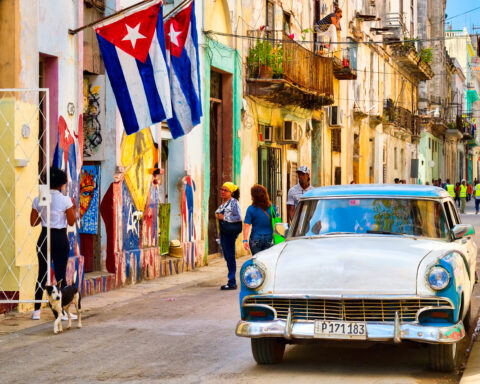

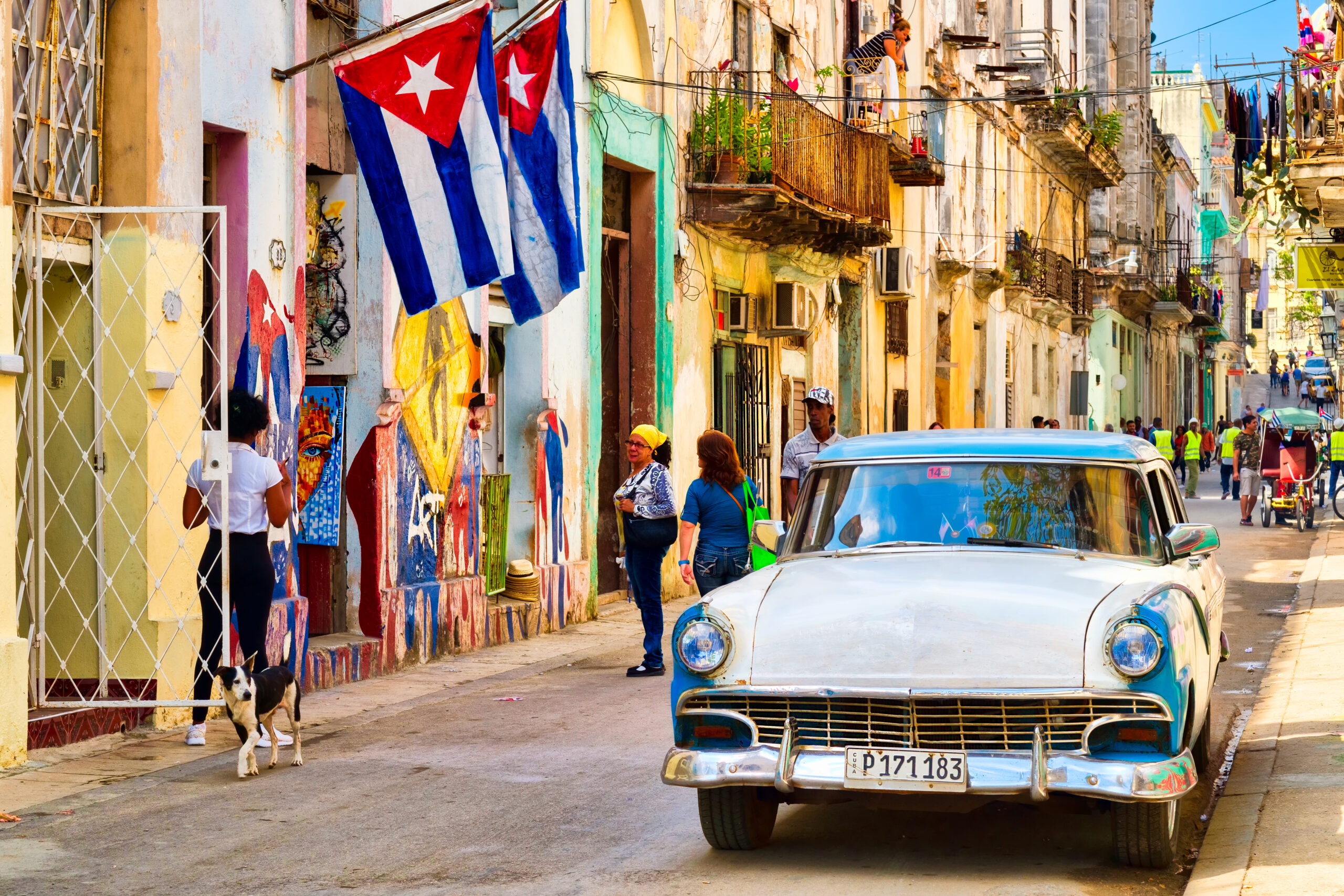
The nation of Cuba went entirely dark on Monday, with the entire country losing power at once.
The Cuban Ministry of Energy and Mines announced a complete disconnection of the country’s electrical system on March 16, leaving all 11 million people on the island without power.
The ministry said it was investigating the cause, but the cause was not a mystery. Cuba’s electrical grid has been collapsing in slow motion for months, starved of the fuel it needs to function and held together by solar panels and prayers while its aging thermoelectric plants fail one by one.
This is not an accident. It is the predictable endpoint of a crisis that has been building since January, when the United States effectively cut off Cuba’s oil supply, and today it reached its logical conclusion.
How Cuba Lost Its Oil
To understand Monday’s blackout, you have to start in Venezuela in January 2026.
For years, Venezuela supplied Cuba with approximately 35,000 barrels of oil per day under a barter arrangement, Cuba sent doctors and teachers, Venezuela sent fuel.
That supply line kept Cuba’s aging grid running at a bare minimum. It was not comfortable, and it was not sufficient, but it was functional.
In early January, the United States conducted a military operation that resulted in the capture of Venezuelan President Nicolás Maduro.
The operation effectively ended Venezuela’s government as it had functioned, and with it, Cuba’s primary oil supply vanished overnight.
There was no replacement lined up. There was no backup plan. Cuba produces roughly 40% of its own petroleum, which was nowhere near enough to compensate.
Then, on January 29, President Trump signed an executive order declaring a national emergency regarding Cuba and authorizing tariffs on any country that sells or provides oil to the island.
Mexico, which had become Cuba’s secondary oil supplier, temporarily halted its own shipments under US tariff pressure. The message from Washington was explicit. No oil goes to Cuba.
Cuban President Miguel Díaz-Canel said on Friday that the island had not received oil shipments in more than three months. Three entire months.
For a country that was already running on a generation deficit every single day before the oil cutoff, three months without primary fuel imports is catastrophic.
The Cuban Grid Was Already On The Edge
Even before Monday’s total blackout, Cuba’s electrical situation had been dire for weeks.
At 6am on Monday morning, before the complete system failure, Cuba’s grid had an availability of only 1,140 megawatts against a national demand of 2,347 megawatts.
The country was already operating at less than half capacity before everything went dark.
This pattern has been consistent for months. Cuba’s thermoelectric plants, the backbone of its electrical generation, are decades old and increasingly unreliable.
When they fail, there is no fuel to restart them and no spare parts to repair them quickly.
The solar panels that China has been helping Cuba install produce power only during daylight hours and cannot compensate for the scale of the deficit.
On March 4, just twelve days ago, a blackout hit the western half of the island, including Havana, after a boiler pipe burst at the Antonio Guiteras thermoelectric plant, Cuba’s largest.
Power was not fully restored for days. Crews worked around the clock in what engineers described as a confined space with extreme heat just to get the plant back online.
The day that happened, Cuba’s grid was already running a deficit of more than 1,000 megawatts before the plant failure added to the load. The Guiteras failure was a trigger, not a cause.
Monday’s complete disconnection is a different scale of event. It is not a partial outage affecting part of the island. It is a total failure of the national electrical system, what Cuba’s own ministry called a “complete disconnection.”
What Does Life In Cuba Look Like Without Power?
The human consequences of this crisis extend far beyond inconvenience. Díaz-Canel confirmed on Friday that the government has had to postpone surgeries for tens of thousands of people because of the energy situation.
Without power, hospitals cannot operate normally. Without power, water pumps cannot function. Without power, food cannot be refrigerated.
During the March 4 blackout, residents of Havana described gathering outdoors to cook over wood and charcoal fires.
Business owners watched their frozen food spoil. People reported not sleeping because without fans or air conditioning, the mosquitoes were unbearable.
Internet access was cut as the government moved to prevent the spread of information and suppress potential protests, a tactic Cuba used during previous blackout-related unrest in October 2024, when police deployed to clear protesters by force in Havana’s streets.
This crisis has been described by analysts as the most severe Cuba has experienced since the collapse of the Soviet Union in 1991, when the loss of Soviet oil subsidies triggered a decade-long economic depression Cubans call the Special Period.
Then, Cubans learned to grow food on rooftops and ride bicycles to work. Now they are running out of the fuel to keep the lights on entirely.
United States And Cuba At Odds
The United States and Cuba have been in an adversarial relationship for more than sixty years, but the current crisis is the most acute intervention in Cuba’s energy infrastructure in the modern era.
Trump has been explicit about his goals. He has said openly that regime change in Havana is “a matter of time” and has described Cuba’s communist government as being “in its last moments.”
The oil blockade is not a side effect of policy, it is the policy.
The UN Secretary-General has expressed being “extremely concerned” about Cuba’s humanitarian situation, warning it could “worsen, or even collapse” without adequate fuel.
Democratic senators have filed a war powers resolution attempting to check Trump’s actions toward Cuba. The moves have had no effect on the embargo.
At the same time, Díaz-Canel confirmed on Friday that Cuba is holding talks with the United States government in an attempt to resolve the situation.
Trump has suggested a deal may be coming but has indicated his administration is focused on Iran first. Cuba, meanwhile, cannot wait.
On Monday, the entire island went dark. Eleven million people. No power. No timeline for restoration given. The Ministry of Energy and Mines said it was investigating.
The lights went out because there is no fuel to keep them on, and there is no fuel because the United States cut off the supply.