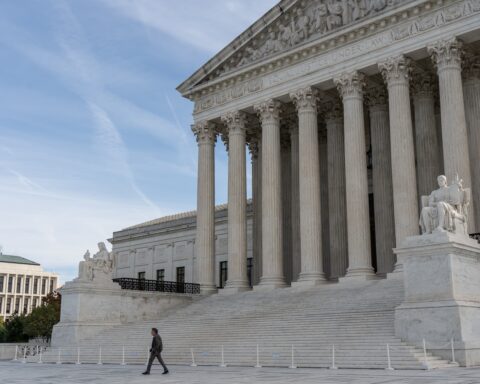

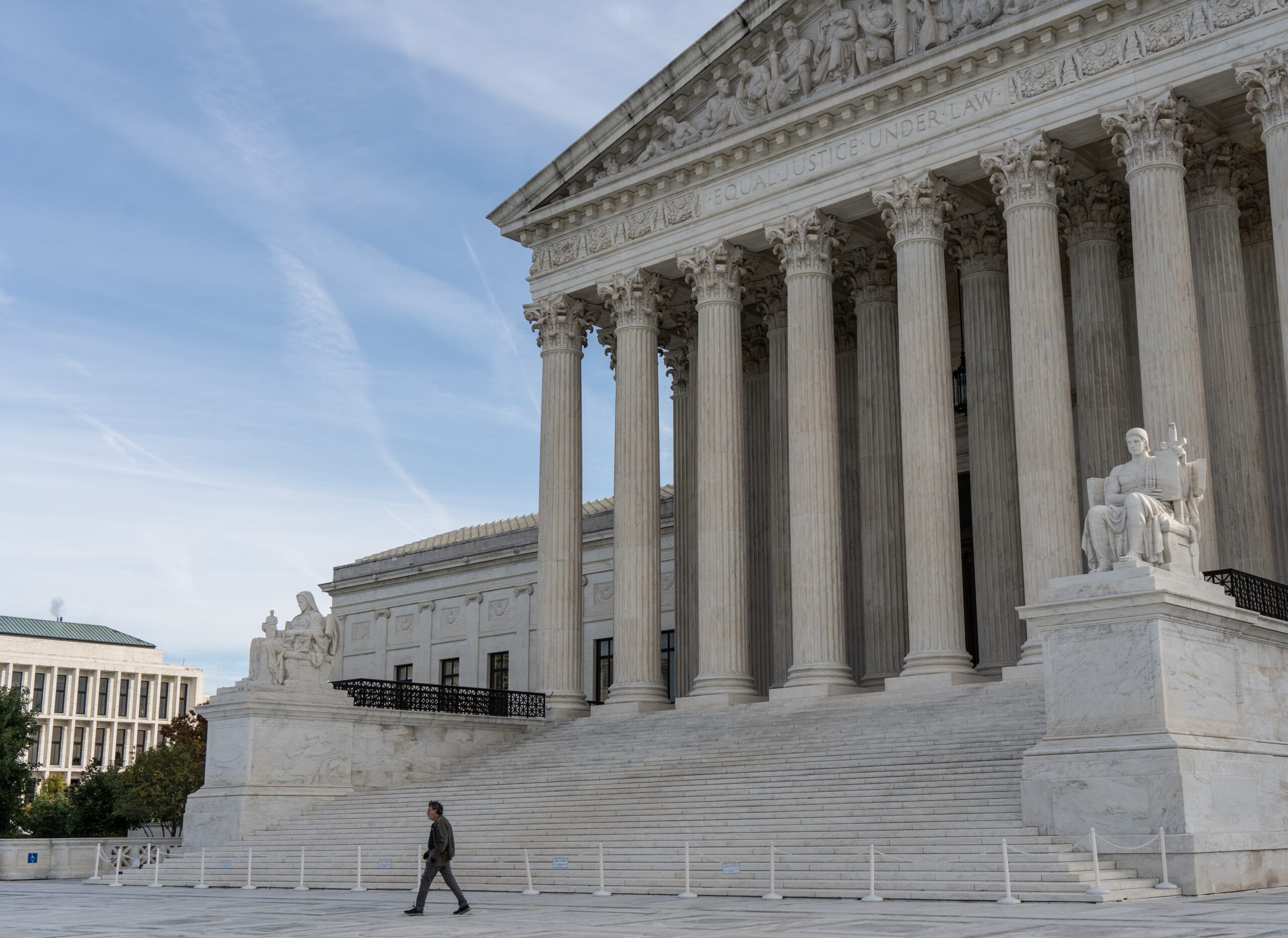
The Supreme Court ruled 8-1 on Tuesday, March 31, 2026, that Colorado’s ban on conversion therapy for minors violates the First Amendment free speech rights of a Christian counselor, invalidating the state law and placing similar laws in more than 20 other states in serious legal jeopardy.
The case is Chiles v. Salazar. The decision was written by Justice Neil Gorsuch for the majority.
Justice Ketanji Brown Jackson was the lone dissenter, and she took the unusual step of reading excerpts of her 35-page dissent aloud from the bench, a signal of how strongly she disagreed with the outcome.
What Was The Case About?
Kaley Chiles is a licensed professional counselor in Colorado. She is also a practicing Christian who believes, as she stated in her petition to the court, that “people flourish when they live consistently with God’s design, including their biological sex.”
She wants to offer voluntary talk therapy to minors who seek help “reducing or eliminating unwanted sexual attractions, changing sexual behaviors, or growing in the experience of harmony with one’s physical body.”
Colorado’s Minor Conversion Therapy Law, passed in 2019, prohibits licensed mental health professionals from providing exactly that kind of therapy to clients under 18.
The law does include an exemption for therapists “engaged in the practice of religious ministry,” meaning unlicensed religious counselors are not covered by the ban.
Chiles filed a lawsuit in 2022 arguing the law violated her First Amendment rights.
She was represented by the Alliance Defending Freedom, a conservative Christian legal advocacy group that has had significant success at the Supreme Court in recent years, including in 303 Creative LLC v. Elenis in 2023.
The Trump administration backed Chiles before the Supreme Court.
Colorado argued the law regulates a medical treatment, not speech, and falls within states’ well-established authority to regulate the healthcare profession to protect patients from harmful or substandard care.
The state’s position was that conversion therapy is scientifically discredited and associated with serious harm to young people, and that banning it is no different from banning any other dangerous medical practice.
The 10th Circuit Court of Appeals sided with Colorado, ruling the law regulated professional conduct rather than speech and did not violate the First Amendment. That ruling is what the Supreme Court overturned Tuesday.
What Was The Ruling?
Writing for eight of the nine justices, Gorsuch concluded that Colorado’s law, as applied to talk therapy, regulates speech based on viewpoint, not conduct, and therefore requires the highest level of First Amendment scrutiny, a standard known as strict scrutiny that very few laws survive.
“Colorado’s law addressing conversion therapy does not just ban physical interventions,” Gorsuch wrote. “In cases like this, it censors speech based on viewpoint.”
He added, “Colorado may regard its policy as essential to public health and safety. Certainly, censorious governments throughout history have believed the same. But the First Amendment stands as a shield against any effort to enforce orthodoxy in thought or speech in this country.”
The majority’s key finding is that the law creates a viewpoint-based distinction. It permits therapists to affirm a client’s gender identity or sexual orientation but prohibits them from helping a client who wants to change those same characteristics.
Because the law treats identical speech differently based on the message being delivered, the court found it regulates viewpoint, which triggers the strictest constitutional protection.
The ruling is technically narrow. The court did not itself strike down Colorado’s law as unconstitutional.
Instead, it reversed the 10th Circuit’s decision and sent the case back to the lower courts, directing them to apply the more stringent strict scrutiny standard when evaluating whether the law can survive.
Strict scrutiny requires the government to prove it has a compelling interest and that the law is narrowly tailored to serve that interest. It is a legal standard most laws fail.
What Did The Lone Dissenting Justice Say?
Jackson dissented alone, and did so forcefully. “The Constitution does not pose a barrier to reasonable regulation of harmful medical treatments just because substandard care comes via speech instead of scalpel,” she wrote.
Her central argument is that states have always had the authority to regulate what licensed medical professionals do in the course of treatment, and that the First Amendment has never been understood to strip states of that power simply because the regulated practice happens to involve talking rather than a physical intervention.
Jackson also warned that the majority’s reasoning could have sweeping consequences for medical regulation far beyond this specific case.
She wrote that the court’s decision “ultimately risks grave harm to Americans’ health and wellbeing” and suggested the majority may be “ushering in an era of unprofessional and unsafe medical care” where treatments conducted through speech effectively escape state oversight.
She cited long-established precedent holding that states have the power to regulate the health professions, and argued the 10th Circuit was correct in finding this law regulated conduct rather than speech.
She also pointed to a potential inconsistency in the court’s recent jurisprudence.
In United States v. Skrmetti, decided in 2025, the court ruled that a state legislature could prohibit gender-affirming healthcare for minors based on its assessment of the medical evidence.
Jackson questioned during oral arguments in October 2025 why the same logic should not allow Colorado to prohibit conversion therapy based on its own assessment that the practice is harmful, the mirror image of the same regulatory question.
What Does This Ruling Mean?
Twenty-three states and Washington, D.C., have enacted laws banning or restricting conversion therapy for minors by licensed mental health professionals.
All of them are now likely to face legal challenges under the framework the Supreme Court established Tuesday.
The Alliance Defending Freedom and similar organizations are expected to bring those challenges in short order.
The medical consensus on conversion therapy is unambiguous. Every major medical and mental health association in the United States, including the American Psychiatric Association, the American Psychological Association, the American Medical Association, and the American Academy of Pediatrics, opposes conversion therapy and has condemned it as ineffective and potentially harmful to young people.
The APA removed homosexuality from its Diagnostic and Statistical Manual of Mental Disorders in 1973.
Research has linked conversion therapy to increased rates of depression, anxiety, and suicidal ideation among LGBTQ youth.
Gorsuch’s majority opinion directly addressed this, noting in an argument that drew sharp criticism from the dissent that the American Psychiatric Association itself once classified homosexuality as a mental disorder, and suggesting that reflexive deference to current professional consensus is not a reliable constitutional standard.
Colorado had argued that the court should defer to that consensus in evaluating the state’s interest in banning the practice.
The ruling fits within a broader pattern from the Supreme Court’s conservative majority in recent years.
The court ruled in favor of a group of Maryland parents in 2025 who sought to opt their children out of school instruction featuring books that address gender identity and sexual orientation.
It ruled in 2023 in favor of a Christian website designer who objected to creating sites for same-sex weddings. Both cases were also brought by the Alliance Defending Freedom.
Polling from 2025 found that 56 percent of American adults believe conversion therapy should be illegal for use on minors, with support for bans holding across partisan lines including from Republican state legislators who have backed such bans more than 1,000 times since 2012.
The case now returns to the 10th Circuit, which must apply strict scrutiny to Colorado’s law.
Whether that law ultimately survives remains unresolved. What is resolved is the constitutional framework all such laws must now navigate, and that framework is significantly more demanding than the one the 10th Circuit applied.