
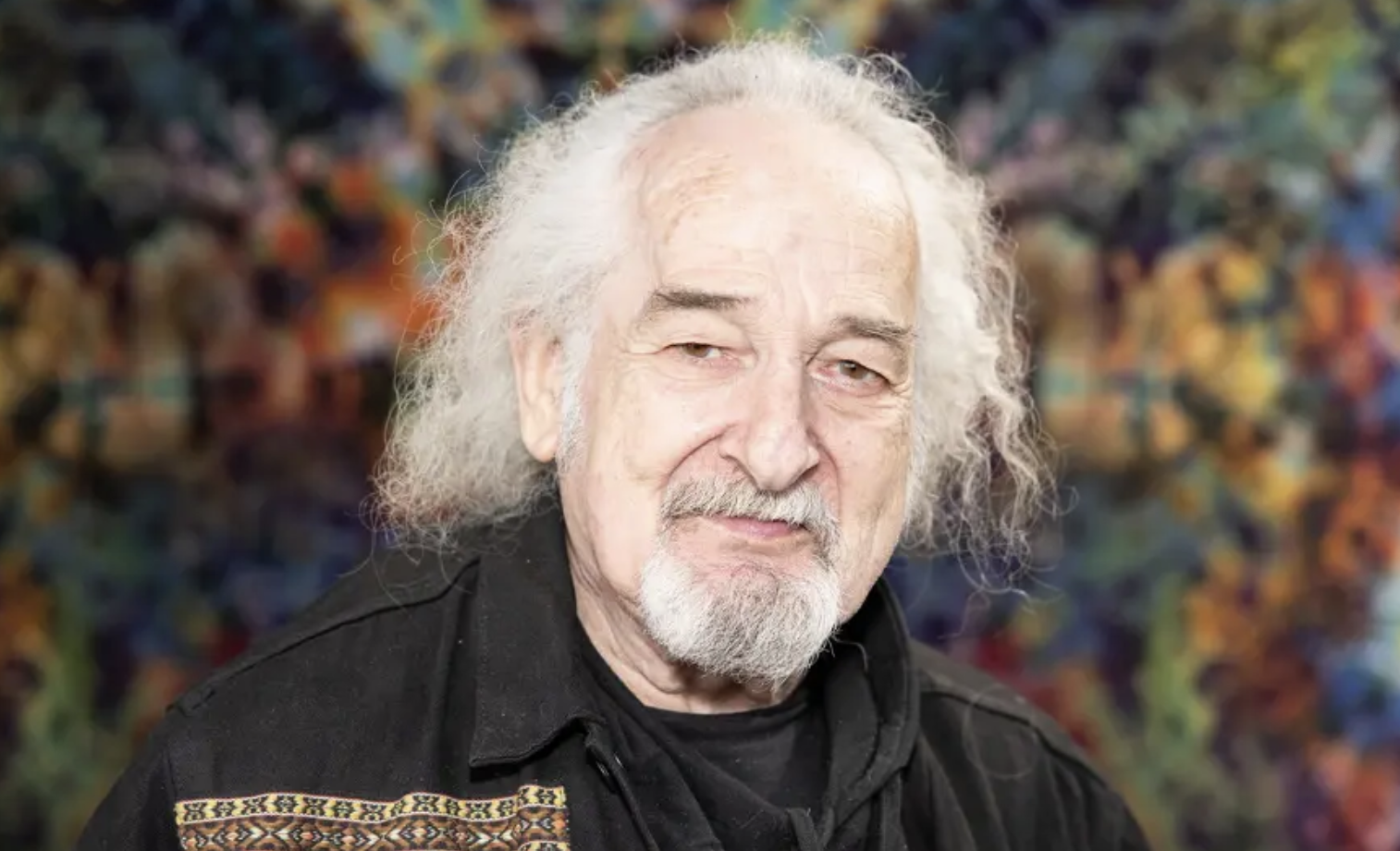
Doug Irwin died on March 27, 2026. He was 76 years old. No cause of death was publicly disclosed, though a comment posted to his official website by someone who said they knew him stated he passed from cancer in hospice care in California.
The official Irwin Guitars social media account confirmed his death on March 30, writing,
“Doug was a master craftsman, a visionary, and someone who dedicated his life to his work. His guitars were never just instruments, they were built with intention, precision, and soul, becoming part of the music and the artists who played them.”
Fifteen days before Irwin died, one of those guitars sold at Christie’s in New York for $11.56 million.
Jerry Garcia had originally paid him $5,800 for it.
Who Was Doug Irwin?
Douglas Leo Irwin was born October 29, 1949. He spent the early part of his career working at Alembic, the innovative San Francisco instrument company that was deeply intertwined with the Grateful Dead’s operation in the early 1970s.
The Dead were partial owners of Alembic at various points, and the company supplied electronics and instruments to multiple band members.
It was in that environment, working out of what one of his apprentices later described as “a small chicken shack,” that Irwin first developed the sensibility that would define his work.
Exotic hardwoods, elaborate inlay, custom brass hardware, and sophisticated onboard electronics that were years ahead of what any production guitar manufacturer was offering.
Garcia discovered him through one of his early Alembic builds.
In late 1972, Garcia came across a guitar Irwin had made and bought it on the spot for $850.
He described it to the Metropolitan Museum of Art, which later acquired the Wolf guitar for its permanent collection, as “twelve guitars in one,” a reference to the instrument’s onboard active electronics, which gave the player an enormous range of tonal options unavailable on any standard instrument of the era.
Garcia asked Irwin to build him a custom guitar. That guitar became Wolf.
The Five Guitars
Over the course of the next seventeen years, Irwin built five custom guitars for Jerry Garcia. Each one is a significant object in American music history.
Wolf was the first true custom build, serial number D. Irwin 001, begun in May 1972 and completed in 1973.
Made from quilted and flamed maple, purpleheart, vermilion, padauk, and ebony with brass hardware and mother-of-pearl inlay, it became Garcia’s primary instrument from 1973 to 1979 and accompanied the Grateful Dead through some of their most celebrated touring.
A cartoon wolf sticker Garcia placed below the tailpiece named it. Irwin later inlaid the wolf image permanently into the body. Wolf sold at auction in 2002 for $789,500 and again in 2017 for $1.9 million.
Tiger followed immediately. The moment Garcia received Wolf, he commissioned another guitar and told Irwin to make it “the most extravagant instrument he was capable of,” or in Garcia’s words at various times, “don’t hold back” and “make it the way you think is best, regardless of cost.”
What Irwin produced took six years and over 2,000 hours of work. The body is a laminated construction of highly figured exotic woods, cocobolo, vermilion, maple, with solid brass binding and hardware that brings the total weight of the instrument to approximately 13.5 pounds, nearly twice the weight of a standard electric guitar.
The electronics are extraordinary: a five-way pickup selector, an op-amp based buffer preamp to prevent signal loss over long cable runs, an onboard effects loop that Garcia used to route his signal through an external rack before returning it to the guitar’s volume control.
Garcia called it his guitar and paid Irwin $5,800 for it when it was delivered in 1979. It became his primary instrument for the next decade.
Rosebud arrived in 1989 and was, by most accounts, Irwin’s technical masterpiece, incorporating MIDI controls that Garcia had been requesting since the mid-1980s, along with everything Irwin had learned about guitar construction over twenty years.
It is named for the inlaid dancing skeleton on the ebony cover plate, which Irwin called “The Saint” and Garcia nicknamed Rosebud, possibly a nod to Citizen Kane.
Garcia used it as his main guitar from 1990 until his death. Garcia’s equipment manager Steve Parish later clarified that Tiger’s final appearance was not at the Grateful Dead’s last show at Soldier Field on July 9, 1995 as had long been believed, but at a Jerry Garcia Band show at the Warfield Theater in San Francisco on April 23, 1995, when Garcia reached for it after Rosebud developed a mechanical problem mid-set.
Wolf Jr. was a headless guitar built in the spirit of Steinberger designs. Garcia never played it in concert.
Eagle was the first guitar Irwin built under his own name and the first he sold to Garcia, who bought it at the Alembic shop for $850. It was later auctioned through Bonhams in 2007 for $186,000.
The Legal Battle After Garcia’s Death
Jerry Garcia died on August 9, 1995, at the age of 53, from a heart attack at a drug rehabilitation facility in Forest Knolls, California.
His will directed that the four Irwin-built guitars he possessed at the time of his death, Wolf, Tiger, Rosebud, and Wolf Jr., be returned to Doug Irwin. The remaining members of the Grateful Dead challenged the will, arguing that the band, not Garcia personally, owned the instruments.
The legal dispute was eventually settled in 2001. Under the settlement, Irwin received Wolf and Tiger. GD Productions retained Rosebud and Wolf Jr. The following year, Irwin auctioned both guitars at Christie’s. Wolf sold for $789,500.
Tiger sold for $957,500, believed at the time to be the highest price ever paid for a guitar at auction.
The winning bidder for Tiger was Indianapolis Colts owner Jim Irsay, who paid $957,500 and immediately announced he intended for the guitar to be played rather than preserved under glass.
Over the following two decades, Irsay loaned Tiger to Warren Haynes for the Jerry Garcia Symphonic Celebration tour in 2016, made it available for Dead and Company concerts, and exhibited it at the Metropolitan Museum of Art’s Play It Loud exhibit in 2019.
The $11.56 Million Sale And What Happened The Next Day
Jim Irsay died in May 2025 at the age of 65.
His estate, which included one of the most remarkable private collections of cultural artifacts ever assembled, among them Jack Kerouac’s original scroll for On the Road, which sold to Zach Bryan for $12.1 million, went to auction at Christie’s in New York beginning March 12, 2026. Tiger was among the first lots offered.
Christie’s estimated it would sell for between $1 million and $2 million. The bidding obliterated that estimate.
Tiger sold for $9.5 million, or $11.56 million including fees. The buyer was Bobby Tseitlin of Family Guitars, who declared that Tiger would “continue to be played, heard, and experienced the way it was meant to be.”
He was true to his word within twenty-four hours. The same evening, just a few blocks from Christie’s, Derek Trucks of the Tedeschi Trucks Band was in the middle of a ten-night residency at the Beacon Theatre. Tseitlin brought Tiger to the venue.
The next night, March 13, Trucks walked onstage with it and opened with Blind Willie McTell’s “Statesboro Blues,” the same song the Allman Brothers had opened with at the Fillmore East exactly 55 years earlier.
He played Garcia’s “Sugaree,” John Prine’s “Angel From Montgomery,” and teased the Grateful Dead’s “Dark Star.”
Trucks later described playing Tiger to Rolling Stone,
“There are instruments where you look at it and go, ‘Holy shit, what has this thing seen?’ Just imagining Garcia in his dressing room, fucking playing the thing.”
For context on the price: the same night, David Gilmour’s Black Strat sold for $14.55 million, setting the record for the most expensive guitar ever sold at auction.
Kurt Cobain’s Fender Mustang from the Smells Like Teen Spirit video sold for $6.9 million. Tiger, at $11.56 million, became the second most expensive guitar ever sold. Garcia paid Irwin $5,800 for it in 1979.
Doug Irwin died fifteen days later. His daughter released a statement through Guitar World,
“As the family begins the process of honoring my father’s life, our priority is ensuring his artistic legacy and historical archives are preserved with the respect due to his monumental contributions to American music.”
He built more than fifty guitars and basses over his career, for musicians including Phil Lesh and Pete Sears. Many photographs and documents from his earlier years were lost in a fire at his studio, The Art Farm, in Sonoma, California.
What survived is the work itself, instruments in museums, on stages, and in the hands of people who understand what they are.
Garcia’s equipment manager Steve Parish said it better than anyone, years ago,
“We slept with these instruments. You could lose amps. You could break things, and sometimes we did. But I could never look Jerry in the eye and say, ‘I don’t have your guitar.'”
That is what Doug Irwin built. Things you could not afford to lose.