
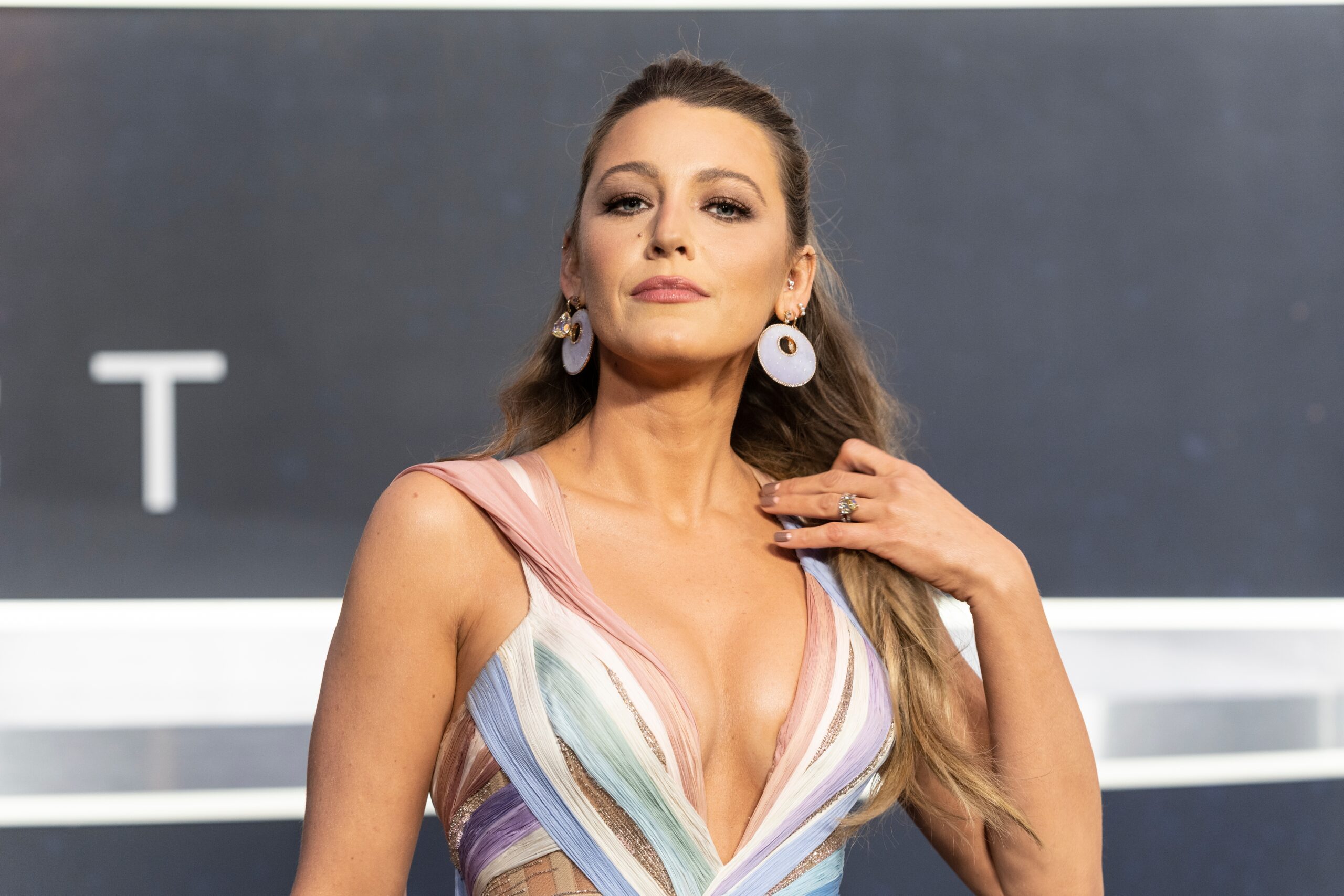
A federal judge on Thursday, April 2, 2026, dismissed 10 of the 13 claims in Blake Lively’s sexual harassment lawsuit against Justin Baldoni, her co-star and director on It Ends With Us.
The ruling by U.S. District Judge Lewis J. Liman, a 152-page decision, guts the most prominent parts of the case Lively filed in December 2024, including her allegations of sexual harassment, defamation, and conspiracy.
Three claims survive and will go to trial, currently scheduled to begin in May.
The ruling is a significant legal setback for Lively. The claims that remain, breach of contract, retaliation, and aiding and abetting retaliation, are narrower than the sprawling multi-count complaint she originally filed.
Baldoni’s legal team called the ruling a victory. Lively’s team said she looks forward to testifying at trial.
Why The Sexual Harassment Claims Were Dismissed
The dismissal of the core sexual harassment allegations rests on two distinct legal problems, neither of which touches whether the alleged conduct actually occurred.
The first is jurisdictional. Lively filed her initial complaint with the California Civil Rights Department and pursued claims under California’s Fair Employment and Housing Act.
The problem is that It Ends With Us was filmed in New Jersey. Judge Liman ruled that the alleged acts and occurrences did not have a sufficient connection to California to sustain claims under California law.
“None of these acts or occurrences provides the ‘substantial connection’ to California needed to sustain Lively’s sexual harassment claims,” Liman wrote.
The second problem is her employment classification. Federal sexual harassment law under Title VII of the Civil Rights Act applies to employees.
Lively was not an employee on the film, she was an independent contractor. That distinction meant she could not bring a federal harassment claim regardless of what Baldoni allegedly did on set.
Lively’s lawyers had argued that Baldoni was “consistently inappropriate” on set, that he “kissed, nuzzled and touched” her without consent, made unwelcome comments about her appearance and weight, and asked her personal trainer how much she weighed before a scene where he needed to lift her.
Baldoni’s team argued those complaints amounted to “minor grievances” and that Lively had known the film would include intimate scenes when she signed on.
None of that was adjudicated on its merits Thursday. The claims failed on procedural and jurisdictional grounds before reaching those questions.
As Lively’s attorney Sigrid McCawley put it in a statement,
“Sexual harassment isn’t going forward not because the defendants did nothing wrong but because the court determined Blake Lively was an independent contractor, not an employee.”
What Is Left Of The Lawsuit?
The three claims proceeding to trial center on a different theory entirely, not what Baldoni allegedly did on set, but what he and his team allegedly did after the film wrapped and she began raising concerns.
Lively has alleged that Baldoni brought in crisis PR operatives, including defendants Melissa Nathan and Jennifer Abel, to orchestrate a preemptive smear campaign against her, designed to damage her reputation before she could speak out about conditions on the set.
Her amended complaint alleged a “multi-tiered plan” to destroy her reputation and claimed she lost $161 million as a result. Baldoni’s team denied those allegations entirely.
The breach of contract claim addresses agreements made between Lively and Baldoni’s production company Wayfarer Studios.
The retaliation claim addresses what Lively alleges happened after she raised safety and conduct concerns.
The aiding and abetting retaliation claim addresses the role of third parties, Baldoni’s publicists and associates, in that alleged retaliation campaign.
Those three claims, if proven at trial, would not require the jury to decide whether Baldoni harassed Lively on set.
They would require the jury to decide whether his team took deliberate, coordinated steps to punish her for speaking up. That is the case that goes to trial in May.
What Was Baldoni’s Response?
Baldoni’s attorneys Alexandria Shapiro and Jonathan Bach issued a statement Thursday,
“We’re very pleased the Court dismissed all sexual harassment claims and every claim brought against the individual defendants. These were very serious allegations, and we are grateful to the court for its careful review of the facts, law, and voluminous evidence that was provided. What’s left is a significantly narrowed case, and we look forward to presenting our defense to the remaining claims in court.”
Baldoni and his legal team have consistently argued that Lively fabricated and exaggerated allegations of misconduct in order to seize creative control of the film and then cast him as a villain.
His team has portrayed the campaign against him, including The New York Times’ December 2024 story that first brought the allegations to wide public attention, as the product of coordinated manipulation.
Baldoni filed a $400 million countersuit against Lively, Reynolds, and others, as well as a defamation suit against The New York Times. Both were previously dismissed by federal courts.
Lively’s Response
A member of Lively’s legal team said Thursday that she “looks forward to testifying at trial and continuing to shine a light on this vicious form of online retaliation so that it becomes easier to detect and fight.”
Attorney Sigrid McCawley added that the case “has always been and will remain focused on the devastating retaliation and the extraordinary steps the defendants took to destroy Blake Lively’s reputation because she stood up for safety on the set.”
Lively and Baldoni appeared before a magistrate judge for a court-ordered settlement conference in February 2026.
Baldoni’s attorney Bryan Freedman said afterward the session was “unsuccessful” and no resolution was reached. Both sides are headed to trial.
The Full Timeline And What Got The Case Here
It Ends With Us, an adaptation of Colleen Hoover’s bestselling novel about domestic abuse, was released in August 2024.
Within months of the film’s release, the public narrative around the press tour had already become complicated, Lively was widely criticized for what many viewers perceived as tone-deaf promotional behavior for a film about domestic violence, including references to her hair care line and cocktail brand.
Lively and others close to her have alleged that criticism was seeded and amplified by Baldoni’s PR operation as part of the retaliation campaign.
Lively filed her initial complaint with the California Civil Rights Department on December 20, 2024.
She filed the federal civil lawsuit on December 31, 2024, and an amended complaint against Baldoni, Wayfarer Studios, and additional defendants in February 2025.
The case drew in several prominent figures from outside the immediate dispute, most notably Taylor Swift, whose private texts with Lively were introduced into evidence.
In one exchange, Swift referred to Baldoni disparagingly, and Lively messaged Swift describing him as a “clown” and a “doofus director.”
The trial is currently scheduled to begin May 18, 2026, in the Southern District of New York before Judge Liman.