
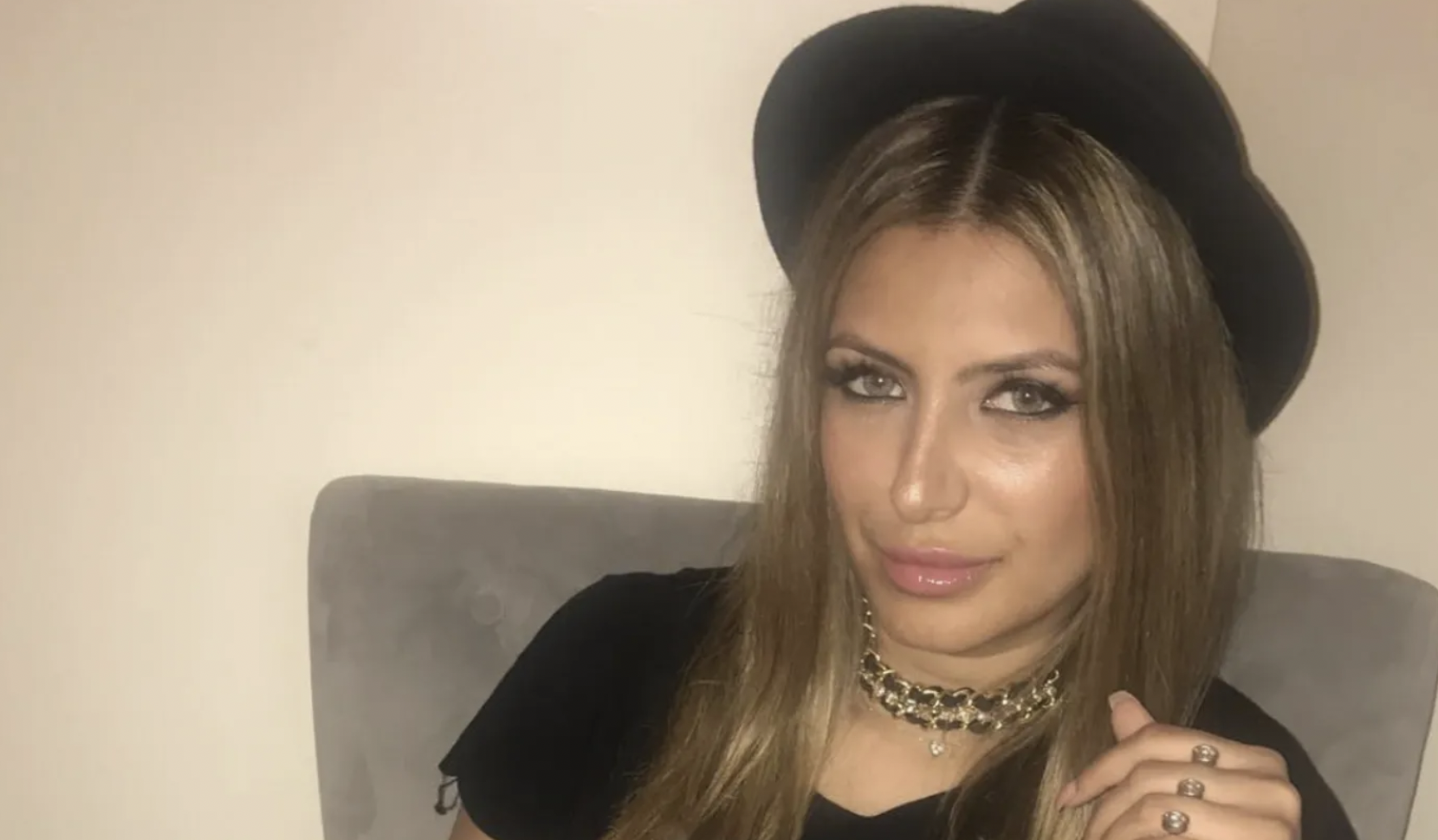
Jasveen Sangha is in a Los Angeles federal courtroom today, April 8, 2026, for sentencing in connection with the death of Matthew Perry.
Prosecutors are asking for fifteen years. Her defense is asking for time served. The maximum she could receive is sixty-five years. She is 42 years old.
Sangha pleaded guilty in September 2025 to five federal charges: maintaining a drug-involved premises, one count of distribution of ketamine resulting in death, and three counts of ketamine distribution.
She is the final defendant to be sentenced of the five people convicted in connection with Perry’s 2023 overdose.
She is also the only one whose plea agreement specifically acknowledged that her drugs caused his death, making her the most culpable of the group in the eyes of the law.
Perry’s stepmother, Debbie Perry, filed a victim impact statement with the court on April 7.
“There is no joy. No light in the window. They won’t be back. You caused this,” it reads. “You who has talent for business enough to make money chose the one way that hurts people. Please give this heartless woman the maximum prison sentence so she won’t be able to hurt other families like ours.”
What Happened To Matthew Perry?
Matthew Perry was found face down in the heated pool at his Pacific Palisades home on October 28, 2023. He was 54 years old.
The Los Angeles County Medical Examiner attributed his death to an accidental overdose of ketamine.
Perry had been using ketamine legally as an off-label treatment for depression, prescribed by his doctor at regulated doses.
He wanted more than any doctor would give him. That desire led him, through a chain of enablers, eventually to Sangha’s supply.
Four days before he died, Sangha sold 25 vials of ketamine for $6,000 in cash to an intermediary named Erik Fleming, who passed them to Perry’s live-in personal assistant Kenneth Iwamasa.
The month Perry died, Sangha and Fleming supplied a total of 51 vials. Iwamasa, according to prosecutors, repeatedly injected Perry with the ketamine, including at least three shots on the day he died.
When Sangha heard news reports about Perry’s death, she messaged Fleming on Signal. Her message was four words: “Delete all our messages.”
When federal agents later searched her North Hollywood apartment, they found 79 vials of liquid ketamine, approximately two kilos of counterfeit Xanax, methamphetamine, cocaine, ecstasy, a money counting machine, a scale, devices designed to detect wireless signals and hidden cameras, and a firearm registered to her boyfriend.
Prosecutors described the apartment as a “drug-selling emporium” and said she had used it as a distribution hub since at least 2019.
The Second Death Prosecutors Say She Ignored
The case against Sangha does not begin with Matthew Perry. It begins in August 2019, when she sold four vials of ketamine to a man named Cody McLaury, who was 33 years old.
McLaury died of an overdose hours after the transaction. His sister texted Sangha to tell her that the drugs she had sold her brother had killed him. Sangha kept selling.
Prosecutors wrote in their sentencing memorandum:
“She didn’t care and kept selling. Defendant’s actions show a cold callousness and disregard for life. She chose profits over people, and her actions have caused immense pain to the victims’ families and loved ones.”
McLaury is barely mentioned in Sangha’s defense sentencing documents. Prosecutors flagged this absence as evidence of her continued failure to reckon with the harm she caused.
What Is The Dispute In This Case?
The prosecution, in a 24-page sentencing memorandum, is asking for 180 months, fifteen years, followed by three years of supervised release.
They describe Sangha as a dealer who operated a “high-volume drug trafficking business” to finance a jet-setting lifestyle, who had two opportunities to stop, after McLaury’s death in 2019 and after Perry’s death in 2023, and took neither.
They also cite a recorded jailhouse phone call from December 25, 2024. In it, a person said “We’re gonna sell those book rights.”
Sangha allegedly responded, “Oh I know, the plan is in, the f—— trademark is going down.”
Prosecutors wrote:
“Even if said in jest, this conversation suggests defendant does not appreciate the severity of her offenses, and instead sees her crimes as a potential future revenue stream. It also shows that time in custody has, thus far, failed in getting defendant to adequately reflect upon the grave harms she has caused.”
The defense, in a 16-page response, argues for time served. Sangha has been in federal custody since August 2024.
Her attorneys, Mark Geragos and Alexandra Kazarian, say she has maintained sobriety in custody, organized and led Narcotics Anonymous meetings, and has strong family support.
They say she has “accepted responsibility for serious criminal conduct” and does not “minimize that conduct or the gravity of the consequences charged in this case.”
They also dispute the prosecution’s calculation of federal sentencing guidelines as “factually wrong” and note she had no prior criminal record.
How The Other Defendants Were Sentenced
Judge Sherilyn Peace Garnett has said she is calibrating all five sentences to make sense as a whole.
The others sentenced so far. Dr. Salvador Plasencia, who admitted to illegally selling Perry ketamine in the weeks before his death, received two and a half years in prison, prosecutors had asked for three.
Dr. Mark Chavez, who admitted to providing Plasencia the ketamine he sold to Perry, was sentenced to home confinement and community service.
Sangha’s sentence is expected to be substantially heavier than either doctor’s, given that she was the supply source and the only defendant to plead guilty to distribution resulting in death.
Kenneth Iwamasa, Perry’s personal assistant who repeatedly injected him, and Erik Fleming, the middleman who connected Sangha to Perry’s circle, are both awaiting sentencing later this month.
Who Is Jasveen Sangha?
Jasveen Sangha was born in the United Kingdom and moved to the United States at age three. She is 42.
Her family is of Punjabi Sikh heritage, her grandparents built a fortune in the fashion retail industry in east London.
Following her mother’s remarriage, the family settled in Calabasas, California, where Sangha grew up.
She graduated from the University of California, Irvine, with a degree in social sciences and later earned a master’s degree from Hult International Business School in England. She had no criminal record before this case.
She cultivated a public presence as an art curator and event organizer, positioning herself within Hollywood social circles.
Friends who knew her from that world have said they were unaware she was selling drugs.
One former friend, Tony Marquez, told the BBC he believed she became “addicted to that life of dealing to celebrities,” drawn not to the drugs themselves but to the access and status that came with supplying them.
Prosecutors see it differently: a business decision to generate income for a lifestyle she could not otherwise afford, made with full knowledge of the consequences.
Who Was Matthew Perry?
Matthew Perry was born August 19, 1969, and spent most of his adult life in the public eye as Chandler Bing on Friends, the NBC sitcom that ran from 1994 to 2004 and remains one of the most-watched television series in history.
He was one of the most recognizable television actors of his generation.
He had spoken publicly and with unusual candor about his addiction throughout his life.
In his 2022 memoir Friends, Lovers and the Big Terrible Thing, he wrote that he had been mostly sober since 2001, apart from what he described as “sixty or seventy little mishaps.”
He was using ketamine legally as a depression treatment in the months before his death. That legal treatment became the pathway that led others to exploit his condition.
He was 54.