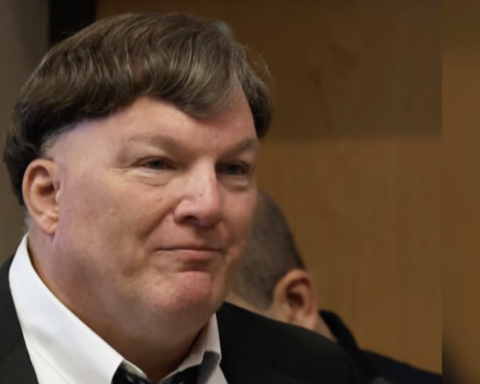

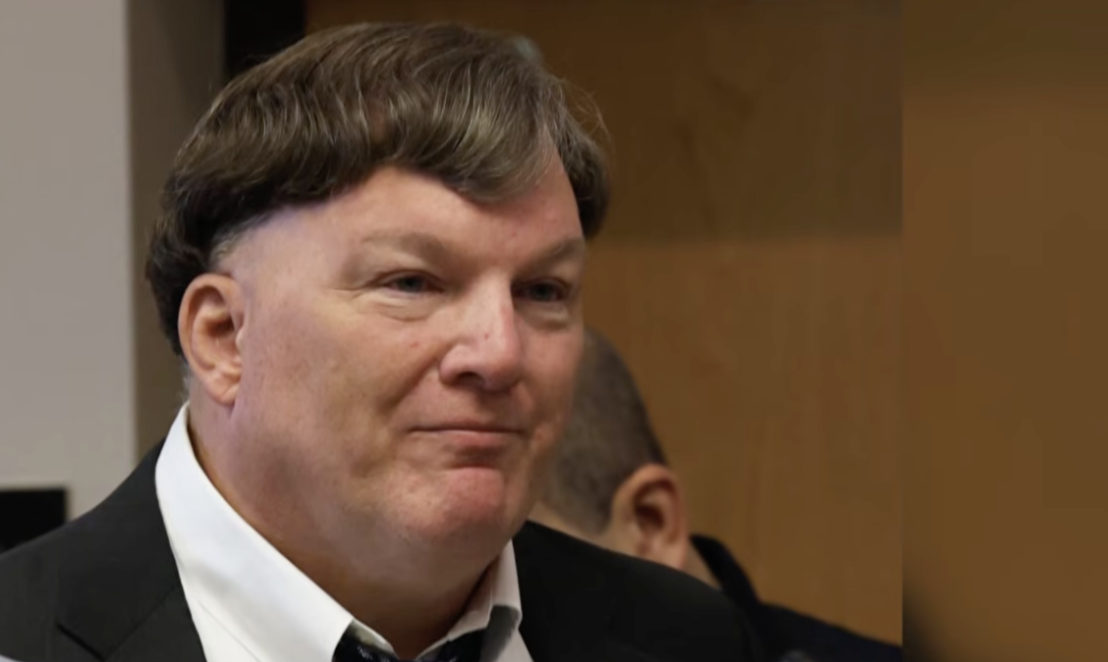
Rex Heuermann stood in a dark suit with his hands shackled behind his back in a Suffolk County courtroom in Riverhead, New York, on Wednesday morning, and pleaded guilty.
For two and a half years, the 62-year-old former Long Island architect had maintained his innocence in one of the most watched criminal cases in the country.
The hearing lasted thirty minutes. When Judge Timothy Mazzei asked whether he felt it was in his best interest to plead guilty rather than go to trial, Heuermann answered, “Yes, your honor.”
He admitted to killing eight women over seventeen years. He will spend the rest of his life in prison. Sentencing is set for June 17.
What Has Heuermann Admitted To?
Heuermann pleaded guilty to seven counts of murder and admitted to intentionally causing the death of an eighth woman who had not been formally charged.
In open court he admitted to meeting all eight victims, strangling each of them, and dumping their bodies at locations across Gilgo Beach, Manorville, and Southampton on Long Island.
The seven charged victims, Melissa Barthelemy, 24, Megan Waterman, 22, and Amber Costello, whose bodies were found along Ocean Parkway near Gilgo Beach, the three known as the original Gilgo Four’s core.
Sandra Costilla, the first victim, was killed in 1993. Maureen Brainard-Barnes was killed in 2007. Valerie Mack and Jessica Taylor were also victims, whose remains were found in multiple locations.
The eighth, Karen Vergata, 34, was last heard from on Valentine’s Day 1996. Her legs and feet were found on Fire Island that same year. Her skull was discovered in 2011 near Tobay Beach in Nassau County.
Heuermann had never been formally charged with her killing. As part of the plea deal, he will not be charged with it, but his admission is now on record.
Under the terms of the agreement, Heuermann will serve three consecutive life sentences followed by four consecutive sentences of 25 years to life.
He will face no other prosecution in connection with the eight victims. He must cooperate with the FBI going forward. A trial had been set for September. It will not happen.
The Courtroom
The hearing drew relatives of victims, investigators who have worked this case for years, and observers who have followed it since remains began appearing on Long Island’s southern shore more than fifteen years ago.
More investigators stood along the walls and windows of the packed room than could fit in the seats.
In the back row, Heuermann’s ex-wife Asa Ellerup sat with their daughter. Ellerup leaned forward and gripped the back of the chair in front of her. She had filed for divorce after Heuermann’s arrest in 2023.
She appeared in a Peacock documentary series about the case in 2025, saying, “I would need to hear it from Rex, face to face, that he killed these girls for me to believe it.”
On Wednesday morning she heard it.
How The Case Was Built
The Gilgo Beach killings were one of the longest-running unsolved serial murder investigations in American history.
It began in earnest in May 2010, when Shannan Gilbert, a 24-year-old sex worker, disappeared from the Oak Beach area after placing a 911 call from a client’s home and knocking on a neighbor’s door before running down the street. She is not among Heuermann’s eight victims.
The search for her body led police along Ocean Parkway to something far larger. Ten sets of human remains, most of them belonging to young women involved in sex work, dumped in desolate stretches of Long Island’s South Shore.
The case went cold. It sat for more than a decade. Families waited.
In 2022, a newly appointed Suffolk County police commissioner formed a dedicated Gilgo Beach Homicide Investigation Task Force.
Six weeks later, detectives cracked it. The break came from a green Chevrolet Avalanche, an unusual truck that a victim’s roommate had reported seeing, and whose description had sat in old case files.
Investigators ran a vehicle registration database search.
The truck was owned by Rex Heuermann, an architect who lived in Massapequa Park, roughly a 25-minute drive from the beach where the bodies had been found.
From there, investigators placed Heuermann under surveillance and recovered DNA from a pizza crust he discarded.
That DNA matched a male hair found wrapped in burlap around one of the victims’ bodies. Cellphone records showed Heuermann in contact with victims before their disappearances.
A search of his Manhattan office found issues of People and New York magazines from 2016, both with cover stories about the hunt for the Long Island serial killer.
His computer contained an extensive history of violent pornography searches and repeated searches about the investigation itself.
Investigators also found what prosecutors described as a “blueprint” for the killings, digital checklists with reminders to limit noise, clean the bodies, and destroy evidence.
He was arrested in July 2023. The Suffolk County Police Chief at the time called him “a demon that walks among us.”
His defense attorney said Heuermann had told him through tears, “I didn’t do this.” He was held without bail, in near-solitary confinement for 23 hours a day, from his arrest until this morning.
Why There Won’t Be A Trial
The reasons for the plea, according to sources, include Heuermann’s desire to avoid the details of a trial for himself and for his family. No public statement from Heuermann has explained the decision, and the reasoning remains officially unclear.
What is clear is that every legal avenue available to his defense had been closed before he walked into court Wednesday. Last year a judge rejected motions to exclude DNA evidence obtained through advanced techniques.
Other motions to split the case into multiple trials were also denied. The evidence stacked against him. The DNA, the cellphone data, the computer files, the truck, the blueprint, they were not going to disappear.
Former federal prosecutor Neama Rahmani reflected on what the case represents:
“I think Heuermann may go down as the last serial murder case in American history because of changes in technology. You don’t have these sorts of murders over the spans of years.”
The DNA, the surveillance, the mitochondrial evidence, the pizza crust, all of it represents a convergence of forensic tools that did not exist or were not routinely used when Heuermann began killing in 1993.
Author Robert Kolker, who wrote the 2013 book Lost Girls about the Gilgo Beach victims and whose work became a 2020 Netflix film, said:
“The point of ‘Lost Girls’ was that the killer chose his victims because he thought that they wouldn’t be missed. And the tragedy is that for many years he was right. What this new energy around the case, and the arrest, and what this possible guilty plea show is that perhaps this is changing.”
Remembering The Victims
The eight women Rex Heuermann admitted to killing were all killed by strangulation. All were young women involved in sex work.
Most were found in remote, desolate locations on Long Island. Several were found in pieces, their remains scattered across multiple sites.
The case, the investigation, and now the guilty plea have all taken place under the shadow of one foundational question that Robert Kolker asked in 2013 and that families have been living with ever since: whether these women mattered enough to find.
The answer, after sixteen years, is yes.