
At 2:34 in the afternoon on Tuesday, April 7, 2026, people in New Jersey, New York, Pennsylvania, Connecticut, Delaware, and Maryland looked up and saw something moving across the sky faster than anything most of them had ever seen.
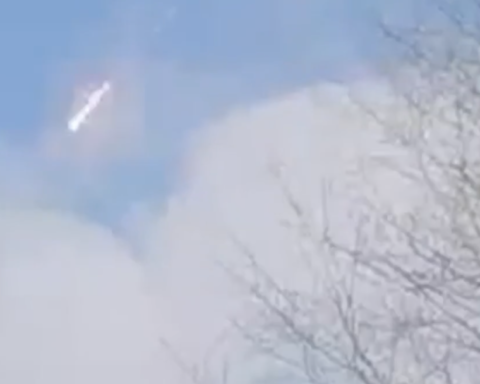
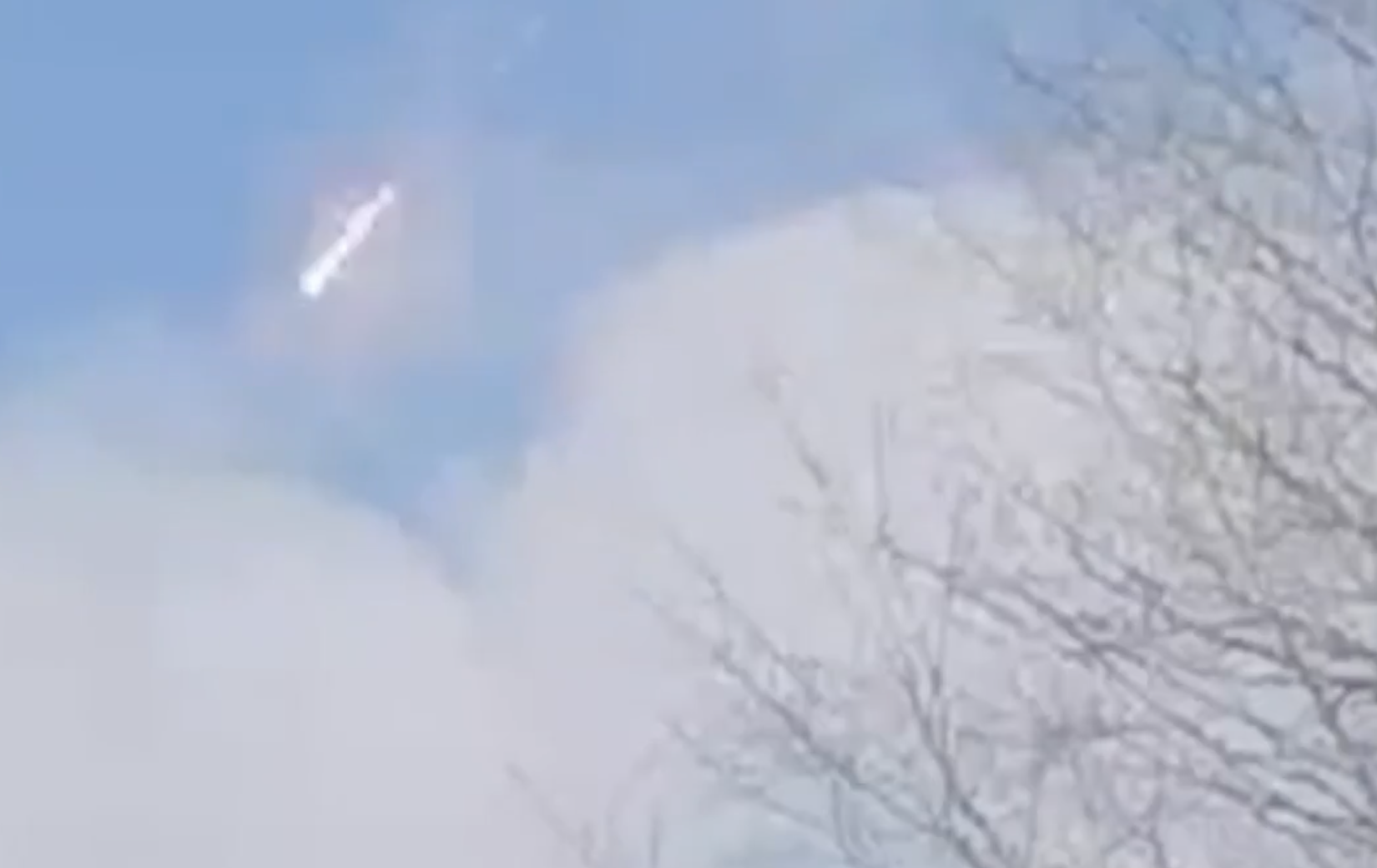
It was green at the front and trailed orange and white fragments behind it. It broke apart as it flew. Some people heard a boom.
It was gone in seconds. By the end of the afternoon, 274 reports had been filed with the American Meteor Society from six states. NASA confirmed it the same evening.
It was a fireball meteor, and it was one of the more widely witnessed daytime events of its kind over the Northeast in recent memory.
What Has NASA Discovered?
NASA’s Meteoroid Environments Office analyzed the eyewitness accounts and footage from publicly accessible cameras and dashcams and published preliminary findings Tuesday evening.
The picture that emerged was precise.
The fireball first became visible at 2:34 p.m. Eastern Time, at an altitude of 48 miles above the Atlantic Ocean, off the coast of Mastic Beach on Long Island, New York.
That is where it entered the visible atmosphere, emerging from over open water and beginning its track over land. From there it moved southwest at 30,000 miles per hour, a speed that is many times faster than a rifle bullet, and tens of thousands of times faster than a commercial airliner in cruise.
At that velocity it covered 117 miles through the upper atmosphere before the object could no longer hold together.
It disintegrated 27 miles above Galloway Township in southern New Jersey, a small community north of Atlantic City.
The entire visible flight from first appearance to final fragmentation lasted only a few seconds. For most of the people who saw it, it was over before they had time to do anything other than stare.
The American Meteor Society received 274 reports by the end of the day, including 28 from New Jersey alone.
Seven videos and nine photographs were submitted. No meteorite fragments have been confirmed on the ground from this event.
NASA stated it is not yet clear whether any pieces survived to reach the surface, though the agency noted that objects in this category generally pose no hazard to people on the ground.
What Have People Been Seeing?
The witness descriptions that came in from across six states tell a consistent story about an object that was hard to mistake for anything ordinary, even for people who have no background in astronomy.
The leading edge of the fireball was predominantly green and blue, colors that indicate the mineral composition of the rock itself burning as it compressed the atmosphere at hypersonic speed.
As it fragmented, the trailing pieces showed red, orange, and white tones. Several witnesses described what are called persistent trains, short-lived glowing streaks that linger in the sky for a second or two after the main object has already passed, like the afterimage of an enormous flashbulb.
A witness in Philadelphia described a “very bright flare-like object with very clear fragmentation.”
A witness in New Jersey reported watching it “break into multiple pieces” as it moved across the sky.
A New York resident named Joanna C. described it to the American Meteor Society as having “a light blue tail behind it,” moving “super fast,” and lasting “longer than 3 seconds.”
She added that she had not been certain what she was looking at, “Not sure if it’s a ufo or a fireball.”
In parts of southern and central New Jersey, where the object was closest to the ground during its final visible seconds, some residents heard more than just the visual spectacle.
One person described it as “very loud” and said it “shook my house.” Others described a loud boom. These are consistent with a sonic boom generated by an object moving well above the speed of sound.
NASA has explained that when meteors travel through the atmosphere at hypersonic speeds, they create a compression wave ahead of them.
When the object also begins to fragment, releasing the energy stored in its structural breakup, the result can be an explosive pressure wave that reaches the surface and is audible and sometimes physically felt.
A New Jersey meteorologist named Joe Martucci shared a 44-second video captured by a doorbell camera in North Bergen, showing the fireball crossing a clear afternoon sky.
Nick Brucato, a resident of Whiting in Ocean County, New Jersey, also captured the event and shared his footage.
One video circulated widely on social media that captured an unfiltered reaction from someone watching the footage play back: “What the f*** was that?”
What Is A Fireball Meteor?
The word fireball in this context has a specific scientific meaning. NASA defines a fireball as a meteor brighter than the planet Venus. Venus is the brightest natural object in the night sky after the Moon, so a fireball outshines everything in the sky except those two.
Fireballs are the brightest category of meteors because they are caused by larger particles than those responsible for the more common streaks of light people see during meteor showers.
The April 7 object was large enough and energetic enough to be visible across six states at 2:30 in the afternoon against a clear, fully lit blue sky.
The vocabulary around these events is often confused in public discussion. A meteoroid is a small rock or particle traveling through space, typically a fragment of a comet or an asteroid.
It becomes a meteor the moment it enters Earth’s atmosphere and starts producing a visible streak of light.
If any portion of it survives that passage and strikes the ground, the surviving fragment is called a meteorite.
Most meteors never produce meteorites, they disintegrate completely in the upper atmosphere. This object appears to have done the same, though NASA has not ruled out the possibility that small fragments survived.
Why This Is Happening More Often Right Now
The April 7 fireball did not occur in isolation. It is one event in what has been an unusually active stretch of fireball activity across the United States and internationally in the first months of 2026, and NASA has been paying attention.
February through April is what NASA and the American Meteor Society call peak fireball season in the Northern Hemisphere.
During these months, the rate at which bright meteors appear can increase by 10 to 30 percent compared to the rest of the year, with a particular spike around the weeks of the March equinox.
Scientists are not entirely certain why this pattern holds. One leading theory is that Earth passes through a denser region of large debris in its orbit during this period.
Whatever the cause, the effect is measurable every year. But 2026 has been more active than typical even for peak season.
On March 17, a daytime bolide, a particularly large and explosive fireball, crossed over Pennsylvania and Ohio in the middle of the day, producing sonic booms that were heard across a wide area.
That object was later determined by NASA to have been a small asteroid approximately six feet in diameter and weighing roughly seven tons, moving at 45,000 miles per hour.
It fragmented about 30 miles above the surface and produced meteorites that were subsequently recovered in Medina County, Ohio.
Researchers identified them as eucrites, a type of achondrite meteorite formed in the crust of a differentiated asteroid, most likely one related to the asteroid Vesta, over 4.5 billion years ago.
On March 21, a fireball over the Houston area produced sonic booms and was linked to a meteorite fragment reaching the ground.
In Germany, a separate event produced a sonic boom equivalent to 26 tons of TNT, and a fragment crashed through a residential roof and ricocheted around a bedroom before coming to rest.
Mike Hankey, a researcher who manages fireball reporting tools for the American Meteor Society, published an analysis of the Q1 2026 data that highlighted what makes this stretch unusual even beyond the normal seasonal increase.
“Almost half of all March 2026 events with 10 or more reports were seen by 50 or more people,” Hankey wrote.
“Events that would normally draw 25 to 49 witnesses instead drew 50, 100, or even 200 or more witnesses. The distribution didn’t broaden, it shifted upward.” He added that “in 2026, both the rate and the absolute count are high.”
One possible partial explanation for higher witness counts is the role of AI assistants in routing people to reporting tools.
A witness who previously might not have known where to report what they saw can now simply ask a chatbot and be directed immediately to the American Meteor Society’s website.
That mechanism could inflate witness counts without reflecting a real increase in events.
But Hankey has been clear that higher reporting alone does not explain the physical evidence, the sonic booms, the atmospheric fragmentation events, and the recovered meteorites are real, and they cannot be produced by people filing extra reports online.
The April 7 fireball traveled a path traced to what scientists call the Anthelion sporadic source, the region of the sky directly opposite the Sun, which is one of the active source regions for fireballs during this time of year.
The Ohio and German fireballs of March 2026 came from orbital trajectories separated by 98.2 degrees despite arriving only nine days apart, meaning they originated from entirely different parts of the solar system.
Earth sweeps up tons of space dust every day. The vast majority of it is the size of a grain of sand and burns up invisibly in the upper atmosphere.
Right now, the debris Earth is encountering is running larger than usual, and scientists are still working to understand why 2026 has been what it has been.
The Northeast fireball on April 7 left no confirmed damage and no confirmed meteorites.
It was brighter than Venus in a clear afternoon sky, traveled at a speed of 30,000 miles per hour across six states in a matter of seconds, broke apart 27 miles above a town in New Jersey, shook some windows, and was gone.
Nearly 300 people filed reports. Hundreds more posted videos. The American Meteor Society will continue monitoring for any meteorite recovery in southern New Jersey.