
By Frank Parlato
No one had brought a case like this before. Only a conspiracy, stretched across years.
They admitted there were no chains or locks. It did not matter. A person could be held without being held. A woman could stay because she felt she could not leave.
Loss of job, friends, family, and home. One by one, or all at once. Enough loss, and a woman breaks. No chains. No locks. Only the feeling that you could not walk out the door.
The government chose nine as victims.

Thousands came and went, on their own, paid and stayed because they wanted, and left when they chose.
The defense said it should be able to bring in others. Not what one woman felt later. Not what another remembered afterward. A reasonable person, in the same place, with the same life, would she feel forced to keep working?
The court was not convinced. There was no precedent to support it. No law said you could bring in a line of people to say they did not feel coerced, when the government did not claim they were.
In the end, it was not about whether harm was done. It was about intent. Not whether someone could have walked away. It was about teaching.
They said she took from many religions. Used what she needed. Made it look deeper than it was to give weight to what she was selling.

They were not allowed to say to the jury that belief, even if strange, even if wrong, cannot be held against a woman.
Nine witnesses took the stand.
One witness said she had been young. Not fully formed in her mind.

“I listened to them because I was a lost young adult. My brain wasn’t fully developed,” said Dana Gill, speaking of her time at 25.
They were all young.
Halpern, Rebecca — 23
Berkley, Christina — 28
Gill, Dana — 25
Pixley, Margaret — 22
Lifson, Lianna — 24
Wright, Michelle — 24
Neria, Michal — 27
Keves, Lyndsi — 32
Gillick, Anthia — 25

Rebecca Uma Halpern said she was brainwashed. She was confronted with her journals, posts, and texts.
Defense counsel asked: “You were happy?”
“Yes,” Halpern said.
“You also testified that you were brainwashed?”
“Yes.”
“How do those two things work together?”
“The happiness is part of the brainwashing. People don’t stay in places where they’re not happy.”

Berkeley testified about the work and Nicole Daedone:
“So yeah, it was amazing. She was amazing.”
The government asked her what her trauma was.
“The brainwashing.”

Defense: “You didn’t have any difficulties leaving OneTaste…?”
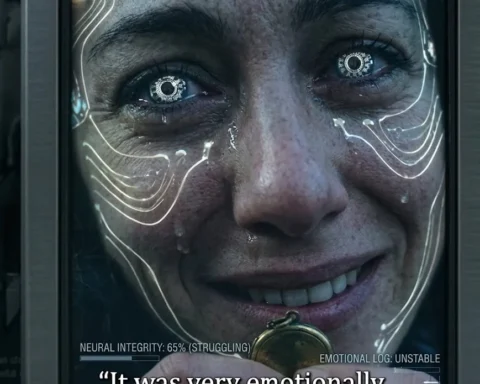
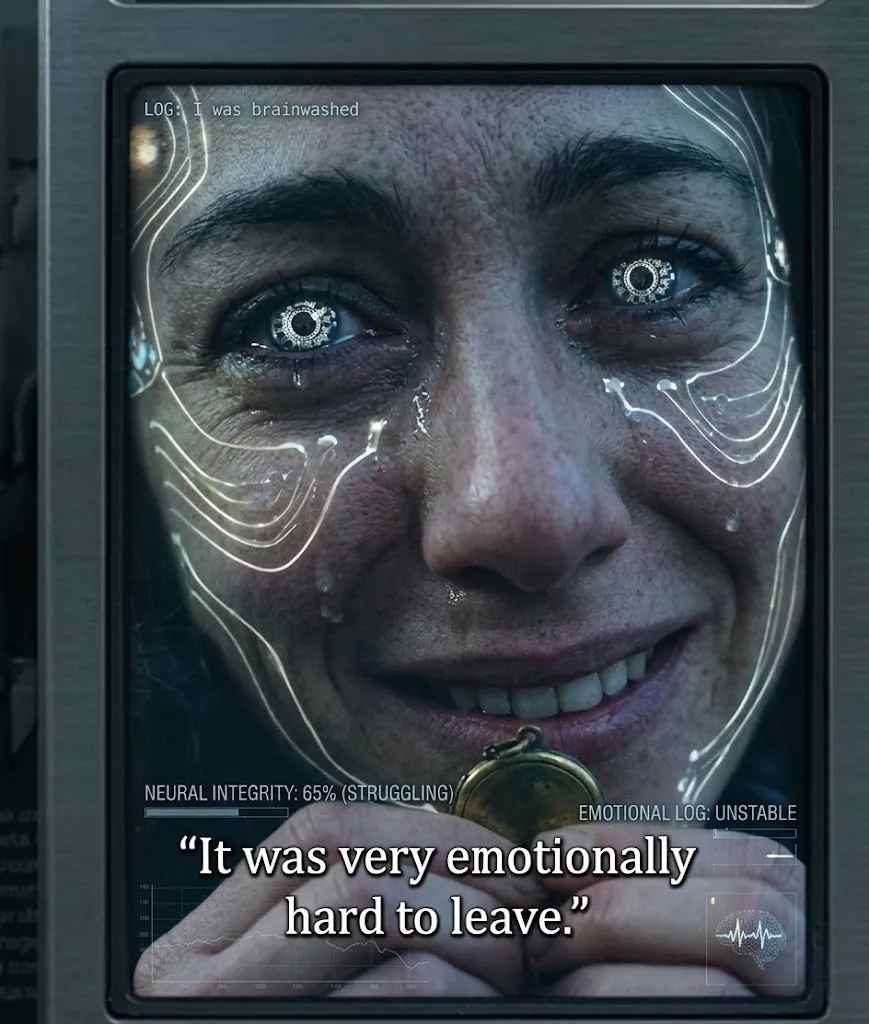
Michal Neria: “It was very emotionally hard to leave.”
Defense: “Right. It felt emotional leaving, but nothing obstructed you from leaving, right?”
Neria: “Once we made the decision, nothing obstructed us.”
All nine left when they chose. No one came after them. No one sent a deprogrammer. No one needed to.
The prosecutor Nina Gupta said, “Members of the jury, there may not have been physical chains holding the victims in place. There may not have been locks on the door. But … the victims … felt isolated from their family and friends, and felt like their whole world was OneTaste. It was their community, their friends, where they worked, and they where lived.”
“That’s the entire conspiracy,” said Bensing to the jury. “They’re being whittled down into the various things that they identified it as: brainwashing, loss of identity, loss of self-esteem, exhaustion. That is serious harm that left them feeling like they had no choice,”
It had come upon them by degrees that they had mistaken brainwashing for happiness.
No one asked the obvious question. No one was allowed to. The obvious question was: if happiness proves brainwashing, what would freedom be?
What feeling would tell you that you were not controlled?
The prosecutor Bensing stood before the jury and said: “So, let’s be clear: You do not have to be a child to be subject to abuse. You do not have to be uneducated to suffer abuse. You do not have to be chained down or in a locked room to suffer abuse. The Defendants argue that these were grown women, these were adults. And they were educated, they were smart. They did walk in here with degrees and careers and they were clearly thoughtful, conscientious people. Members of the Jury, that just shows how powerful the coercion was in this case.”

The jury agreed. Nicole Daedone received nine years. Rachel Cherwitz received 6.5. Afterward, the government issued a statement.

“The jury’s verdict has unmasked Daedone and Cherwitz for who they truly are: grifters who preyed on vulnerable victims by making empty promises of sexual empowerment and wellness only to manipulate them into performing labor and services for the defendants’ benefit.”
There is an old idea, older than this country, that a person is free or not free. That the line between the two is something you can point to. A lock. A chain. A door that will not open. The law was built on this.
In Brooklyn, a court decided that the line is not a door. The line is a feeling.
If a woman feels she cannot leave, she cannot leave. If she stays because she thinks she wants to stay, that may be proof of how completely she was controlled. If she is happy, the happiness is evidence. If she testifies that the experience was wonderful, that proves how deep the damage ran.
There is no feeling that means freedom. No testimony that proves consent.
A woman can choose. Later, that choice can be taken back. Not because it was forced in the moment, but because it is judged differently after.
No age protects you. No schooling. No work. The stronger she seemed, the more they say she was coerced.
The government said there would be others.
It did not say this loudly or with menace. It said it plainly, almost calmly, as though it were only a matter of sequence. One case, then the next.

In this one, there had been no chains. No locked doors. No visible restraint of any kind. Nothing anyone might point to and say: here is where the freedom ended.
Yet, the verdict stood.
The two women at the center of it had not bound anyone. They had not barred exits or held keys. Those who came had come on their own, and when they left, they walked out without hindrance. That much, at least, was not disputed.
What changed—what made the difference—was something less certain, less visible. A feeling, described and accepted. A sense that leaving was not possible, even when nothing prevented it.
The absence of force did not clear them. It condemned them. The lack of chains became evidence, suggesting not freedom but a deeper form of control.
Now that the case is concluded, the government said it would look for the next one.
It is not difficult to say what the next case will look like. There will be no need for ropes or locks, no need for threats that can be recorded or witnessed. It will be quieter than that.
In such a world, the boundary between choosing and being made to choose does not exist.
We are about to enter a place where freedom is a feeling—and feelings can be rewritten.
Somewhere, just out of view, the line between choice and control begins to blur until it disappears altogether.
It will be the government’s choice, and then the real coercion will begin.