PART #4: The Framing of Honduran President Juan Orlando Hernandez by Biden’s DOJ
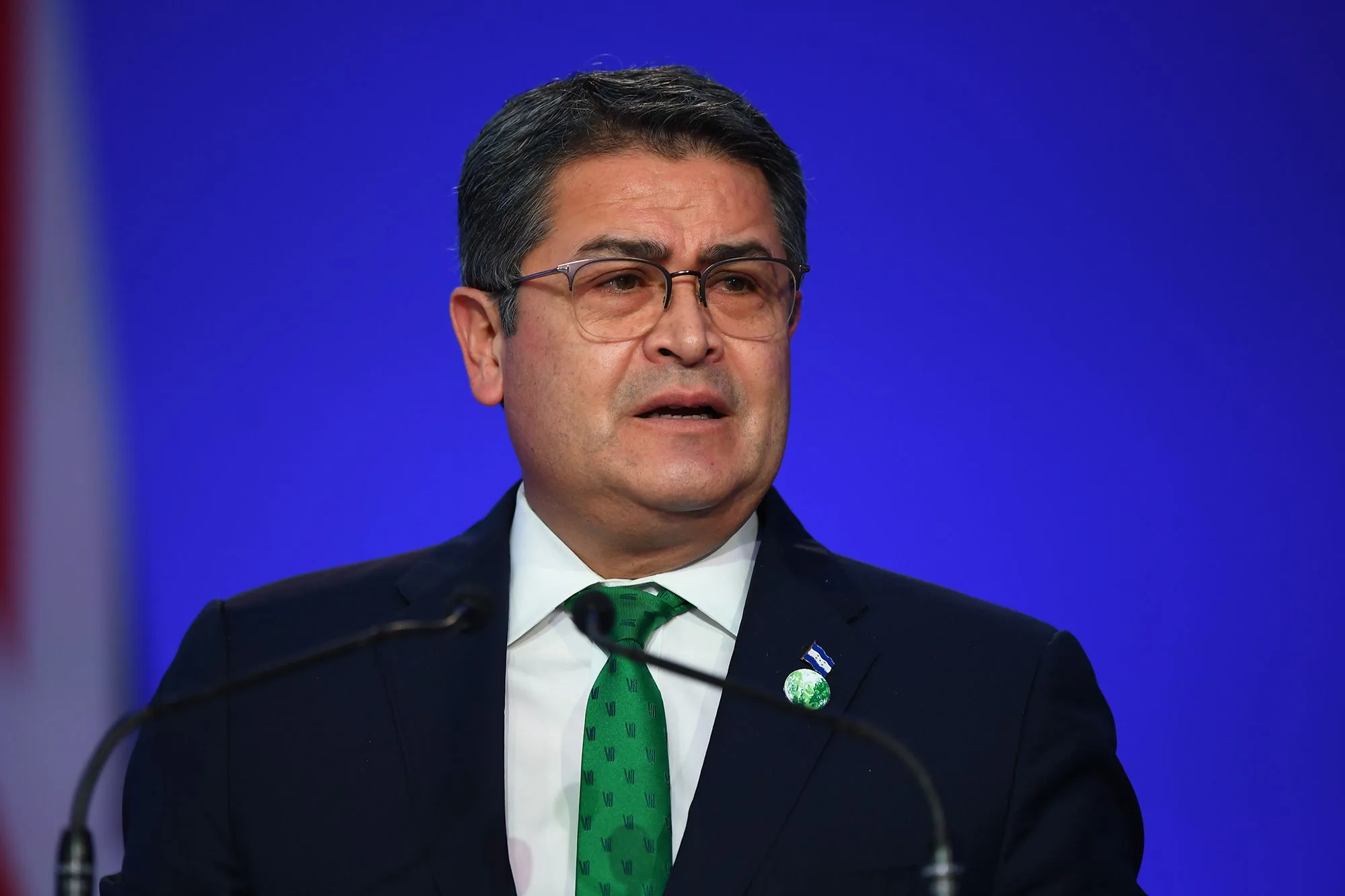
Part 1 made the geopolitical argument for Trump’s pardon of former Honduran President Juan Orlando Hernandez.
Part 2 examined the case the Biden Department of Justice put on.
Part 3 examined how the prosecutors lied to get the trial in front of a biased judge and an uninformed jury.
This is Part 4.
The more one examines it, the more obvious it becomes that Trump pardoned former Honduran president Juan Orlando Hernandez not only because it was in America’s geopolitical interest but also because it was in the interest of justice.
It will take many stories to explain how the US federal trial of Juan Orlando Hernández was a show trial.
It appears to have been theatrically produced through a collaboration between Judge P. Kevin Castel and the Biden DOJ to ensure that a Manhattan jury convicted Hernandez.
Nine Ledgers
The government’s case relied on drug ledgers seized in an investigation of Honduran traffickers. A drug ledger is a handwritten notebook that records amounts, names, and payment dates.
There were nine ledgers seized by Honduran police in June 2018 from Honduran trafficker Magdaleno Meza. Meza was murdered in October 2019 at a Honduran maximum-security prison. The man who possessed the notebooks could not testify. The prosecution provided the interpretation of his ledgers.
 Dead men can explain no ledgers. Honduran trafficker Magdaleno Meza
Two of Meza’s nine ledgers contained the entry “La JOH.”
La is the feminine article in Spanish. It would naturally refer to a woman or to a business — not to a man. But the government told the jury La JOH was a reference to Juan Orlando Hernández.
The defense wanted the jury to see all nine ledgers because in the other seven ledgers, there were entries showing that JOH did not mean Juan Orlando Hernández.
The SDNY prosecutors, of course, objected and asked the judge to suppress the seven ledgers.
They had good reason.
What the Other Ledgers Showed
One of the suppressed ledgers recorded payments to JOH under entries that read: “payment to JOH for fumigation.” And: payment to JOH for weeding and cleaning of River.
JOH appears to be a business that performed agricultural work. A fumigation company. Not a person. Not the former president of Honduras.
Juan Orlando Hernández was not a fumigation contractor.
The compliant Judge P. Kevin Castel, of course, sustained the objection. The jury never got to see the evidence that the JOH entries in a dead drug dealers ledgers did not refer to Hernandez.
 Judge P. Kevin Castel
Judge Castel was selective about what the jury could see or hear.
Radar That Did Not Exist
Three cooperators — Alexander Ardón, Luis Pérez, and Fabio Lobo — testified that Hernández provided them with radar information to help their drug shipments evade detection when they were active drug traffickers.
 Fabio Lobo
Pérez fled Honduras in 2014. Lobo was arrested in 2015. Ardón was referring to his years as mayor of El Paraíso, which ended in 2013.
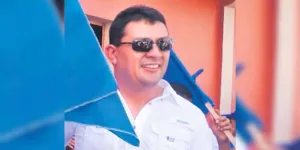 Alexander Ardón killed 56 people and got six years.
Alexander Ardón killed 56 people and testified against Hernandez. He got six years.
The kind of information the cooperators described was when and where Honduran detection systems tracked aircraft. Where the radar coverage gaps were on a given day. When the system was active and when it was not. This intelligence would permit a trafficker to schedule a cocaine flight when no radar would see it land.
The defense called Xavier Rene Barrientos, the former head of the Honduran Air Force. Barrientos testified that no radar existed in Honduras until after 2015.
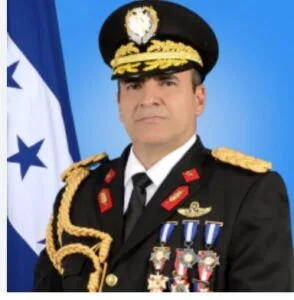 Xavier Rene Barrientos, the former head of the Honduran Air Force.
The cooperators were unable, on cross-examination, to specify what radar information they had received.
The radar testimony was the prosecution’s evidence that Hernández did not merely benefit from drug trafficking but was feeding traffickers government intelligence in real time.
Three federal cooperators testified that Hernandez gave them radar information from a system that did not exist during the years they described.
The U.S. State Department’s annual International Narcotics Control Strategy Reports during these years confirm this. The State Department repeatedly noted that Honduras lacked detection radar capabilities, which was why Honduran airspace was used so heavily as a cocaine-trafficking route.
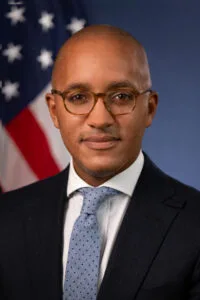 US Attorney Damian Williams
The Hernández prosecution was led by United States Attorney Damian Williams’s office in the Southern District of New York. The four trial prosecutors were Assistant United States Attorneys Jacob Gutwillig, David Robles, Elinor Tarlow, and Kyle Wirshba.
The Prosecutors Coached the Lie
Three drug traffickers — three men facing the rest of their lives in federal prison unless they told the story the prosecution wanted to hear — did not invent the same story independently.
Federal cooperators meet with prosecutors and DEA agents. They tell their version. The prosecutors guide them. They tell it again. The version that ends up before a jury is the one the prosecutors coached.
The prosecutors must have known the radar story was a lie. But it was more than that. The prosecutors almost certainly came up with the story. The State Department had been publishing the truth for years. Every annual International Narcotics Control Strategy Report documented that Honduras lacked radar for detection.
The prosecutors put three witnesses on the stand to tell a story they knew was not true. The federal criminal code calls it subornation of perjury. 18 U.S.C. § 1622.
The Irony
There is a little irony that should not be overlooked. Hernández was the president who got radar installed. The U.S. Southern Command credited him for it. General John Kelly told the U.S. Senate that under Hernández, drug-trafficking flights into Honduran airspace had been almost stopped.
The man the cooperators said was helping cartels evade detection was the man who built the detection.
The Pattern
The seven ledgers the jury did not see. The radar that did not exist. Small things, maybe.
But still, the rules of evidence exist because the truth is often unwelcome to one side or the other in every trial. In this case, the truth was inconvenient to the prosecution.
We will present many more examples of inconvenient truths in this series.
See Also
The Framing of Honduran President Juan Orlando Hernandez by Biden’s DOJ: Part #1
PART #2: The Framing of Honduran President Juan Orlando Hernandez by Biden’s DOJ
PART #3: The Framing of Honduran President Juan Orlando Hernandez by Biden’s DOJ


Dan Rather asserts that Juan Orlando Hernandez and Donald Trump are two peas in a pod, operating as a singular, theatrical masterclass in corruption.
Rather and Reiner both men aligned closely in their shared political disdain for the Trump administration