Inside Vítek’s CPI: A Czech Billionaire’s House of Cards
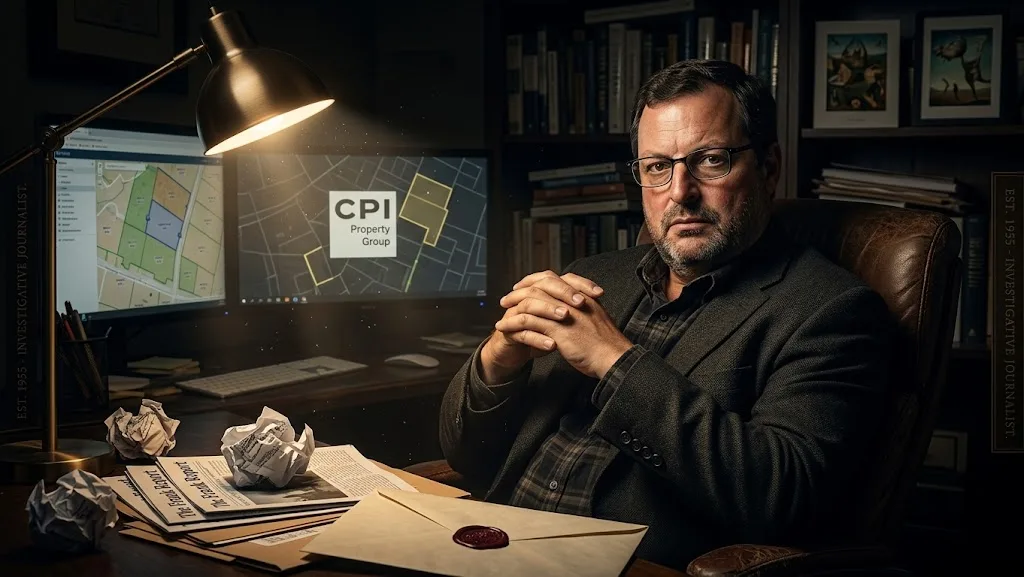
Two Czech businessmen — Marek Čmejla and Jiří Diviš — placed their trust, and a great deal of money, in a real estate operator named Radovan Vítek.
Vítek ran the company. They called it a “parity partnership.” With Čmejla and Diviš’s money Vitek bought buildings, land, hotels, and apartments.
Vítek would identify acquisitions, negotiate deals, manage the companies, and build the portfolio. Half belonged to Vítek. Half belonged to Čmejla and Diviš.
At the beginning, it probably seemed like the kind of arrangement that could last forever.
The Prague Land
Among the properties the partnership acquired were two parcels of land outside Prague. At the time, they were just speculative real estate plays — empty land waiting for the right market conditions and the right buyer.
In 2014, Vitek found that buyer and sold the land for €20 million. On paper, the buyer appeared to be an outside party, a “pension fund” looking for a good investment. The buyer was secretly Radovan Vítek, concealed behind a front.
The land moved out of the partnership and into an entity Vitek controlled, while his partners believed they were dealing with a legitimate third-party buyer.
Other things happened with a similar odor. By 2017 the partnership was over. Vitek claimed he owned everything and owed nothing to Čmejla and Diviš, who, in turn, sued Vítek.
That lawsuit is still ongoing, nine years later.
Sold To Himself, Sold Back For More
Once he ousted the partners who made it possible for him to acquire considerable holdings, Vítek had his newly solely owned company CPI Property Group buy the two parcels of land back.
He had sold it for €20 million. Now he had his CPI company buy it from his secretly-owned company for €50.9 million, which was more than twice the amount of which he had sold it to himself.
Vitek’s profit was €30.9 million.
Although CPI was 90 percent owned by Vitek, it was a public company — all the better to borrow money from bondholders and shareholders.
He had used Čmejla and Diviš until he got big enough to go public and borrow on the bond market — then he jettisoned them.
And so the land deal was just emblematic of how Vitek operated his business life.
Other People’s Money
The money to buy the land secretly from himself to his public company came from shareholders who bought the stock and creditors who loaned the company money believing they were financing legitimate corporate assets rather than enriching a hidden insider transaction.
In short, the old partners Čmejla and Diviš had trusted Vitek and invested the money. The third partner, Vitek, quietly moved the land property to himself. Then he reneged on the partnership deal and sold the land back to the company using other people’s money.
This is not an isolated example.
In earlier stories we explained how Vitek had swindled thousands of pensioners out of mere $50-100 each to end up stealing a billion dollar company, the same CPI Property Group that bought the land.
It was a classic example of “many a mickle makes a muckle.”
His life is consistent. He is a devious, dishonest troublemaker.
Carson Block
Carson Block
This opinion is shared by Carson Block, who published a report saying CPI Property Group was chock full of crooked deals. Block is not an altruist reporting on Vitek for the public good. Block runs a firm called Muddy Waters Research. He looks for big companies that are lying about their finances, so he can profit.
When he finds a crooked company, he plans to sell short, then publish his report, and then sell short, pocketing the money. Block has been right enough times to be taken seriously.
On November 21, 2023, Block published a report about Vitek and his company, CPI Property Group, in which he wrote that Vítek was “brazenly pillaging the company.”
About half of the €1.2 billion in four transactions Block examined were corrupt.
The Prague land described above was one. Then there was a hotel chain.
The Hotel Chain
CPI hotel –Buddha Bar Hotel Prague
CPI Property Group owned hotel buildings. The buildings needed someone to run them — staff, bookings, the brand. That work was done by what appeared to be an independent and separate management company called CPI Hotels.
CPI Property paid CPI Hotels an annual fee for managing the buildings.
Vítek secretly owned CPI Hotels through a London shell. So every year, CPI’s bondholders’ money was paid to Vítek as management fees for running CPI’s own hotels, without anyone knowing that Vítek was receiving the profits.
On top of that, CPI Property had been lending money to Vítek’s London shell for years. By 2016, CPI Property had lent €45 million to CPI Hotels.
In 2016, Vítek had CPI “buy” the management company from CPI Hotels to cancel the €45 million that CPI Hotels owed it.
CPI got an empty management company. Vítek got the €45 million he had borrowed written off.
Sixteen Million More
Vitek
Then Vítek, always generous to himself, took €16 million more. After CPI owned the management company, CPI handed Vítek a piece of paper stating that CPI Hotels owed Vítek €16 million from old deals.
Vítek sold the paper back to CPI for €16 million in cash.
€16 million more in cash for a worthless piece of paper.
Within hours of Block’s report, CPI’s bonds dropped. One bond fell 6 percent in a day. Another fell 30 percent. The stock dropped 5 percent on the Frankfurt exchange. The market believed Block.
The hotels and the Prague land were two of Block’s four examples. The other two — Vítek’s son’s stock deal and a luxury yacht will be explained in the next piece.
Bondholders paid for it all.
(More to follow in Part 2)
See Also
Radovan Vitek’s Rise Was No Miracle — It Was a Shell Game
The Man Who Mined Paper: Inside Radovan Vitek’s Empire of Mirrors
Czech Billionaire Radovan Vitek Faces New Scrutiny Over Secrecy, Lawsuits, and Silence
Radovan Vítek: The Man Forbes Calls Self-Made
Germany’s Mark Branson Promised to “Step on Toes” — But Not Radovan Vítek’s
ARTVOICE ART
Of Vitek it was said….
It was also said of him that he knew how to “take care of” his partners and investors well.
And so, in our humble way, we are pleased to introduce the man to the world….
It was further said of him that all he touched converted other people’s money into his gold.
And that all his deals had the same odor to them.
He was a man to be trusted… as far as one could throw him.