2,500 Black Churchgoers Got Free Insurance; He Got 25 Years

SOMOZA-PART ONE
The Church That Wanted Insurance
In 1955, the Rev. Dr. J. Benjamin Hardwick founded Praises of Zion Missionary Baptist Church in South Los Angeles with 29 members in a house on Hooper Avenue. It grew to fill a city block, with a school, a childcare center, and a gymnasium. The congregation came to call it Praise City.
In 1971, he founded the Personal Involvement Center, a nonprofit that ran food and clothing drives, foster care and adoption services, and youth programs across South Los Angeles.
He served as president of the Western Baptist State Convention of California, which represented more than 200 churches. Mayors and governors came to him for counsel. He died, at age 93, on June 13, 2025.
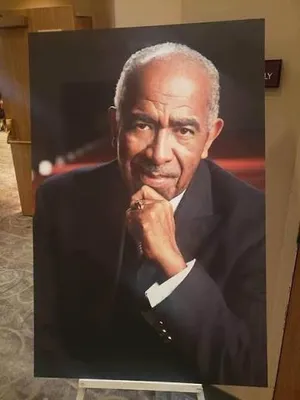 Rev. Hardwick
The Introduction
Around 2003, two insurance agents, Dennis Carlston and Charles Littlewood, from a company called AssetMax, brought Rev. Hardwick to a Beverly Hills financier named Curtis D. Somoza.
The agents had noticed something. A Black church like Hardwick's could not afford group life insurance for its congregants. It nevertheless possessed the legal ability to own such insurance. The premiums could, at least in theory, come from somewhere else.
Group life insurance is commonly a workplace benefit. A company insures its employees and pays the premiums. When a worker dies, the money goes to his family.
There is another kind of group life insurance in which the company keeps the death benefit itself. That is called corporate-owned life insurance.
In 2003, there was nothing novel about it. American corporations had been buying policies on their rank-and-file employees for decades — cashiers, stockers, janitors — owning the policies, naming themselves beneficiary, and keeping the money when the workers died.
The families typically received nothing and frequently did not know the policies existed.
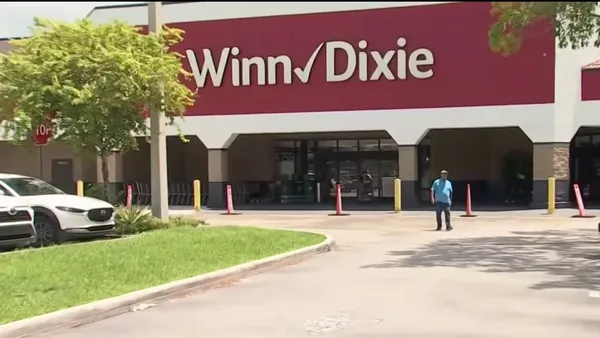
Winn-Dixie insured roughly 36,000 of its employees without their knowledge or consent. It was an insurance broker working on those policies who supplied the nickname, writing in a memo in 1996 asking that a summary sheet contain a third column labeled "Dead Peasants."
Wal-Mart bought policies on hundreds of thousands of workers through the 1990s. Dow Chemical, Procter & Gamble and Walt Disney bought them too.
This was not a back-alley racket. The idea had entered ordinary corporate life.
When a Winn-Dixie butcher was killed in a car accident, his pregnant widow was told about a $17,500 policy she was entitled to. She learned eight years later, from a lawyer reading court records, that the company had collected $102,000 on a policy of its own.
The Eleventh Circuit eventually held that Winn-Dixie's policies were a sham transaction for tax purposes. Wal-Mart settled a class action for $5.1 million and stopped the practice in 2000, saying it was losing money. Congress restricted corporate-owned life insurance in the Pension Protection Act of 2006, requiring notice and consent from the insured.
But that was 2006. In 2003, an employer or any entity with a legal insurable interest in a group could insure that group, with or without their knowledge. And a church also has a legal insurable interest in its congregation.
Separating Ownership From Money
The question put to Somoza, and one he answered, was whether two functions could be separated: the church holding the legal right to insure, and an outside investor supplying the money to pay for the premiums.
The law did not require them to be the same party. The church could insure its congregants. An outside investor could finance the premiums.
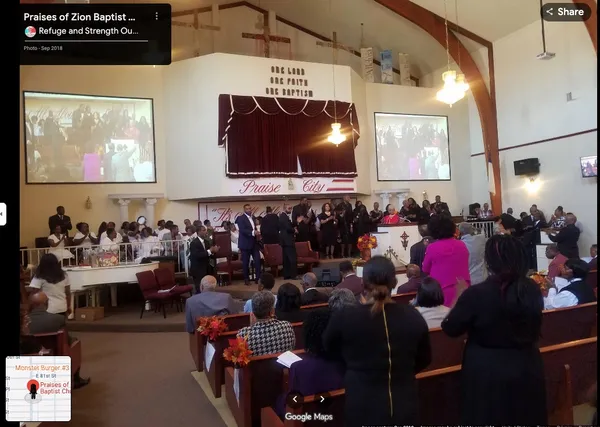 Rev. Harwick conducting services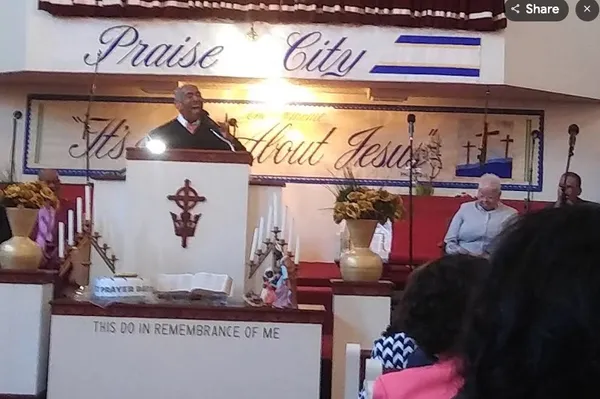
The church would own the policies. The capital could come from Somoza and investors he assembled.
That was the architecture proposed, with one thing added.
Hardwick and Somoza both insisted on the insured's consent. Unlike Winn-Dixie's butcher or Wal-Mart's cashiers, the family would collect. So would the church.
Now here was the catch: It was still an investment, not a charity. For any investor to put money in, the arrangement had to pay out more than it cost.
For the numbers to work, the people insured by the church had to die, on average, sooner than the insurance company figured they would.
They weren't talking about a one-off gamble. There were thousands of poor people in this church, faithful and poor, and because they were poor, perhaps more in need of basic life insurance than any other sector who believed in having a funeral or last rites to commemorate their dead.
For in more cases than not, they didn't have the money. They had not saved enough even for living, let alone to pay for those sudden expenses that come when someone has died.
 Homegoing service for the departed
Suddenly there is a funeral home, a coffin, flowers, cars, and a bill due now.
To meet this need of the church and its members, Rev. Hardwick did not go to donors for the tens of millions, or maybe hundreds of millions, needed to pay the premiums on his thousands of congregants and those of nearby churches of faith.
Try raising a hundred million dollars by telling donors you need it to pay premiums on people who are perfectly alive today.
An investor was needed. Somoza was chosen, or at least he, unlike perhaps many others, chose to tackle the problem.
How to lure investors into the life insurance gamble on, of all people, poor, Black church-going folks in South Los Angeles, which had the highest homicide rate in the county.
Therein lay the opportunity.
Why Insurers Are Not Often Beaten
Insurance companies are not often beaten, not in the long run. They do not often misprice risk. Pricing is the thing they exist to do. They employ actuaries to estimate mortality and hold reserves against getting it wrong.
Their survival depends upon being right more often than their customers are.
But life insurance in the area was based more or less on Los Angeles and surrounding counties as a whole.
No insurance company had miscalculated South Los Angeles.
None had ever calculated it. Group life pricing was built for workforces, people with jobs, schedules and paychecks, whether executives or janitors.
Praises of Zion was not a workforce. Its members came from a part of Los Angeles where the homicide rate ran double the county's, and the church members were employed and unemployed, working and disabled.
And to be candid, as Somoza was candid, some of them were in gangs, some of them were using drugs and supporting their lifestyle with danger and risk.
Somoza, whatever else may be said of him, did not pretend these people were something they were not.
There was everything that does not show up neatly on the insurance application. The doctor you don't see because you don't have the money. The good food that costs more than the bad food. The gym membership nobody buys because the electric bill is due. The strain of poverty. The strain of violence. The strain of being Black in a place where people had been learning what that could cost for generations.
Here was a population that could not oftentimes afford a decent Christian burial, and that was, in the aggregate, just a little more likely to need one just a little sooner and a little younger.
And that was the calculus that just might make it possible, the dying earlier, that might allow Curt Somoza to outsmart the life insurance companies, who from their very inception had always outsmarted everyone else.
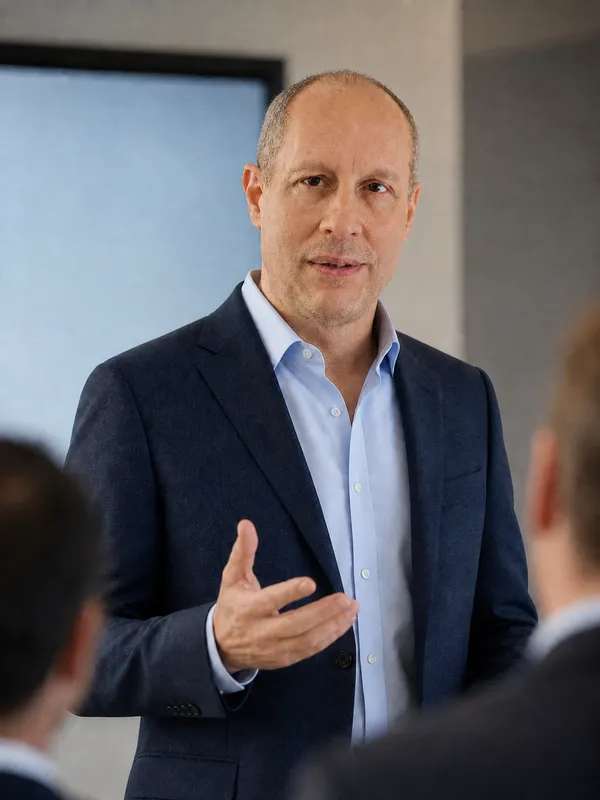 Curtis Somoza
Why Write This
And this is where the story stops being about insurance and starts being about prison. Somoza got 25 years. He spent roughly 14 of them behind bars. I submit that the road to his cell began right here, with his discovery that the insurance company had left money on the table.
Not because the idea failed, but because it may have worked too well against people accustomed to winning.
It is whether, after he outmaneuvered Transamerica economically, corporate influence and federal prosecutorial power were used to convert that defeat into a criminal prosecution.
Around Washington these days, people call that weaponized justice. I intend to see whether the name fits.
You don't have to believe in Santa Claus to know that weaponized justice exists, and for the wealthy, it can come down the chimney bearing gifts for the wealthy company and remove obstructions to its profit model.
Everyone but a fool knows the lopsided power of the Department of Justice (its very name a mockery of the word justice) can be employed at the will of wealth and power.
A giant company has lawyers, lobbyists, former officials, future officials and telephone numbers you and I do not have. Then there is the Department of Justice, which can freeze money, raid offices, indict people and put them in cages.
The question is narrow. Was Somoza prosecuted because he committed a crime, or because he became a problem for powerful interests?
My job is to show you what happened to Curtis Somoza.
Somoza was not acting as a philanthropist.
The church didn't have the money. Investors would provide it only if there was a profit. Somoza's job was to find that profit.
And for the investment to work, he had to see something in the lives of these people that Transamerica's numbers had failed to see.
The next part will show you how he did it. How he outsmarted supposedly one of the smartest groups of life insurance executives in the world.
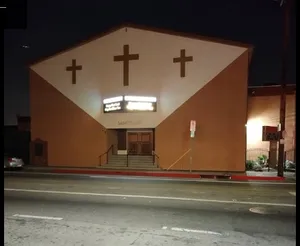 Praises of Zion Missionary Baptist Church in South Los Angeles
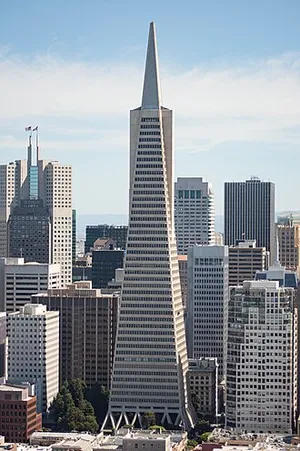 The 48-story Transamerica headquarters in San Francisco