
The Promise
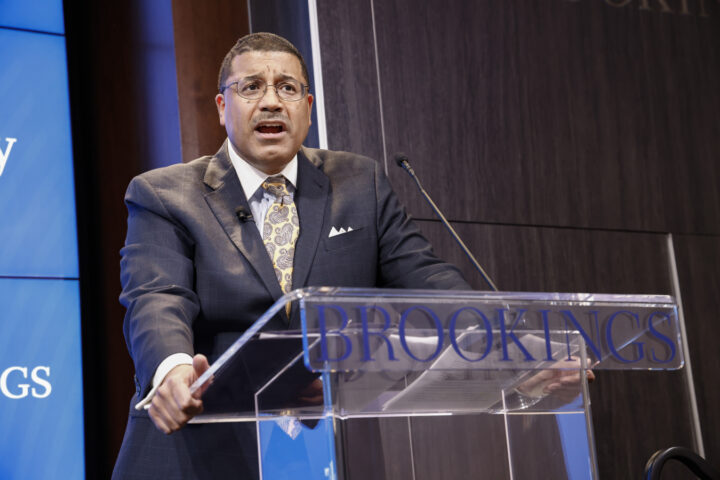
On June 26, 2025, Mark Branson, president of Germany’s Federal Financial Supervisory Authority — BaFin — gave an interview to the Financial Times.
He acknowledged that BaFin had failed during the Wirecard scandal
“We didn’t meet all the expectations placed on a supervisor,” Branson told the Financial Times. He admitted BaFin had sent “mixed signals into the market” about Wirecard, the payments company that collapsed in June 2020 after disclosing that half its revenue and €1.9 billion in cash didn’t exist.
But really, BaFin didn’t send mixed signals. It sent no signals until the company collapsed.
“Broadly speaking, your institution (the media) got it right; ours got it wrong,” Branson told the Financial Times.
In other words, Branson praised journalists for doing the job that BaFin did not do. But Branson said it’s different now.
BaFin, he said, had become “a more active, bolder institution.” Its approach now was “about stepping on the right toes at the right time.”
No toes were named.
The Problem

The challenge to this toe-stepping boldness is that one of the largest companies trading on the Frankfurt Stock Exchange, under BaFin’s direct oversight, was built on documented violations of securities law.
The company is CPI Property Group. Its controlling shareholder is Czech billionaire Radovan Vítek. The story of how Vítek built his €20 billion empire makes Wirecard look small. Wirecard fabricated cash. Vítek fabricated control. Wirecard collapsed. CPI thrived.
In January 2021, the same year Branson took office, BaFin imposed a fine of €685,000 on CPI Property Group for failing to publish the total number of voting rights within the required period. The violation was a breach of German securities trading law.
The number sound serious but it is negligible compared to the dollars involved.
Vítek exploited voting rights disclosures to seize control of ORCO Property Group, the Luxembourg-based real estate company whose assets became the foundation of CPI.
Luxembourg’s financial regulator, Commission de Surveillance du Secteur Financier, (CSSF) Luxembourg’s equivalent of BaFin in Germany or the SEC in the U.S., documented it in detail.
How Vítek Built the Empire BaFin Ignores

Before Vítek took control of ORCO, he was not a billionaire. His first appearance on the Forbes list came in 2015 at $1.66 billion — after the ORCO theft was substantially complete. Today, Forbes values him at approximately $7.17 billion.
The destruction, the cratering, the stealing from ORCO didn’t grow Vítek’s wealth. It created it. Without ORCO, there is no CPI and no €20 billion empire.
In 2012, Vítek entered ORCO Property Group through a corrupt deal with the company’s founder, Jean-François Ott. The arrangement was that Vítek would secretly take control of ORCO’s assets; Ott would keep his job and eventually receive €16 million in severance for his cooperation in swindling the other investors.
Over the next four years, Vítek used shell companies, front men, and Ott’s dishonest complicity to secretly accumulate control of ORCO without triggering the mandatory buyout provisions that would have protected minority shareholders.
That meant keeping Vitek’s true ownership secret.
Among the minority shareholders whose investments were stolen was Kingstown Capital, a Manhattan-based investment firm managing over $1 billion in American pension funds — retirement funds for teachers, nurses, firefighters, and municipal workers.
The Method
The scheme followed a pattern: acquire shares through Vitek fronts — a Czech dentist, former J&T Banka officials, Cyprus shell companies — each holding just below the disclosure threshold. Vitek, with Ott’s complicity, used those hidden votes to control board decisions. Then to sell the company’s most valuable assets to himself at fire-sale prices.
The Mother

ORCO’s crown jewel was the Endurance Office Fund, a portfolio of commercial properties valued at approximately €330 million. The fund was sold for €52 million.
The buyer was a company called Sidoti. The ORCO board was not told that Sidoti was owned by Vítek’s mother, Milada Malá. Sidoti then flipped the properties to Vítek’s company, CPI, netting mama a €13 million profit and handing Vitek assets worth €265 million more than he paid.
Using your mother as a corporate front to strip pension fund assets is, in any jurisdiction that takes securities law seriously, a textbook criminal conspiracy.
The Kill Shot
In January 2014, Vítek (and his shills) voted the American pension fund representatives off the ORCO board. Locked out and watching the share price collapse under Vítek’s public threats of liquidation, Kingstown exited at a loss of approximately €70 million — 94 percent of its investment.
The Confirmation
In 2017, the CSSF issued a report confirming the existence of the corrupt scheme. Vítek, Ott, and the network of shell companies had secretly acted “in concert” to seize control of ORCO in violation of takeover and transparency laws. The regulator suspended trading in ORCO shares and imposed fines.
But Vitek had already taken all of ORCO’s assets.
The subsequent €685,000 fine is an insignificant amount compared to the almost €1 billion Vitek siphoned out of ORCO.
In other words, Vitek paid €685,000 in fines and kept the other €999,315,000.
The Invisible Victims
In the spring of 2014, an estimated 1 million Americans received pension statements showing a tiny decrease in their funds due to Kingston’s investment in ORCO. Spread out over one million pensioners, it was less than $100 each. Most never noticed; few ever learned why. How clever it was to take a little from many and in so doing become a billionaire. This way you have no major complainers, Just. lot of little people who never even knew they were pickpocketed.
By August 2014, ORCO Germany was renamed CPI Property Group.
The Empire Today
CPI Property Group now controls €20 billion in assets across Europe, including one million square meters of commercial property in Berlin. The company trades on the Frankfurt Stock Exchange under BaFin’s jurisdiction.
In December 2025, Moody’s downgraded CPI’s credit rating from Ba1 to Ba2. The company carries approximately €9.1 billion in debt against €17.8 billion in property assets — a loan-to-value ratio hovering near 50 percent. CPI is a fragile empire built on stolen foundations.
The Old Partners
In late December 2025, CPI established a joint venture with Dušan Palcr, identified as “a founder of J&T Real Estate.” J&T Banka was the financial institution that Luxembourg regulators found had served as Vítek’s shills throughout the ORCO scheme — financing front men, providing overdrafts to straw buyers, and acquiring shares on Vítek’s behalf while maintaining the fiction of independence.
The J&T relationship endures. That by itself should raise suspicions. Whose pension will be swindled next? What minority shareholders are about to lose thier investment?
What Branson Promised, What Branson Delivered
Oh, but never fear. We have the bold-talking, toe-stepping Branson.
In his Financial Times interview, Branson said that BaFin had sent “special monitors” into German businesses, issued millions in fines (for billions in thefts) and imposed restrictions on problematic institutions.
In a classic circular, unspecific, meaningless, almost comical statement, Branson told the Financial Times, “The institutions that have problems with us are problematic institutions,”
This explains nothing, answers nothing and lacks even an iota of specificity.
CPI Property Group was built on systematic violations of securities law. Its controlling shareholder was fined for those violations. Its corporate structure features the kind of opacity and complexity that enabled Wirecard. Its victims include American pension funds.
They are up to something right now. That is almost certain.
BaFin has taken no action beyond a €685,000 fine for a disclosure violation against a company controlling assets worth €20 billion.
“Our ambition is to be a world-class supervisor,” Branson told the Financial Times.
The BaFin interview is published on its website. The CSSF findings of Vitek’s corruption remain part of the public regulatory record. CPI Property Group has characterized lawsuits against Vítek as attempts to “force an undue settlement” through negative publicity.
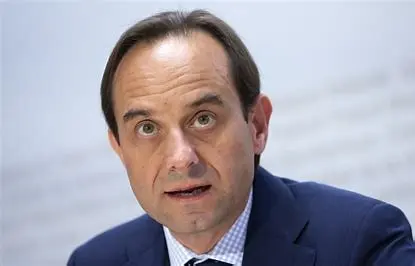
Branson has promised to step on toes. He just won’t step on Vitek’s toes.
The publicity has just begun.