
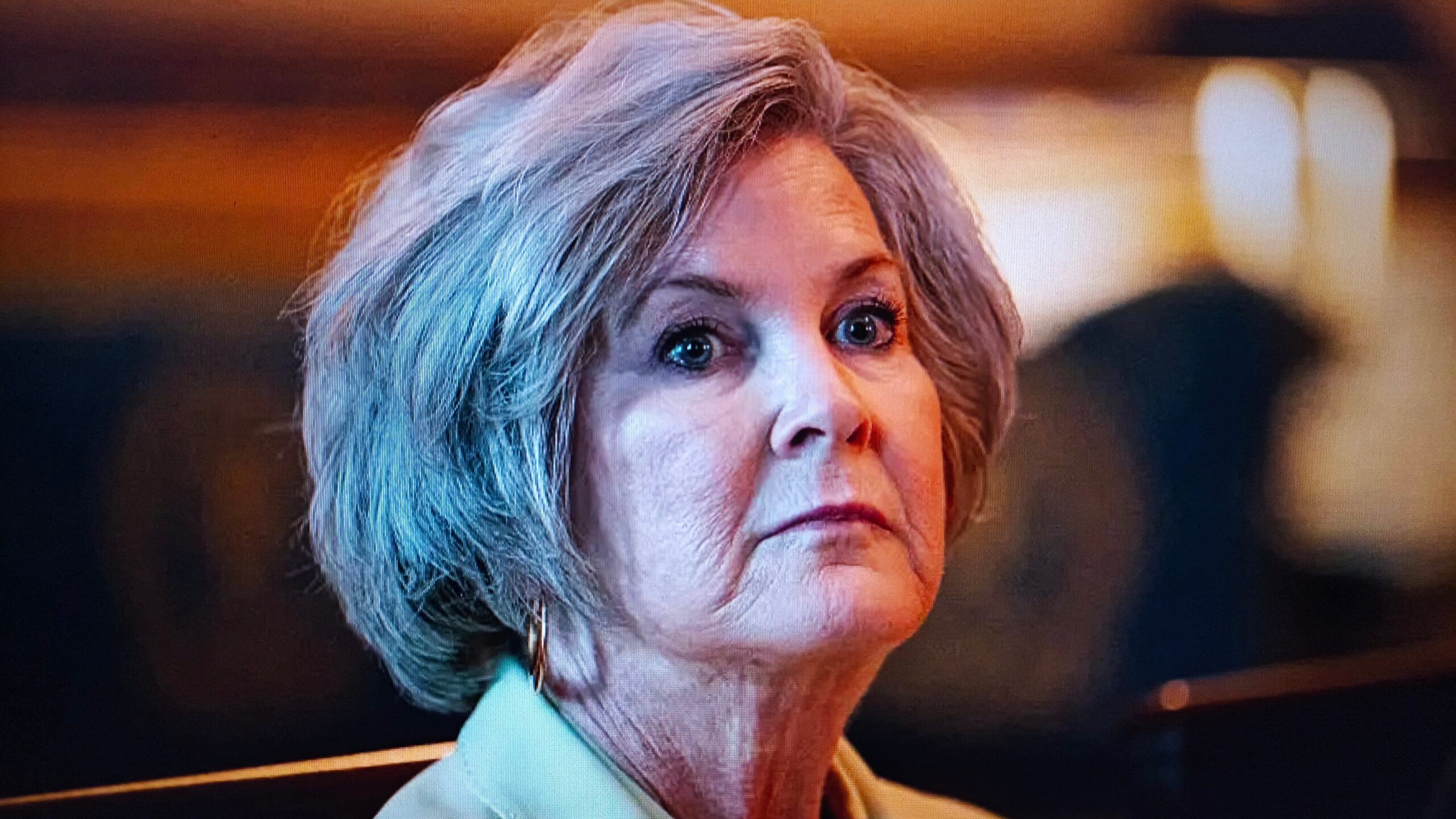
Susie Wiles, the White House Chief of Staff and the most powerful woman in the Trump administration, has been diagnosed with early-stage breast cancer.
President Donald Trump made the announcement Monday on Truth Social, revealing that Wiles has already decided to begin treatment immediately and will remain in her role throughout the process.
“During the treatment period, she will be spending virtually full time at the White House, which makes me, as President, very happy,” Trump wrote.
He said Wiles has a fantastic medical team, an excellent prognosis, and described her as one of the strongest people he knows.
Trump praised her decision to tackle the diagnosis head-on rather than wait, writing that her strength and commitment to the job “tells you everything you need to know about her.”
He signed off with characteristic certainty: “She will soon be better than ever!”
Trump also called Wiles “one of my closest and most important advisors” and said that he and First Lady Melania Trump are with her in every way.
The White House has not provided additional details about the specific type of treatment she will undergo, the stage of the diagnosis within the early-stage classification, or how long treatment is expected to last.
Who Is Susie Wiles, And Why Does This Matter?
To understand why this announcement landed the way it did, you have to understand how central Susie Wiles is to the functioning of this White House, and how unusual it is for someone in her position to be known to the general public at all.
Wiles has served as the 32nd White House Chief of Staff since January 2025, and is the first woman to ever hold the position. She is 68 years old. She is the daughter of Pat Summerall, the legendary NFL player turned broadcaster who was the voice of countless Super Bowls for CBS and Fox.
Growing up in that world, high stakes, high performance, relentless public scrutiny, shaped her. So did decades of operating in the most competitive corners of Republican politics, almost always from the shadows.
After Trump announced his presidential campaign in November 2022, Wiles was named as his campaign manager alongside Chris LaCivita.
She is widely credited as the strategic architect of his 2024 return to the presidency, the person who brought discipline, structure, and operational rigor to a campaign that had historically resisted all three.
Before that, she managed his post-presidential political operations, helped Glenn Youngkin win the Virginia governorship by carefully calibrating his distance from Trump, and earlier ran Rick Scott’s successful 2010 Florida gubernatorial campaign.
She is a Florida political institution who eventually became a national one.
In Washington, she has developed a reputation for being the anti-chaos figure in a White House that has historically generated plenty of it. She is disciplined, low-profile, and intensely protective of her access.
She does not do cable news hits. She does not leak. She shows up and she gets things done.
Trump himself has called her incredible and described her publicly as one of his most important advisors, high praise from a president who is not known for sharing credit.
The fact that Trump announced her diagnosis himself, publicly, in personal terms, is itself telling. This is not a chief of staff he would lose without consequence. She is not decorative. She runs the place.
What Is Early-Stage Breast Cancer?
The term “early-stage breast cancer” carries a lot of weight, and it is worth being specific about what it means — both medically and in terms of what Wiles is likely facing.
Early-stage breast cancer typically refers to Stage I or Stage II diagnoses, meaning the cancer is localized to the breast and possibly a limited number of nearby lymph nodes, but has not spread to distant organs.
At Stage I, the five-year survival rate exceeds 99 percent. At Stage II, it remains above 90 percent.
These are, by the standards of cancer diagnoses, highly treatable scenarios, which is consistent with Trump’s description of her prognosis as “excellent.”
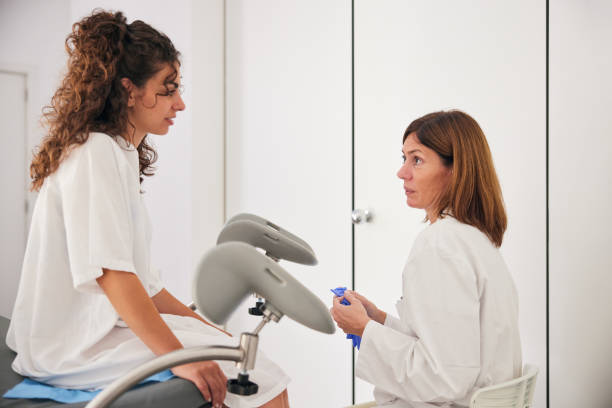
Treatment for early-stage breast cancer varies depending on the specific type, the tumor’s hormone receptor status, HER2 status, and other factors, but commonly includes surgery (either a lumpectomy or mastectomy), radiation, and in many cases hormone therapy or targeted drug therapy.
Chemotherapy is less common at the earliest stages but may be recommended depending on the tumor’s characteristics. The full picture of what Wiles will undergo is not yet public.
What Trump’s announcement does make clear is that Wiles is not stepping back. She is treating this the way she appears to treat everything, directly, without delay, and without drama.
The decision to begin treatment immediately rather than wait is consistent with standard medical guidance, early intervention at Stage I or II produces significantly better outcomes than delayed treatment.
She appears to have made that call the moment she had the information.
Wiles’s diagnosis comes at an extraordinarily busy moment in the Trump administration. The White House is simultaneously managing ongoing foreign policy crises, a contentious federal budget process, and the early stages of the 2026 midterm political environment.
The Chief of Staff is the central nervous system of the executive branch, the person who controls the flow of information to the president, manages the senior staff, and ensures that the machinery of the White House actually functions.
Losing that person, even temporarily, would be significant.
That is not what is happening here. Trump was explicit: she is staying. She is working.
She will be virtually full time at the White House throughout treatment. For a 68-year-old woman navigating a cancer diagnosis while running one of the most demanding jobs in the world, that is a remarkable commitment, and by all accounts, completely in character.
Breast cancer is the most commonly diagnosed cancer among women in the United States, with roughly 310,000 new cases expected in 2026 according to the American Cancer Society.
Approximately one in eight women will receive a breast cancer diagnosis at some point in their lifetime.
When caught at early stages, as appears to be the case with Wiles, the outlook is very good. Detection has improved dramatically over the past two decades, and treatment options have expanded significantly.
Wiles has not made a public statement of her own. The announcement came from the president, and there is every reason to believe that is exactly how she wanted it, handled, communicated, and moved past as quickly as possible, so she can get back to work.
This is a developing story and will be updated as more information becomes available.