
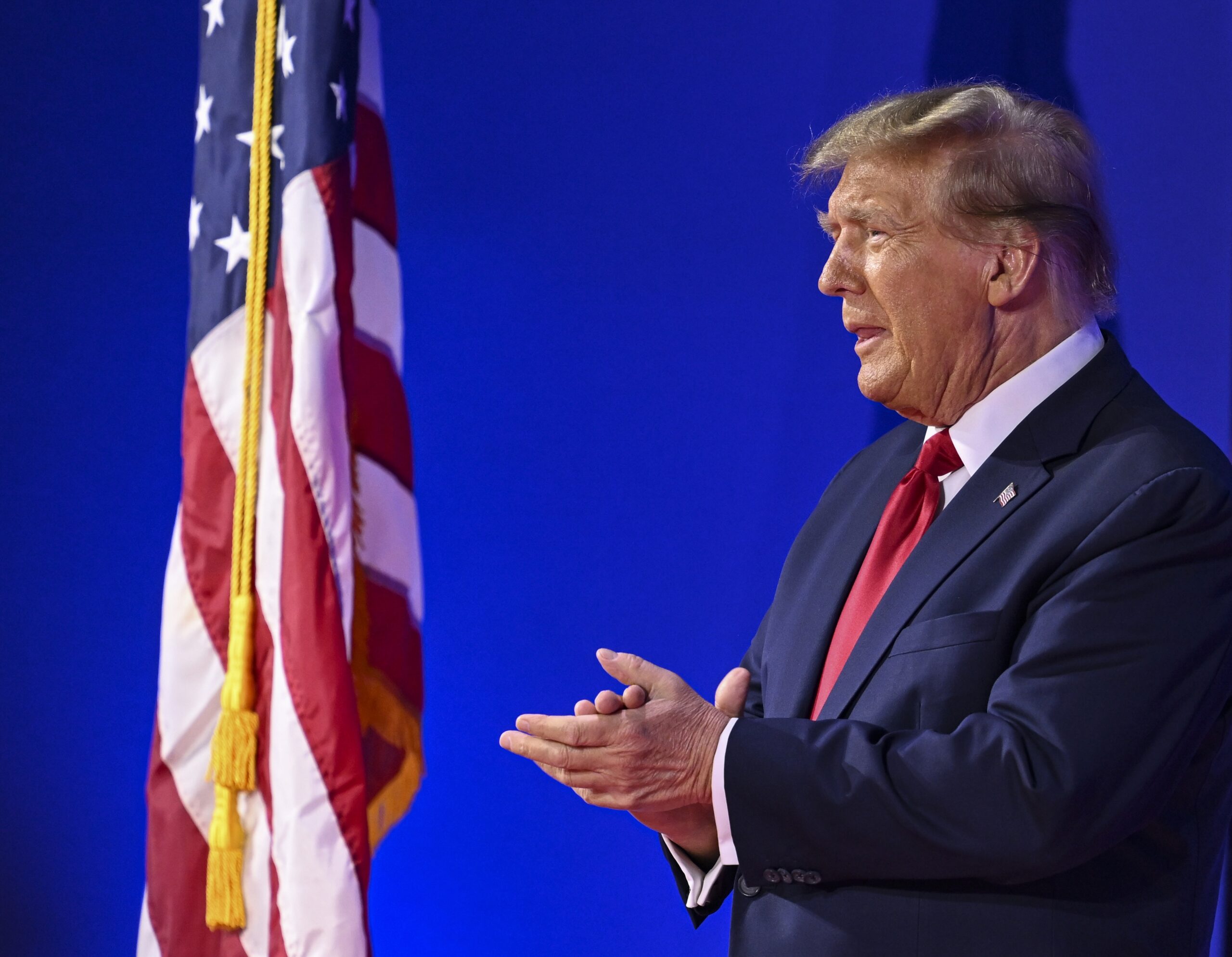
President Donald Trump posted on Truth Social on Monday morning announcing that the United States has agreed to hold off on military strikes against Iranian power plants and energy infrastructure for five days, citing what he called “very good and productive conversations” between the two countries over the past 48 hours.
The post, written in all capital letters as is Trump’s established style on the platform, read:
“I AM PLEASE TO REPORT THAT THE UNITED STATES OF AMERICA, AND THE COUNTRY OF IRAN, HAVE HAD, OVER THE LAST TWO DAYS, VERY GOOD AND PRODUCTIVE CONVERSATIONS REGARDING A COMPLETE AND TOTAL RESOLUTION OF OUR HOSTILITIES IN THE MIDDLE EAST.” He added that he had “INSTRUCTED THE DEPARTMENT OF WAR TO POSTPONE ANY AND ALL MILITARY STRIKES AGAINST IRANIAN POWER PLANTS AND ENERGY INFRASTRUCTURE FOR A FIVE DAY PERIOD, SUBJECT TO THE SUCCESS OF THE ONGOING MEETINGS AND DISCUSSIONS.”
The announcement came hours after Trump’s own 48-hour deadline to Iran had expired.
He had issued that ultimatum Saturday night, threatening to “obliterate” Iran’s power plants if the Strait of Hormuz, the narrow waterway through which approximately 20 percent of the world’s oil passes, was not fully reopened by Monday evening.
Iran has effectively closed the strait to commercial shipping since the war began on February 28.
What Has Triggered This Pause?
The five-day hold appears to represent the most significant diplomatic development since the United States and Israel launched their joint military campaign against Iran nearly four weeks ago.
Whether it represents a genuine path toward ending the conflict or another volatile turn in a war that has repeatedly shifted direction within hours is not yet clear.
Iran has not publicly acknowledged any negotiations with the Trump administration.
As of Monday morning, Tehran had not confirmed that talks of any kind were underway.
Iran’s National Defence Council, responding to Trump’s Saturday ultimatum, warned that any attempt to attack Iran’s coastline or islands would cause “all communication lines in the Persian Gulf to be mined,” a threat to extend the existing blockade into a full mining of the entire gulf.
Trump’s post did not specify who the U.S. is talking to on the Iranian side, what channel the conversations are happening through, or what a “complete and total resolution” would actually require.
Previous reporting from Axios indicated that U.S. officials have been attempting to identify which Iranian figures have actual decision-making authority following the killing of multiple senior Iranian leaders in the early weeks of the war.
How Did The US Get Here With Iran?
The United States and Israel launched the current campaign against Iran on February 28, with strikes targeting Iran’s nuclear program, military infrastructure, and leadership.
The war has resulted in the deaths of more than 1,500 people in Iran, more than 1,000 in Lebanon, and at least 15 in Israel, according to various official counts.
Iran’s navy and air force have been significantly degraded, according to U.S. military statements.
The conflict has also produced one of the most severe global energy crises since the 1970s.
The International Energy Agency’s executive director Fatih Birol said Monday that the situation is “worse than the two consecutive oil crises in 1973 and 1979” and called the threat to the global economy “major.”
Brent crude oil was trading at approximately $114 a barrel on Monday morning. At the pump, the U.S. national average for a gallon of gasoline reached $3.94 over the weekend, up more than a dollar from a month earlier.
Iran’s strikes have knocked out roughly 17 percent of Qatar’s LNG export capacity, with damage expected to persist for years.
The Ultimatum And The Reversal
The five-day pause represents a notable shift from Trump’s posture just 48 hours ago.
On Saturday night, he threatened in a Truth Social post to destroy Iran’s power plants, starting with the largest one, if the Strait of Hormuz was not reopened.
Iran responded by threatening to close the strait “completely and indefinitely” if its power plants were targeted, and its parliament speaker threatened to make energy infrastructure across the entire region “legitimate targets” for destruction.
On Friday, just one day before the power plant ultimatum, Trump had suggested the opposite direction, saying the United States was considering “winding down” military efforts without resolving the Hormuz situation.
The rapid sequence of positions, wind down, obliterate, now pause, reflects what analysts have described as an increasingly unpredictable decision-making process around a conflict with significant global economic consequences.
What The Five Days Mean
The five-day window is explicitly conditional. Trump’s post stated the pause is “subject to the success of the ongoing meetings and discussions.” If those discussions break down, or if Iran continues strikes on Israel and Gulf states, the situation could escalate again quickly.
Iran has continued firing missiles and drones at Israel throughout the weekend, injuring more than 100 people in the southern Israeli cities of Arad and Dimona, the latter of which is located near Israel’s main nuclear research center.
The Iranian government has not committed to pausing its own strikes as part of whatever discussions are underway.
Netanyahu said Sunday that the war “will continue for several more weeks,” though he also said Israel would agree to end the war when the U.S. decides to.
The U.S. has been sending additional naval assets and Marines to the region throughout the conflict.
For now, the power plants are off the target list for five days. Whether that window produces a deal, or simply delays the next escalation, is the question the global energy market is now waiting to answer.