Tulsi Gabbard Is Resigning As Director Of National Intelligence And Here’s What We Know
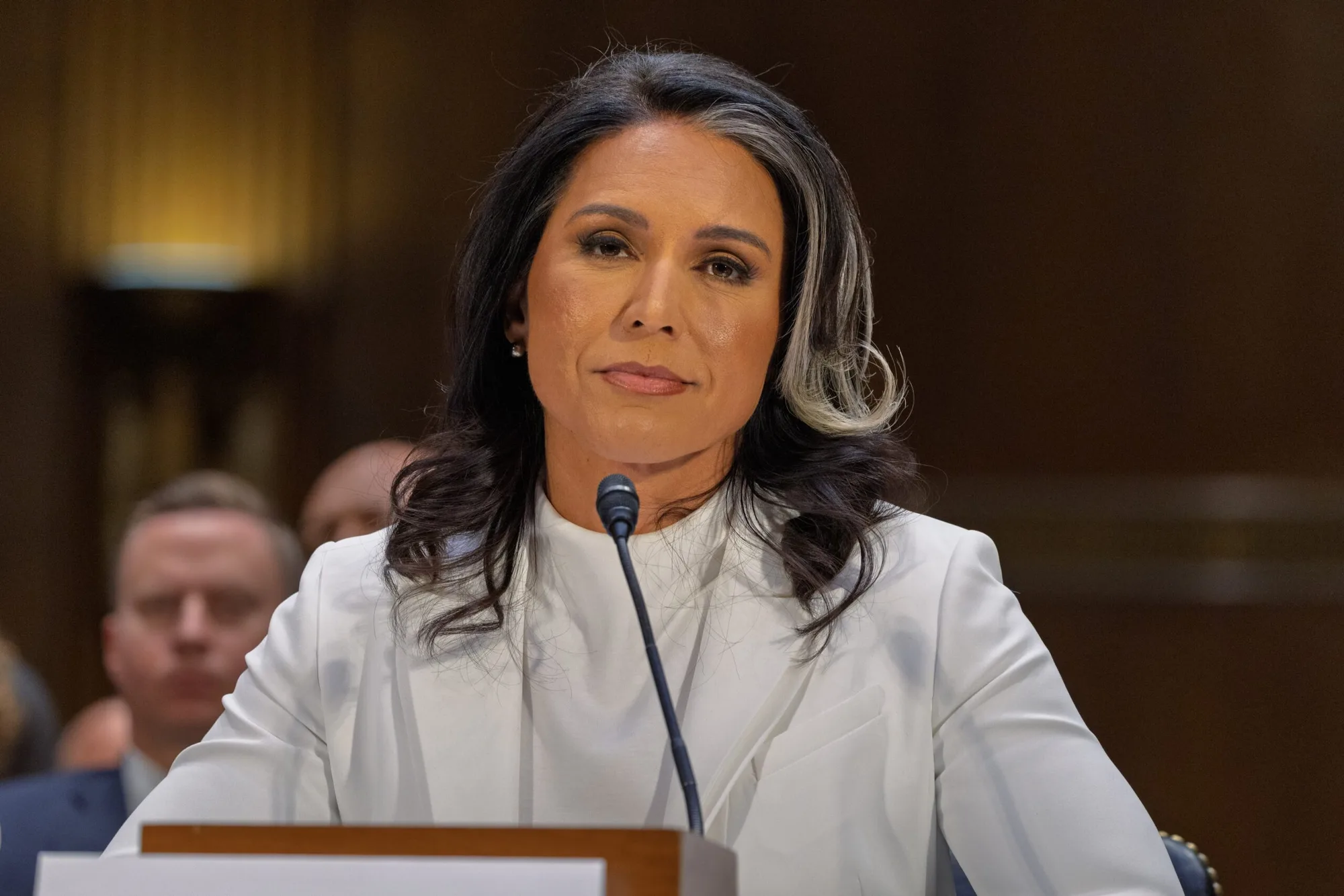
Tulsi Gabbard walked into the Oval Office on Friday and told President Trump she is resigning as Director of National Intelligence, effective June 30, 2026.
The reason is personal, specific and impossible to argue with. Her husband Abraham Williams, the cinematographer who has been beside her through deployments, congressional campaigns and her 15 months leading the American intelligence community, has been diagnosed with an extremely rare form of bone cancer.
She is leaving her post to be with him.
“My husband, Abraham, has recently been diagnosed with an extremely rare form of bone cancer. He faces major challenges in the coming weeks and months,” Gabbard wrote in her formal resignation letter to Trump. “At this time, I must step away from public service to be by his side and fully support him through this battle.”
No successor has been named. Her last day is June 30.
The resignation of a spouse who has always kept a low profile introduces a dimension to this story that the political context around it cannot diminish. Abraham Williams met Tulsi Gabbard in 2012 when he volunteered as a photographer on her first congressional campaign.
Their friendship deepened over the following year. By the time she became the first female combat veteran elected to Congress from Hawaii, he had been her partner through the kind of life that most people only experience from the outside.
She described him in her letter as her “rock,” the person who made everything else possible by being steady when she was not.
She said she could not in good conscience allow him to face this illness without her.
The 15 Months And What She Accomplished
Gabbard arrived at the Office of the Director of National Intelligence in early 2025 as one of the more unconventional appointments in the office’s history.
She had been a Democratic congresswoman from Hawaii, a 2020 presidential candidate, and a combat veteran who had been public and consistent about her skepticism of American military interventionism.
She endorsed Donald Trump in 2024, switched parties and was nominated to oversee all 18 of the nation’s intelligence agencies.
Her confirmation was contentious. Critics questioned whether her background, legislative, military and political rather than intelligence, equipped her for the most senior position in the American intelligence community. She was confirmed anyway and set to work.
Her own assessment of what she accomplished in the letter is direct. She said she made “significant progress at the ODNI, advancing unprecedented transparency and restoring integrity to the intelligence community.”
The specific achievement she can point to with documentation is substantial: during her tenure, Gabbard oversaw the declassification of more than half a million pages of government records.
The documents related to historical intelligence matters that had been withheld from the public for years, in some cases decades, and their release was consistent with her stated commitment to transparency as a governing principle rather than a campaign talking point.
She also established a Directors Initiative Group specifically tasked with pursuing answers on the JFK assassination files, the origins of COVID-19 and what are called “Anomalous Health Incidents,” the condition commonly referred to as Havana Syndrome that has affected American diplomats and intelligence personnel at overseas postings.
The work of that group became visible in the final days of her tenure when a CIA insider testified before the Senate Homeland Security Committee that his agency had obstructed ODNI’s efforts to uncover information on those topics.
A CIA spokesperson disputed the testimony and said the agency had not impeded ODNI in any way.
The dispute captured something essential about the institutional friction that has characterized Gabbard’s relationship with the intelligence community she was supposed to oversee.
The Husband Who Stayed In The Background
Abraham Williams has been one of the quieter presences in modern American political life for a person so central to the story of someone as visible as Tulsi Gabbard.
He is a cinematographer by profession, someone whose work involves capturing other people’s images rather than producing his own.
He met Gabbard when he volunteered to photograph her 2012 campaign for Hawaii’s 2nd Congressional District, and many of the images that introduced her to voters in that first campaign were shot through his lens.
Their friendship developed over the year that followed, away from the campaign and its pressures.
By the time Gabbard was taking the oath of office as a member of Congress, Williams was part of the life around that oath.
He has appeared in Instagram photographs and campaign imagery across the years since, present but never pursuing the spotlight that often gravitates toward the spouses of prominent politicians.
His diagnosis with an extremely rare form of bone cancer is the kind of medical event that reorganizes everything else around it.
The rarity of the specific cancer, a detail that Fox News Digital confirmed and that Gabbard described without further specification in her letter, suggests a condition that will require specialized care and sustained support across the weeks and months ahead.
Gabbard has chosen to provide that support herself rather than continue in a role that she described as “demanding and time-consuming” in a way that is incompatible with being the person her husband needs right now.
The decision reflects the same value she has articulated throughout her public career, the centrality of personal commitment and direct action rather than delegation and management from a distance.
She did not say she would arrange support for her husband while continuing as DNI. She said she was leaving to be by his side.
What She’s Leaving Behind
The timing of Gabbard’s resignation places her exit in a period of significant transition across the Trump cabinet and in the middle of the Iran war that has defined much of the administration’s foreign policy focus since February 28.
She has been the latest in a string of departures, Kristi Noem was fired as Homeland Security Secretary in March, and both Attorney General Pam Bondi and Labor Secretary Lori Chavez-DeRemer left last month.
Gabbard’s tenure at ODNI has not been without friction. Her counterterrorism chief Joe Kent resigned from his position at the National Counterterrorism Center over his opposition to the Iran war, saying he could not in good conscience support the conflict and that Iran had posed no imminent threat.
The resignation put Gabbard in an uncomfortable position given her own history of skepticism about military intervention.
She navigated the situation by stating publicly that her role was to present the president with the best available information to inform his decisions, regardless of her own views.
She was also questioned in March before the Senate Intelligence Committee about the war, one of the more visible moments of her tenure, in which she declined to characterize her own role in the deliberations that produced the military action.
Those tensions are part of the full picture of her time at ODNI. They are not the reason she is leaving. She is leaving because her husband is sick and she intends to be there.
What’s Next For Tulsi?
No successor has been named as of Friday afternoon. Gabbard’s last day is June 30, giving the administration approximately five weeks to identify a replacement, begin the confirmation process and manage the transition at an office that coordinates the work of 18 separate intelligence agencies and advises the president on the most sensitive security matters facing the country.
Gabbard said in her letter that she is “fully committed to ensuring a smooth and thorough transition over the coming weeks so that you and your team experience no disruption in leadership or momentum.”
That commitment to an orderly handoff reflects the institutional responsibility she has carried since confirmation, whatever the disagreements about her qualifications, the DNI position is not one that can be left in disorder.
She has not announced plans beyond the immediate transition. She has refused in recent months to rule out a 2028 presidential run, an ambiguity that the resignation does not resolve.
What is resolved is the decision she made on Friday, to close the Oval Office door on the most powerful intelligence position in the world and go home to her husband.