
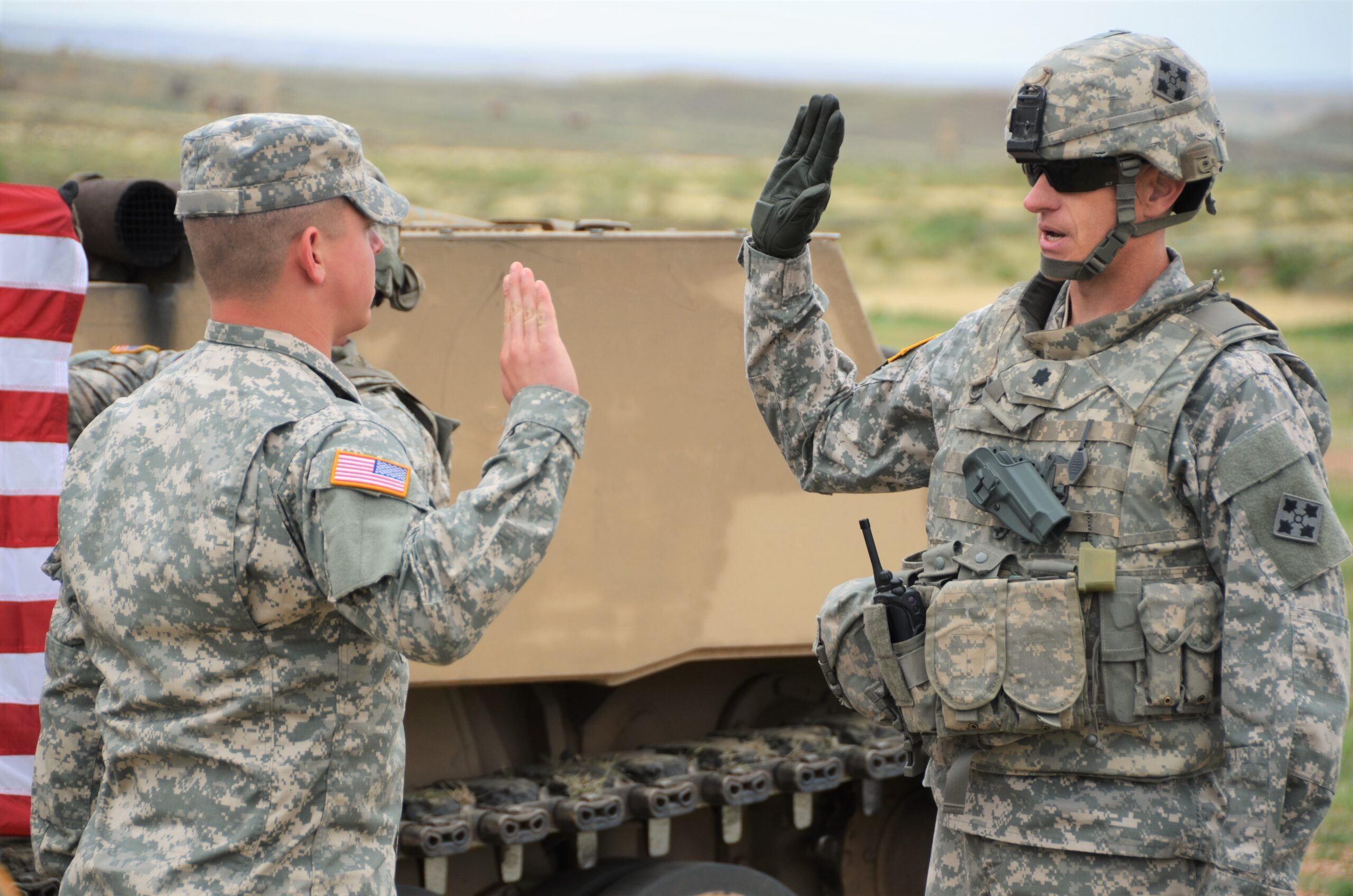
Starting December 18, 2026, the United States government will no longer require young men to register themselves for the military draft. It will do it for them.
A provision tucked into the fiscal year 2026 National Defense Authorization Act, signed by President Trump on December 18, 2025, mandates that the Selective Service System automatically register eligible men using existing federal databases rather than requiring each individual to proactively sign up within 30 days of his 18th birthday.
The Selective Service System submitted its proposed implementing rule to the Office of Information and Regulatory Affairs on March 30, 2026.
That rule is currently awaiting finalization. If it clears review on schedule, automatic registration takes effect exactly one year after Trump signed the law.
This is the most significant administrative change to draft registration since self-registration began in 1980.
What Automatic Registration Actually Means
The change is procedural, not operational. The Selective Service System does not draft anyone. It maintains a database. It keeps lists.
The actual activation of a military draft requires an act of Congress passed by both the House and Senate and signed by the President.
No executive order, no emergency declaration, and no presidential post on social media can change that. The December 2026 change is about how names get into the database, not about what happens to those names.
Under the new system, the Selective Service System will pull data from existing federal records, including Social Security Administration databases, to automatically identify and register all male US citizens and qualifying male noncitizen residents between the ages of 18 and 25.
Once a man has been registered, the SSS will notify him and request any missing contact information.
Men who believe they were incorrectly registered, such as those in the country on valid nonimmigrant visas like international students, can request to be removed.
Until December 18, 2026, the old rules still apply. Men are required to register within 30 days of turning 18, with late registration available until age 26.
Why Congress Made The Change
The push for automatic registration was driven by two related concerns: declining registration rates and administrative inefficiency.
Registration rates had been falling. In 2022, 15.6 million men ages 18 to 25 were registered.
By 2023 that number had dropped to 15.2 million. The decline accelerated after the federal student loan application, known as FAFSA, removed its Selective Service registration checkbox in 2022.
That checkbox had previously accounted for nearly a quarter of all registrations in a given year. In 2024, 81 percent of eligible men were registered, down from 84 percent the year before.
Rep. Chrissy Houlahan, a Democrat from Pennsylvania who sponsored the automatic registration language, framed the change in practical terms.
The shift, she said, would allow the government to redirect resources toward readiness and mobilization planning rather than spending money on education and advertising campaigns just to get people to sign up.
The Selective Service System will also receive $6 million from the Technology Modernization Fund over fiscal years 2026 through 2028 to modernize its legacy conscription systems.
The SSS itself described the change as a “streamlined registration process and corresponding workforce realignment,” transferring responsibility for registration from individual men to the agency through federal data integration.
What The Penalties Were, And Why They Are Changing
Under the current self-registration system, failure to register is technically a federal felony.
The penalties on paper are significant. A fine of up to $250,000, up to five years in prison, ineligibility for federal employment, federal student aid, job training programs, and for immigrants, the path to US citizenship.
In practice, prosecutions have been extraordinarily rare. There have been only 14 convictions under the law since registration was reinstated in 1980, and none since 1986.
Once automatic registration takes effect, the individual penalty structure becomes largely moot because the government handles registration without requiring any action from the individual.
A man who would previously have been at risk of failing to register is now registered automatically. He does not need to do anything, and the compliance gap that produced the declining registration rates closes itself.
Who Is Covered And Who Is Not?
The automatic registration provision covers male US citizens and qualifying male noncitizen residents between 18 and 25.
It does not apply to women. Women have never been required to register for Selective Service and remain excluded under the new system.
This is a long-running point of legal and political tension. In 1981, the Supreme Court ruled in Rostker v. Goldberg that male-only registration was constitutional.
In 2020, a bipartisan National Commission appointed by Congress recommended expanding registration to include women, noting that women have been eligible for all combat roles since 2015 and make up nearly 18 percent of the active-duty force.
Three Supreme Court justices noted in 2021 that the legal reasoning behind the 1981 ruling may no longer hold given those developments. Congress has not acted on the recommendation.
The FY2026 NDAA as enacted does not include women in the automatic registration provision. That debate continues in Congress but has not produced legislation.
Already, 46 states and territories automatically register men for Selective Service when they obtain a driver’s license, learner’s permit, or state identification card.
The December change extends that logic to the federal level and reaches men who do not interact with state DMV systems.
The History Behind The System
The Selective Service System was established in 1917 by President Woodrow Wilson after the United States entered World War I.
At that point the Army had failed to meet its recruitment targets and Congress gave the president the authority to conscript men for military service.
The US has activated the draft in several major conflicts. Most recently, conscription was used during the Vietnam War and ended in 1973 when the country shifted to an all-volunteer military force.
President Gerald Ford formally suspended registration in 1975.
President Jimmy Carter reinstated it in 1980 as the Soviet Union invaded Afghanistan, arguing the country needed to maintain the administrative infrastructure to draft men quickly if a national emergency required it.
That logic, the maintenance of readiness infrastructure without activating the draft itself, has governed Selective Service ever since.
The system has not sent a single induction notice since 1973. It maintains the database and the machinery. What December 2026 changes is only who does the paperwork of keeping that database current.
If Congress were ever to activate the draft, the mechanics under current law are established.
Men turning 20 in the year a draft is activated would be called first, selected by random birthday lottery.
The SSS would issue induction notices, adjudicate claims for deferments and exemptions including religious and conscientious objector claims, and assign those classified as conscientious objectors to alternative service.
None of that is happening. The rule change in December is administrative. The database is getting better at keeping itself up to date. The keys to activate it remain exactly where they have always been, in the hands of Congress.