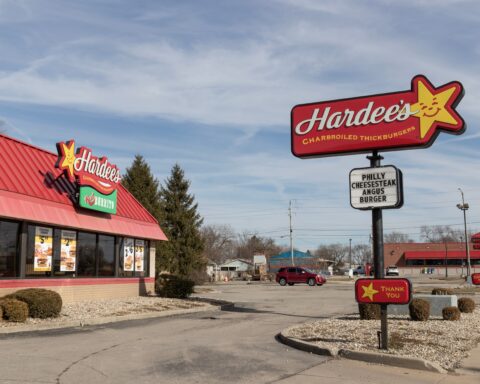

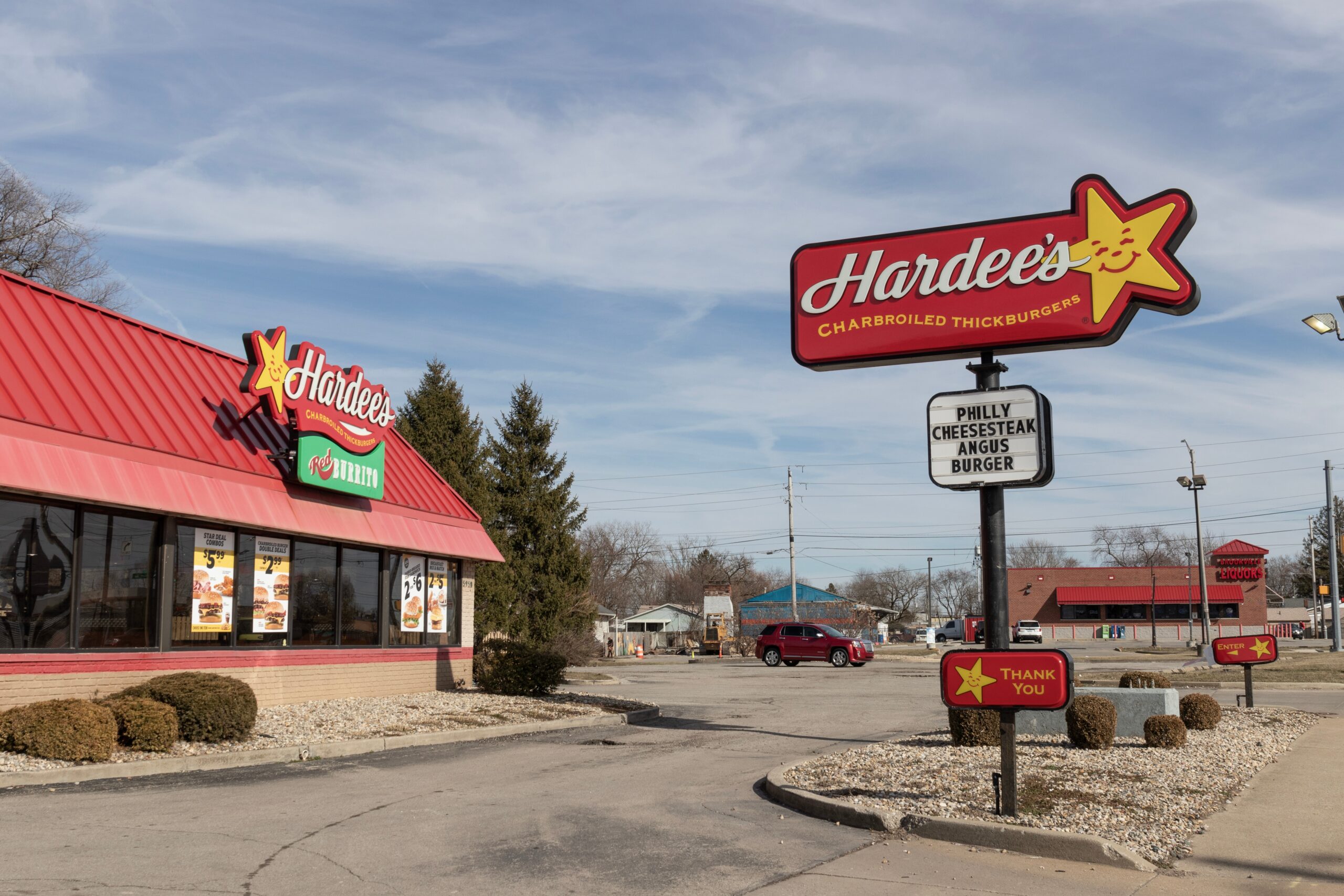
ARC Burger LLC, the Marietta, Georgia-based Hardee’s franchisee that operated 77 locations across nine states before closing them all, filed for Chapter 7 bankruptcy liquidation on April 20, 2026 in the U.S. Bankruptcy Court for the Northern District of Georgia.
The filing lists more than $29 million in total debt. Chapter 7 means liquidation, not reorganization, not a second chance. The company is done.
What makes this filing more than a routine fast-food bankruptcy is the history behind it.
ARC Burger acquired these exact restaurants in 2023, out of a bankruptcy. The franchisee it bought them from, Summit Restaurant Holdings, had already closed 39 of the locations and filed for Chapter 11 protection before selling the remaining 80 to ARC.
These same restaurants have now been through two separate bankruptcy processes in roughly three years.
How It Fell Apart
ARC Burger started missing payments in December 2024. What it stopped paying was the full stack of franchise obligations. Royalties, advertising fund contributions, technology and training fees, rent and taxes.
According to the lawsuit Hardee’s Restaurants LLC filed against ARC Burger on November 21, 2025, in the U.S. District Court for the Middle District of Tennessee, the total owed exceeded $6.5 million.
The franchisor terminated ARC Burger’s franchise and sublease agreements in September 2025, but allowed the franchisee to keep operating temporarily, which is common when a franchisor is weighing the cost of an immediate shutdown against the cost of continuing operations while the dispute resolves. That window closed.
Hardee’s pursued the lawsuit. ARC Burger ultimately closed all 77 of its remaining locations across the Mountain West, Midwest and Southeast, leaving customers in Alabama, Florida, Georgia, Illinois, Kansas, Missouri, Montana, South Carolina and Wyoming without a Hardee’s.
The April 20 Chapter 7 filing triggers an automatic stay on all pending legal actions against ARC Burger, including the Hardee’s lawsuit.
That lawsuit, still seeking more than $6.5 million, is now frozen while the bankruptcy case proceeds.
Among the other creditors listed in the filing: the Georgia Department of Revenue, owed $403,569 in back taxes, and former ARC Burger employees owed approximately $19,000 in unpaid wages.
The attorney representing ARC Burger in the bankruptcy is Robert Matthew Martin of Dentons US LLP.
Who Owned ARC Burger?
ARC Burger was owned by High Bluff Capital Partners, a private equity firm. High Bluff also owns Church’s Chicken, Taco Del Mar and Quiznos. The pattern of a PE-backed operator acquiring distressed franchise locations out of bankruptcy, then struggling to turn them around, is not unique to Hardee’s, it has played out across multiple fast-food brands in recent years.
The economics of these acquisitions are difficult: you are buying restaurants that have already demonstrated they cannot sustain themselves under their previous operator, in a system where per-unit revenue is already thin.
Hardee’s locations generate less than $1.2 million per year on average, per industry data.
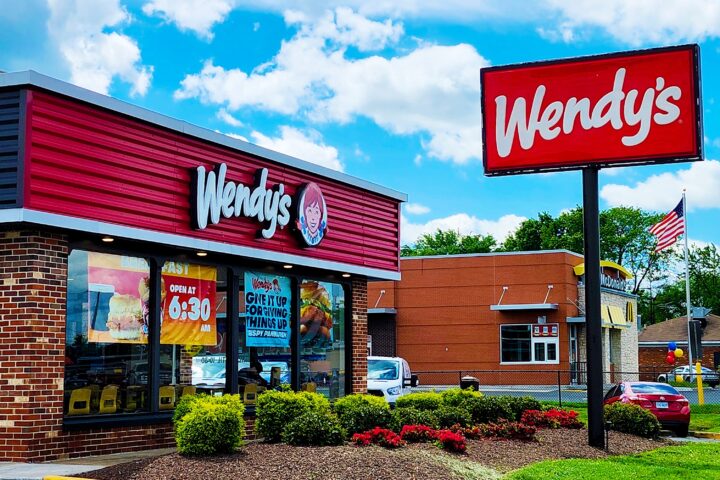
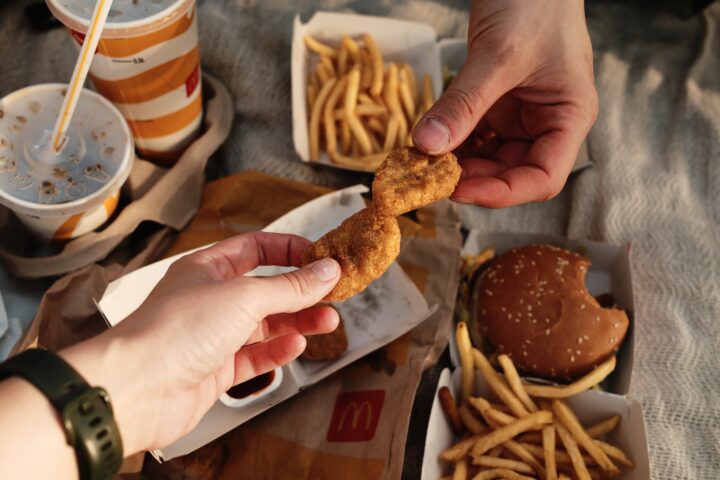
That compares to roughly $2 million per unit at Wendy’s and $3.9 million at McDonald’s.
The margin for error at those volumes is narrow, and the fixed cost structure of a multi-unit franchise operation, royalties, advertising fees, rent, labor, supplies, does not compress proportionally when revenue is weak.
ARC Burger started defaulting on those costs within about a year of when the payments became due.
The Restaurants That Already Failed Once
The underlying issue is that these specific Hardee’s locations had already proven they could not sustain a franchise operator. Summit Restaurant Holdings, ARC Burger’s predecessor, filed for Chapter 11 and closed 39 locations before ARC took over the remainder.
ARC bought 80 locations from that bankruptcy in 2023. By the time ARC Burger itself closed down, it had 77 still operating, meaning it lost or closed three more in the intervening period even before the mass shutdown.
The restaurants Hardee’s is now reopening as corporate-owned locations are the same physical buildings that have now cycled through two failed franchisees.
Hardee’s parent company has announced plans to reopen more than 40 of the shuttered ARC Burger locations under direct corporate ownership, with hiring already underway in Georgia, Missouri and South Carolina.
Whether corporate ownership produces different results than two consecutive franchise operators is the practical question those reopenings will answer.
A Second Franchisee Fight Happening Simultaneously
ARC Burger is not the only large Hardee’s franchisee in active conflict with the parent company.
Paradigm Investment Group, which operates 76 Hardee’s restaurants in Alabama, Florida, Mississippi and Tennessee, is suing the franchisor, CKE affiliate Hardee’s Restaurants LLC, over a series of operational mandates Paradigm refuses to comply with.
The dispute involves hours and technology. CKE requires Paradigm’s locations to operate from 6 a.m. to 10 p.m.
Paradigm closes at 2 p.m. CKE also requires Paradigm to offer third-party delivery, online ordering and loyalty programs, all of which Paradigm refuses to implement.
CKE sent a notice of default and termination on January 15, 2025, threatening to cancel Paradigm’s franchise agreements.
Paradigm sued four days before the termination deadline on April 14, 2025. The court agreed to pause the termination while the case proceeds.
The jury trial is scheduled for March 30, 2027, in the U.S. Court for the Middle District of Tennessee.
Paradigm is seeking $35 million in compensatory damages from Hardee’s plus an injunction preventing the termination of its franchise agreements. If Paradigm loses, another 76 Hardee’s locations become vulnerable.
Is The Hardee’s Parent Company Doing Well?
Hardee’s was founded in 1960 and operates more than 1,800 U.S. restaurants.
The brand is most associated with its Thickburgers and breakfast biscuits, a distinct identity in the fast-food burger category.
The numbers tell a story the brand identity can’t fully offset. With per-unit revenue below $1.2 million annually, Hardee’s is competing at a structural disadvantage against better-funded chains.
Its franchise system is showing strain at multiple points simultaneously.
The ARC Burger situation removed 77 locations from the chain’s operational footprint in a single collapse.
The Paradigm situation puts another 76 at potential risk. That’s a combined 153 locations, nearly 9 percent of the entire U.S. system, either already closed or in legal jeopardy from franchisee disputes.
The broader fast-food industry is under pressure. Wendy’s announced in February 2026 that it would close 5 to 6 percent of its domestic restaurants, somewhere between 292 and 350 underperforming locations, in 2026.
A Farmer Boys franchisee in California and Arizona filed Chapter 11 in March 2026. The economics that made ARC Burger’s situation inevitable are not unique to Hardee’s.
For a chain that was already thin at the unit level, losing 77 locations to a single franchisee failure, and dealing with a second major franchisee fight at the same time, is exactly the kind of compounding pressure that makes recovery slow and uncertain.