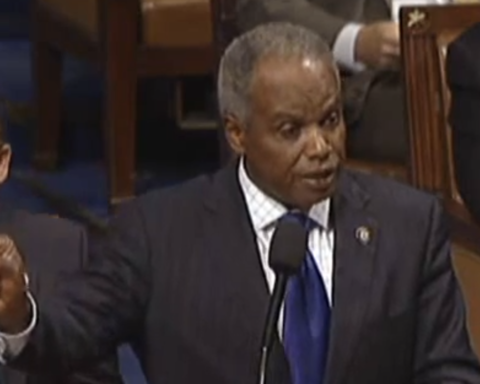

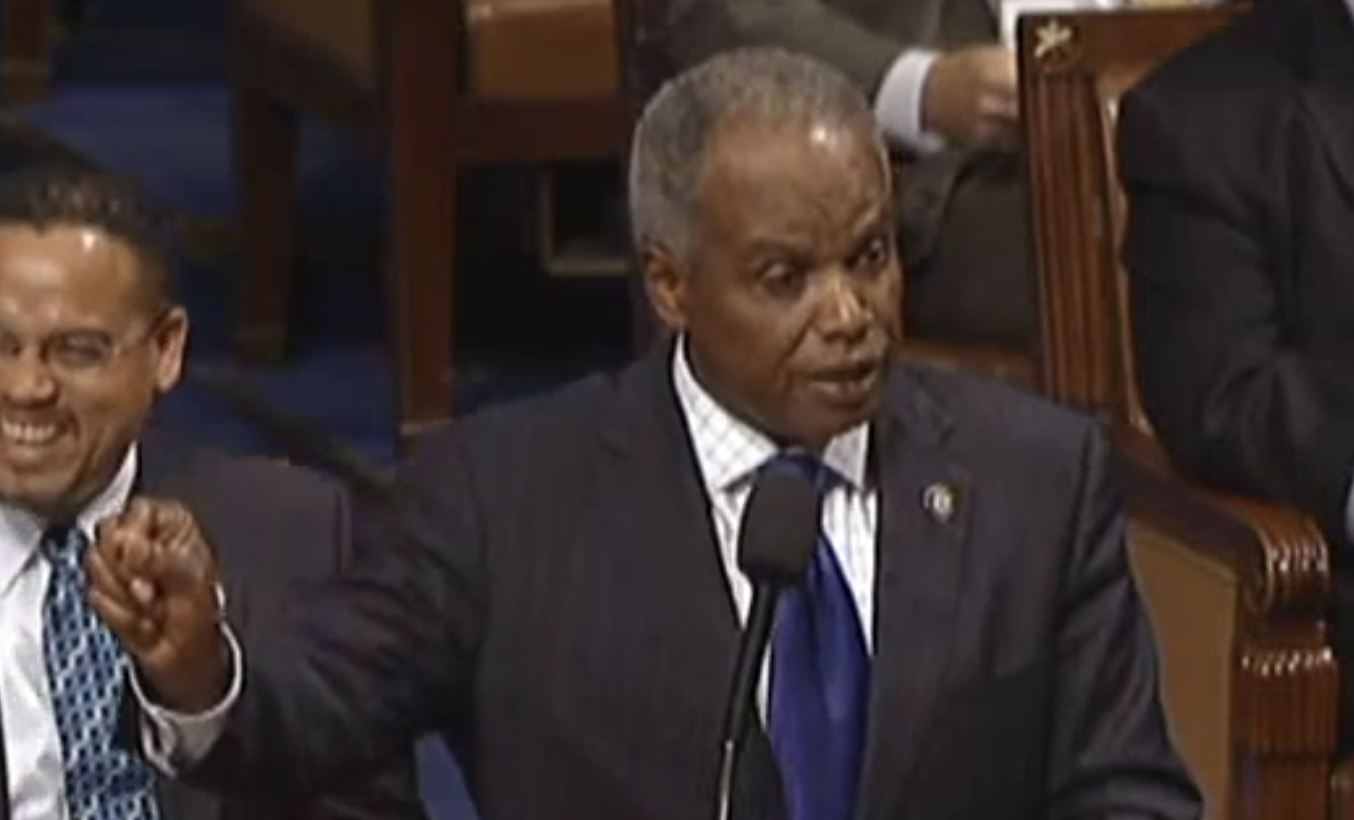
U.S. Representative David Scott of Georgia died on April 22, 2026 at the age of 80. CBS News confirmed the death through a source familiar with the situation.
No cause of death has been released. Scott was 27 days away from a Democratic primary election in which he was seeking a 13th consecutive term in Congress, a race that had already drawn one of the most crowded primary fields of his career.
He had been in public office for more than five decades.
By any measure, the length of his service, the margin of his victories, the loyalty of his constituents, David Scott was one of the most durable figures in Georgia Democratic politics. The end came while he was still on the ballot.
Who Was David Scott?
David Albert Scott was born June 27, 1945 in Aynor, South Carolina, and grew up in Daytona Beach, Florida, where he graduated from Campbell High School in 1963.
He went on to earn a bachelor’s degree in finance from Florida A&M University in 1967 and an MBA with honors from the Wharton School of Finance at the University of Pennsylvania in 1969, a credential that placed him among a small number of Black professionals with elite business school degrees at a time when those doors were rarely open.
After graduate school he started a marketing and advertising company and worked as a budget analyst under Georgia Governor Jimmy Carter.
That civic proximity to Carter’s administration was an early signal of where his ambitions were pointed.
In 1974 he won a seat in the Georgia House of Representatives, and his path from there was straight and unbroken.
He served in the Georgia House until 1982, then won election to the Georgia State Senate, where he served for twenty years. He was a state legislator for nearly three decades before he ever ran for federal office.
In 2002, when the 2000 census gave Georgia an additional congressional seat and the newly created 13th District became available, Scott entered a five-way Democratic primary, won it with 53.8 percent, and defeated Republican Clay Cox in the general election with 59 percent of the vote.
He would never come that close to a competitive race again.
The 23 Years In Congress
Georgia’s 13th Congressional District covers suburban Atlanta, all of Rockdale County and portions of Clayton, DeKalb, Gwinnett, Henry and Newton counties.
It is a safely Democratic seat, and Scott won it with comfortable margins across twelve consecutive terms. He ran unopposed in 2004, 2014 and 2016.
When challengers did appear, he dispatched them. In the 2022 primary he won with 65.7 percent.
In the 2024 primary, despite facing six challengers amid mounting public concerns about his health and engagement, he still won with 57.6 percent.
He served on the House Financial Services Committee and the House Agriculture Committee, where he became ranking member in 2023 after succeeding Glenn Thompson in that role.
He was ranked the 18th most bipartisan member of the House during the 114th Congress and the second most bipartisan Georgia member, a designation that reflected his willingness to work across the aisle in an era when that was increasingly uncommon.
His office said he secured $1.18 billion in federal funding for his district over his career and helped resolve more than 7,000 constituent cases.
He was also named one of the 25 most corrupt members of Congress by Citizens for Responsibility and Ethics in Washington in 2007, a designation from a watchdog group that his supporters disputed and his opponents occasionally raised.
The Final Years And The Questions That Followed
The last several years of Scott’s congressional career were shadowed by public and private concern about his capacity to serve.
Politico reported in 2022 that his speech had become increasingly halting and that he had trouble at times focusing on topics and appeared to be forgetting prior conversations.
By 2024, colleagues and observers noted he often read from a script and had difficulty carrying out conversations about food and agricultural policy, the very area he oversaw as ranking member.
One member of Congress told Politico at the time that they had not met a colleague who was not concerned about Scott’s ability to carry out his duties.
Party leadership subsequently removed him from the Agriculture Committee ranking member position.
He had not cast a vote in six consecutive elections, including the 2024 presidential election, a fact that became central to the arguments his 2026 primary challengers were making against him.
In late 2024 he was photographed arriving at the Capitol in a wheelchair and screamed at the Politico reporter who took the picture.
None of it ended his political career while he was alive. He qualified for the 2026 election on March 2, less than two months before he died.
He had beaten every primary challenger who came after him. Whether he would have survived the May 19 primary is a question that will never be answered.
The Race He Leaves Behind
The 2026 Democratic primary for Georgia’s 13th Congressional District was already one of the most closely watched intraparty contests in the state before Scott’s death.
With his name no longer on the ballot, it becomes a wide-open race among a field that had been building for months.
The leading challengers at the time of his death included Dr. Jasmine Clark, a 42-year-old Emory University lecturer, microbiologist and state representative from Lilburn who had been campaigning on science-based policy and voting rights.
Everton Blair Jr., the former chair of the Gwinnett County Board of Education, had also been drawing attention.
State Senator Emanuel Jones and a candidate named Heavenly Kimes were among the other Democrats in the field.
The Atlanta Journal-Constitution had noted before Scott’s death that the best path for challengers was forcing Scott below 50 percent in May and into a runoff, a head-to-head contest where his limited campaign trail presence would have drawn maximum scrutiny.
That scenario is now moot. What remains is a Democratic primary that will determine who holds a safely Democratic seat in the United States House of Representatives for the next two years, and who begins building the institutional power and seniority that Scott accumulated over two decades.
The district will remain Democratic. The seat will be filled. The person who fills it will not have spent twenty years in the Georgia legislature before winning it.
What Comes Next?
Scott’s death creates two parallel processes. The first is the May 19 primary, which proceeds with the incumbent now gone, Georgia election law will determine how his name is handled on ballots already printed or distributed.
The second is a special election process to fill his seat for the remainder of the current term through January 3, 2027, a period of roughly eight months.
That process is governed by Georgia law and federal statute and will be initiated by Governor Brian Kemp.
The details of both processes, timelines, ballot implications, the special election schedule, had not been formally addressed in official statements as of the time of publication.
Scott’s family had not released a public statement. No cause of death had been disclosed.
What had been released was the confirmation that he was gone, a man who had given more than fifty years to Georgia public life, who had won every race he had ever entered, and who died with his name still on a ballot.