
The Kansas City Royals and Hallmark Cards announced on April 22, 2026 that they have formed a partnership to build a new ballpark at Crown Center in Kansas City, Missouri.
The development would span 85 acres, include a world-class ballpark, mixed-use commercial development, and reimagined headquarters for both organizations, and would represent more than $2 billion in private investment, the largest private investment in Kansas City history if it comes to fruition.
There is no timeline yet. What there is, finally, is a site, a partner, and a deal structure that nobody saw coming, even people who had been watching this stadium saga for five years.
“That trust and mutual respect proved critical in creating a possibility that nobody would have imagined even a year ago,” the Royals said in a statement describing how the partnership with Hallmark Cards came together.
Why This Is Bigger Than A Stadium
The announcement is being covered as a sports story but it is at least as much a Kansas City civic story, because of what Crown Center is and who owns it.
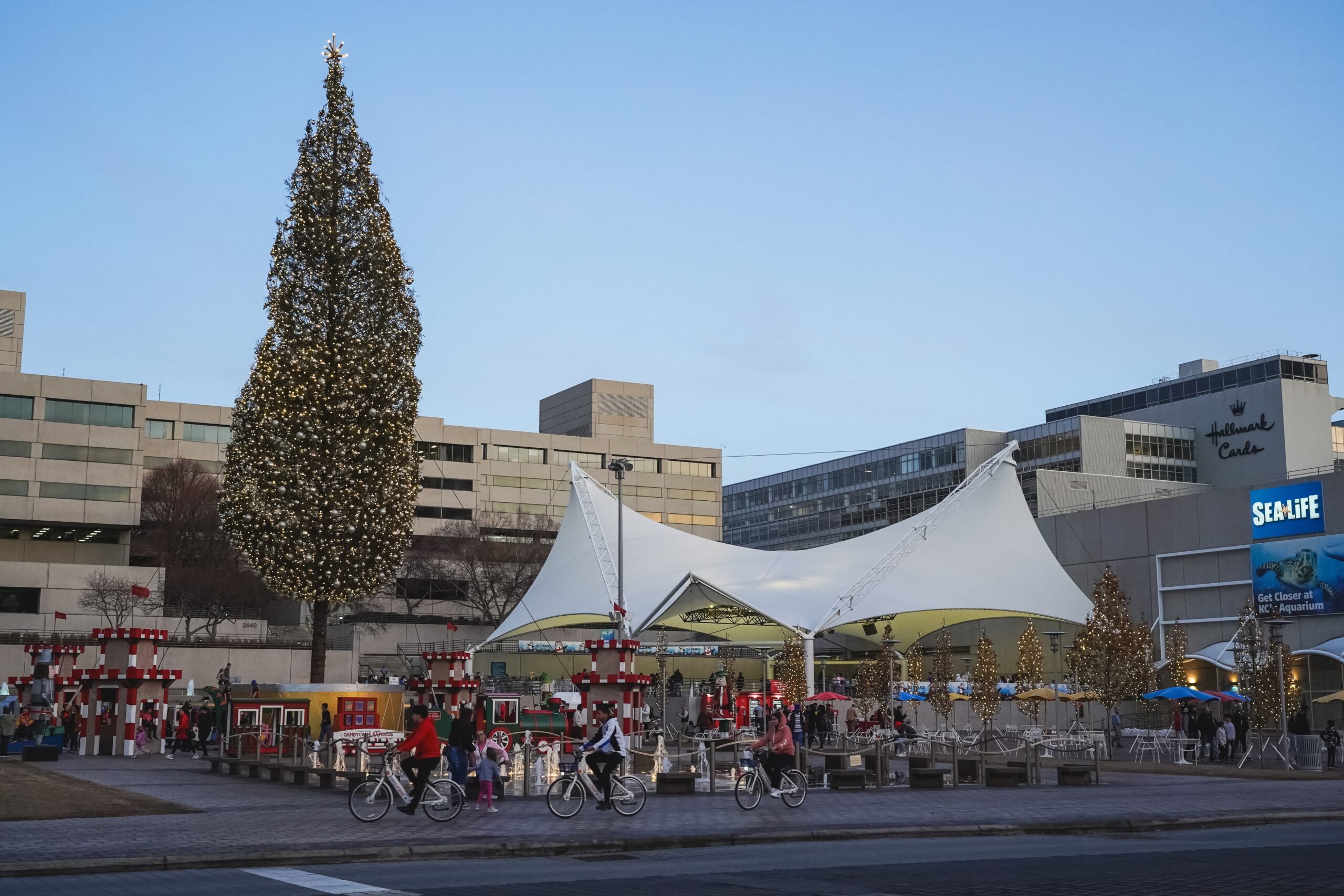
Crown Center is the large mixed-use retail, hotel and residential complex in midtown Kansas City built and owned by Hallmark Cards, specifically by the Hall family, the founding family of the greeting card company that has been headquartered in Kansas City for more than a century.
Don Hall Jr. serves as executive chairman of the board. Crown Center sits adjacent to Union Station and is connected to downtown by the KC Streetcar.
It is one of the anchors of midtown Kansas City and has been a Hall family project for decades.
The Royals crown logo, the one on every jersey, every hat, every piece of merchandise the franchise has ever sold, was designed by Hallmark. That logo was created in a building at Crown Center.
The new stadium, if built as announced, would bring that crown back to the exact neighborhood where it was conceived.
Don Hall Jr. made that point explicitly at Wednesday’s announcement:
“When the new Royals stadium opens at Crown Center, something proud will come full circle. The iconic Royals crown that Hallmark created will return to the very neighborhood where it was conceived. Every time a fan walks through the stadium doors, they’ll be standing in a place shaped by Kansas City and Hallmark’s creative spirit.”
How The Deal Came Together
The announcement surprised observers who had been tracking the stadium saga because the speculation in recent months had centered on Washington Square Park, a smaller site nearby, not the full Crown Center campus.
The Kansas City City Council passed an ordinance on April 16 authorizing the city manager to negotiate a financing deal for a stadium in the Washington Square Park area.
That ordinance passed 11-1 with one abstention. Washington Square Park was understood to be the destination.
What emerged instead was something different in scale. The Royals CEO John Sherman and Hallmark’s Don Hall Jr. have known each other for decades through civic and philanthropic work in Kansas City.
The Royals said that relationship, built over years of working on projects that touched all corners of the city, was what made the Crown Center announcement possible.
“Joining Hallmark with this project achieves both and extends the Hall family’s critical legacy of helping Kansas City grow,” Sherman said Wednesday, invoking the name of Ewing Kauffman, the Royals’ founding owner, who built the franchise from an expansion team in 1969 into a World Series champion and one of the defining institutions of Kansas City’s civic identity.
Kauffman Stadium, where the Royals have played since 1973, is named after him. The lease on that stadium expires in 2031.
The Road To Crown Center
This announcement is the end of a five-year process that included a failed ballot measure, a site that fell through twice, the Kansas City Chiefs’ decision to leave Missouri for Kansas, and a mayor who kept finding new angles when old ones closed.
In September 2021, Sherman publicly announced the team was exploring new ballpark sites. In November 2022 he confirmed the Royals would leave Kauffman Stadium and begin formally searching for a $2 billion stadium and entertainment district location.
In February 2024 the Royals unveiled plans for a site in the Crossroads Arts District at Truman and Grand, a location that generated significant excitement and had the backing of major civic institutions.
Earl Santee, the Kansas City-based Populous architect who has designed or renovated 24 of the 30 MLB stadiums and whose credits include PNC Park in Pittsburgh, Target Field in Minneapolis and Truist Park in Atlanta, was attached to the design.
Then in April 2024, Jackson County voters were asked to approve a 3/8-cent sales tax to fund construction. They said no. The plan was dead.
What followed was a scramble across multiple locations. The Royals looked at Aspiria in Johnson County, at sites in Clay County, at Wyandotte County, options narrowed by the December 2025 announcement that the Kansas City Chiefs were leaving Missouri for Kansas, which eliminated certain cross-state scenarios that had been in play.
The team confirmed it was no longer pursuing the Aspiria site in January 2026. Clay County said the team had missed the deadline for a county ballot measure in January as well.
On March 30, 2026, the day of the Royals’ home opener at Kauffman, Sherman told reporters he was “kinda zeroing in on an opportunity downtown.”
Two weeks later the City Council had passed an ordinance. Two weeks after that the Royals and Hallmark were standing together announcing the Crown Center partnership.
The Financing
The deal’s financial structure reflects lessons learned from the 2024 ballot failure. The city is not asking voters to approve a new tax. Instead, the City Council approved a tax-increment financing mechanism, TIF, that would allow the city to borrow $600 million upfront, using bonds repaid over time from increased tax revenue generated within the TIF district.
The TIF district has not yet been formally drawn but is expected to include Washington Square Park, Crown Center and much of the Crossroads neighborhood.
The structure works like this. The city establishes a baseline level of sales tax and earnings tax revenue within the district.
After the stadium opens and surrounding development generates new economic activity, the tax revenue above that baseline, the increment, is used to pay off the $600 million loan.
The risk is that if the economic development falls short of projections, that repayment comes from city general funds rather than new tax revenue.
A third-party financial analysis must be completed before any deal is finalized. The city manager is now authorized to negotiate a term sheet, lease, and development agreement with the Royals. That work has not yet been completed and the deal is not final.
Missouri’s Show-Me Sports Investment Act, state-level incentives passed in 2025, could cover up to 50 percent of construction costs, providing a funding stream the 2024 ballot measure plan did not have available.
The Royals and private investors are expected to contribute $2 billion or more, the majority of the total project cost. The Royals have consistently framed this as a private-led project with public support, not a publicly funded stadium.
What Gets Built And When?
The 85-acre development surrounding the ballpark would include retail, restaurants, office space, hotels, housing and a central park-like square with fountains.
It would also include reimagined headquarters for both the Royals and Hallmark.
Company officials described the plan as unprecedented for a professional sports project in terms of its integration of corporate and civic identity into a single development.
The ballpark’s proximity to the KC Streetcar line is a key selling point for the transit-connected access argument.
The Royals said the site’s connectivity would put them in the top 10 in walkability among all 30 MLB teams, a meaningful consideration in a city where getting to and from Kauffman Stadium has historically required driving.
Earl Santee and Populous are expected to lead the design. No timeline for construction or an opening date has been announced.
Opposition To The Move
Not everyone is celebrating. The Missouri Workers Center, representing a coalition of low-wage and industry workers, opposed the city ordinance from the start and has continued to push for commitments on housing and minimum wage floors as conditions of any deal.
Nathan Willett, who represents the 1st District on the City Council, voted against the ordinance.
The broader debate about public subsidy of professional sports stadiums has not gone away, it has simply moved to a new phase, where the structure of the deal rather than the principle of the public contribution is the contested ground.
Mayor Quinton Lucas offered the framing that has anchored the city’s public position throughout:
“The public-private partnership between Hallmark, the Royals, Kansas City and our state ensures we connect our neighborhoods, keeps our downtown vibrant and maintains big league baseball in our city for generations to come.”
Whether the deal that results from months of negotiation matches the announcement that launched it on April 22 is still to be determined.