
Pershing Square USA, Ltd. and Pershing Square Inc. began trading on the New York Stock Exchange on April 29, 2026, under the tickers PSUS and PS respectively, following the pricing of a combined $5 billion initial public offering that closed out the night before.
Pershing Square USA represents the largest ever launch of a new closed-end fund in the United States.
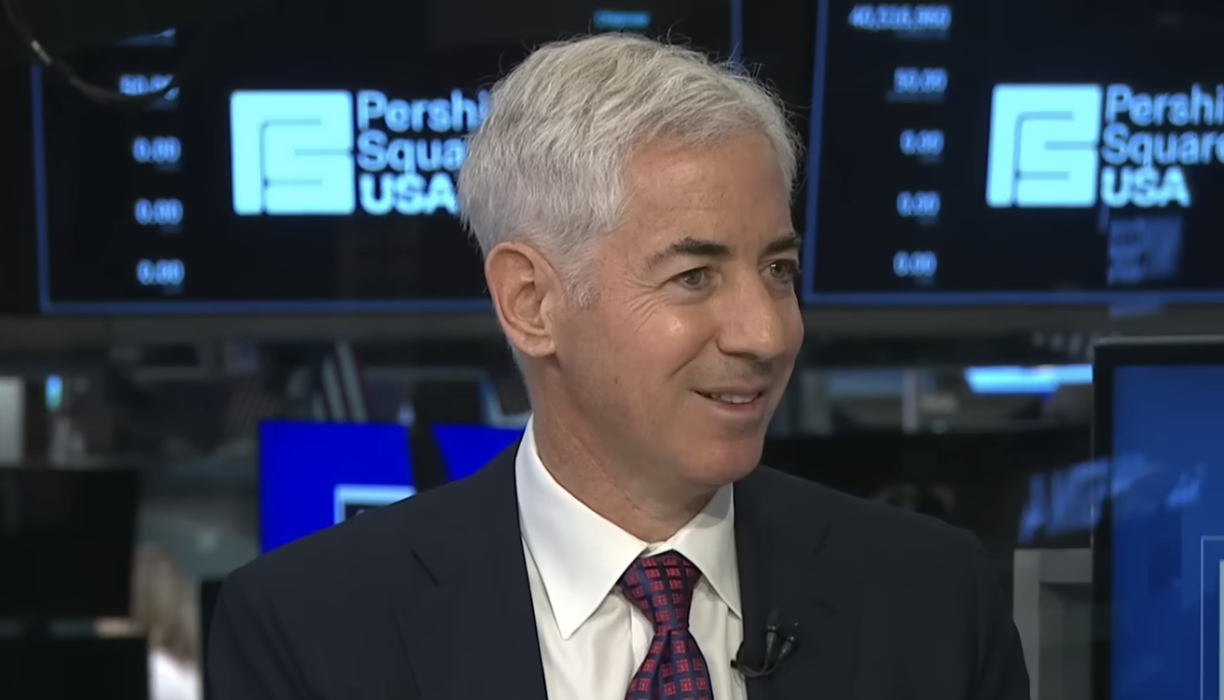
Bill Ackman, one of the most recognizable names in activist investing, tried to make this happen in 2024 and failed. Today it is actually happening.
Here is what PSUS is, what you get when you buy it, what Ackman plans to invest in, and what investors should understand before putting money in.
What Is The Stock Priced At?
PSUS shares priced at $50 each. Buyers receive one PS share at no additional cost for every five PSUS shares purchased.
That means buying 500 shares of PSUS at $50, a $25,000 investment, comes with 100 shares of PS, the parent asset management company, included.
The two tickers are linked by design. PSUS is the fund that holds the actual stock portfolio.
PS is the firm that manages it and collects the fees from doing so. Owning both gives an investor exposure to the investment returns of the portfolio and to the economics of running the business that manages it.
The company raised $2.2 billion by selling 44 million shares in a registered offering to public investors, and $2.8 billion from a private placement to institutional investors, including family offices representing 30 percent of the private placement, pension funds at 25 percent, insurance companies at 22 percent, ultra-high-net-worth investors at 12 percent and other investors making up the remainder.
Institutional investors accounted for over 85 percent of total orders, signaling strong oversubscription. The deal is expected to close April 30 pending customary conditions.
The Failed 2024 Attempt
This is not Ackman’s first attempt to bring PSUS public. He tried in 2024 and pulled the IPO days before the planned debut because investor demand fell well short of expectations.
At the time, early interest had suggested the offering might raise as much as $25 billion. The reality came in far below that and Ackman withdrew rather than price a significantly smaller deal.
What changed between 2024 and today is a combination of structure and market conditions.
Ackman removed the performance fee entirely, the restructured deal charges only a 2 percent management fee with no carry.
He reduced the minimum purchase amount from $5,000 to $250, deliberately targeting retail investors rather than restricting the vehicle to large institutional buyers.
He partnered with retail brokerages to reach their user bases directly. He bundled the asset management firm PS into the offering alongside PSUS, so buyers of the fund also receive shares in the firm collecting fees, which aligns incentives more explicitly between Ackman and his investors.
The result was a $5 billion raise, below the original ambition of $5 to $10 billion but a genuine achievement given the 2024 collapse and the largest closed-end fund launch in American history.
What Will PSUS Invest In?
According to the prospectus filed with the SEC, PSUS will invest in “large minority stakes in high-quality, predominantly North American-listed, large-capitalization growth companies at attractive valuations during periods in which we believe they have underperformed their potential and/or when we believe they are undervalued.”
That language is a formal version of what Ackman does, he identifies large, well-known companies he believes are being mismanaged or mispriced, takes a significant stake, and either pushes for operational or strategic changes or simply holds while the market catches up to his view.
The portfolio will hold 12 to 15 positions, which is concentrated by the standards of any diversified fund.
The existing Pershing Square Holdings, the London-listed vehicle Ackman has managed for years, gives the clearest picture of what PSUS is likely to look like.
Pershing Square Holdings currently holds large stakes in Alphabet, Fannie Mae, Freddie Mac, Brookfield, Uber, Amazon and Meta Platforms, among others.
Alphabet is the top holding across all Pershing Square-related funds. PSUS is designed to mirror a similar strategy for a US-listed audience.
The fund may also make small allocations to alternative assets including private credit and interest rate positions, but the core of the strategy is long-term ownership of concentrated large-cap equity positions.
What Is A Closed-End Fund?
Most funds that retail investors interact with are open-end funds, mutual funds or ETFs where the fund creates new shares when investors put money in and redeems shares when investors take money out.
The fund’s portfolio has to accommodate these flows, which means selling assets to meet redemptions even when selling is not optimal.
The closed-end structure is different. PSUS issued a fixed number of shares in the IPO and those shares now trade on the NYSE like a stock.
If you want to sell your PSUS shares you sell them to another buyer on the exchange.
You do not redeem them back to the fund. This means Ackman’s capital base is stable, he does not have to sell holdings because investors are nervous. He can hold through volatility, which is central to his investing philosophy.
The company stated that permanent capital will allow its manager to take a long-term view and be opportunistic during periods of market volatility, without being exposed to the need to raise capital by selling assets to meet redemptions during such periods.
That stability is the primary structural advantage over a conventional hedge fund.
The trade-off is that closed-end funds frequently trade at a discount to their net asset value, the market price of the shares can fall below the per-share value of what the fund actually owns.
This is the main risk analysts have flagged for PSUS. If the fund trades at a persistent discount to NAV, retail investors who bought at $50 on IPO day could find themselves holding something worth less in market terms even if the underlying portfolio performs well.
The NAV premium or discount behavior is the key variable to watch in the days and weeks after today’s debut.
Who Is Bill Ackman?
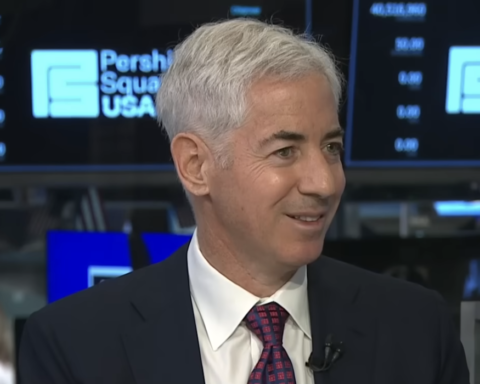
Ackman is the founder and CEO of Pershing Square Capital Management, which manages approximately $30.7 billion in total assets as of the end of 2025.
He graduated from Harvard Business School and has been running Pershing Square since 2004.
He is known for high-conviction, concentrated bets, both long and short, and for being unusually willing to make his thinking public through investor letters, media appearances and social media posts.
His track record contains some of the highest highs and lowest lows of any major fund manager in recent memory.
In early 2020, as COVID fears were spreading but before markets had fully reacted, Ackman purchased a massive credit hedge for approximately $27 million and sold it weeks later for $2.6 billion as markets collapsed.
The trade is widely considered one of the most profitable macro hedges in modern investment history.
Against that, he spent five years battling Herbalife, publicly declaring it a pyramid scheme and holding a massive short position, before ultimately exiting at a significant loss after the stock failed to collapse as he had predicted.
That episode became a defining example of how activist short-selling can go catastrophically wrong even when the underlying thesis has merit.
He has since exited short-selling entirely and focused exclusively on long-term long positions.
PSUS is the institutionalization of that philosophy, a permanent capital vehicle that does not require him to raise new money, meet redemptions, or operate under the pressure cycles that conventional hedge fund structures impose.
What To Know Before Buying
As with all IPOs, it is worth watching what the share price does in the days and weeks following the debut before committing.
About half of all IPOs pop on the first day only to trade lower in the days that follow.
The specific dynamic for a closed-end fund is the NAV premium or discount, whether the market price of PSUS trades above or below the per-share value of the underlying portfolio.
If PSUS trades above NAV buyers are paying a premium for Ackman’s management.
If it trades below NAV buyers are getting the underlying portfolio at a discount but may face continued pressure if confidence in the fund wavers.
The fund charges a 2 percent management fee annually with no performance fee.
On a $5 billion fund that is $100 million per year in fee revenue flowing to Pershing Square Inc., which is also now publicly listed as PS, meaning investors can evaluate the asset management business independently of the fund.
The underwriters on the deal were Citi, UBS Investment Bank, BofA Securities, Jefferies, Wells Fargo Securities, RBC Capital Markets, BTG Pactual and Keefe Bruyette Woods.
PSUS starts trading today. The IPO is done. The largest closed-end fund launch in American history is now a publicly traded security. Whether it was worth doing depends on where the stock goes from here.