

Jack Grynberg was a Polish-born Holocaust survivor who arrived in Denver in 1949 with twenty-seven dollars in his pocket and built one of the great independent oil fortunes of the twentieth century. He died in 2021 at the age of 89. By then, his three children — Rachel, Stephen, and Miriam — had taken the companies away from him in court.
This is the story of one of the men who built those companies, and what Rachel Grynberg did to him after she took control.
The Empire
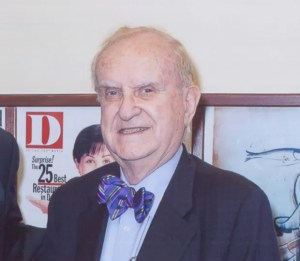
Gene Webb worked for Jack Grynberg for fifteen years.
He started in December 2004 as Vice President of Business Development. He came in to raise money. Within a couple of years, he was running operations.
“He had a lot of concessions around in Africa that were starting to expire,” Webb said. “I got involved in almost looking over all the concessions and negotiation with the countries to keep them going.”
Webb negotiated crude oil purchase contracts. He renegotiated gas contracts. He negotiated with the governments of Belize and Cameroon to extend expiring concessions. He inspected wells in Wyoming, Colorado, and North Dakota.
Each year, he went to Kazakhstan to audit Shell and British Gas alongside Rachel Grynberg herself. He says he personally helped recover about $90 million in overcharges from those audits. In the first year, he spent twelve weeks in Kazakhstan. After that, three to six weeks every year. He sat beside Rachel while they worked.
Then Rachel took the companies from her father. And the lawyers Rachel and her siblings hired fired him.
The Empire and the Fight Over It

Jack Grynberg’s signature discovery was the Karachaganak field in Kazakhstan — one of the largest natural gas finds of the last half-century.
After a long lawsuit against British Gas in Texas, Jack secured a 15 percent net profits interest in the field. By 2010, Webb says, that interest was paying the family between $25 million and $60 million per quarter.
In the 1990s, Jack put the companies in the names of his wife and three children: Rachel, Stephen, and Miriam. A judge later found this was done to protect the wealth from creditors, estate taxes, and kidnapping threats. Jack expected to run the businesses until the day he died.
The structure Webb describes is layered. Grynberg Petroleum held Jack and his wife’s personal U.S. oil-and-gas properties. RSM Production Corporation held offshore concessions in the Caribbean and Africa. Gadeco LLC held a portfolio of U.S. exploration assets. And Pricaspian Development Corporation — the most valuable entity of all — held the 15 percent net profits interest in Karachaganak.
“Now the Kazakhstan production generates over ninety percent of” the family’s income, Webb said. RSM and Gadeco were owned by the three children as subchapter S corporations. Pricaspian was owned by the three children, plus a 25 percent stake Jack retained.
Jack built the empire. The children owned it on paper.
The Audits in Kazakhstan

The Pricaspian audits are how Webb came to know Rachel.
Under the British Gas contract, the family had the right to audit the operator’s books each year to ensure their 15 percent net profits interest was calculated correctly. Webb went every year. So did Rachel.
“I spent a lot of time with Rachel every year on these audits auditing — Audit British Gas,” Webb said. “We’d be over there. The first time we was over there, twelve weeks out of the year. After that, we spent three to six weeks each year auditing them.”
The recoveries were significant.
“We recaptured about ninety million dollars in overcharges from British Gas,” Webb said.
Asked who did the work, Webb did not hesitate.
“No, I did most of the work.”
An outside audit firm was involved. But the negotiation, the line-by-line review, the pressure to settle, the relationships with the operator’s staff in Kazakhstan — Webb says that was him.
This makes Rachel’s treatment of Webb hard to explain. She was not a distant heiress who had never met him. She had sat next to him in Kazakhstan for years. She had watched him recover $90 million for her family. She knew his work.
The Decline, and the Theory the Children Sold to the Court
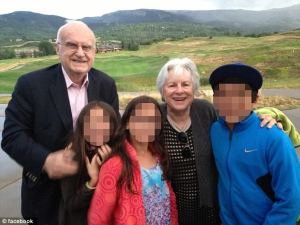
By 2014, Jack was in his eighties, and his behavior was raising concerns. He claimed to own a Wyoming oil well containing more crude than the entire national reserve. He told the president of Botswana he had two billion dollars in a local bank. He tried to buy 100 million dollars’ worth of generators for a nonexistent Nigerian power plant.
In 2015, the Pricaspian board removed Jack as a signatory on the company’s bank accounts. In 2016, they removed him as president. In March 2016, they removed him from the board. He sued. The case moved from Texas to Colorado, where a jury found there had never been a binding lifetime agreement giving Jack control. He lost.
The children’s case rested on a single proposition: that Jack had dementia, and had had it for years.
Webb, who saw Jack daily through that whole period, does not buy it.
“In the trial and everything, they tried to accuse Jack of having dementia. I mean, he probably had some — this is where I don’t know if the attorneys would tell you he had dementia. He was really never tested. For dementia. That I’m aware of.”
The expert witness the children retained, in Webb’s telling, was a hired gun.
“They hired this psychiatrist quack who has been thrown — his testimony has been thrown out of many courts,” Webb said.
Webb says Jack had moments of forgetfulness. He says Jack made bad business judgments. But he draws a line.
“He was a very brilliant man and very knowledgeable. Not being derogatory — but just a lot of things he did didn’t make sense. He didn’t have a lot of common sense sometimes.”
That is not dementia. That is Jack Grynberg as he had always been — brilliant, restless, taken by every speculative pitch that walked through the door, and constitutionally incapable of saying no to a deal. The same man who had built the empire was the same man whose children now used his deal-making to argue he could not be trusted with it.
“Jack used to say, every pile of horse shit you count, eventually you’ll pull out a pony,” Webb said. “He said, I know they’re all forty and they won’t work, but maybe one just one will.”
Most of them did not work. One — Karachaganak — paid for everything.
The Conservatorship That Did the Firing

Rachel emerged as the leader of the three siblings. “Probably Rachel,” Webb said when asked which of them ran things. She became CEO of RSM Production. She and her siblings now controlled the Kazakhstan royalties, the cash reserves, the office, and the people who worked there.
Including Webb.
The mechanism that actually ended Webb’s career was not corporate. It was probate.
After the civil verdict, the children petitioned a Colorado probate court to declare Jack incapacitated and appoint a conservator over his affairs. The probate judge granted the petition. The conservator hired attorneys. Those attorneys took over the day-to-day management of Jack’s life and his money.
“The conservatives got Jack’s will, where the kids got all his money,” Webb said.
Jack’s 2013 will, Webb says, directed up to f$40 million to the Colorado School of Mines for a new College of Engineering and Mines building. The conservator’s attorneys went back to probate court, used the dementia finding to argue Jack had not been competent when he signed the will in 2013, and got it revoked. The forty million stayed in the family.
“To me, they were appointed by the courts to protect Jack’s assets and do what he wants with them,” Webb said. “To me, they didn’t do that. All of a sudden now they’re the kid’s attorney. The attorneys for the three kids.”
The same attorneys also took over the management of the companies. They terminated employees. Webb was one of them.
In February 2020, attorneys operating under the conservatorship that Rachel Grynberg and her siblings had asked the probate court to place over their father, terminated Webb.
The children did not fire Webb themselves. They did not need to. The lawyers they put in place did it for them.
What She Owed Him

The company owes Webb about $110,000 in accrued vacation pay.
“I never took vacations,” Webb said. “So I had quite a — I had — I forgot how many weeks, but anyway, it comes up to a hundred and ten thousand dollars.”
Jack preferred it that way. “Jack would rather have you work, pay you for that extra time, than for you to take a vacation,” Webb said. “He didn’t mind doing that at all. He preferred it, as a matter of fact.” Other employees got those payouts. Webb did not.
The company also owes Webb $13,000 in approved business expenses from 2019.
“They said they’re gonna pay me,” Webb said. “It’s concerns that she’ll get me paid, then all of a sudden — they changed their mind.” Later, he says, they told him the trips were never authorized. They were.
He says he is owed severance, too. About ten other former employees say the same.
In an earlier round of cuts, Rachel’s group laid off 18 employees and paid them severance. Then they fired Webb and the rest. They paid nothing.
What She Said About Him

During the litigation, Rachel’s lawyers accused Webb of taking bribes.
“They tried to accuse me of taking bribes,” Webb said. “Which is very embarrassing to go sit there with — they were going to call the judge because I got irritated when they asked me these questions and told them to shove it.”
He was deposed on it three times. Nothing came of it. No charges. No findings. No evidence produced. He says the same thing happened to other employees. “They accused some of the other employees of transgressions too, but none of us can understand why they do it. Cause all we did was — everybody did a good job.”
To call a fifteen-year executive a bribe-taker on the record, three times, without producing evidence, is to mark a man. It is in the record now. Webb says it is false. The absence of any charge or finding suggests Webb is right.
What She Wouldn’t Let Him Have
When the offices closed in 2020, Webb asked to come retrieve his belongings.
Files he had built over a career. Antique books he had brought from home. Reference materials on oil and gas leasing that he had used to train Jack’s young lawyers, who, Webb said, came out of law school not knowing what a gas lease was.
“When they cleaned all the offices, they wouldn’t let me come back and get rest of my stuff,” Webb said. “They said no. You can’t come. They never gave a reason, just said — but we’re packing it all up and putting in storage.”
He never got the boxes.
The Pattern

Webb is not alone.
He names Sherem Regazzi. Regazzi’s family was personally close to the Grynberg family. He and his brother grew up with the Grynberg children. His father was Iranian. Regazzi worked for Jack for years.
“He just can’t understand why Rachel had this huge, all of a sudden huge dislike for the employees,” Webb said. “I have no idea. It baffled all of us.”
He names Bob Bollard. Bollard worked for Jack from the early 1980s through about 2014. Three decades. When Bollard left, Webb says, Rachel’s group did not want to pay him anything. They eventually offered fifty thousand dollars.
The companies were not broke. Court filings established that Rachel and Miriam each held about $40 million. The companies had more than $200 million in bank accounts. Kazakhstan was generating $25 to $60 million per quarter.
The money to pay these people existed. The decision was made not to pay them.
Why?

Webb does not know why.
“She just turned against all the employees,” he said. “I have no idea why she did that. It baffled all of us.”
He has theories. One is that the employees were too close to Jack and had to be cleared out, along with the father.
“I would think that would be one of the reasons,” he said. Another is that it was a simple matter of economics. Stiff a dozen workers. Save a million dollars.
The Question Rachel Has Not Answered

Rachel Grynberg has built a public profile in Denver as a philanthropist. Colorado Ballet. Jewish Family Service of Colorado. Kent Denver School. She gives to the institutions that mark a person as a civic figure.
She has not given to Gene Webb. She has not given to the ten other former Grynberg employees who say they are owed severance and were denied it.
What philanthropy tells the world about Rachel Grynberg is one thing. What the employees say tells the world another.
The Frank Report invites Rachel Grynberg to respond. Phone 305-783-7083/email frankparlato@gmail.com.
See also:
The Grynberg Inheritance: A Billion-Dollar Oil Empire, a Family Takeover, and the Women Nobody Talks About
ARTVOICE ART