
The Old Switcheroo
The case of United States v. Daedone and Cherwitz was the first federal forced-labor conspiracy conviction that relied entirely on psychological coercion, with no physical restraint and no spoken threats.
In fact, it rested entirely on a conspiracy-only charge. The only charge against the two women, Nicole Daedone and Rachel Cherwitz, was that they conspired to force nine women to labor — not that they actually forced any woman to labor.

They conspired to force labor, the government alleged, through pyching them out — through brainwashing, psychic control, manipulation by making them think they were loved and in some cases that the defendants themselves were witches.
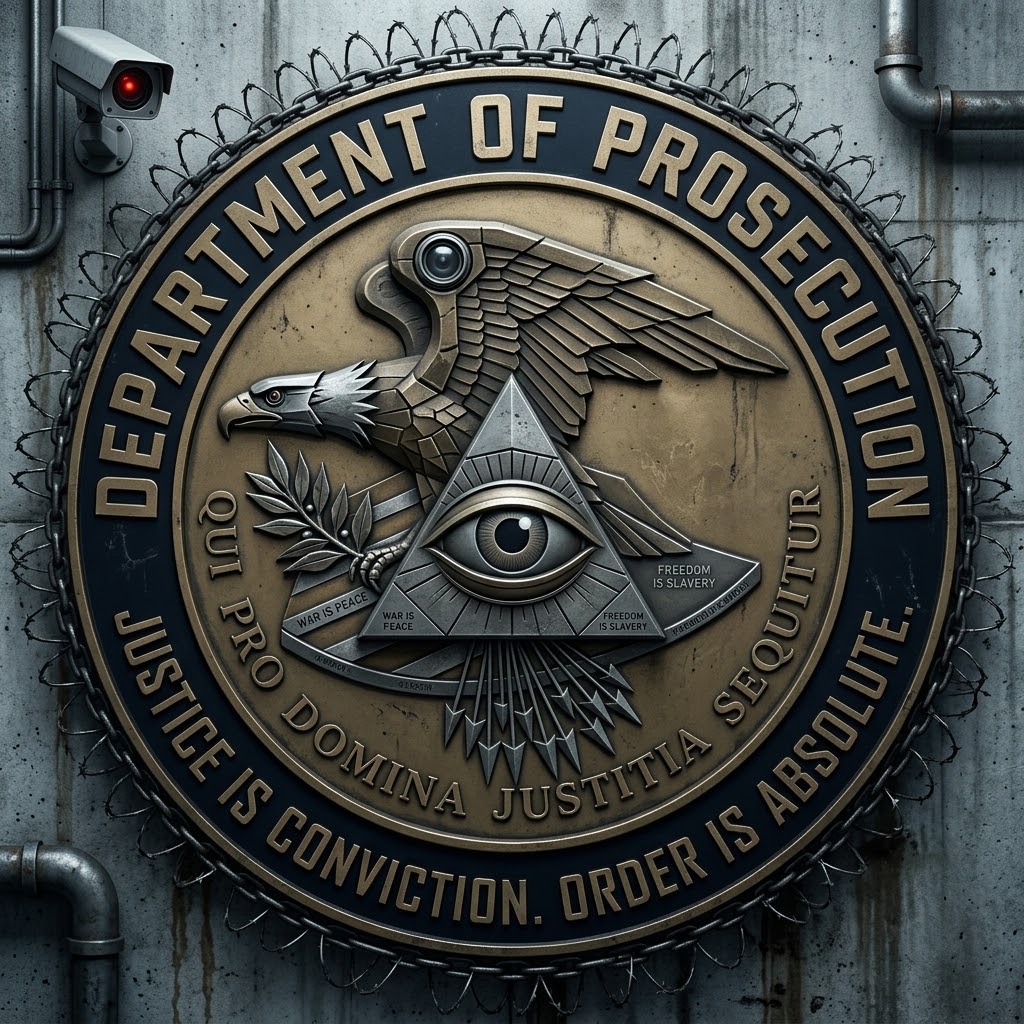
Therein lies the trick of creeping totalitarianism. Charge the thought crime — the idea, the conspiracy of two defendants, in this case women, conspiring to use their voodoo, or mojo, or sexiness, or the promise of better sex, any notion you care to choose. The prosecution used all of the above.
Just charge conspiracy, find nine women out of some 35,000 who took courses, have them testify that the defendants brainwashed them and hence they loved it so much they were afraid to leave — and charge them with conspiracy to commit forced labor — that the two women planned it, not that any woman did one lick of labor.
Forced labor was not charged.
A Sentencing Spectacle

On June 9, 2025, a federal jury convicted Nicole Daedone and Rachel Cherwitz of a single count of conspiracy to commit forced labor. The Sentencing Guidelines range for forced labor conspiracy, where no one was forced to labor, with no violence, with two women with no prior criminal offenses, was under three years.
The government asked for 20 years for Daedone and 14 years for Cherwitz.
The jury had convicted Daedone and Cherwitz only for conspiracy. The government asked the judge to sentence them for forced labor against the nine alleged brainwashed victims, plus an uncharged sexual abuse offense, plus obstruction and witness tampering.
They were doing the old switcheroo. Relevant conduct is the legal term for this anti-due process federal criminal justice technique, which helps keep our American prisons full and profitable.

On March 30, 2026, U.S. District Judge Diane Gujarati sentenced Daedone to nine years in federal prison and Cherwitz to six and a half years. She sort of split the difference.
The jury’s conviction was solely for forced labor conspiracy. Gujarati sentenced them for forced labor and other crimes that the prosecution did not charge.
A Word About Relevant Conduct
At trial, the judge asked the jury to decide solely whether Daedone and Cherwitz conspired to commit forced labor. That was the only charge in the indictment.
The jury heard the evidence, deliberated, and returned a verdict of guilty that Daedone and Cherwitz conspired to force nine women to labor, not that any woman labored. The two women just planned it and agreed to do it, the jury decided.
Most people assume that the sentence is calculated based on the crime the jury found. That is not how federal sentencing works. Federal sentencing is guided by relevant conduct.
Relevant conduct means any act the judge believes the defendant committed, even if it was never charged, never proven to a jury, and not part of the indictment or the conviction, can still be part of the sentencing calculation.
The Jury as Gateway
The reader might ask: What is the point of a jury? What is the point of reasonable doubt? What is the point of an indictment that charges specific crimes if the sentence can be calculated based on crimes the government never proved?
The jury is merely the gateway. The same way marijuana was once called the gateway drug to heroin and worse — a small entry point that opens the door to everything else.
Once the jury has convicted on any charge, however minor, the gate is open.
The judge at sentencing can add prison time for any conduct the judge decided might have occurred.
Forced labor. Sexual abuse. Even Murder (It’s been done in other cases).
The Trial Penalty and the Plea Trap
A reader might ask why anyone would go to trial under these rules. The answer is that almost no one does. Roughly 97% of federal criminal cases end in plea bargains. The few who go to trial face another anti-due process technique in the federal system — the trial penalty — where judges, to teach the nation’s defendants not to demand the right to a trial, impose sentences roughly three times longer than those imposed on defendants who plead to the same conduct.
This helps prompt plea bargains, even if one is innocent, to save years of one’s life in a system that is definitely cocked against the defendant. This also helps America fill its prisons with a robust number of innocent people who take pleas and go directly to jail (do not pass due process) just so they have a chance of getting out one day.
But even the plea-bargained defendant does not escape the relevant-conduct doctrine.
At sentencing, a federal judge may consider conduct for counts that were dismissed as part of the plea agreement. The defendant who pleads guilty to one charge in exchange for the dismissal of nine others can be sentenced as though all ten had been proven.
The plea saved him from the trial penalty. It did not save him from being punished for the dismissed counts.
What the Government Told the Trial Court
The most illustrative detail of this lacking-in-due process technique is found in the government’s pretrial filings.
Before the trial, the defense asked the prosecution to specify what forced labor, what sexual demands, or manipulative tactics the defendants used against which victims, on which dates, the defendants would be required to defend at trial.
The government told Judge Gujarati in effect what are you talking about?
“It need not prove that any individual was, in fact, at any time and at any location, subjected to forced labor, directed to engage in sexual activity, or the target of abusive and manipulative tactics.”
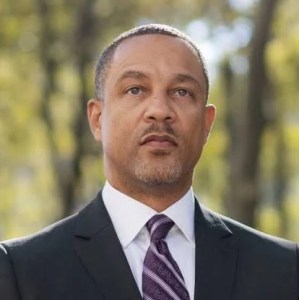
US Attorney Breon Peace explained, “the instant case charges a conspiracy and not a substantive offense. The defendants could be proven guilty if they never forced any victim to do anything—so long as the evidence proves beyond a reasonable doubt that they agreed to do so.”
After the jury returned a verdict on what the government charged — forced labor conspiracy alone.
Then the government pulled the old switcheroo. The prosecutors asked Judge Gujarati to sentence Daedone and Cherwitz as though they had proven the crimes they had told the court they had no obligation to prove.
A former prosecutor herself, Judge Gujarati was happy to oblige. She sentenced the women as if they had committed forced labor and said so.
Why It Matters Beyond Daedone
Relevant conduct has been the obscenity of American federal sentencing for forty years. It has helped make the United States the most incarcerated country on earth. But the new precedent in Daedone is something else. It is the precedent of the conspiracy-only forced labor charge — a charge no prosecutor before this had been willing to gamble on.
Every other charge of forced labor in history depended on also charging forced labor or sex trafficking.
Of course, they had a prosecutor in robes in Gujarati, and if anyone studies the rulings she made and how she blocked the defense from putting on a meaningful case, they would ask the biased lady to take off that robe and stop pretending.
So the government could take the gamble — charge only conspiracy and get the judge through relevant conduct to hammer them for doing the crime they never had to prove — using brainwashing no less.
So every future case where the government wants to stop some witches or maybe some pastor or wellness guru or, for that matter, anyone who teaches any crap the government wants to say stinks, they can charge forced labor conspiracy under § 1594(b).
It does not take a genius to see where this is headed.
The innovation built into this prosecution — convict on the conspiracy, sentence on forced labor, and anything else — means the government does not have to charge or prove an actual crime to the jury. It only has to allege a conspiracy and, at sentencing, get the judge to sentence for the crime they never had to prove.
The prosecution finally figured it out. Kudos to the Eastern District of New York and what they established in this case. They helped keep America number one in prison incarcerations and hypocrisy.
Hypocrites, you ask?
Yeah.
Nowhere on earth is the brag bigger of liberty and justice and due process, and nowhere, maybe on earth, is it less seen than in the American federal criminal justice system. It is a fraud from top to bottom, and the government just pulled off another trick to enhance it.
Fraud, you ask?
In banana republics and totalitarian regimes, they do not pretend to due process. They just lock you up. America locks you up too — but pretends it is a fair process. The proof is on the record. The US houses more people in prison than anywhere else on earth. You don’t get that kind of batting average unless either your people are the worst on earth or your hypocrisy is the worst in history.
Every prosecutor in America is now free to use the conspiracy-only precedent.
It will be used again.

ARTVOICE ART

What nice teeth you have, Mr. Prosecutor….


Better than any bananda republic. Better than Stalin.

The system works.


Throwback Thursday

Keep it bright and happy… This is justice, baby.

Thoughts are crimes too….

Relevant conduct, baby….