AJ Brown Trade To New England Is Imminent According To Multiple Reports
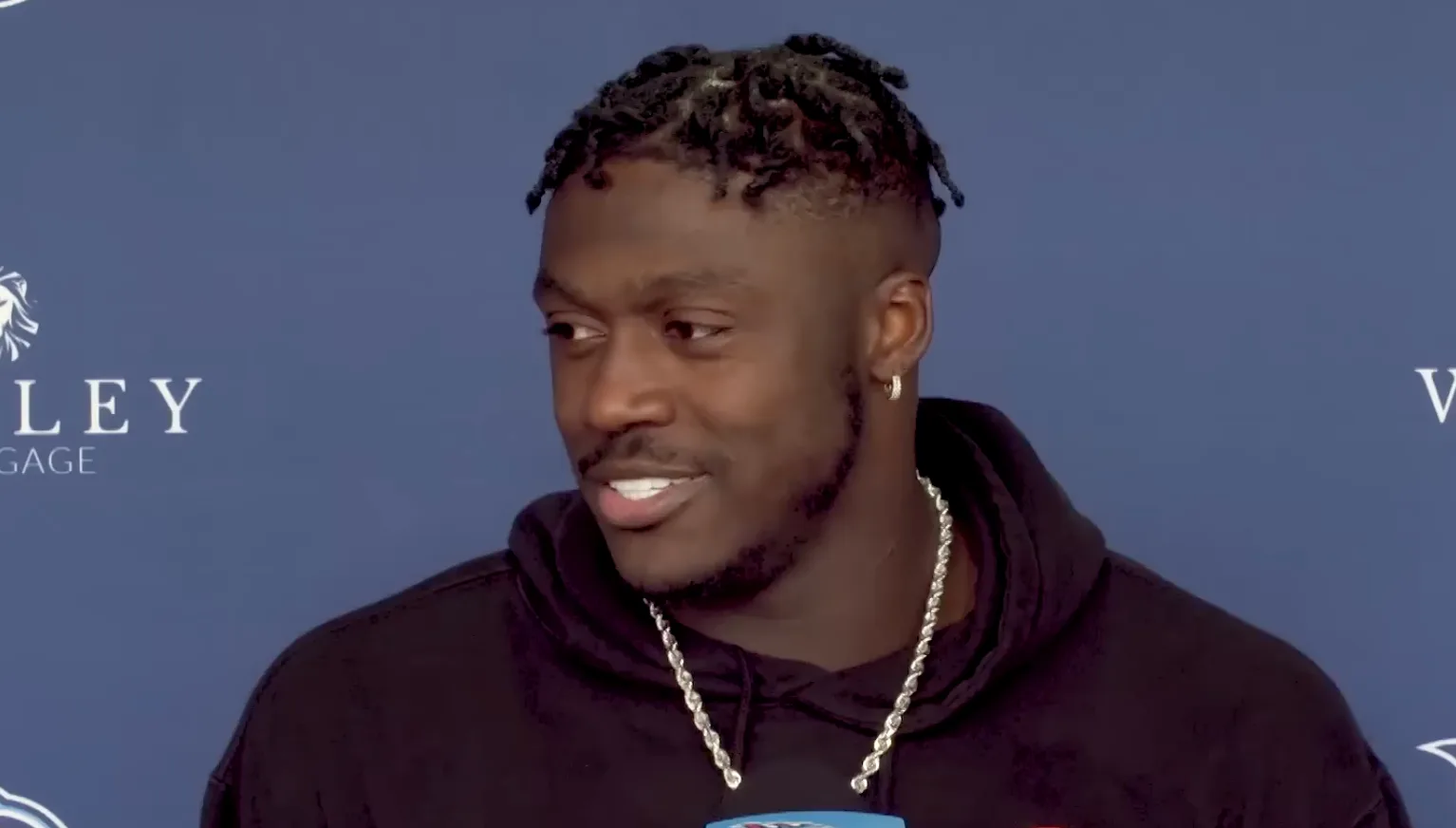
The deal that the NFL has been expecting since April is reportedly approaching its conclusion. AJ Brown, the Philadelphia Eagles wide receiver who has made his unhappiness public, been the subject of trade rumors since the NFL Combine, and who represents one of the most sought-after playmakers on the market, is headed to the New England Patriots, according to multiple reports, with the announcement likely to come in the hours or days following June 1.
The date matters specifically and has been the reason this story has taken months to reach its resolution. ESPN's Jeremy Fowler reported Sunday on SportsCenter that the process was getting close.
"We're getting really close here, and I was told the Patriots remain confident that they can get this deal done," Fowler said. "When I checked with a source on trade terms, I was told that sides are 'working on it.'"
Sports Illustrated's Albert Breer reported Friday that "the framework is in place for a trade to be made early next week that will make AJ Brown a Patriot." There are still things to be worked out, primarily the specific draft pick compensation, but a trade remains likely and the destination remains New England.
ESPN's Adam Schefter had reported in April that a trade was "tracking to happen on or after June 1" and that "Brown to the Patriots is still the likely outcome." June 1 has now arrived.
Why Everyone Was Waiting For June 1
The specific reason that months of reporting on this trade have centered on a single date is the salary cap structure of AJ Brown's contract and what happens to it when the calendar turns.
Brown is owed a massive amount of money under the three-year, $96 million extension he signed with the Eagles in 2023.
His 2026 salary cap charge carried by Philadelphia as dead money would have been approximately $43.3 to $43.5 million if the Eagles had traded him before June 1, an enormous cap hit that would have severely constrained their ability to operate.
That number does not go away when a player is traded. It converts to dead cap, charged against the trading team's books.
After June 1, the cap accounting changes. The dead money splits across two years, approximately $16.3 million charged to Philadelphia in 2026 and $27.1 million charged in 2027. For an Eagles team that is still in a win-now window, that difference is the difference between a manageable accounting entry and a crippling cap hit in a season where they need to compete.
For the Patriots, the financial picture of acquiring Brown is remarkably clean. Taking on his contract after June 1 creates a 2026 cap hit of only $6.79 million for New England, a fraction of Brown's market value and a number that barely registers against the Patriots' available cap space.
The June 1 unlock is why Adam Schefter told his audience in April not to expect anything to happen before June.
Both sides were essentially waiting for a calendar page to turn before finalizing what they had already agreed in principle was the right transaction. That page has turned.
The Sticking Point That Still Needs Resolving
The framework is in place and the destination is agreed upon, but the specific trade compensation has not been finalized.
The Eagles entered this process wanting something in the neighborhood of what the New York Jets received when they traded Quinnen Williams, a first-round pick, a second-round pick and a player.
Brown is older than Williams was at the time of his trade, but he is a wide receiver in a league that values the position highly, and the Eagles believe his talent justifies first-round pick compensation.
The Patriots have been resistant. Fowler reported Sunday that New England has "not been overly crazy about giving up a first-round pick, which is what Philly's kind of wanted all along here."
The middle ground the two sides are reportedly trying to find involves either a conditional first-round pick, one that becomes a first-rounder based on performance thresholds, or some form of pick going back in the other direction that lowers the effective cost of the acquisition.
"Does it include maybe a conditional pick or maybe a pick going back to New England?" Fowler said. "That's what they're sorting through."
The gap between what the Eagles want and what the Patriots are willing to pay is the only thing standing between a reported framework and a completed trade.
Given the timeline that both Fowler and Breer outlined, imminent, likely early this week, that gap appears to be closing.
Why Brown Wants Out Of Philadelphia
AJ Brown has not hidden his frustration with the Philadelphia Eagles, even in years when his statistics have been excellent.
He had 78 catches for 1,003 yards and seven touchdowns in 2025, his fourth career 1,000-yard season, while expressing displeasure about his target share, his role in the passing game and his relationship with the organization.
A player who produces at that level while publicly signaling dissatisfaction is a player who has decided his current situation is not the right one regardless of what the box score says.
The Eagles responded to the situation by doing exactly what a team does when it has accepted that a star is leaving. They drafted Makai Lemon 20th overall in the 2026 NFL Draft, spending a first-round pick on a wide receiver in a draft class that was not known for exceptional wide receiver talent, signaling that they needed to fill a very specific hole.
They traded for Dontayvion Wicks. They signed Hollywood Brown and Elijah Moore. They rebuilt their wide receiver room around DeVonta Smith and a group of new additions while Brown was still nominally on the roster.
No team spends a first-round pick on a wide receiver and signs three more wide receivers in the same offseason unless it expects the wide receiver who was already there to not be there much longer.
The Eagles' offseason moves are the clearest possible signal that the organization reached the same conclusion Brown did, that his time in Philadelphia was over.
What Brown Means To The Patriots
The New England Patriots reached Super Bowl LX on February 8, 2026, losing to the Seattle Seahawks in Santa Clara, California.
Drake Maye, who entered the league as the No. 1 overall pick in 2024 and whose development under head coach Mike Vrabel has been one of the major success stories of the 2025 NFL season, had the kind of postseason run that convinced the organization it was on the right track.
What the Patriots have been missing is the wide receiver who can be that quarterback's alpha target, the player who demands the most attention from opposing defenses, who wins his individual matchup often enough to be the answer when the game is on the line, who changes what opposing coordinators can do schematically by his presence on the field.
Stefon Diggs filled portions of that role in 2025 but is a free agent. The Patriots have been adding at wide receiver throughout the offseason but have not yet added the piece that changes the calculus of their offense in the way that a genuine No. 1 receiver does.
Brown was Vrabel's best receiver when Vrabel coached him in Tennessee from 2019 through 2021, the years before the Eagles acquired him with a first-round pick. The head coach who built his relationship with Brown, who coached him through his first three NFL seasons and who understands how he operates and what environment brings out his best, is now the coach who would be receiving him in New England.
That connection is the part of this trade that is about more than statistics and cap numbers.
Drake Maye apparently agrees. Asked about the trade rumors at minicamp, Maye was characteristically measured:
"If he ends up being on our team, great. What a great player. And if he doesn't, we've still got to work these guys here."
June 1 has arrived. The framework is in place. The Patriots are confident. The only question now is the pick.