
The Government Asked to Shield Rose’s Accuser While Denying Him Due Process
As the Justice Department weighs immunity, one question persists: why did the woman who accused Frank Rose erase evidence and seek his help for years after the alleged conduct?

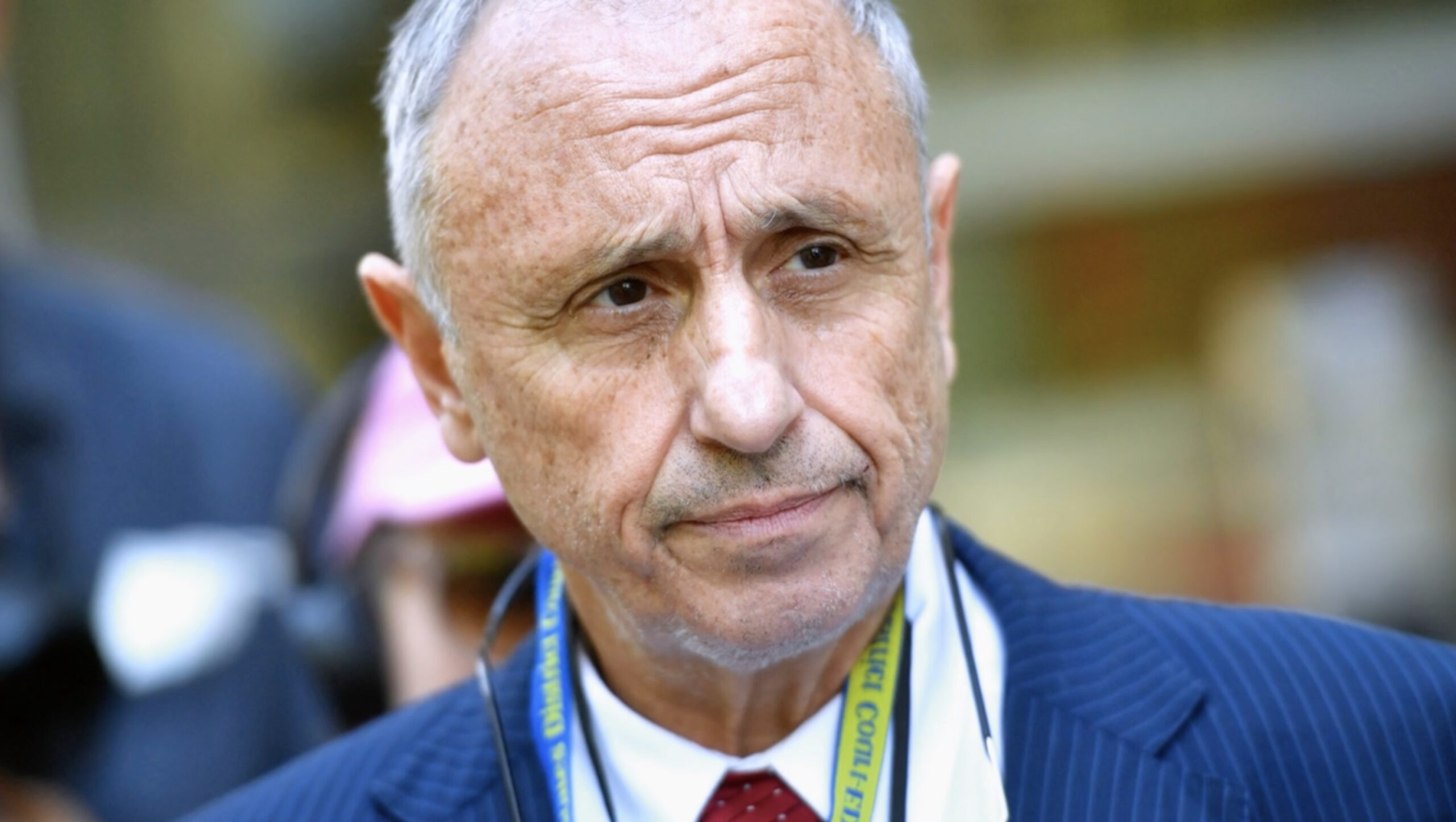
Frank Rose, the No. 2 official at the National Nuclear Security Administration, was in a Hanoi hotel room when his phone rang at 3:00 a.m. on February 24, 2024. On the line was his boss, Jill Hruby, Administrator of NNSA, calling to tell him he was under investigation for creating a “hostile work environment” and “harassment.”
There would be a “fair investigation,” Hruby said. Rose would be interviewed. He pledged his cooperation.
Seventeen days later, on March 12, the investigation was declared complete. Rose was never interviewed. He was never told the specific allegations. He was never allowed to defend himself.

The National Nuclear Security Administration, while little known outside Washington, is responsible for maintaining America’s nuclear weapons arsenal and safeguarding atomic material globally. The agency employs more than 60,000 personnel at laboratories and sites nationwide. Rose, as Principal Deputy Administrator, was second-in-command of an organization whose work directly affects national security.

The order came from above. Christopher Davis, Chief of Staff to Energy Secretary Jennifer Granholm, wanted him “out” by the end of April. NNSA, a semi-autonomous agency within the Department of Energy, answers to the Secretary.

Hruby conducted the investigation. Davis—speaking for Secretary Granholm—delivered the verdict.
Now, nearly two years later and under a new administration, the same agency—then led by Biden’s Energy Secretary—is asking Trump’s Department of Justice to shield Kathryn Hewitt – Rose’s accuser – from Rose’s defamation lawsuit against her. The decision would require the Trump administration to validate the Biden administration’s handling of Rose’s termination and grant immunity to the woman whose allegations the Biden DOE used to force him out.
The Department of Justice is expected to decide around January 16 whether to invoke the Westfall Act, which would substitute the United States as defendant in Rose’s $5 million defamation lawsuit. If granted, Hewitt would be dismissed from the case, never having to answer Rose’s allegations under oath.
The decision hinges on a single question: Were Hewitt’s statements to Politico, a prominent Washington, D.C.-based political news outlet—alleging Rose sexually harassed her at one job, the Brookings Institution, and retaliated against her at her next job, the NNSA—made “within the scope of her federal employment”?
The Westfall Act: A Shield Becomes a Sword
The Westfall Act was enacted to protect federal employees from personal liability for actions taken in their official capacity.
If the Department of Justice certifies that Hewitt’s allegedly defamatory statements to Politico were made within the scope of her employment, she would be dismissed from the lawsuit. The United States would become the defendant. Rose’s defamation case against Hewitt would be removed from Virginia state court to federal court.
A Premature Announcement—and Convenient Delay
On October 20, 2025, Brighton Springer, an attorney at the Department of Energy, emailed Hewitt’s attorney: “I am pleased to report that DOJ determined that Westfall Act substitution is appropriate in your case. As a result, we will be moving to have you replaced with the United States (Rose v United States).”
Springer’s involvement suggests a coordinated federal response. Though Hewitt was employed by DOD when she spoke to Politico, DOE—Rose’s former employer and the agency that conducted the 17-day investigation—is taking the lead in securing her immunity.
But Springer was wrong. DOJ had not made that determination. Two months later, on December 18, 2025, Dennis C. Barghaan, Jr., Chief of the Civil Division at the U.S. Attorney’s Office for the Eastern District of Virginia, emailed Hewitt’s attorney explaining the decision was still pending:
“The request remains in active consideration here at the Department of Justice; unfortunately, given resource issues (including the handling of nearly 300 immigration-related habeas corpus petitions in the last 60-90 days), we have not yet completed our review.”
He estimated a decision by January 16, 2026—three months after Springer’s email claimed the determination had already been made.
Springer’s premature announcement served Hewitt’s interests: it gave her attorney justification to delay responding to Rose’s amended complaint. Under Virginia court rules, defendants must respond within 21 days of service. Hewitt has avoided responding for five months. Based on the pending Westfall decision, she filed her second motion for extension, pushing her response deadline to January 30, 2026—five months after Rose filed his amended complaint in August.
As of January 7, 2026, Hewitt has not responded to any of Rose’s allegations.
Unauthorized Statements to Media
According to Rose’s complaint, Deborah Rosenblum, Assistant Secretary of Defense for Nuclear, Chemical, and Biological Affairs, “specifically confirmed to NNSA Administrator Jill Hruby that Hewitt had spoken to the media without authorization.”
At the time, Hewitt was employed by DOD, having been detailed from NNSA in 2023.
Federal employees do not have blanket authority to speak to the media. The Department of Defense has strict policies requiring pre-approval for media contacts—particularly when those contacts involve allegations against other government officials. If Hewitt violated DOD policy by speaking to Politico without authorization, those statements cannot have been made “within the scope of her employment.” By definition, unauthorized conduct falls outside the scope of employment.
The Westfall Act typically protects federal employees when they make statements to agency investigators during an official inquiry. Employees need to be able to report workplace concerns through proper channels without fear of personal liability. Hewitt’s statements were made to a reporter for publication to potentially millions of readers, not to government investigators conducting an inquiry.
According to Rose’s complaint: “None of the defamatory statements made by Hewitt were made as part of a report regarding Rose made by Hewitt to any governmental entity. None of the defamatory statements made by Hewitt were made during an investigation by any governmental entity.”
The DOJ will have to decide whether unauthorized statements to the media about events that occurred at a different organization (Brookings) years before Hewitt joined the DOD are considered “within the scope of employment” at the DOD.
The Evidence Hewitt Destroyed
According to Rose’s complaint, between July 2019 and May 2021—after Hewitt left Brookings—she “aggressively sought out Rose’s counsel,” initiating meetings “under the guise of seeking career advice.”
She solicited a reference from Rose to NNSA. Rose provided it. That reference “directly enabled her subsequent federal employment at the NNSA in 2020,” according to the complaint.
Over the next two years, Hewitt and Rose communicated via LinkedIn messages. After speaking to Politico in 2024, Hewitt deleted all those messages along with her entire LinkedIn account.
BlueJeans was a cloud-based video conferencing platform, similar in purpose to FaceTime, but aimed more at business and enterprise use.

However, Rose kept a record of those communications.
The Timeline That Demands Explanation
If Rose sexually harassed Hewitt at Brookings from 2018 to 2019 as she alleges, her subsequent conduct raises questions:
July 2019 – May 2021: Hewitt repeatedly seeks Rose’s career advice, initiates meetings with him, and requests a reference to NNSA. Rose provides the reference, which helps her secure federal employment at NNSA in 2020.
2021: Rose undergoes an FBI background investigation as part of his Senate confirmation. “The FBI agents conducting the investigation never mentioned any allegations of sexual harassment against Rose made by Hewitt or anyone else,” according to his complaint.
August 2021 – 2023: Both work at NNSA—Rose as Principal Deputy Administrator, Hewitt in Communications/Public Affairs. Rose states he never communicated with Hewitt during this period.
2023: Hewitt is on detail to DOD. Rose initially denies extending her detail due to staffing shortages at NNSA. Hewitt bypasses Rose to reach DOD leadership. Rose ultimately approves the extension as a favor to DOD.
February 2024: Investigation into Rose begins. Rose is told he’ll be interviewed. He never is.
April 30, 2024: Rose departs NNSA.
May 5, 2024: Politico publishes Hewitt’s allegations that Rose harassed her at Brookings and retaliated against her at NNSA.
May 2024: Hewitt deletes all LinkedIn messages with Rose, then deletes her entire LinkedIn account.
Politico Article Started It All
Five days after Rose’s departure, Politico published “Sexual harassment allegations made against top Biden nuclear official,” citing “eight current and former government officials familiar with the matter, all of whom were granted anonymity.”
Not a single source was named. The article reported that Rose “delayed extending an intergovernmental detail of an NNSA employee (Hewitt) who had lodged a sexual harassment complaint against him when they previously worked together at the…Brookings Institution.”
Politico did not verify whether a complaint was actually filed, or whether Brookings found it to have any merit; it did not mention that the FBI’s 2021 background investigation found no such complaint, did not report that Rose was promoted at Brookings after Hewitt left, and did not disclose that Hewitt spent two years after the alleged sexual harrassment seeking Rose’s career advice and references. The article also did not reveal that Hewitt spoke to Politico without Department of Defense authorization.

The Allegations
According to Rose’s amended complaint, Hewitt allegedly described to Politico a pattern of workplace conduct that, even if true, falls far short of what most people would consider serious sexual harassment.
These are not allegations of forcible assault, groping, or explicit propositions. Hewitt’s allegations describe a supervisor allegedly overly interested in a younger colleague: standing uncomfortably close, reading over her shoulder with his face within inches of hers, asking about her dating life, commenting on her appearance, touching her knee or shoulder during meetings, staring at her chest, and telling her he had “inappropriate thoughts about her all the time.”
In the #MeToo era, such allegations can end a career. They are also notoriously difficult to disprove—particularly when they allegedly occurred years ago in an open office environment where no one else reported witnessing them.
Rose denies all of it.
His amended complaint states, in 19 separate denials, that Rose never sexually harassed Hewitt. He never stood uncomfortably close. He never read over her shoulder. He never made comments about her appearance or legs. He never showed an alarming interest in her love life. He never asked about her dating life. He never stared at her chest during meetings. He never touched her knee, leg, shoulder, or back. He never told her he had inappropriate thoughts about her.
The complaint emphasizes: “Rose was never made aware of any formal complaints or investigations regarding allegations of sexual harassment or inappropriate touching during Hewitt’s tenure at Brookings.”
What makes these denials significant is what happened after Hewitt allegedly left the hostile environment she described. Rather than distancing herself from someone who had allegedly harassed her, Hewitt spent the next two years actively seeking Rose’s professional help, asking for career advice, requesting his reference for a federal job, and maintaining a LinkedIn relationship with him.
Witnesses Who Saw Nothing
Hewitt worked in an open bullpen cubicle at Brookings, seated directly next to Adam Twardowski and Ariel Higuchi. Rose’s office was nearby, with Co-Director Mike O’Hanlon in the adjacent office. When Rose met with Hewitt in his office, “the door was open” most of the time, according to his complaint.
According to Rose’s legal filings, none of these colleagues—Twardowski, Higuchi, or O’Hanlon—”ever expressed any concerns with Rose’s behavior toward Hewitt or anyone else.”
Sources familiar with Rose’s workplace conduct told the New York Post the allegations surprised them. “I never observed anything that would suggest that there was any kind of harassing behavior,” one source said.
Another source told the Post that “Rose had never been informed of any wrongdoing at Brookings or NNSA—and his disagreements with Hewitt also appeared to stem from her professional striving.”
If the conduct Hewitt described actually occurred—daily questions about her dating life, staring at her body during meetings, touching her knee or shoulder, standing uncomfortably close while reading over her shoulder—multiple people in an open office would have seen it. None reported concerns.
What the FBI Didn’t Find
When Rose was nominated for a Senate-confirmed position overseeing the United States’ nuclear weapons, the FBI conducted an exhaustive background check, interviewing former employers, colleagues, supervisors, and subordinates at every stage of his career.
“The FBI agents conducting the investigation never mentioned any allegations of sexual harassment against Rose made by Hewitt or anyone else,” Rose’s complaint states.
If Hewitt had filed a harassment complaint at Brookings, if Brookings had investigated, the FBI would have found it. Background investigations for Senate-confirmed national security positions are designed to surface precisely such concerns. The FBI found none.
The Senate confirmed Rose in July 2021.
More tellingly, Rose was promoted to Co-Director at Brookings following Hewitt’s departure in April 2019. During his tenure at NNSA, Brookings invited him back for presentations and discussed his potential return.
None of this is consistent with an organization that had investigated and substantiated harassment allegations.
Why Westfall Should Be Denied
Rose’s lawyers argue that Westfall cņrtification cannot be correctly granted because:
1. Unauthorized conduct: Hewitt violated DOD policy by speaking to the media without permission—confirmed by Assistant Secretary Rosenblum’s notification to Administrator Hruby.
2. Not part of job duties: Speaking to national media about alleged events at a prior employer (Brookings) has nothing to do with official responsibilities at DOD.
3. Not made to investigators: The statements were made to Politico for publication to readers, not to government investigators.
4. Personal grievances, not official business: The allegations pertain to Hewitt’s time at Brookings (2018-2019) and her personnel issues at NNSA (the detail extension in 2023)—not her duties at DOD.
Courts have consistently held that the Westfall Act does not protect conduct that is unauthorized, personal in nature, or undertaken for purposes unrelated to official duties.

The Investigation
Rose’s federal lawsuit against DOE and NNSA challenges the investigation itself.
“Despite Rose’s willingness to cooperate, OHA never interviewed Rose or provided Rose with the specific allegations made against him,” the complaint states. “Instead, DOE closed its investigation by mid-March 2024—without giving Rose notice of the charges pending against him or any opportunity to defend himself.”
Then the explanations began to contradict one another.
On March 12, Hruby told Rose the investigation was complete.
On April 10, Deputy General Counsel Jocelyn Richards said fact-finding “has not been completed.”
On May 29, Richards claimed any inquiry was “rendered moot by Mr. Rose’s retirement.”
The language shifted as the outcome remained the same. What was first described as “complete” became “not completed,” then “moot.” The vocabulary adjusted itself to the conclusion, not the other way around.
Rose’s lawyers argue these contradictory statements prove “Defendants had no intention of providing Rose with the process he was due prior to his constructive discharge.”

The Oppenheimer Irony
In December 2022, Energy Secretary Jennifer Granholm vacated the 1954 security clearance revocation of J. Robert Oppenheimer, calling it “a long-overdue recognition of Dr. Oppenheimer’s profound contributions.”
The 1954 proceeding against Oppenheimer has been widely criticized as a due process failure. Oppenheimer was not afforded adequate time to prepare, was denied access to classified evidence used against him, and faced a proceeding whose outcome was predetermined.
During his tenure at NNSA, Frank Rose participated in discussions about restoring Oppenheimer’s clearance.
Sixteen months after Granholm celebrated correcting a 70-year-old due process violation, her Department of Energy conducted a 17-day investigation that never interviewed Rose, never disclosed the specific allegations to him, and forced him out on the basis of unverified claims. The Biden administration, which championed Oppenheimer as a victim of institutional injustice, created a new one—under the same Energy Secretary who had condemned such treatment as a historic wrong.

Questions DOJ Must Determine
When the U.S. Attorney’s Office issues its Westfall certification decision around January 16, 2026, Trump’s Department of Justice will be deciding whether to validate the Biden administration’s handling of Rose’s removal.
Can unauthorized statements to the media be considered “within the scope of employment”? If a federal employee violates agency policy by speaking to a reporter without permission, can those statements be official government business?
Can statements about events at a prior employer be covered? Hewitt’s allegations concern her time at Brookings (2018-2019), not her duties at DOD.
If Hewitt deleted LinkedIn messages and her entire account to conceal her relationship with Rose, is that official government business?
If Immunity Is Granted
If DOJ certifies that Hewitt was acting within the scope of her employment:
For Hewitt: She would be dismissed from the lawsuit.
For Rose: He would sue the United States rather than Hewitt personally. The government would have significantly more resources to fight the case and shift the burden from Hewitt to the taxpayers.
For the precedent: Federal employees who make unauthorized statements to the media about workplace grievances would be shielded by sovereign immunity. The Westfall Act could become a shield for personal vendettas carried out through media campaigns.
Proving a Negative
If Westfall immunity is granted, Rose faces a legal paradox: How does he prove defamation when the person who made the defamatory statements cannot be questioned?
Defamation requires proving that statements were false and made with actual malice—knowledge of falsity or reckless disregard for the truth. But if Hewitt is dismissed from the case, Rose cannot:
- Depose her about the 19 specific acts she allegedly described to Politico or why she sought his help for two years after leaving Brookings
- Cross-examine her about requesting his job reference in 2020
- Ask her to explain why she deleted all LinkedIn messages after going public
- Force her to address the FBI background investigation that found no complaints
- Challenge her coordination with others to orchestrate the media campaign
While Rose could subpoena Hewitt as a non-party witness, the government would almost certainly block her testimony by claiming executive privilege or arguing that forcing a federal employee to testify would chill workplace reporting—and courts typically defer to such objections once Westfall substitution occurs.

The government would defend the case as if Hewitt’s statements were official business, but Hewitt herself—the only person who knows whether her allegations are true or false—would be shielded from scrutiny. Government lawyers would argue about legal standards and the scope of employment. But they cannot testify about what actually happened at Brookings in 2018-2019. Only Hewitt can.
Rose would be left trying to prove that the conduct never occurred. Without the ability to depose his accuser, without access to the evidence she destroyed, without the ability to cross-examine her about her contradictory behavior, it would be potentially impossible.
This is why the Westfall Act was never intended to shield unauthorized media statements about personal grievances. If federal employees can make career-ending allegations to reporters, then hide behind sovereign immunity when sued, the accused has no remedy. The allegation becomes the verdict.
If Immunity Is Denied
If DOJ declines to certify that Hewitt was acting within the scope of employment, she would have to defend the lawsuit personally.
She would have to respond to Rose’s amended complaint, answer interrogatories, sit for depositions, and produce documents—including communications about Rose, contacts with Politico, and an explanation for deleting her LinkedIn account.
She would have to explain under oath:
- Whether she filed a harassment complaint at Brookings
- Why she sought Rose’s career advice for two years after leaving Brookings
- Why she asked Rose for a reference to NNSA
- Why she deleted all LinkedIn messages with Rose after speaking to media
- Whether she spoke to Politico without DOD authorization
- Whether Rose actually committed any of the 19 specific acts she allegedly described to Politico
Discovery would be extensive. Witnesses would be deposed. Documents would be produced. The truth would be tested in an adversarial process.
The Damage Done
Regardless of how the Westfall decision comes out, Rose has already suffered devastating losses.
Since his forced departure in April 2024, he has applied for more than 20 positions in his field. He has been rejected from all of them.
A three-decade career in national security—serving in three Democratic administrations, advising presidents, securing Senate confirmation, surviving FBI background checks, rising to the No. 2 position at the agency responsible for America’s nuclear weapons—ended in 17 days based on allegations he was never allowed to confront.
In September 2024, Rose filed complaints with both the DOE and DOD Inspectors General. As of January 2026—16 months later—he has received no response.

A Career of Three Decades
The Frank Rose who answered that 3 a.m. call in Hanoi was not a bureaucratic journeyman or political appointee parachuted into a sensitive position. He was a national security professional who had spent 30 years building one of the most respected careers in his field.
Rose began on Senator John Kerry’s staff and later served as a presidential appointee in the Department of Defense during the Clinton administration. During the Bush administration—despite being a Democrat—he was retained as a civil servant policy advisor at DOD, a testament to his non-partisan professionalism. He served as professional staff on both the House Intelligence Committee and the House Armed Services Committee.
When Barack Obama took office, Rose was appointed Deputy Assistant Secretary of State for Space and Defense Policy, serving from 2009 to 2014. He was then nominated and Senate-confirmed as Assistant Secretary of State for Arms Control, Verification, and Compliance—the No. 3 position at the State Department’s Bureau of Arms Control.
Between the Obama and Biden administrations, Rose served as Co-Director of the Center for Security, Strategy, and Technology at the Brookings Institution.
When President Biden nominated Rose to be Principal Deputy Administrator of NNSA in April 2021, the Senate Armed Services Committee held hearings. Rose was confirmed by voice vote—meaning no senator objected.
At no point in this three-decade career spanning four administrations—Clinton, Bush, Obama, and Biden—was Rose ever disciplined for misconduct. At no time was he counseled regarding inappropriate behavior toward women. At no point did any formal complaint appear in his personnel file.
He survived the vetting processes of three Democratic administrations and one Republican administration. He passed Senate confirmation twice. He worked at the highest levels of the State Department, the Department of Defense, and the NNSA—positions requiring the highest security clearances and the most rigorous scrutiny.
And then, in 17 days, it was over.
The allegations that ended this career came not during any of the extensive vetting processes Rose underwent, not during any of the FBI background checks, not during any of his Senate confirmations, but years after the alleged conduct, from a woman who had spent two years seeking his professional help and then deleted all evidence of their communications.
The Decision That Matters
Around January 16, 2026, the U.S. Attorney’s Office for the Eastern District of Virginia will issue a decision that extends far beyond Rose’s case.
Trump’s Department of Justice will decide whether to validate the Biden administration’s handling of Rose’s removal—a 17-day investigation conducted under Energy Secretary Jennifer Granholm that never interviewed him, never told him the allegations, and forced him out based on unverified claims from a woman who violated DOD policy by speaking to the media.
If Trump’s DOJ grants Hewitt Westfall immunity despite the fact that she spoke to media without authorization, made statements about events at a prior employer, acted for personal rather than official reasons, and destroyed evidence of her relationship with Rose—then the Westfall Act will have been transformed from a shield for employees doing their jobs into a weapon that enables career destruction without accountability.
If DOJ denies immunity and requires Hewitt to defend her statements in court, then Rose will finally get what he has been seeking since that 3 a.m. call in Hanoi: a fair process in which evidence is tested, witnesses are cross-examined, and the truth can be determined.
The Biden administration denied Rose due process once. The Westfall decision will reveal whether the Trump administration intends to compound that injustice by shielding his accuser from defending her allegations.
We’ll know soon.
Sampling of Deleted Texts
Here is a sampling of some of the Linked-in texts Kathryn Hewitt sent to Frank Rose, after she left Brookings, where she claimed he had sexually harrassed her. She deleted these texts after she gave her Politico interview. Note BlueJeans was a cloud-based video conferencing platform, similar in purpose to FaceTime, but aimed more at business and enterprise use.